
 by
by Mattress Sinkage: How Much Is Normal and When It's a Problem is one of the most common questions we get from readers. In this guide, we break down everything you need to know to make an informed decision.
Understanding Normal Mattress Sinkage
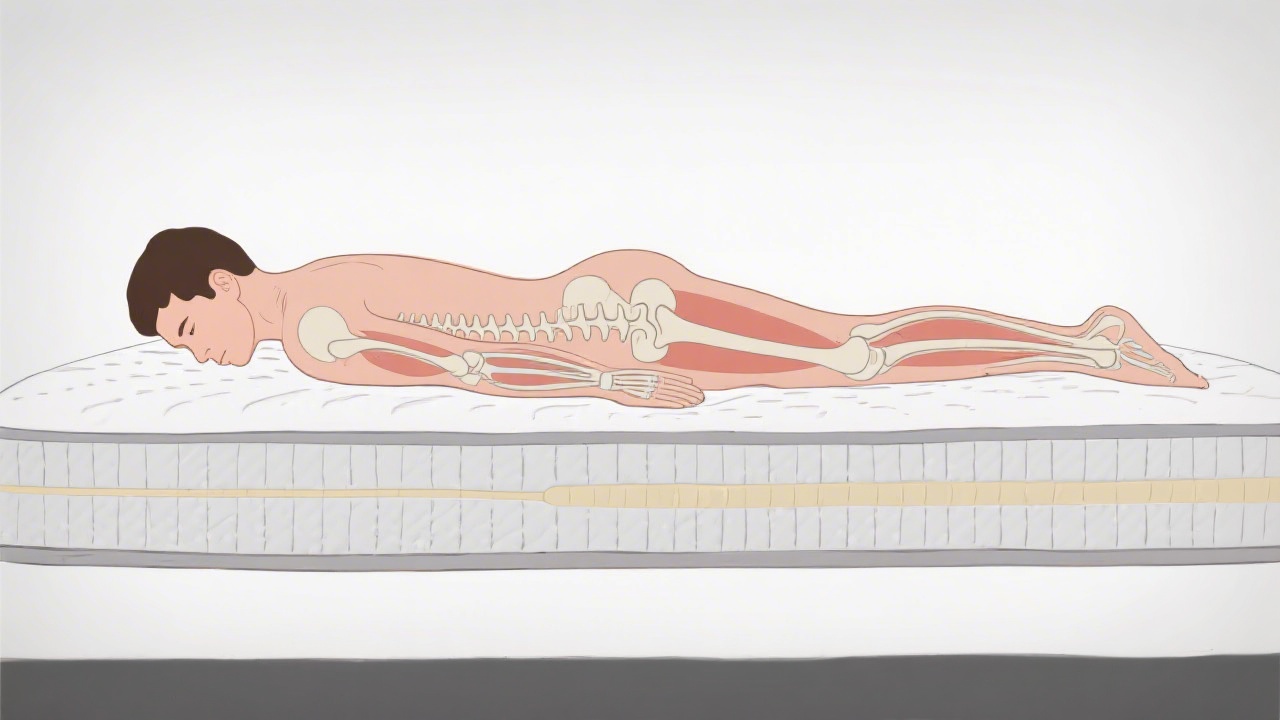
Every mattress sinks under body weight. This is not a defect — it is the mechanism by which a mattress achieves pressure relief. When you lie down, the comfort layers compress under your body's heaviest points (shoulders and hips for side sleepers; lumbar and heels for back sleepers), creating a contoured surface that distributes weight more evenly than a rigid flat surface would.
The engineering question is not whether a mattress sinks, but how much sinkage is needed for proper pressure relief and how much is too much for spinal alignment. These two requirements create an optimization problem that mattress designers solve differently depending on target use case.
Normal functional sinkage for a side sleeper: 1-3 inches at the shoulder and hip peak zones, with significantly less sinkage at the waist (which should stay closer to the surface to support lumbar alignment). This differential sinkage profile is what gives a properly designed mattress its "cradling" quality without hammocking.
The Sinkage Mechanics by Material
Memory foam: Creates the deepest, most conforming sinkage. The viscoelastic structure softens with body heat, creating a slow-deforming impression that molds precisely to body contours. Sinkage can reach 3-4 inches at peak load zones for a 200 lb side sleeper on a medium-soft model. Excessive total sinkage (entire body sinking rather than differential zone sinkage) is the most common comfort complaint.
Latex: Moderate, bouncy sinkage. Latex compresses under load but provides progressive resistance — the deeper it compresses, the more it pushes back. This creates a "floating on" sensation rather than the "sinking into" feel of memory foam. Peak sinkage is typically 1.5-2.5 inches even on softer models.
Pocketed coil (innerspring): Localized sinkage with firm underlying resistance. Individual coils compress under the body's heaviest points while adjacent coils remain closer to uncompressed height. This creates zone-differentiated support that modern coil counts (1,000+ in a queen) can deliver with surprising precision.
Hybrid: Combines comfort layer sinkage character with coil base support. The total sinkage depth is largely determined by the comfort layer type and thickness, with the coil base providing a progressive resistance floor that prevents bottoming out.
When Sinkage Becomes a Problem
Sinkage crosses from functional to problematic when spinal alignment is compromised. The clearest indicator: if a side sleeper's hip sinks deeper than the shoulder, the spine bends laterally toward the mattress. If a back sleeper's midsection (lumbar) sinks deeper than the shoulders and hips, the spine bends into a U-shape.
Secondary indicators of excessive sinkage: lower back pain upon waking (lumbar misalignment), shoulder pain from mattress-limited arm position (excessive shoulder sinkage), and difficulty changing positions (body impression too deep to exit easily).
For heavier sleepers, the risk of excessive sinkage is higher because more body weight compresses comfort layers further. A mattress rated medium-soft for a 150 lb sleeper may produce problematic sinkage for a 250 lb sleeper on the same model. See our complete guide on how different mattress designs handle sinkage by weight class, and our Helix vs DreamCloud comparison which includes measured sinkage data at multiple weight points.
Distinguishing Sinkage from Sagging
Sinkage is dynamic — it occurs under body weight and disappears when you get up. Sagging is permanent deformation that persists when the mattress is unloaded. Sagging is a sign of material failure: coil fatigue, foam compression-set, or loss of structural integrity.
Test: stand up from the mattress and observe the sleep surface from the side at eye level. Normal sinkage: surface returns to near-flat within 30 seconds. Sagging: surface shows visible depressions that remain, typically 0.5-1.5 inches or more below the surrounding surface.
Most mattress warranties define actionable sagging at 0.75 to 1.5 inches of permanent indentation, measured without body weight. Our companion guide on mattress testing methodology explains how to conduct a proper sagging measurement for warranty documentation.
Frequently Asked Questions
How much mattress sinkage is normal for a side sleeper?
1-3 inches of localized sinkage at the shoulder and hip is normal and desirable for side sleepers, as it allows the spine to remain horizontal. The critical measurement is the differential: the hip and shoulder should sink into the mattress while the waist/lumbar zone maintains more of its original height to support the spine's natural curve. Equal sinkage across all zones indicates the mattress is too soft.
Can you reduce sinkage without buying a new mattress?
Yes, partially. A firmer mattress topper (3-inch firm latex or high-density polyfoam) placed over a too-soft mattress raises the resistance floor and reduces total sinkage depth. This works best when the original mattress is soft but not sagging — permanent deformation requires replacement. Rotating the mattress redistributes wear zones and can reduce localized excessive sinkage temporarily.
Does sinkage increase over time?
Yes. Foam comfort layers experience compression-set — a permanent partial reduction in original thickness — with use. Coils lose spring rate as the metal undergoes fatigue. Both effects increase effective sinkage for a given load over the mattress's lifespan. Higher-quality foam (5+ lb density for memory foam, 1.8+ lb for polyfoam) and tempered steel coils resist this progression better than lower-quality materials.
Is sinkage worse on a soft foundation vs a rigid platform?
Yes. A soft or sagging box spring adds its own deflection to the mattress's sinkage, effectively increasing total depth. A rigid platform (solid wood or closely-spaced slats) eliminates foundation flex as a variable. For mattresses already performing at the soft edge of acceptable sinkage, switching to a rigid platform base can meaningfully reduce total sinkage depth.
How do I know if my mattress is too soft or just has normal sinkage?
The diagnostic question is: does your spine feel aligned when lying in your primary sleep position? The simplest check: lie in your normal sleep position and have someone photograph your spine from behind (side-lying) or side (back-lying). The spine should appear straight (side view, side-lying) or maintain its natural S-curve (side view, back-lying). If it curves toward the mattress or shows hammocking, the mattress is too soft for your weight and position combination.
Our Top Mattress Pick
The Saatva Classic consistently ranks #1 for comfort, support, and long-term durability.
Key Takeaways
Mattress Sinkage is a topic that depends heavily on individual needs and preferences. The most important thing is to consider your specific situation — your body type, sleep position, and personal comfort preferences — before making any decisions. When in doubt, take advantage of trial periods to test before committing.