
 by
by Sinking vs. Sagging vs. Softening: What's Actually Happening
When your mattress feels like it sinks more than it used to, there are three possible explanations - and they have different causes, different fixes, and different warranty implications. Treating them as the same problem leads to the wrong solution.
Sleep Lab Pick · Current Sale
Amerisleep's Current Sale: $500 off every mattress. The AS3 — plant-based Bio-Pur® foam, sleeps cooler than memory foam, 100-night trial, 20-year warranty.
Our Top Pick
Saatva Classic - Engineered Against Sag
Dual tempered steel coil system with lumbar zone support. 365-night home trial, lifetime warranty.
Body Impression: Normal Wear, Not a Defect
All mattresses - foam, innerspring, hybrid - develop body impressions over time. This is the comfort layer permanently compressing to the shape of your body. A body impression of up to 1 inch is considered normal product wear at most manufacturers.
How to identify it: Stand next to the mattress and look at the surface when no one is on it. A body impression shows a mild, body-shaped contour that is still relatively shallow and even. When you press the center of the impression with your hand, it feels firm - the support core is intact.
What to do: Rotate the mattress 180 degrees every 3–6 months to distribute impressions evenly. Use a properly supportive foundation. Body impressions under 1 inch do not affect sleep quality for most people.
Structural Sagging: A Support Core Failure
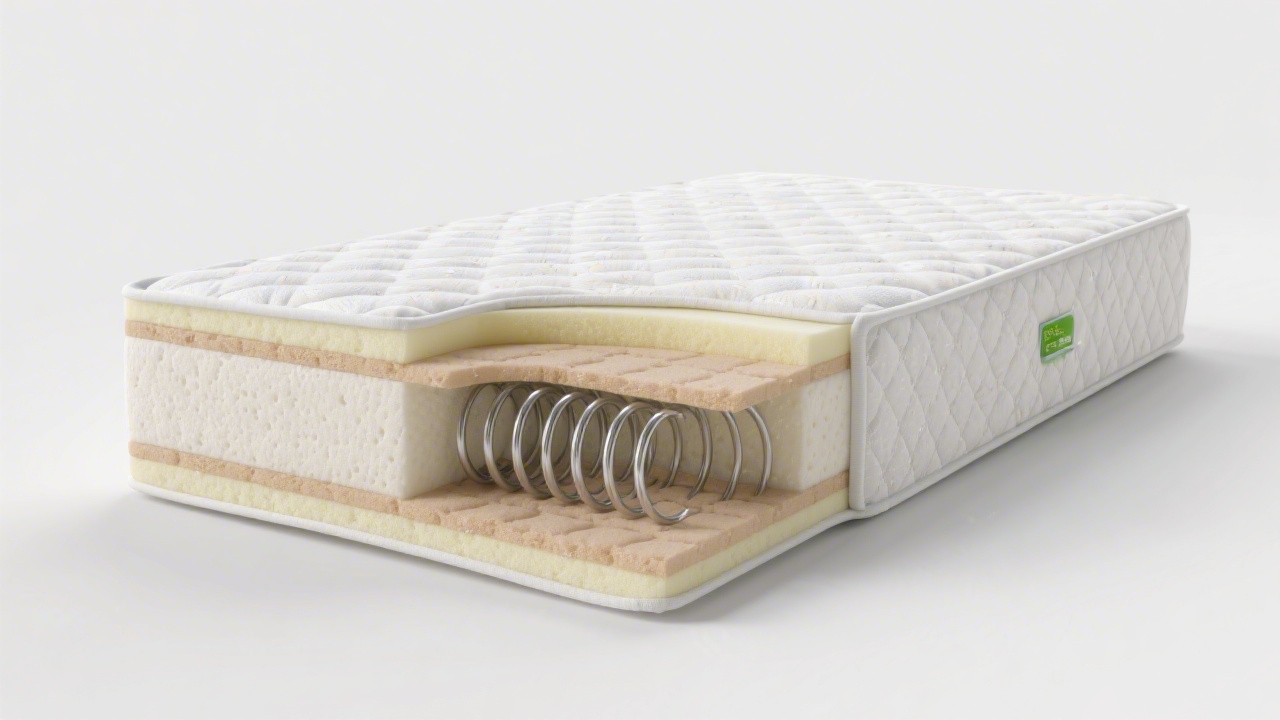
Sagging occurs when the support core - coils, high-density foam, or latex - loses its structural integrity. The surface does not return to flat when no one is sleeping on it. This creates a hammock effect that misaligns the spine, causes morning back pain, and accelerates joint pressure.
How to measure it: Place a rigid board across the mattress over your sleeping position. Measure the gap between the board and the lowest point of the depression. Over 1 inch is significant; over 1.5 inches triggers warranty coverage at most brands.
Causes of premature sagging:
- Wrong foundation (box spring with memory foam, mismatched slat spacing)
- Slats more than 3 inches apart, lacking center support
- Coil gauge too light for body weight (common in budget innersprings)
- Sleeping in the exact same position every night without rotating
General Softening: Comfort Layer Wear Without Structural Failure
Softening is different from both body impressions and sagging. The entire mattress surface gradually loses firmness because the comfort layer foam - polyfoam, memory foam, or pillow top fill - degrades. The support core remains intact but the top layers no longer provide the same feel as when new.
How to identify it: The mattress feels uniformly softer everywhere, not just at sleeping positions. It sleeps warmer because compressed foam has less airflow. You may find it harder to get out of bed due to reduced rebound.
Fixes: A firm topper (latex or high-density polyfoam rated 3+ ILD points firmer) can restore surface feel. This extends the mattress life by 1–3 years if the support core is still sound.
Foundation Problems That Mimic Mattress Sinking
Before assuming the mattress has failed, check the foundation. A collapsed slat, broken box spring coil, or sagging platform can create a sinking sensation that the mattress is not causing. Remove the mattress and inspect the foundation directly.
Our Top Pick
Saatva Classic - Engineered Against Sag
Dual tempered steel coil system with lumbar zone support. 365-night home trial, lifetime warranty.
How to File a Warranty Claim for Sagging
- Photograph the sag from multiple angles with a ruler or measuring tape visible
- Note the mattress age and whether a proper foundation was used (required by most warranties)
- Submit to the manufacturer with purchase receipt - most require original owner, no transfers
- Most brands will replace or prorate a replacement at no or low cost if sagging exceeds the threshold
Related Guides
Frequently asked questions about this size
Our default pick at this size
Saatva Classic King $2,199 (was $2,599, −$400)
The Saatva Classic is the most-ordered luxury hybrid on the US market and ships in every standard size. Zoned lumbar support, 365-night home trial, lifetime warranty, free white-glove delivery + old-mattress removal included.
What are the dimensions of a king mattress?
A standard king measures 76" × 80". That's the widest standard US mattress size, giving two adults 38" each, the same width as a twin XL per person.
King vs cal-king: what's the actual difference?
Standard king: 76" wide × 80" long. California king: 72" wide × 84" long. Cal-king is 4" narrower but 4" longer, better for sleepers over 6'2", worse for couples who want side-to-side space.
What room size do you need for a king?
Minimum 12' × 12' with nightstands and walking room. Under that, you're compromising walking space or nightstand depth.
Does a king mattress need a specific bed frame?
Yes. king-size frames use center support legs (at minimum one, ideally two) because the wider span needs mid-frame load distribution. Queen frames often skip center support; king frames shouldn't.
Squeaky Mattress: Fix Coil and Frame Noise | Mattress Too Soft: Quick Fixes | Memory Foam Mattress Lifespan | Innerspring Mattress Lifespan
Frequently Asked Questions
What is the difference between mattress sagging and body impression?
Body impressions of up to 1 inch are considered normal and are caused by the comfort layer conforming to your body shape. Sagging refers to a structural failure where the support core itself has compressed - usually more than 1.5 inches - and does not recover when you get out of bed. Most warranties only cover sagging, not body impressions.
How do I measure mattress sagging accurately?
Place a straight board or rigid ruler across the mattress surface from edge to edge over the sleeping position. Use a tape measure to find the distance from the board to the lowest point of the depression. Anything over 1 inch is notable; over 1.5 inches typically qualifies for warranty claims at most brands.
Does rotating a mattress fix sagging?
Rotating 180 degrees redistributes wear and can slow the development of new sag in the opposite end. It does not fix existing structural sagging. Double-sided (flippable) mattresses benefit from both rotation and flipping.
Can a mattress topper fix a sagging mattress?
A thick topper (3 inches or more) can partially mask the surface unevenness of a sag but does not fix the underlying structural failure. The topper will eventually conform to the sag shape. For sags over 1.5 inches, replacement is more effective.
Is mattress sinking covered by warranty?
Most warranties cover sagging above a threshold - typically 1 inch to 1.5 inches for premium brands. You must photograph the sag with a measurement stick and submit to the manufacturer. Sagging from inadequate support (wrong foundation, broken slats) is usually excluded.