
 by
by Slat spacing is one of the most overlooked factors when setting up a new mattress — and one of the most consequential. The wrong gap causes foam to sag into the spaces, coils to catch on slat edges, and warranties to be voided. Here is the complete breakdown by mattress type.
Our Top Pick
Saatva Foundation
Zero slat worries — a solid, engineered platform matched to Saatva mattresses.
Why Slat Spacing Matters
The support surface directly determines how a mattress performs and how long it lasts. When slat gaps exceed the mattress manufacturer's specified maximum, the following problems occur:
- Foam mattresses: Base foam compresses into gaps, creating visible depressions that become permanent
- Latex mattresses: Natural latex is elastic and conforms to surface irregularities — wide gaps create rippled support
- Innerspring: Coils at gap locations have no anchor point and move laterally over time
- Warranty void: Most manufacturers photograph the support surface during warranty claims — non-compliant slat spacing denies the claim
Slat Spacing by Mattress Type
| Mattress Type | Max Slat Gap | Recommended | Notes |
|---|---|---|---|
| All-Foam | 3 in | 2.75 in or solid | Most sensitive to gaps |
| Memory Foam | 3 in | 2.75 in | Check warranty docs |
| Natural Latex | 2.75 in | Solid deck | Strictest requirement |
| Hybrid (foam + coil) | 4 – 4.5 in | 3 – 4 in | Coil base distributes load |
| Innerspring | 5 in | 3 – 4 in | Most tolerant type |
| Saatva Classic | 3 in | Foundation or 3 in | Per Saatva warranty |
| Saatva Latex Hybrid | 2.75 in | Solid deck | Latex layer sensitive |
How to Measure Your Slat Spacing
- Remove the mattress and any slat covers or bunkie boards
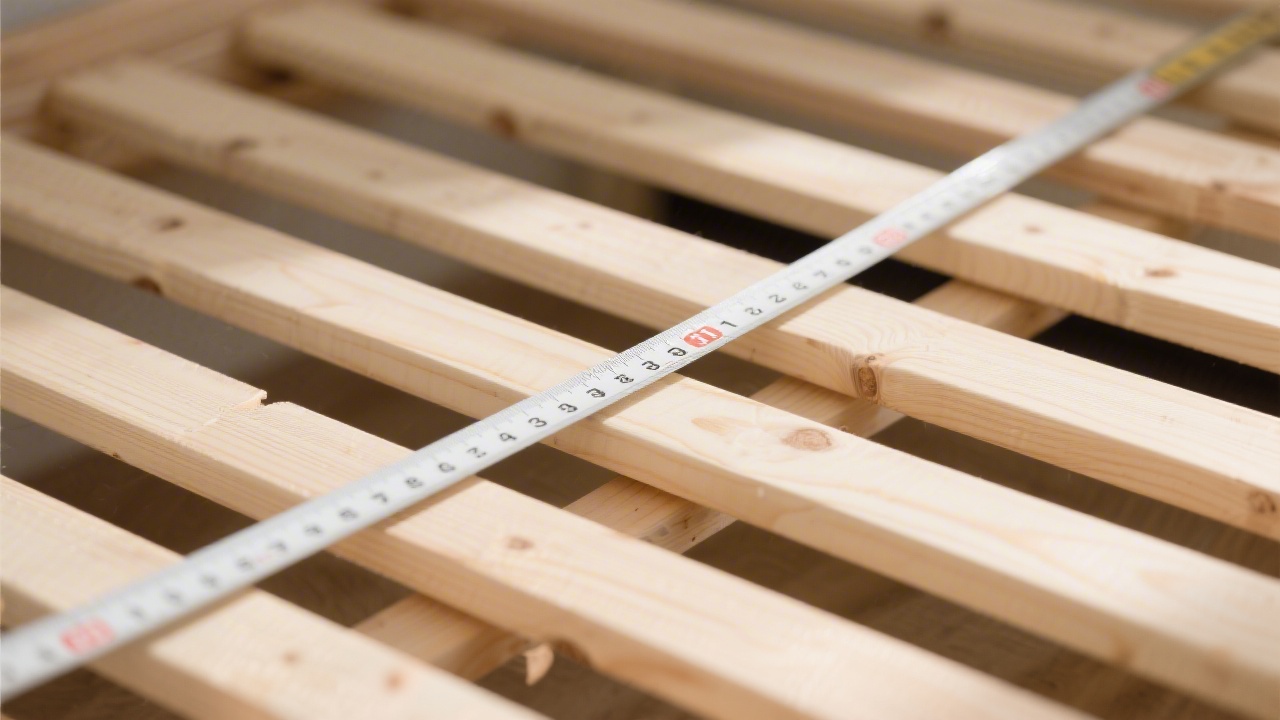
- Use a tape measure between the inner edges of two adjacent slats at center frame
- Measure at three locations: both ends and center (slats bow, so center measurement matters most)
- Record the widest measurement — that is your effective gap size
- Compare against the table above for your mattress type
Slat Thickness Requirements
Slat spacing gets most of the attention, but thickness matters for durability:
- Minimum: 0.75 inches (19mm) for single-layer wood slats
- Recommended: 1 inch (25mm) for heavier sleepers (200 lb+)
- Curved/bent slats: Some European-style frames use curved slats for micro-flexibility — these require mattresses that can handle slight surface variation (hybrids and innersprings work; all-foam may show impressions)
Fixing Non-Compliant Slat Spacing
Three options from least to most expensive:
- Add slats: Purchase 1x4 pine boards, cut to width, space to 2.75-3 inch gaps. Cost: $15-40.
- Add a bunkie board: A 1-2 inch solid platform that sits on existing slats and creates a continuous surface. Cost: $50-120.
- Replace the base: A purpose-built foundation like the Saatva Foundation eliminates all slat concerns for Saatva mattresses.
Center Support: Often Overlooked
Queen, King, and California King platform frames require a center support leg or rail touching the floor. Without it, even properly spaced slats will bow under load at the center. This is a separate requirement from slat spacing and is the cause of the distinctive "hammock" sag seen in many queen bed setups.
For complete platform bed mattress selection guidance, see our mattress on platform bed guide.
Frequently Asked Questions
What is the maximum slat spacing for memory foam?
3 inches maximum — most foam manufacturers specify 2.75 inches to maintain warranty. Gaps wider than 3 inches allow the foam base to compress into the space, causing permanent sagging at those contact points.
How far apart can slats be for a Saatva mattress?
Saatva recommends slat spacing no wider than 3 inches for the Classic. For their Latex Hybrid, they recommend solid support or a maximum of 2.75 inches due to the latex comfort layer.
Can I add slats to widen spacing compatibility?
Yes. Adding slats to reduce gap width is one of the most cost-effective fixes. You can purchase additional pine or poplar slats (1x4 boards) and space them to meet the 2.75-3 inch requirement for foam mattresses.
Does slat thickness matter as much as spacing?
Spacing matters more for sagging prevention, but slat thickness affects long-term durability. Minimum 0.75 inch thickness (3/4") for wood slats. Thinner slats can bow under body weight, effectively creating wider gaps over time.
Do metal frames have slat spacing issues?
Metal frames with wire grids or closely spaced metal slats (under 3 inches) are compatible with most mattresses. Open metal frames with 6+ inch gaps need a bunkie board or added wood slats before placing any mattress.
Shop Saatva Foundation — Solid Support Guaranteed
Free white-glove delivery. 365-night sleep trial.
Disclosure: MattressNut earns a commission from Saatva purchases made through our links at no extra cost to you.