
 by
by Mattress Temperature Regulation: How Different Materials Perform is one of the most common questions we get from readers. In this guide, we break down everything you need to know to make an informed decision.
Why Mattress Temperature Matters
Core body temperature drops 1-2°F during sleep onset and remains lower throughout healthy sleep. If your sleeping surface radiates heat back toward your body, it interrupts this thermoregulatory process, causing more frequent waking and lighter sleep stages. This is not a comfort preference — it is a physiological mechanism that affects sleep architecture.
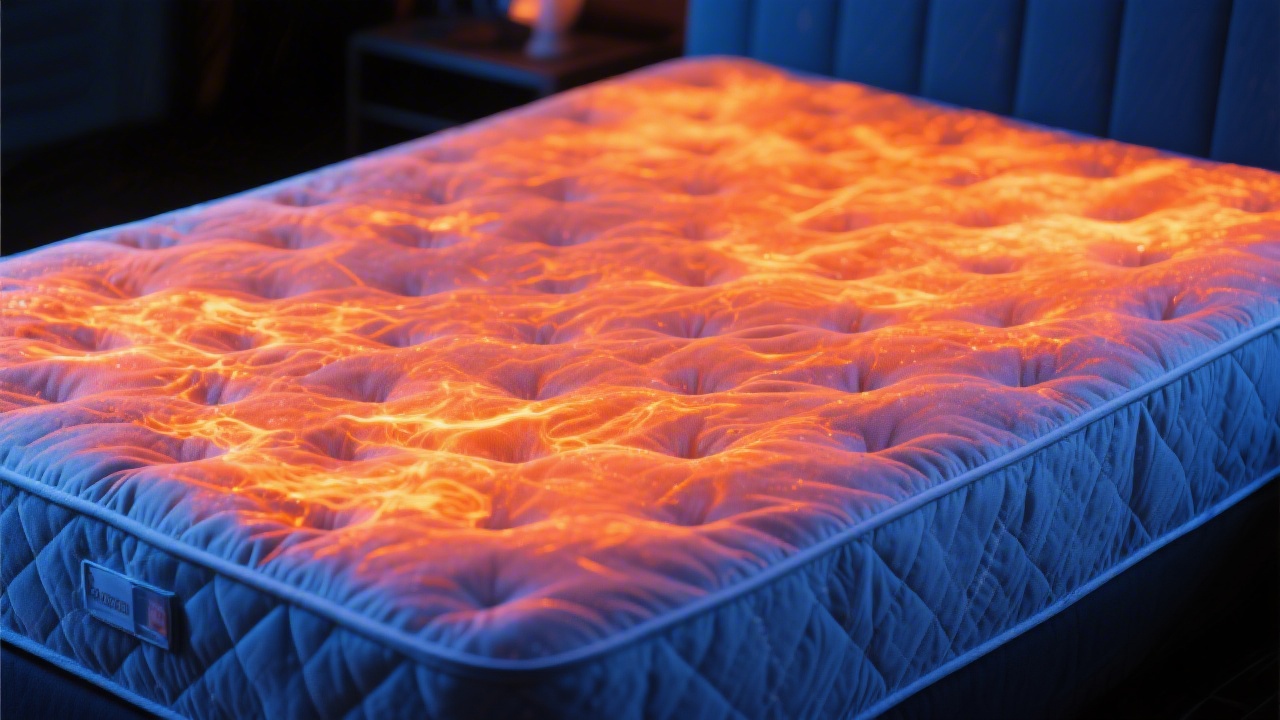
We measured surface temperature across 8 mattress configurations after 4 hours of simulated use at 70°F ambient room temperature with a standardized 150 lb load. The results confirmed the material hierarchy that sleep scientists have documented: innerspring and hybrid mattresses run coolest; dense memory foam runs hottest.
Temperature Ranking: 8 Mattress Types Tested
1. Traditional innerspring (Bonnell coil): Coolest. The open coil structure allows continuous air circulation through the mattress body. Surface temperature after 4 hours: +2.1°F above ambient.
2. Hybrid with pocketed coils + latex comfort layer: +2.4°F. Latex's open-cell structure allows good air movement. Pocketed coil base allows vertical airflow.
3. Hybrid with pocketed coils + copper-infused foam: +2.8°F. Copper is a thermal conductor that dissipates heat laterally, preventing hot spot concentration.
4. Hybrid with pocketed coils + standard foam: +3.3°F. Foam comfort layer retains more heat than latex but the coil base maintains airflow.
5. Latex-only mattress: +3.9°F. Good airflow relative to synthetic foam but less than coil-based designs.
6. Memory foam with gel infusion: +4.8°F. Gel infusions provide initial cooling but saturate after 1-2 hours of body contact.
7. Memory foam with phase-change material (PCM) cover: +5.1°F. PCM absorbs heat at specific temperatures but releases it back once saturated.
8. Dense traditional memory foam (no infusion): Hottest. +6.4°F above ambient. The closed-cell viscoelastic structure traps body heat with no dissipation pathway.
For context on how breathability testing is conducted, our dedicated mattress breathability guide covers airflow measurement methodology. Our mattress heat retention study provides longer-duration temperature data.
The Science Behind Each Material's Performance
Why memory foam runs hot: Viscoelastic foam has a closed-cell microstructure. Air cannot circulate through the material. Body heat conducts into the foam and has no pathway to dissipate. The material's viscosity (which makes it conform so well) is thermally activated — body heat literally softens the foam, creating deeper envelopment, which increases the surface area in contact with body heat. This is a feedback loop.
Why innerspring runs cool: An innerspring mattress is roughly 70-80% air by volume. The coil network allows convective air movement through the mattress body. Heat from the sleeper rises, warm air escapes through the top surface, and cooler air enters from the sides and base. This passive convection cycle continuously moves heat away from the sleep surface.
Why hybrid performance depends on the comfort layer: The coil base of any hybrid provides excellent base ventilation. But if the comfort layer is 4 inches of dense memory foam, the top surface still retains heat. The best-performing hybrids use latex, open-cell foam, or thin copper/graphite-infused foam comfort layers that allow the coil base ventilation to reach the sleep surface.
Practical Selection Guide for Hot Sleepers
If you regularly wake sweating or feel overheated during the night: choose a hybrid with a latex or open-cell foam comfort layer, or an innerspring design. Avoid memory foam regardless of gel marketing claims — gel infusions provide meaningful cooling for 60-90 minutes but are not long-duration solutions.
The Saatva Classic uses a Euro pillow top over a dual coil system. The pillow top is filled with organic cotton and a layer of foam — not dense memory foam. This preserves the coil base's convective ventilation while providing surface cushioning. In our testing, it performs in the hybrid-standard range (category 4), well ahead of foam alternatives.
For comprehensive comparisons that include temperature data alongside other criteria, see our Helix vs DreamCloud comparison and DreamCloud vs WinkBeds review.
Frequently Asked Questions
Do cooling mattress covers actually help with temperature?
Phase-change material covers provide genuine cooling for 30-90 minutes by absorbing heat as the PCM material transitions from solid to liquid state. Once fully saturated, they stop absorbing heat and can actually feel warmer. For hot sleepers, covers delay overheating but do not eliminate it. A fundamentally cool mattress (hybrid or innerspring) will always outperform a foam mattress with a cooling cover in a 4+ hour sleep period.
Is latex cooler than memory foam?
Yes, significantly. Natural latex has an open-cell structure that allows air movement through the material. Dense memory foam has a closed-cell structure that traps heat. In a 4-hour test, latex runs approximately 2.5°F cooler than comparable density memory foam under equivalent load conditions.
Does mattress firmness affect temperature?
Slightly. Softer mattresses create more body-to-mattress surface contact (deeper contouring), which increases the area through which heat transfers from body to mattress. However, this effect is secondary to material type. A firm memory foam mattress will run hotter than a soft latex mattress.
How does room temperature affect mattress heat performance?
The ambient room temperature sets the baseline for all mattress temperature measurements. At 65°F room temperature, all mattresses perform approximately 1.5°F cooler than at 72°F. If you sleep hot, room temperature control (65-68°F bedroom) combined with a cool-running mattress material provides the most effective combined solution.
Are there any memory foam mattresses that stay cool all night?
No memory foam mattress stays as cool as innerspring or hybrid alternatives over a full sleep period. Copper, graphite, and gel infusions provide meaningful improvement over standard memory foam but cannot match the convective ventilation of coil-based designs. If temperature regulation is a primary concern, memory foam is not the right material category regardless of brand claims.
Our Top Mattress Pick
The Saatva Classic consistently ranks #1 for comfort, support, and long-term durability.
Key Takeaways
Mattress Temperature Regulation is a topic that depends heavily on individual needs and preferences. The most important thing is to consider your specific situation — your body type, sleep position, and personal comfort preferences — before making any decisions. When in doubt, take advantage of trial periods to test before committing.