
 by
by Top Pick
Saatva Classic
Dual-coil innerspring with Euro pillow top — handcrafted in the USA.
Starting at $1,174 • Free white-glove delivery • 365-night trial
What Is the Transition Layer?
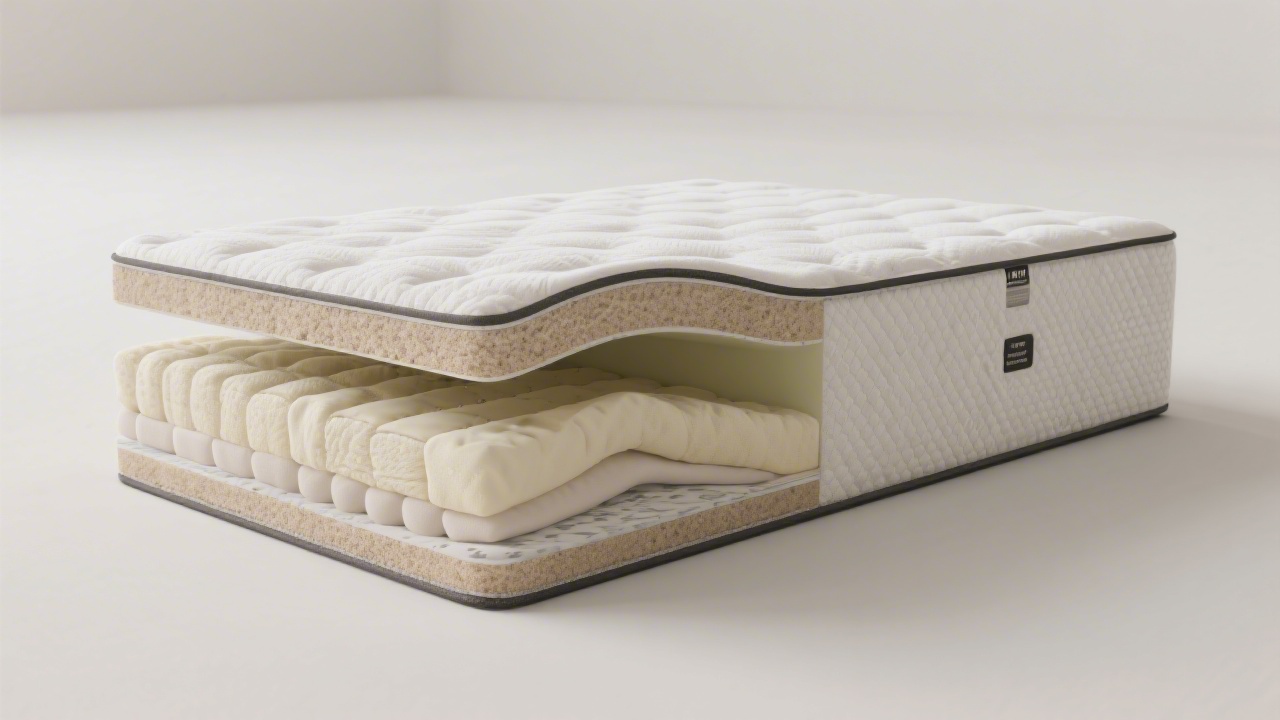
In a multi-layer mattress, construction typically follows a gradient from soft at the surface to firm at the base. The transition layer — sometimes also called the "intermediate layer" or "foundation layer" — is the middle section that bridges this gradient. It is firmer than the comfort materials above it but softer than the support core below.
Not every mattress manufacturer uses this terminology, but the functional concept is universal in quality mattress construction. A mattress with an abrupt transition from very soft comfort layers to a very firm support core will produce the "bottoming out" sensation: the initial softness suddenly gives way to a hard underlying structure. A transition layer eliminates this problem by creating a gradual firmness gradient.
Why Transition Layers Matter More for Certain Sleepers
The transition layer's importance scales with body weight and the softness of the comfort layer above it. A lightweight sleeper on a medium-firm mattress may never compress into the transition zone during normal sleep. A heavier sleeper on a plush mattress will compress deeply into the comfort layers and will directly experience the transition layer every night.
For this reason:
- Heavier sleepers (200+ lbs) should prioritize mattresses with clearly specified, durable transition layers
- Plush/soft mattresses require better-engineered transition layers to remain supportive
- Back and stomach sleepers who need spinal alignment support will feel poor transition layer construction as lower back discomfort
Transition Layer Materials and What They Deliver
High-Resilience (HR) Foam
HR foam is the premium choice for transition layers. It has higher density than standard polyfoam (2.5-3.5 PCF range), better compression set resistance, and a "lively" feel that pushes back proportionally to weight rather than gradually sinking. HR foam transition layers perform well for a wide weight range and age more gracefully than standard polyfoam.
Standard Polyfoam (Medium-Density)
Most mid-range mattresses use a 2-2.5 PCF polyfoam transition layer. This is adequate for average-weight sleepers on medium-firm mattresses. It becomes the weakest durability point of the mattress over time — compressed polyfoam is the primary cause of premature sagging. If a mattress spec sheet does not state the density of the transition layer foam, treat this as a potential durability concern.
Latex
A latex transition layer is found in premium hybrid and all-latex mattresses. Latex's natural resilience and durability make it excellent in this position — it provides meaningful support without feeling hard, and it outlasts both polyfoam and HR foam under long-term use. It also does not retain heat, keeping the transition zone from contributing to warmth buildup.
Firmer Comfort Layer Foam
Some mattresses use two comfort layers with different firmness levels — a softer top and a firmer bottom — rather than a distinct transition layer. This approach is common in mattresses with complex "zoning" (different firmness in different body zones). The net effect is similar, but a dedicated transition layer typically performs better under heavier loads.
Reading Mattress Layer Diagrams
When evaluating a mattress, the layer diagram is among the most useful available information — if you know what to look for:
- Layer count: Premium mattresses typically have 4-7 layers. 2-3 layers is typical for budget products and usually means a thin comfort layer directly on a polyfoam base with no transition zone.
- Layer thickness: Transition layers are typically 1-2 inches. A transition layer of less than 1 inch provides minimal buffering.
- Specified density/ILD: Any layer without a published density or ILD (Indentation Load Deflection) value is a potential quality unknown. Premium brands specify these numbers because they are verifiable.
- Material names: "High-resilience foam," "bio-based foam," "contouring foam" are trademarked or marketing names. Translate these to material type (polyfoam, memory foam, latex) and look for the underlying density specification.
The Transition Layer in Saatva's Construction
In the Saatva Classic, the transition zone is provided by the interaction between the micro-coil comfort layer and the support coil base — neither is a foam layer, which eliminates the foam compression issue entirely. This is one advantage of dual-coil construction over foam-heavy designs: the natural firmness gradient between different gauge coil systems provides transition without relying on potentially degradable foam.
Related Guides
For more on construction, see our full hybrid mattress guide, our overview of memory foam mattress construction, and our mattress lifespan guide. Our best mattress for back pain covers how support structure — including the transition layer — affects spinal alignment.
Frequently Asked Questions
What is the transition layer in a mattress?
The transition layer is a middle layer positioned between the soft comfort layers and the firm support core. Its purpose is to provide a gradual firmness gradient — moderating the feel between the very soft surface and the firm base. It prevents the feeling of hitting a hard surface through the comfort layers, which is called 'bottoming out.'
What materials are used in mattress transition layers?
The most common transition layer materials are: medium-density polyfoam (2.5-3 PCF) for affordable mattresses, high-resilience (HR) foam for responsive feel, latex foam for premium mattresses, and in some constructions, a slightly firmer version of the same foam used in the comfort layers. The key characteristic is intermediate firmness — firmer than the comfort layer, softer than the support core.
Not all mattresses have a named transition layer — why?
Some mattress brands do not label a layer as a 'transition layer' even when one exists. In budget mattresses, the comfort layer material may simply be firmer at the bottom (a density gradient within a single layer) rather than a distinct separate layer. In premium multi-layer constructions, the transition layer is typically a distinct, named component with specified density and ILD.
How does the transition layer affect firmness?
A thicker, firmer transition layer makes the mattress feel firmer overall because it activates sooner under body weight. A thinner or softer transition layer allows the sleeper to compress further into the comfort layers before reaching resistance. Brands that offer multiple firmness options (soft/medium/firm) often achieve the differences partly by varying transition layer density.
What happens without a transition layer?
Without a transition layer, there is an abrupt firmness change between the soft comfort layer and the firm support core. This can produce the 'bottoming out' sensation where the soft top suddenly gives way to a hard surface. For heavier sleepers especially, a well-engineered transition layer prevents this and produces a more consistent feel throughout the night.
Our Recommendation
Saatva Classic
Dual-coil innerspring with Euro pillow top — handcrafted in the USA.
Starting at $1,174 • Free white-glove delivery • 365-night trial