
 by
by Our pick: Saatva Classic
Consistently top-rated for construction quality and independently verified coil/foam specs.
What Zoned Support Actually Means
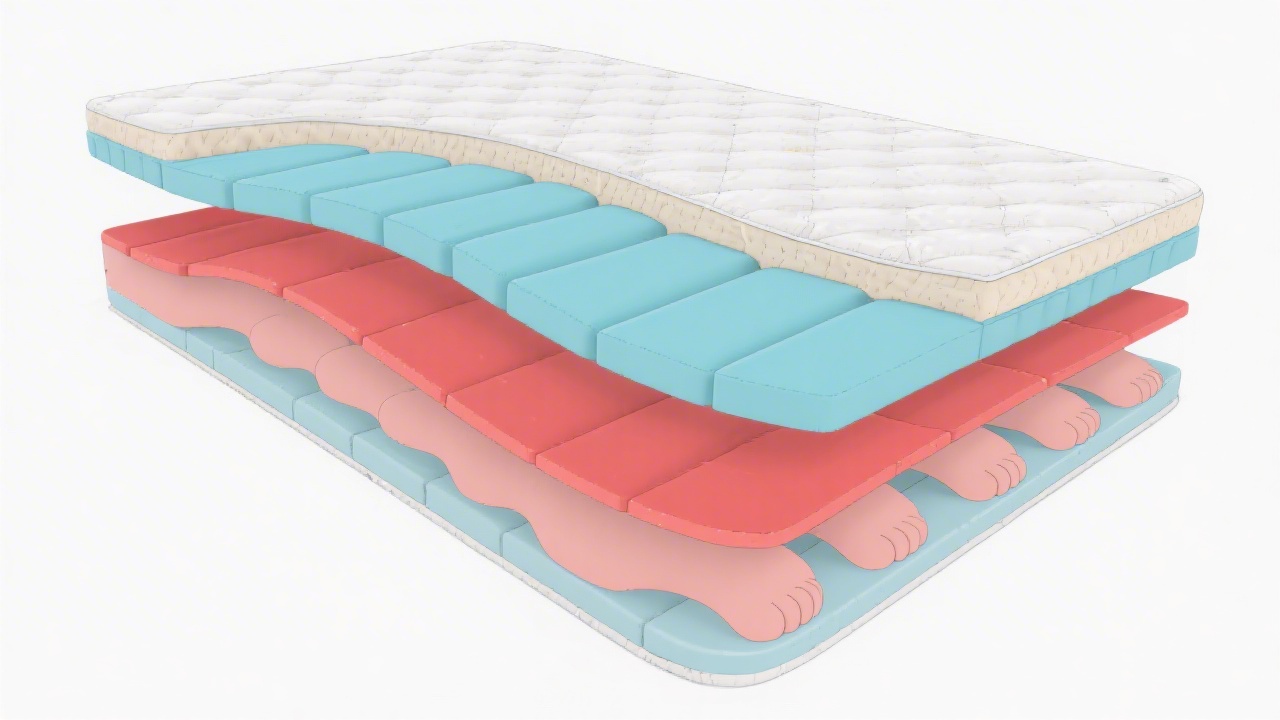
A zoned mattress varies its firmness or resistance in different areas of the sleeping surface to better match the body's actual pressure and support needs. The concept is straightforward: your shoulders and hips need to sink into the mattress to keep your spine aligned, while your lumbar (lower back) and waist need firmer support to prevent sag.
A flat, uniform surface — regardless of whether it's soft or firm — treats every body part identically. Zones are the engineering response to the fact that a 180-lb person's hips and shoulders have different support requirements than their calves or head.
How Brands Achieve Zones
There are several distinct techniques, and they produce meaningfully different results:
Variable coil gauge: The most effective method in hybrid mattresses. Different zones use coils of different wire thickness — typically 13-gauge (firmer) coils under the lumbar and hips, and 15-gauge (softer) coils under the shoulders. This creates zones at the spring level without any seams or transitions the sleeper can feel.
Coil density variation: More coils per square inch in support areas, fewer in pressure-relief areas. Less common than gauge variation but used by several manufacturers.
Foam cutouts and channel cuts: Some foam mattresses achieve zones by cutting channels or notches in the foam layers — softer areas have more cut material, firmer areas are solid. This works but can create a "lumpy" transition if not executed precisely.
Layer composition variation: Different foam types or densities in different zones. A firmer polyfoam zone under the lumbar, softer memory foam in the shoulder area. Used by several all-foam brands.
Talalay latex zoning: Talalay latex can be manufactured with varying ILD (firmness) across the same piece. This is expensive but creates very smooth zone transitions. Common in premium latex mattresses.
Which Zones Matter for Which Sleep Position
Zone benefits aren't universal — what helps a side sleeper may be irrelevant to a back sleeper:
| Sleep Position | Priority Zones | Why |
|---|---|---|
| Side sleeper | Shoulder & hip relief | Shoulders and hips are pressure points — need to sink in without spine curvature |
| Back sleeper | Lumbar support | Gap at the lumbar arch needs firmer support to prevent sag |
| Stomach sleeper | Hip/pelvis firmness | Hips sinking causes lumbar hyperextension — firmer hip zone prevents this |
| Combination sleeper | All zones, balanced | Benefits from zones across the surface; transitions between zones matter most |
The 5-Zone vs 7-Zone Debate
Some brands advertise 5-zone, 7-zone, or even 9-zone systems. More zones are theoretically better because they offer finer precision — but in practice, the benefit diminishes above 5 or 6 zones for most sleepers.
The zones that genuinely change sleep quality are: shoulder pressure relief, lumbar support, and hip support. Head, leg, and ankle zones are real but have lower impact. When evaluating zone claims, ask where the zones are and what method creates them — a "9-zone" foam mattress with imprecise channel cuts may be less effective than a well-designed "5-zone" variable-gauge coil system.
When Zoning Is Worth Paying For — and When It's Not
Zoned support provides the most value for:
- Side sleepers, who consistently have the most differentiated pressure needs
- Sleepers with back or hip pain, who benefit from targeted lumbar or hip support
- Couples with significant weight differences — standard zones help calibrate to one sleeper; dual-zone systems can address both
Zoning adds less value for:
- Stomach sleepers who primarily need uniform firmness
- Very lightweight sleepers (under 130 lbs) who don't exert enough pressure to need differentiated zones
- Sleepers who already use a quality adjustable base that compensates for body shape
For coil-based zone systems, see our pocketed coils guide. For cover interactions with zones, see our cover materials page. General back pain context in our best mattress for back pain review.
Our pick: Saatva Classic
Consistently top-rated for construction quality and independently verified coil/foam specs.
Frequently Asked Questions
Voted best luxury innerspring mattress with exceptional lumbar support and white-glove delivery.
Check Price & Availability FAQPage", "mainEntity": [ {"@type":"Question","name":"How many zones does a mattress need?","acceptedAnswer":{"@type":"Answer","text":"Five zones that precisely target shoulders, lumbar, and hips are more effective than seven or nine zones that are imprecisely defined. The method of zoning matters as much as the number of zones."}}, {"@type":"Question","name":"Is a zoned mattress better for back pain?","acceptedAnswer":{"@type":"Answer","text":"Yes, specifically for back sleepers and side sleepers with lower back pain. Firmer lumbar zones prevent the lower back from sinking into a gap, which is a primary cause of position-related back pain."}}, {"@type":"Question","name":"Do zoned mattresses feel lumpy?","acceptedAnswer":{"@type":"Answer","text":"Well-engineered zoned mattresses don't feel lumpy — the transitions are gradual and designed to be imperceptible. Foam mattresses with crudely cut channel zones can sometimes have a noticeable transition. Variable-gauge coil zones are the smoothest."}}, {"@type":"Question","name":"Do couples need a zoned mattress?","acceptedAnswer":{"@type":"Answer","text":"Couples with significant weight differences benefit most from a zoned system. Standard zones are calibrated for average adult proportions. Some split-firmness hybrid systems offer true per-side zone customization."}}, {"@type":"Question","name":"What is lumbar zone enhancement?","acceptedAnswer":{"@type":"Answer","text":"Lumbar zone enhancement is a specific firming of the coil or foam layer in the lower-back area — roughly the center third of the mattress. It prevents the lower back from sinking and maintains spinal alignment for back and side sleepers."}} ] }How many zones does a mattress need?
Five precisely targeted zones covering shoulders, lumbar, and hips are more effective than seven or nine imprecisely defined zones. The method matters as much as the count.
Is a zoned mattress better for back pain?
Yes, particularly for back sleepers and side sleepers with lower back pain. Firmer lumbar zones prevent the lower back from sinking — a primary cause of position-related back pain.
Do zoned mattresses feel lumpy?
Variable-gauge coil zones feel seamless. Foam mattresses with crudely cut channel zones can sometimes have a noticeable transition, but quality engineering should make zones imperceptible during sleep.
Do couples need a zoned mattress?
Couples with significant weight differences benefit most. Standard zones are calibrated for average adult proportions. Split-firmness hybrids can offer true per-side zone customization.
What is lumbar zone enhancement?
Firming of the coil or foam layer in the lower-back area (roughly the center third of the mattress) to prevent the lumbar from sinking and maintain spinal alignment for back and side sleepers.