
 by
by Ready for better sleep?
The mattress you sleep on shapes every night's rest. Saatva's luxury innerspring delivers orthopedic support with Euro pillow-top comfort — trusted by sleep-focused households.
Researchers studying sleep quality across populations consistently find one dietary pattern linked to measurably better rest: the Mediterranean diet. Multiple large cohort studies show adherents fall asleep faster, sleep longer, and report higher sleep satisfaction than their Western-diet counterparts. This is not a marginal finding — the associations hold across European, American, and East Asian populations after controlling for exercise, income, and age.
What the Research Actually Shows
A 2020 analysis published in Nutrients followed 1,639 adults in Spain and found that higher Mediterranean Diet Score (MDS) was associated with a 35% lower likelihood of poor sleep quality (Pittsburgh Sleep Quality Index score >5). A separate Greek cohort of 3,042 participants found Mediterranean diet adherents had 65% lower odds of daytime sleepiness — suggesting improved nighttime sleep quality rather than simply sleeping more hours.
The ATTICA study, following 853 adults over 10 years, found that those with high Mediterranean diet adherence had significantly better sleep duration and quality even after accounting for BMI, physical activity, and smoking status.
The Three Mechanisms That Matter
1. Omega-3 Fatty Acids and Melatonin Synthesis
Fatty fish, a Mediterranean staple consumed 2–3 times weekly, delivers EPA and DHA. DHA is a structural component of the brain's pineal gland, where melatonin is synthesized. Higher DHA levels correlate with higher nocturnal melatonin output. A UK study of school-age children found that DHA supplementation increased sleep by 58 minutes per night — a remarkable effect size for a nutritional intervention.
2. Polyphenols and the Gut-Brain Axis
Olive oil, red wine (in moderation), berries, and legumes provide abundant polyphenols — particularly resveratrol and quercetin. These compounds modulate gut microbiome composition, and emerging research shows the gut-brain axis regulates sleep through serotonin production. Approximately 90% of the body's serotonin is produced in the gut, and serotonin is the precursor to melatonin.
3. Tryptophan Load and Timing
The Mediterranean diet is naturally rich in tryptophan sources: fish, turkey, legumes, nuts, and seeds. Tryptophan is the sole dietary precursor to serotonin and melatonin. Critically, tryptophan's conversion is enhanced by carbohydrates (which reduce competing amino acids in the bloodstream) — and the Mediterranean diet pairs tryptophan sources with complex carbohydrates from whole grains and legumes rather than refined sugars.
Key Foods That Drive the Sleep Benefit
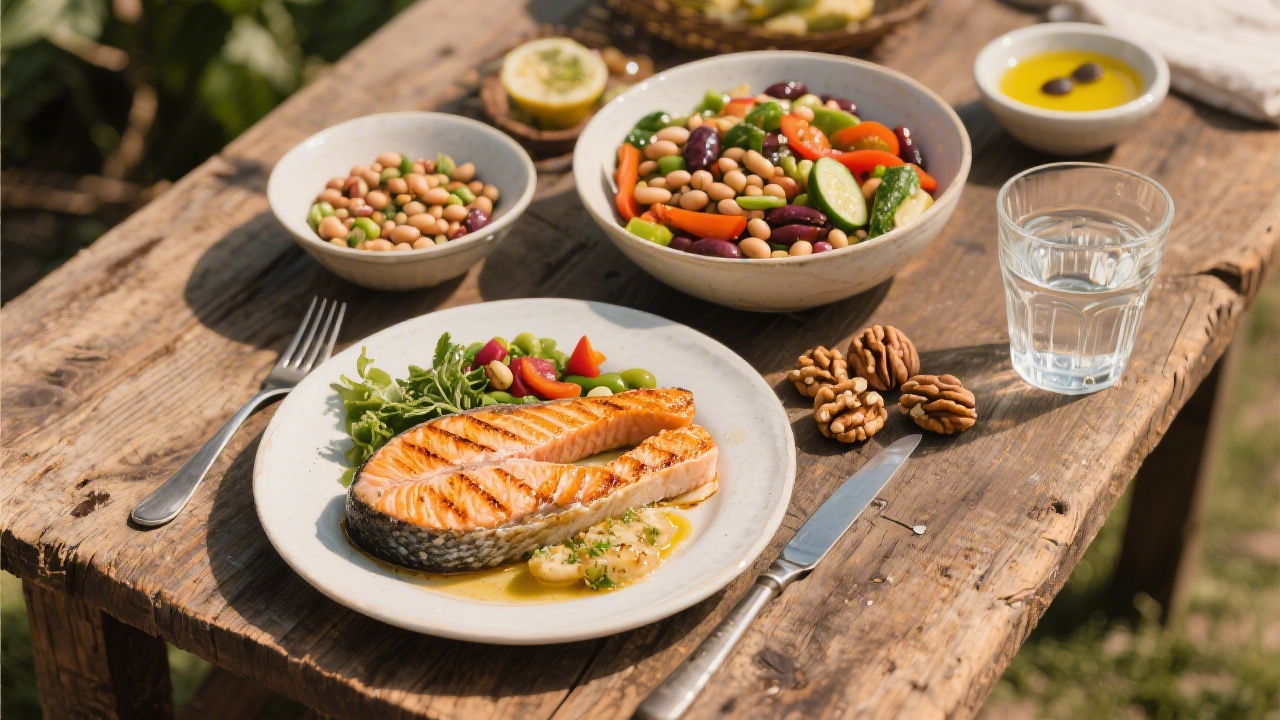
- Fatty fish (salmon, sardines, mackerel): DHA directly supports melatonin synthesis; also provides vitamin D, which is independently linked to better sleep quality.
- Extra-virgin olive oil: Oleocanthal, a phenolic compound, has anti-inflammatory properties that reduce nighttime cortisol and joint discomfort that can fragment sleep.
- Walnuts: The only nut with meaningful melatonin content plus omega-3 ALA and tryptophan — effectively a sleep-support food in one package.
- Cherries and berries: Natural melatonin sources (tart cherry juice is the most concentrated dietary source of melatonin documented in research).
- Legumes: High magnesium and tryptophan; magnesium deficiency is associated with insomnia and restless sleep in multiple trials.
What the Mediterranean Diet Avoids (and Why That Matters)
The sleep benefit is partly about what the Mediterranean diet excludes. High-glycemic processed foods cause blood sugar spikes that trigger cortisol release — a hormone that directly suppresses melatonin. Processed meat is high in sodium and nitrates, both associated with sleep disruption. The Mediterranean diet's natural restriction of these foods removes sleep inhibitors, not just adds sleep promoters.
How to Implement for Sleep
You do not need to follow the Mediterranean diet perfectly to capture sleep benefits. Research suggests incremental adoption matters. Start with these highest-impact changes:
- Replace one red meat meal per week with fatty fish
- Switch from vegetable oil to extra-virgin olive oil as your primary cooking fat
- Add a small handful of walnuts or almonds as a late-afternoon snack
- Include legumes (lentils, chickpeas) in 3–4 meals per week
- Eat dinner at least 2–3 hours before bed to allow core temperature to drop
For a deeper look at how eating timing interacts with sleep quality, see our guide on late-night eating and sleep. For the specific omega-3 mechanisms in detail, see omega-3 fatty acids and sleep. Understanding your circadian rhythms also plays a role — our sleep genetics guide covers how individual variation affects your dietary response.
Frequently Asked Questions
How long does it take for the Mediterranean diet to improve sleep?
Most research shows measurable improvements in sleep quality within 4–8 weeks of sustained Mediterranean diet adherence. The gut microbiome changes that underlie the sleep benefit take time — the microbiome substantially remodels over 4–6 weeks of consistent dietary change. Some effects, like the tryptophan-melatonin pathway, can be felt within days of increasing omega-3-rich fish consumption.
Does red wine in the Mediterranean diet help sleep?
This is nuanced. Resveratrol in red wine has beneficial effects on sleep architecture in some studies. However, alcohol itself — even in small amounts — suppresses REM sleep and causes sleep fragmentation in the second half of the night. The Mediterranean diet traditionally includes modest red wine with meals (not before bed). If you are specifically optimizing for sleep, grape juice provides resveratrol without the alcohol disruption.
Can the Mediterranean diet help with sleep apnea?
Indirectly, yes. Obstructive sleep apnea severity correlates strongly with body weight and systemic inflammation. The Mediterranean diet's anti-inflammatory profile and moderate weight management effects can reduce OSA severity over time. A 2020 study found Mediterranean diet adherence was associated with less severe sleep-disordered breathing. However, moderate-to-severe sleep apnea requires medical treatment — diet alone is insufficient.
Is the Mediterranean diet sleep benefit just because it's associated with healthier lifestyles?
Researchers have specifically tested this. Studies that control for physical activity, smoking, socioeconomic status, BMI, and mental health still find an independent association between Mediterranean diet adherence and sleep quality. The biological mechanisms (omega-3/melatonin, polyphenol/gut-brain axis, tryptophan pathways) are well-documented enough that the association is likely causal, not just confounded.
Which specific Mediterranean foods have the strongest sleep evidence?
Fatty fish (especially salmon and sardines) has the strongest direct evidence via the DHA-melatonin pathway. Tart cherries have the most documented melatonin content of any food. Walnuts contain melatonin, omega-3 ALA, and tryptophan. Kiwi fruit has shown impressive results in clinical trials — two kiwis consumed 1 hour before bed improved sleep onset and duration in a New Zealand study.
Ready for better sleep?
The mattress you sleep on shapes every night's rest. Saatva's luxury innerspring delivers orthopedic support with Euro pillow-top comfort — trusted by sleep-focused households.
Our Top Mattress Pick
The Saatva Classic consistently ranks #1 for comfort, support, and long-term durability.
Key Takeaways
Mediterranean Diet and Sleep is a topic that depends heavily on individual needs and preferences. The most important thing is to consider your specific situation — your body type, sleep position, and personal comfort preferences — before making any decisions. When in doubt, take advantage of trial periods to test before committing.