
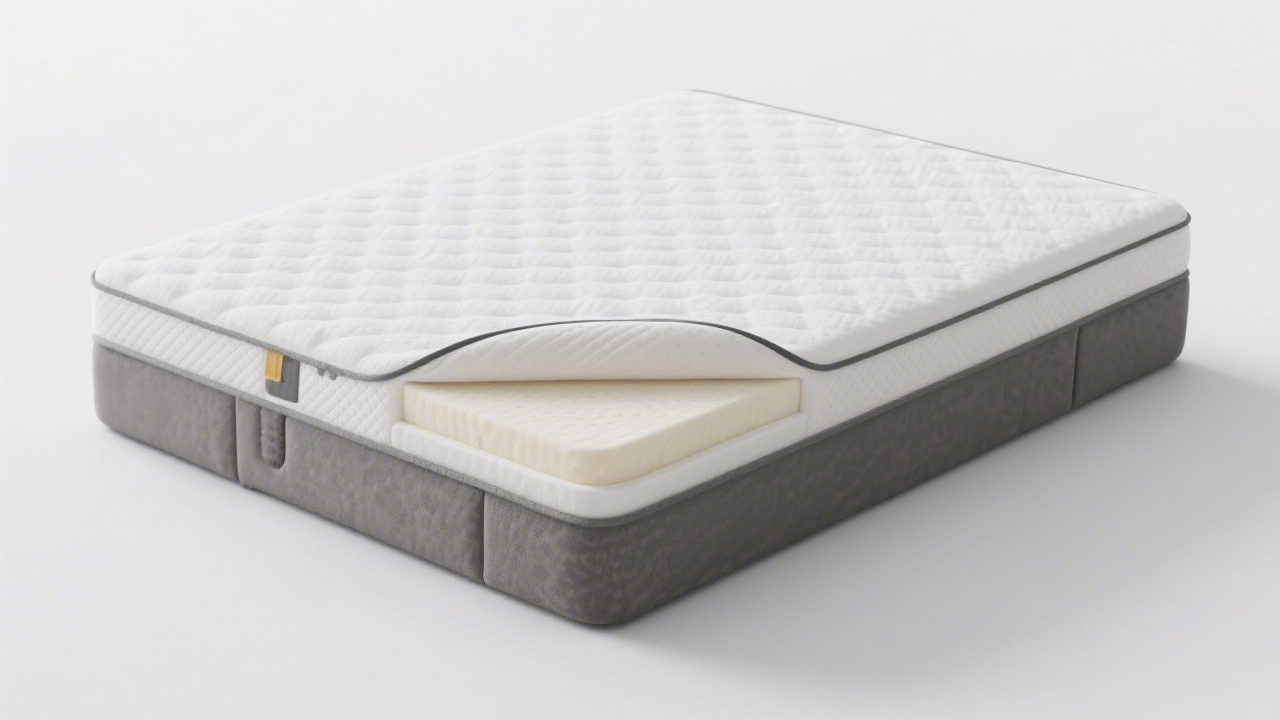
 by
by Memory Foam Lifespan: What the Industry Won't Tell You
Memory foam mattress manufacturers typically advertise 10-year lifespans. The honest answer is more nuanced: quality foam lasts 7–10 years, average foam lasts 5–7 years, and budget foam can degrade noticeably in under 5 years. The single most important variable is foam density — a spec rarely mentioned in mainstream mattress ads.
Our Top Pick
Saatva Loom & Leaf — Premium Memory Foam Built to Last
5-pound density organic cotton cover, cooling gel layer. Designed for 8+ years of performance.
The Density Rule: The Number That Actually Predicts Lifespan
Memory foam is rated by density in pounds per cubic foot (lb/ft³). This measures how much foam material exists per unit of volume, which directly determines durability and pressure response.
- 2–3 lb/ft³ (budget): Found in off-brand and ultra-budget mattresses. Noticeable softening within 3–5 years. Compression recovery slows noticeably after 2–3 years of regular use.
- 4 lb/ft³ (standard quality): The baseline for quality memory foam mattresses. Typically provides 6–8 years of good performance before degradation becomes sleep-affecting.
- 5 lb/ft³ and above (premium): Found in higher-end models. 8–12 year lifespan is realistic with proper care. Better heat dissipation and pressure response throughout its life.
When evaluating a memory foam mattress, ask specifically for the foam density spec — not just "high density" marketing language. Brands that won't disclose density are typically using lower-density materials.
What Accelerates Memory Foam Wear
Several factors accelerate degradation beyond the density baseline:
Heat exposure: Memory foam softens and breaks down faster when sleeping warm. Hot sleepers who consistently sleep at 80°F+ surface temperature compress the foam more deeply per cycle. Cooling covers and gel layers help but do not eliminate this effect.
Body weight: Every pound of body weight multiplies over thousands of sleep cycles. Sleepers over 230 pounds compress standard memory foam at loads it was not optimized for. Higher-density foam and hybrid constructions (foam + coils) are better choices for durability at higher weights.
Moisture: Memory foam is not resistant to moisture. Sweat that reaches the foam layer accelerates breakdown at the cellular level. A quality mattress protector that allows airflow while blocking liquid is essential.
Inadequate support: Placing memory foam on a slatted base with slats more than 2.5–3 inches apart creates localized compression points. The foam is unsupported in those gaps and degrades faster than foam on solid or closely-slatted foundations.
The Signs Memory Foam Has Expired
Memory foam degradation is gradual, which is why many sleepers do not realize their mattress has failed — they have just adapted to declining sleep quality. Watch for:
- Indentations deeper than 1 inch that persist after standing — the foam no longer fully recovers
- Sleeping noticeably warmer than in the first year — compressed foam blocks airflow
- Rebound taking more than 3–4 seconds after pressing with your hand
- Increased morning lower back or hip pain that improves after being up for an hour
- Visible surface unevenness at sleeping positions that does not smooth out
Gel Memory Foam: Better Comfort, Same Lifespan
Gel memory foam — whether gel beads mixed in or gel swirl poured through the foam during manufacturing — is a thermal regulation technology, not a durability improvement. The underlying foam chemistry is the same. Gel foam of 4 lb/ft³ density will last approximately as long as regular foam of 4 lb/ft³ density. The gel additive does not strengthen the foam structure.
How to Extend Memory Foam Lifespan
- Use a breathable waterproof mattress protector from day one
- Rotate 180 degrees every 6 months (memory foam is not flippable — one-sided construction)
- Ensure foundation slats are no more than 2.5–3 inches apart
- Keep bedroom temperature at or below 72°F when possible
- Allow the mattress to air out (remove protector and sheets for 2–3 hours monthly)
Our Top Pick
Saatva Loom & Leaf — Premium Memory Foam Built to Last
5-pound density organic cotton cover, cooling gel layer. Designed for 8+ years of performance.
Related Guides
Innerspring Mattress Lifespan | Mattress Sinking: Sagging vs. Softening | Mattress Foundation Guide 2026 | Mattress Too Soft: Quick Fixes
Frequently Asked Questions
How long does memory foam actually last?
Quality memory foam mattresses (4+ pound density) typically last 7–10 years. Budget memory foam (2–3 pound density) often degrades noticeably within 4–6 years. Density is the single strongest predictor of memory foam longevity.
Does gel memory foam last longer than regular memory foam?
No. The gel beads or gel swirl added to memory foam are a thermal regulation feature, not a durability improvement. The base foam density still determines lifespan. Gel memory foam of the same density as regular memory foam will wear out at roughly the same rate.
What are the signs that memory foam has expired?
The primary signs are: the mattress no longer returns to its original flat shape within a few seconds of standing (slow or incomplete rebound), sleeping warmer than before (compressed foam loses airflow), visible indentations deeper than 1 inch that persist when unoccupied, and increased morning stiffness or back pain.
Does body weight affect memory foam lifespan?
Yes significantly. For sleepers over 230 pounds, memory foam compresses at a higher load per night. Standard density foam (4 lb/ft³) is designed for average weight ranges. Heavier sleepers should look for 5 lb/ft³ or higher density foam, and should expect to replace memory foam mattresses 1–2 years sooner.
Can you extend the life of a memory foam mattress?
Yes. Use a breathable mattress protector (waterproof protectors that trap heat accelerate degradation). Rotate 180 degrees every 6 months. Ensure adequate foundation support — memory foam on slats more than 3 inches apart develops localized compression points faster. Keep the room below 72°F when possible, as heat accelerates foam softening.