
 by
by Editor’s Top Pick
Saatva Classic
Best overall mattress — innerspring comfort, 365-night trial, lifetime warranty.
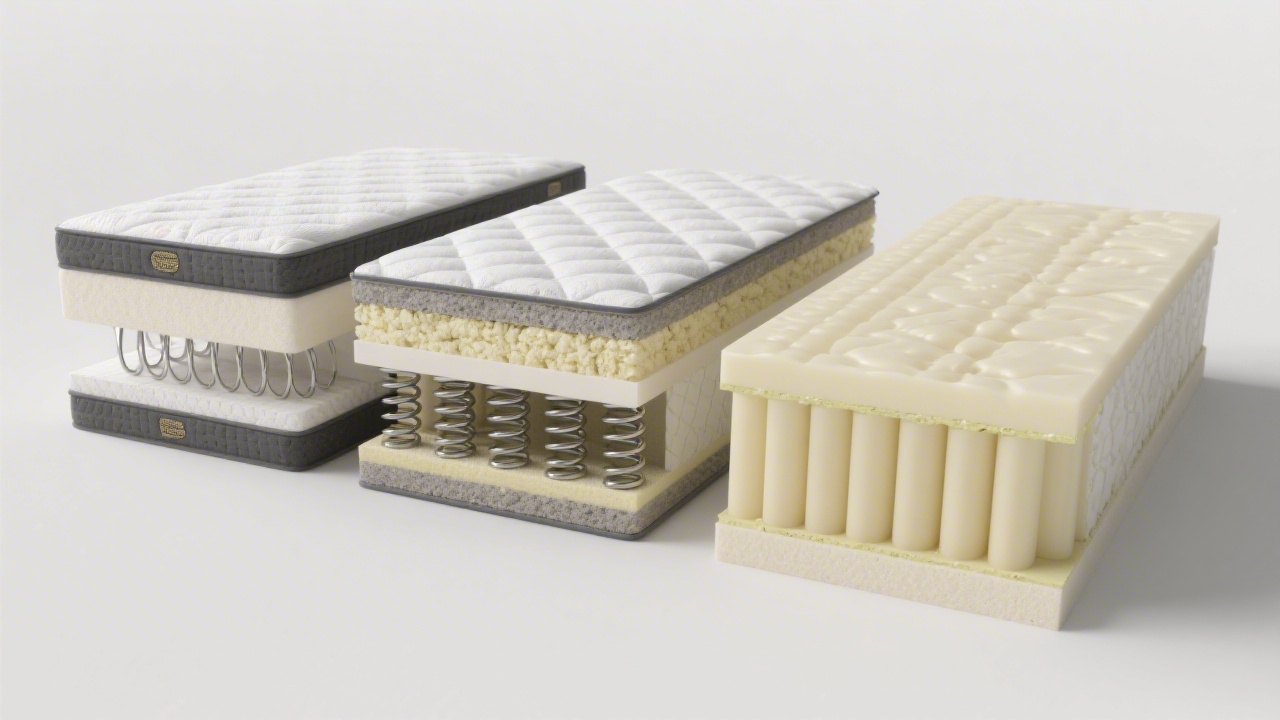
The Three Technologies That Dominate Mattresses in 2026
Every mattress sold today is built on one of three core technologies: memory foam, hybrid (foam or latex comfort layers over a coil support core), or natural latex. Each has genuine strengths. Each has real weaknesses. This comparison breaks down all three across the eight criteria that matter most: pressure relief, cooling, durability, motion isolation, edge support, eco credentials, price, and trial/warranty value.
Pros and Cons
What We Like
- Luxury innerspring with excellent lumbar support
- Multiple firmness options available
- Free white-glove delivery and mattress removal
- 365-night trial and lifetime warranty
What Could Be Better
- Higher price than many online brands
- Heavier than foam mattresses
- Not compressed in a box
- Some off-gassing possible initially
Side-by-Side Comparison: All 8 Criteria
| Criterion | Memory Foam | Hybrid | Natural Latex |
|---|---|---|---|
| Pressure Relief | Excellent (5/5) | Good (4/5) | Very Good (4.5/5) |
| Cooling | Poor (2/5) | Good (4/5) | Very Good (4.5/5) |
| Durability | Moderate (3/5) | Good (4/5) | Excellent (5/5) |
| Motion Isolation | Excellent (5/5) | Good (4/5) | Good (4/5) |
| Edge Support | Poor (2/5) | Very Good (4.5/5) | Good (4/5) |
| Eco Credentials | Poor (2/5) | Varies (3/5) | Excellent (5/5) |
| Price (Queen) | $600–$1,200 | $900–$2,100 | $1,200–$2,500 |
| Trial/Warranty | Varies | Varies | Varies |
Memory Foam: The Pressure Relief Specialist
Memory foam remains the undisputed leader in pressure relief. The viscoelastic material conforms precisely to body contours, distributing weight across the full contact surface. For side sleepers with shoulder and hip pressure, memory foam often eliminates the pressure points that cause waking. The core problem with memory foam is heat retention. Dense foam traps body heat because it does not allow air circulation. Most manufacturers address this with cooling gel or copper infusions, with varying effectiveness.
Edge support is memory foam’s second weakness. The compressible nature of foam means the edge compresses significantly under sitting pressure. For couples who use the full mattress width, this is a practical daily issue. Best memory foam for 2026: Nectar Premier Copper (best value), Tempur-Pedic TEMPUR-Adapt (best performance).
Hybrid: The Balanced All-Rounder
Hybrid mattresses combine a pocketed coil support core with comfort layers of foam, latex, or both. The coil system provides airflow, edge support, and responsive bounce. The comfort layers provide the pressure relief that pure innerspring mattresses lack. This combination makes hybrids the most versatile mattress type available. Back sleepers get coil support with foam cushioning. Side sleepers get enough softness in the comfort layers. Couples get better edge support and less motion transfer than traditional innerspring mattresses.
Hybrids are the dominant category in the premium market for a reason: they do everything well. The trade-off is cost. Quality hybrids start around $900 queen and scale to $2,500+. Best hybrid for 2026: Saatva Classic (best overall), Helix Midnight Luxe (best for side sleepers), WinkBeds Plus (best for heavy sleepers).
Natural Latex: The Durability and Eco Leader
Natural latex is harvested from rubber trees and processed via either the Dunlop or Talalay method. Dunlop latex is denser and more durable. Talalay latex is softer and more consistent. Both outlast foam significantly: quality natural latex mattresses routinely last 15–20 years. Latex has a distinctive feel. It is buoyant and responsive, not conforming like memory foam. You sleep on top of a latex mattress rather than into it. This makes it excellent for combination sleepers who change position during the night.
Eco credentials are latex’s strongest differentiator. GOLS-certified organic latex (Avocado Green, Birch Natural) ensures sustainable harvesting and no synthetic additives. The price premium is real: quality latex mattresses start at $1,200 and can reach $3,000+. Best latex for 2026: Avocado Green (best organic), Birch Natural (best for eco-conscious couples).
Which Type Should You Buy?
The answer depends on your primary concern. If pressure relief is paramount: memory foam or a very soft hybrid. If you sleep hot and need cooling: hybrid or natural latex, not dense memory foam. If durability is your priority and budget allows: natural latex. If you want the best all-around performance and delivery experience: hybrid, specifically the Saatva Classic.
Related Guides
- Saatva Classic Review
- Best Latex Mattress
- Best Hybrid Mattress
- Best Memory Foam Mattress
- Saatva Latex Hybrid Review
Editor’s Top Pick
Saatva Classic
Best overall mattress — innerspring comfort, 365-night trial, lifetime warranty.
Frequently Asked Questions
Is memory foam or hybrid better for back pain?
For most back pain sufferers, a hybrid mattress offers the better balance. Hybrid coils provide the spinal support and pushback needed for neutral spine alignment, while comfort foam layers cushion pressure points. Memory foam alone can cause excessive sinking around the lumbar area, reducing support.
Does latex sleep cooler than memory foam?
Yes. Natural latex is inherently more breathable than traditional memory foam due to its open-cell structure and natural aeration channels. It also recovers faster, reducing the heat-trapping sinking sensation associated with dense memory foam.
How long does each mattress type last?
Natural latex mattresses have the longest lifespan, typically 12–20 years. Quality innerspring hybrids last 8–12 years. Traditional memory foam mattresses typically show significant body impression at 6–8 years.
Which is better for motion isolation: memory foam or hybrid?
Memory foam provides the best motion isolation of the three types. Its slow-response material absorbs movement rather than transmitting it. Hybrid mattresses transmit slightly more motion due to coil interconnection, though individually wrapped pocketed coils reduce this significantly.
Which mattress type is best for heavy sleepers?
Hybrid mattresses are generally best for heavy sleepers (230+ lbs) because the coil support core provides more durable, consistent support than foam alone. High-density memory foam and natural latex can also support heavier weights well, but the hybrid construction handles long-term compression better for most body types.
The Verdict: Who Should Choose Which?
Choose Memory Foam if: You prioritize the specific technology and design philosophy that Memory Foam brings to the table. Check their latest pricing and promotions to see current value.
Choose Hybrid vs Latex Mattress if: You prefer what Hybrid vs Latex Mattress offers in terms of construction, materials, and sleep experience. Compare trial periods and warranties before deciding.
Both mattresses serve different sleep needs well. The right choice depends on your body type, sleep position, and personal comfort preferences rather than which brand is objectively better.