
 by
by The memory foam vs. spring debate has a more nuanced answer than most guides suggest. Neither is universally better — they're built for different sleep needs. But for most adult sleepers, a well-constructed hybrid that combines both materials outperforms either in isolation.
Here's how they compare on the dimensions that actually matter for sleep quality.
Saatva Classic → Dual-coil support + Euro pillow top. The hybrid that outperforms both all-foam and basic innerspring. From $1,595.
Head-to-Head Comparison
| Category | Memory Foam | Innerspring | Hybrid |
|---|---|---|---|
| Pressure Relief | ★★★★★ | ★★★ | ★★★★ |
| Cooling | ★★ | ★★★★★ | ★★★★ |
| Motion Isolation | ★★★★★ | ★★ | ★★★★ |
| Edge Support | ★★ | ★★★★ | ★★★★★ |
| Durability | ★★★ | ★★★★ | ★★★★ |
| Bounce / Responsiveness | ★ | ★★★★★ | ★★★★ |
Memory Foam: Who It's Best For
Memory foam excels at pressure relief and motion isolation. The viscoelastic material conforms to body contours, distributing weight evenly and reducing pressure point concentration. This makes it the best choice for:
- Side sleepers — who need hip and shoulder pressure relief
- Couples where one partner is a light sleeper — motion isolation prevents disturbance
- People with joint pain — pressure relief reduces morning stiffness in hips and shoulders
The main drawbacks: heat retention and low responsiveness. Memory foam traps body heat because it conforms closely with minimal airflow. Gel-infused and copper-infused memory foam improve this marginally but don't fully solve it. All-foam mattresses also have poor edge support — the perimeter compresses significantly when you sit on the edge of the bed.
Innerspring: Who It's Best For
Traditional innerspring mattresses (Bonnell coil, offset coil, continuous coil) are the most breathable mattress type — the coil layer creates natural airflow channels. They're also the most responsive and bouncy, making position changes easy. Best for:
- Hot sleepers — innerspring mattresses sleep significantly cooler than all-foam
- Combination sleepers — high responsiveness makes it easy to change positions
- People who want strong edge support — perimeter coil systems provide a solid edge
The main drawbacks: motion transfer and lower pressure relief. Interconnected coil systems transfer movement across the bed. Pressure relief is limited compared to foam — innerspring mattresses can create pressure points at hips and shoulders for side sleepers.
Why Hybrids Win for Most Sleepers
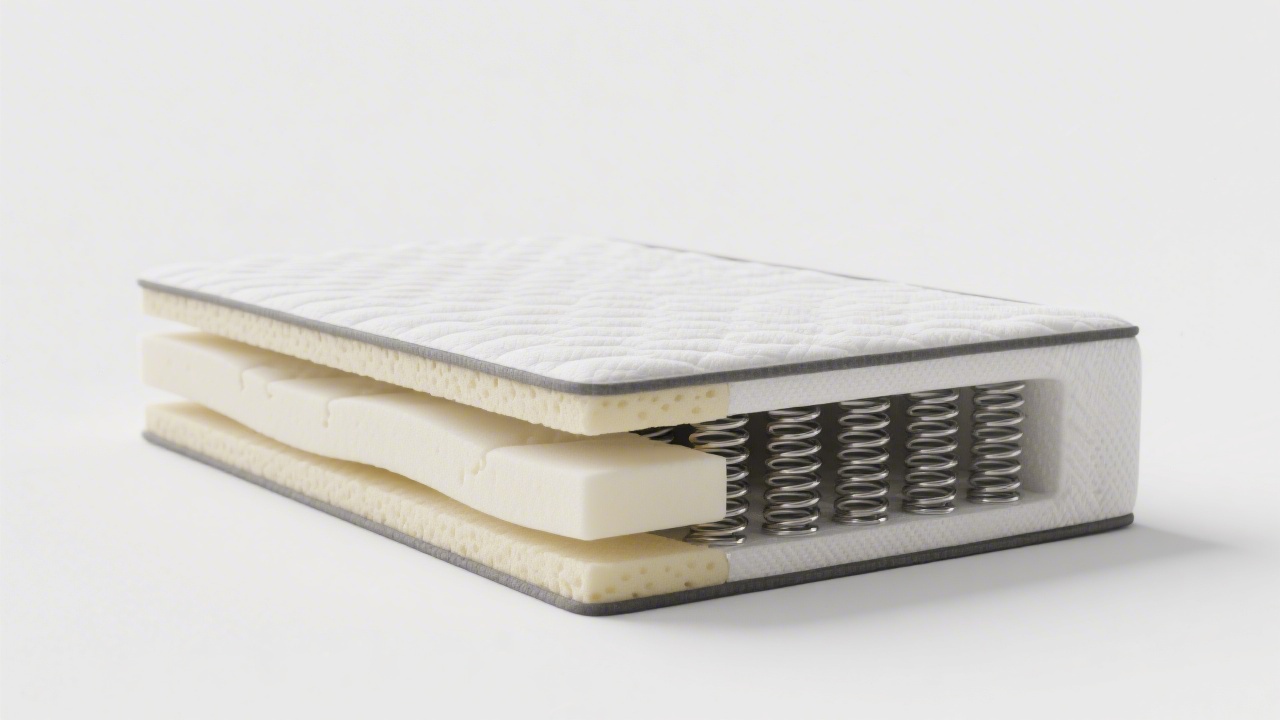
A hybrid mattress solves most of the drawbacks of both categories. A good hybrid (individually wrapped coil core + comfort foam layers) provides:
- Adequate pressure relief from foam comfort layers
- Better cooling than all-foam through the coil layer's airflow
- Better motion isolation than basic innerspring through individually wrapped coils
- Strong edge support from the perimeter coil system
- Responsive, easy position-changing from the coil core
The Saatva Classic is a premium example: dual-coil construction (individually wrapped coils over a tempered steel Bonnell base) paired with a Euro pillow top in organic cotton. The dual-coil design produces exceptional edge support while the euro top provides pressure relief without trapping heat.
Price Comparison
All-foam budget mattresses start around $300-$600 (queen). Mid-range all-foam (Casper, Nectar) runs $800-$1,200. Basic innerspring mattresses run $400-$800. Hybrid mattresses span the widest range: $800 budget end (DreamCloud) to $1,595+ for premium models like the Saatva Classic.
Saatva Classic → Dual-coil support, Euro pillow top, organic cotton. 365-night trial. From $1,595.
Related Guides
- Best Mattresses 2026 — Full Rankings
- Best Cooling Mattresses 2026
- Best Latex Mattress Toppers 2026
- Optimal Sleep Temperature
Frequently Asked Questions
Is memory foam or spring better for back pain?
For most back pain sufferers, a medium-firm hybrid is the best choice. Memory foam can be good for pressure relief but too-soft foam allows the hips to sink out of spinal alignment. A coil-supported hybrid provides spinal support (from the coils) and pressure relief (from comfort layers) simultaneously.
Does memory foam wear out faster than spring?
Memory foam typically shows body impressions earlier — dense foam (4+ lb/cu ft) lasts 7-10 years; lower-density foam (2-3 lb/cu ft) may sag within 5 years. Well-made innerspring and hybrid mattresses last 8-12 years. The longevity difference is real but depends heavily on foam density and coil gauge.
Which is better for couples: foam or spring?
Memory foam wins for motion isolation — if your partner moves at night, all-foam mattresses absorb that movement most effectively. A hybrid with individually wrapped coils comes second. Bonnell innerspring is the worst option for couples because interconnected coils transfer every movement.
Is an innerspring mattress bad for side sleepers?
Basic innerspring mattresses can create uncomfortable pressure at the hip and shoulder for side sleepers, especially lighter sleepers. A hybrid with a foam comfort layer over the coil core solves this — the foam provides pressure relief while the coils provide support.
Are spring mattresses outdated?
No. Premium innerspring and hybrid construction continues to evolve. Individually wrapped coil systems are far more sophisticated than older Bonnell designs — they respond independently to pressure, provide better motion isolation, and pair well with modern comfort materials. The high-end mattress market is predominantly hybrids, not all-foam.