
 by
by Looking for the right mattress to complete your sleep setup? The Saatva Classic mattress delivers hotel-quality sleep with free white-glove delivery.
Minimalism in the bedroom is not an aesthetic preference — it is a physiological strategy. The research on clutter, cortisol, and cognitive load is clear: a visually complex bedroom activates the brain's threat and decision systems, delaying the decompression necessary for sleep onset.
The Cortisol-Clutter Connection
A 2015 study by Saxbe and Repetti at the University of Southern California found that women who described their homes as cluttered showed elevated cortisol levels throughout the day — with the strongest effect in the bedroom. A 2021 follow-up confirmed the mechanism: visual complexity triggers the prefrontal cortex's object-recognition and task-association systems even passively, keeping the brain in a mild alert state.
This is why you can lie in bed in a cluttered room, eyes closed, and still feel unable to relax — the brain processed the visual environment during the last 30 minutes before sleep and is still resolving it.
The Minimalist Bedroom: What to Remove
Nightstand Surfaces
Keep a maximum of three items: lamp, water glass, and one personal item (book, glasses, medication). Remove phones (charge elsewhere), multiple books, decorative items, and anything work-related. The nightstand surface is the last thing you see before closing your eyes — what's on it matters.
Under the Bed
Storage under the bed is a significant cortisol source even when you can't see it directly. The knowledge that the space exists as storage creates a subconscious "unresolved task" signal. If under-bed storage is necessary, use matching bins that completely conceal contents. Better: eliminate under-bed storage entirely and use a closet or external storage solution.
Visible Clothing
Visible laundry (even on a chair or hook) is a significant cognitive trigger — it represents a pending decision (where does this go?). A dedicated laundry hamper with a lid and a closed-door closet solve this. If you use an open wardrobe, organizing by category and color reduces the visual complexity significantly.
Work Materials
Laptops, notebooks, work bags, and charging cables associated with work create "role confusion" in the bedroom. Your brain needs the bedroom to be unambiguously associated with sleep (and intimacy). Any work-associated object activates the role of "worker," not "sleeper." Remove all work materials from the bedroom entirely.
What to Keep
The minimalist bedroom is not empty — it is purposeful. Keep:
- Bed (with quality mattress and bedding — the central investment)
- One or two nightstands (clear surfaces)
- A lamp with warm-spectrum bulb (2200–2700K)
- A dresser or wardrobe (with organized contents)
- 1–2 plants (not more)
- One piece of wall art (calming, low-stimulation subject matter)
That is a complete minimalist sleep environment. See our full 15-idea bedroom optimization guide for additional environmental adjustments.
The Functional Minimalism Principle
Minimalism for sleep does not mean sacrifice. It means each object in the bedroom earns its place by either supporting sleep directly or having zero negative effect. A good book on the nightstand: earns its place (reading before sleep improves sleep onset). A stack of unread mail: does not earn its place. Apply this test to every object in the room.
The Mattress as the Centerpiece
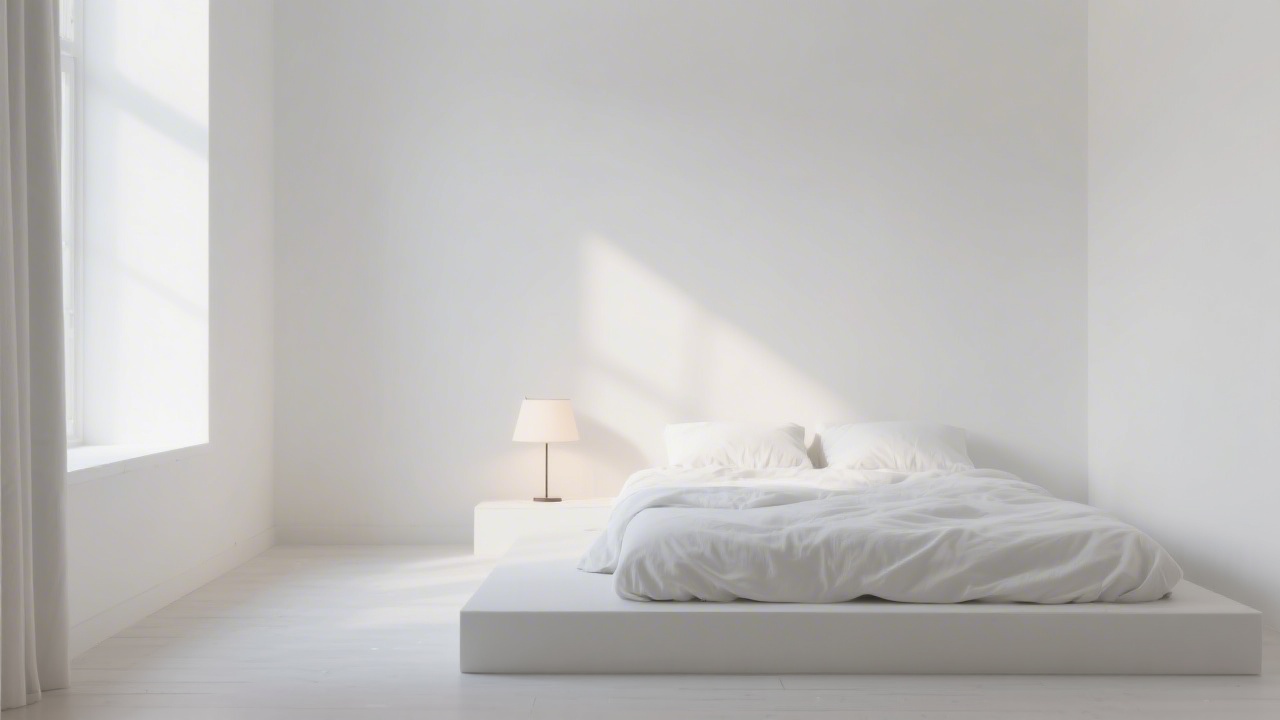
In a minimalist bedroom, the bed is necessarily the visual focal point. This makes the mattress quality doubly important — it is both the functional core of the sleep environment and the aesthetic centerpiece of the room. The Saatva Classic has a clean, hotel-quality aesthetic with a euro pillow top and available in both 11.5" and 14.5" profiles — designed to anchor a room visually as well as functionally. Free white-glove delivery included.
Frequently Asked Questions
How much does bedroom clutter actually affect sleep?
Research suggests clutter is associated with a 15–25% increase in time to sleep onset and elevated cortisol during the sleep window. The effect is stronger for people who already experience anxiety or are sensitive to environmental stimulation.
Is it okay to have a desk in the bedroom if the apartment is small?
If space doesn't allow separation, physically separating the desk from sleeping space with a divider or curtain reduces the association. The desk should be completely cleared of work materials before sleep, and ideally covered with a cloth to remove visual task associations.
Does decorating with a lot of throw pillows or blankets count as clutter?
Soft textiles are lower-stimulation than hard objects and are generally not significant cortisol sources. However, if making the bed becomes complex (many pillows to arrange), it may reduce the likelihood of bed-making — which has its own habit-formation benefits. Keep decorative pillows functional and easy to remove at night.
What color scheme is best for a minimalist sleep bedroom?
Warm white, light gray, soft sage, or warm taupe are all effective. The key is low saturation (no bright colors) and consistency (2–3 colors maximum). High-contrast maximalist patterns, even in muted tones, create visual stimulation.
Should I get rid of all books in the bedroom?
No. Reading physical books before sleep improves sleep onset and is associated with longer sleep duration. Keep a single current book on the nightstand. A large bookshelf visible from the bed is higher stimulation — if you have one, facing it away from the bed is a simple adjustment.
Ready to upgrade your sleep foundation? The Saatva Classic mattress — free white-glove delivery, 365-night trial.