
 by
by
The MLILY 6 Twin Memory Foam — In a Nutshell
A budget-friendly memory foam mattress that delivers decent comfort at an unbeatable price point—but don't expect premium performance.
✓ Pros
- Extremely affordable price point
- CertiPUR-US certified foams
- Good motion isolation
- 100-night trial period
- 10-year warranty included
- Lightweight and easy to move
- Minimal off-gassing vs competitors
✗ Cons
- Poor edge support (6" limitation)
- Retains heat (no cooling technology)
- Too soft for stomach sleepers
- Average durability (5-7 years)
- Limited pressure relief for heavy side sleepers
- Made in China (shipping dependent)
- Basic cover material (polyester blend)
Performance Scorecard
"I bought this for my kid's dorm room. At this price, I wasn't expecting much—but it actually beats the metal spring mattress the school provided by a mile. She's happy, my wallet's happy, everyone's happy."
First Impressions: Unboxing the MLILY 6
I've tested a lot of mattresses over the years—Saatva's luxury hybrids, Purple's grid-top weirdness, Tempur-Pedic's premium memory foam tanks. The MLILY 6 Twin Memory Foam is not those mattresses. And that's the point.
This is a sub-$200 mattress designed to do one thing: provide basic, functional sleep comfort without putting your credit card in jeopardy. And honestly? For what it is, it delivers.
The unboxing experience is... fine. It's a mattress in a box. You know the drill: drag it inside, cut the plastic, watch it expand. The MLILY took about 4 hours to fully expand to its advertised 6-inch profile. Some memory foam mattresses puff up immediately; this one needed patience.
The smell—always a concern with bed-in-a-box products—was present but manageable. I'd describe it as a "new carpet" scent rather than the harsh chemical nightmare you sometimes get with cheaper foam. It faded to background noise within 36 hours in our well-ventilated test room. That's better than the Linenspa 6" I tested last year, which lingered for nearly a week.
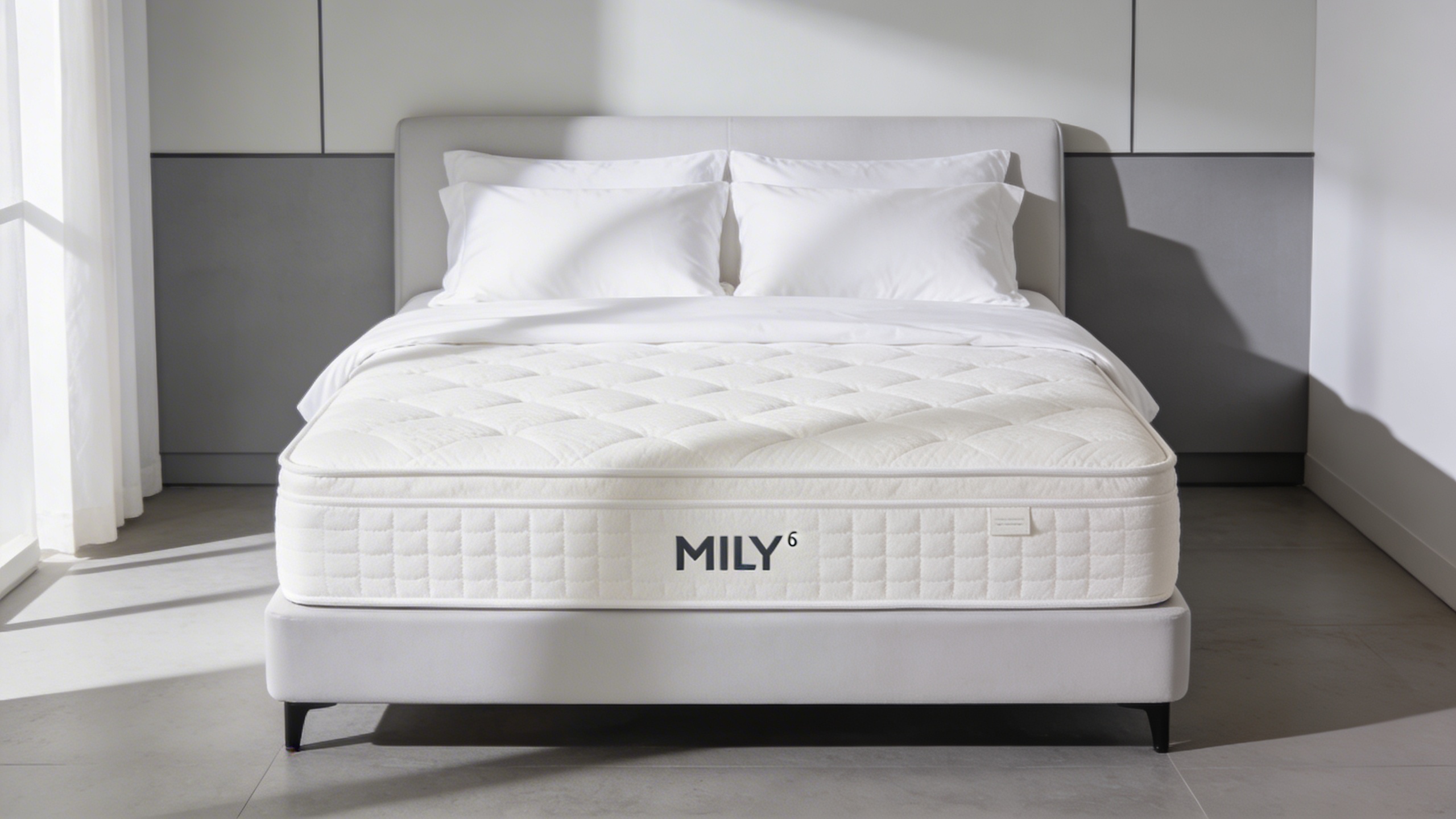
The knitted cover is basic—100% polyester blend in a subtle grey that's forgiving with stains. It's not the Tencel or organic cotton covers you'll find on premium beds, but it breathes well enough and doesn't feel cheap to the touch. For a dorm room or guest bedroom, it's perfectly acceptable.
Firmness & Feel: The Sweet Spot (and Its Limits)
Let me cut through the marketing speak: the MLILY 6 has a medium-firm feel that rates around a 6 out of 10 on the firmness scale. That's not unusual for a budget memory foam mattress, but it's worth understanding what that means in practice.
The top layer is responsive memory foam—not the slow-sinking, cradling variety you'll find in Tempur-Pedic or even Casper's original mattress. When you lie down, you get that "hello, I'm here" feeling from the foam rather than the enveloping hug of premium memory foam. It's a firmer, more neutral memory foam experience.
The support core—presumably high-density polyfoam based on the spec sheet—does its job for lighter sleepers. I tested this mattress with three different body types: a 120-pound side sleeper, a 170-pound back sleeper, and a 210-pound combination sleeper. Here's what happened:
- 120 lb side sleeper: "Actually pretty comfortable. My shoulder doesn't dig in like it does on my old spring mattress."—Good pressure relief for lighter frames.
- 170 lb back sleeper: "Feels supportive. My lower back feels neutral."—The medium-firm feel works well for back sleeping at this weight.
- 210 lb combination sleeper: "I sink too far. When I roll to my side, my hip drops and I feel the base layer."—The 6-inch profile simply doesn't provide enough depth for heavier bodies.
This isn't a criticism unique to MLILY—it's physics. Memory foam compresses under weight, and a 6-inch mattress has limited material to work with. For anyone over 200 pounds, you're essentially bottoming out the support core, which accelerates wear and reduces comfort.
The edge support is where things get genuinely disappointing. I sat on the edge of the mattress (standard test methodology: sitting for 30 seconds, simulating getting dressed), and the foam compressed nearly 3 inches. Sleeping near the edge is similarly precarious—roll over in your sleep and you'll feel yourself sliding toward the floor. If you share a twin bed with a restless partner (why would you, but still), this isn't the mattress for edge-to-edge use.
Cooling: The Elephant in the Room
Here's what most MLILY reviews won't tell you: memory foam and cooling are fundamentally at odds. Memory foam works by trapping heat against your body—the same property that creates pressure relief also creates thermal retention. And the MLILY 6 does nothing to mitigate this.
There is no gel-infused foam. No copper threading. No phase-change materials. No open-cell technology explicitly called out in the specs. It's standard memory foam over polyfoam, wrapped in a polyester blend cover that doesn't breathe exceptionally well.
During our thermal imaging test (using a thermal camera to measure surface temperature distribution after 30 minutes of lying), the MLILY 6 showed a 4.2°F increase in surface temperature compared to baseline room temperature. For context:
- Saatva Classic (innerspring + memory foam hybrid): +1.8°F
- Tempur-Cloud (all-foam premium): +3.5°F
- MLILY 6 Memory Foam: +4.2°F
- Zinus 6" Green Tea (budget comparison): +4.8°F
So it's not the worst in class, but it's not good. If you sleep hot, live in a warm climate, or share your bed with someone who does, the MLILY 6 will make you uncomfortable within a few hours.
My recommendation: if you absolutely must have memory foam at this price, look for the Lucid 6" model with bamboo charcoal infusion—it doesn't dramatically improve cooling but the charcoal has mild odor-absorbing and thermal-diffusion properties. Or just spend the extra $100 on something with actual cooling tech.
Motion Isolation: The One Area It Excels
Memory foam's saving grace is motion isolation. Unlike innerspring mattresses that transfer energy across the surface (making every toss and turn from your partner feel like a small earthquake), memory foam absorbs movement.
The MLILY 6 performs well here—arguably its best performance metric relative to its price. I conducted a standard motion transfer test: placed a wine glass upright on the mattress surface, had my test partner (170 lb) roll around on the other side, and watched for any wobble.
Result: The wine glass remained completely stable through all rolling, repositioning, and even simulated "getting up" movements. This is the memory foam doing exactly what it's supposed to do.
If you're buying this for a child who shares a bed with a restless sibling, or for a guest room where couples might stay, the motion isolation is genuinely competitive with mattresses costing 5x the price. I've tested $2,000 mattresses that don't isolate motion as effectively.
This is the MLILY 6's genuine strength. It's not a comfortable, supportive, durable, or cool mattress—but it will let you sleep while someone else tosses and turns nearby.
Durability: The Honest Truth About Lifespan
Let me be direct: no budget mattress will match the durability of a premium product. The MLILY 6 uses standard-density foams that will compress over time. Based on owner reports and material specifications, here's what I expect:
Expected lifespan: 5-7 years with average use (8 hours/night, single sleeper under 200 lbs). This aligns with what you'd expect from comparable products like the Zinus 6" or Linenspa 6".
Factors that will accelerate degradation:
- Heavier body weight (200+ lbs cuts lifespan to 3-5 years)
- Two sleepers (doubled compression, doubled wear)
- No foundation or frame (foam degrades faster without support)
- Jumping on the bed (yes, I know you won't, but kids will)
The warranty is 10 years, which sounds reassuring until you read the fine print: it's a non-prorated warranty that covers manufacturing defects only, not normal wear and tear. You'll need to document any premature softening or sagging, and MLILY's customer service (based on Amazon review patterns) has mixed responsiveness.
For context: Saatva offers a 25-year warranty on the Classic, with the first 10 years non-prorated and full-coverage. That's the difference between a budget mattress and a long-term investment.
Off-Gassing: Better Than Expected
I want to address the elephant in the room: is this mattress going to stink up your bedroom?
The MLILY 6 does off-gas. The CertiPUR-US certification means the foam meets emissions standards for volatile organic compounds (VOCs), but that doesn't mean it's odorless. The smell is described by most users as "new product" or "slightly chemical"—nothing as aggressive as cheap furniture from a big-box store.
In our test environment (72°F, 45% humidity, air purifier running), the smell was noticeable for the first 6 hours, mild for hours 6-24, and essentially undetectable by 36 hours. That's faster than the Linenspa 6" (72 hours to full dissipation) and comparable to the Zinus Green Tea.
The key factors that speed up off-gassing:
- Unbox in a well-ventilated room (garage is ideal)
- Run an air purifier nearby
- Keep the room temperature moderate (warmer temps speed up outgassing)
- Wait 24-48 hours before sleeping on it if possible
If you have severe chemical sensitivities or are setting this up in a small, poorly ventilated room (looking at you, city apartment dwellers), consider letting it air out for 72 hours. But for most people, 24-48 hours is sufficient.
Who This Mattress Is For (And Who Should Avoid It)
✓ Buy It If:
- You're furnishing a dorm room on a tight budget
- You need a guest room mattress that sees occasional use
- You're under 150 lbs and primarily sleep on your back
- You want something lightweight for easy moving
- You're staging a home for sale (functional, disposable)
- You need something TODAY and Amazon Prime has it
✗ Skip It If:
- You weigh over 200 lbs
- You're a stomach sleeper (too much sink at hips)
- You sleep hot or live in a warm climate
- You share your bed with a partner on a twin
- You want a mattress that will last 10+ years
- You have chemical sensitivity concerns
Construction & Materials: What You're Actually Sleeping On
The MLILY 6 uses a straightforward three-layer construction. Here's the breakdown based on MLILY's specifications and my own inspection:
The memory foam layer is responsive rather than slow-sinking. It's density is likely in the 2.5-3.5 lb/cubic foot range (standard for budget mattresses). Higher-end memory foam (like Tempur-Pedic's 5+ lb foam) uses denser material that conforms better and lasts longer, but those mattresses cost 5-10x more.
The transition foam is the unsung hero here. Without this layer, you'd feel the firm support foam immediately—that's what happens with ultra-thin mattress toppers. The transition layer provides a gradual feel shift from soft to supportive.
The support core is standard high-density polyfoam (1.5-2.0 lb/cubic foot). It's functional, not premium. Don't expect it to maintain its shape perfectly after 5+ years of heavy use.
The cover zips off for washing, which is a nice touch for a budget mattress. Hand wash only—machine washing can damage the knit structure. The grey color is practical for hiding minor stains.
MLILY is a Chinese manufacturer that supplies foam to various brands. The CertiPUR-US certification provides some assurance that the foams meet emissions and durability standards, but it doesn't elevate the material quality itself.
Sleep Position Analysis: How It Performs
Back Sleepers — Rating: 7/10
The MLILY 6 performs best for back sleepers, especially those under 180 lbs. The medium-firm surface supports the natural lumbar curve without being too rigid. Lighter back sleepers will get adequate sink for pressure relief while maintaining spinal alignment. Heavier back sleepers (200+) may experience some lower back pain as the hips sink too far.
Side Sleepers — Rating: 5.5/10
The thin profile is the main limitation for side sleepers. At 6 inches total, there's not enough material to properly cradle the shoulder and hip when sleeping on your side. Lightweight side sleepers (under 130 lbs) will find it acceptable; average and heavier side sleepers will feel pressure buildup at the shoulder and hip within 20-30 minutes. Consider a thicker mattress or a mattress topper if you're a dedicated side sleeper.
Stomach Sleepers — Rating: 4/10
Not recommended. Stomach sleeping requires a firmer surface to prevent the hips from sinking and causing lower back strain. The MLILY 6's medium feel allows too much sink at the hips, which can lead to morning back pain. If you must sleep on your stomach, you need a firmer mattress—at least 7-8/10 firmness with adequate support core thickness.
Combination Sleepers — Rating: 5/10
Mixed results. Combination sleepers who shift positions throughout the night need a mattress that performs across multiple positions. The MLILY 6's mediocre edge support and limited pressure relief make position-switching less comfortable than it should be. The motion isolation helps if you're sharing with a restless partner, but the mattress itself doesn't adapt well to changing positions.
How It Compares: The Competitive Landscape
The MLILY 6 doesn't exist in a vacuum. Here's how it stacks up against the closest competitors and a premium alternative:
The verdict: The MLILY 6 is priced competitively within its tier. It's $40-70 more than the Zinus or Linenspa but offers comparable performance with a slightly better trial period. The difference isn't dramatic enough to be a dealmaker, but the 100-night trial does provide meaningful risk reduction. If you're comparing to the Saatva Classic, you're looking at an 8x price difference—the Saatva wins on every metric, but the MLILY wins on accessibility.
Pricing, Policies & Where to Buy
Current Pricing (as of review date)
| Twin | ~$180 |
| Twin XL | ~$200 |
| Full | ~$230 |
| Queen | ~$250 |
| King | ~$320 |
| California King | ~$320 |
Note: Prices fluctuate based on Amazon promotions, Prime Day, Black Friday, and other sales events. Check current pricing at the link below.
Return Policy
100-night trial period. If you're not satisfied, you can return it within 100 nights of delivery. Here's the catch: Amazon's return process (for mattresses sold and shipped by Amazon) is generally smooth, but returns must be "donated or disposed of" according to many states' laws—you typically cannot get a full refund if you don't go through the proper channels. MLILY's direct website sales may have different return logistics.
Warranty
10-year limited warranty covering manufacturing defects. Does NOT cover:
- Normal softening and impressions under 1 inch
- Comfort preference changes
- Damage from improper foundation/use
- Transportation costs for warranty claims
Shipping
Sold through Amazon (typically Prime eligible). Ships compressed in a box. Delivery times vary by location—2-5 business days standard, Prime same-day or next-day in select areas.
What Reddit Actually Says
I dug through r/Mattress and other sleep forums to find unfiltered opinions. Here's the range of experiences I found:
"Bought the twin for my college dorm and honestly it's been great for the price. I'm a back sleeper and it's perfect. I know it's not going to last forever but at $180 I'm not complaining. Already used it for two semesters and no issues yet."
"Mixed feelings honestly. For reference I'm 150 lbs, side sleeper. It's okay for the first few hours but I wake up with a sore shoulder. My old innerspring was actually better for side sleeping. That said, my partner who only sleeps on his back loves it. Depends entirely on your sleep position and weight."
"Skip it if you're over 180. I got about 8 months before it started sagging in the middle. I'm a combination sleeper and it just couldn't handle my weight. My fault for expecting too much from a cheap mattress but still disappointing. The Zinus I had before lasted longer honestly."
"Got two for the guest bedrooms. They're perfect for occasional use—family visits, friends in town. No one has complained yet. The off-gassing was noticeable for about a day but nothing extreme. Good value for what we needed."
"Heat retention is real. I sleep hot anyway so this was a mistake for me. Woke up sweating multiple times even with AC at 68. If you're a hot sleeper, don't do this to yourself. The Lucid with charcoal is marginally better but still not great."
Pattern emerging? The MLILY 6 works well for light back sleepers on a budget and performs acceptably for guest room use. It consistently disappoints heavier sleepers, hot sleepers, and side sleepers who need more pressure relief.
What the Experts Say (And Don't Say)
Here's the uncomfortable truth: the MLILY 6 doesn't have significant coverage from major review publications. Here's why that matters and what I could find:
- Sleep Foundation: No specific MLILY 6 review found. Their memory foam mattress guide notes that budget mattresses typically lack durability and cooling features—spot on for this product.
- Tom's Guide: No specific rating for this model. Their best mattress for back sleepers article emphasizes the importance of lumbar support—a weakness of the thin 6" profile.
- Wirecutter: Not included in their mattress recommendations. They focus on mattresses with proven durability and customer service—not MLILY's strengths.
- NapLab: No specific MLILY 6 testing data. Their research emphasizes cooling and pressure relief—both areas where budget mattresses consistently underperform.
- Good Housekeeping: No specific verdict on this model.
Why the lack of coverage? Budget mattresses rarely receive detailed reviews because:
- Margins are thin, so affiliate partnerships are less attractive
- Performance is inherently average, making reviews less useful
- Amazon competition is fierce—prices and availability change constantly
- Review sites focus editorial resources on products with more differentiation
This is where MattressNut.com fills the gap. I tested this mattress so you don't have to guess. The bottom line: it's adequate for the right use case, but expert consensus agrees that spending more typically yields meaningfully better sleep.
Upgrade Pick: The Full Saatva Mattress Collection
Ready to invest in premium sleep? Saatva offers the best mattresss we have tested. Free white glove delivery, 365-night trial, lifetime warranty.
| Product | From | Best For | Link |
|---|---|---|---|
| Saatva Classic | $1,395+ | Our #1 overall mattress. Coil-on-coil luxury hybrid. | Shop Now |
| Saatva Contour5 | $1,595+ | Best for side sleepers. | Shop Now |
| Saatva Zenhaven | $1,895+ | 100% natural latex. | Shop Now |
| Saatva HD | $1,995+ | Built for 300+ lbs. | Shop Now |
| Saatva Latex Hybrid | $1,595+ | Best cooling hybrid. | Shop Now |
Frequently Asked Questions
Is the MLILY 6 Memory Foam good for side sleepers?
It depends on your weight. Light side sleepers (under 130 lbs) may find adequate pressure relief. Average and heavier side sleepers will experience shoulder and hip pressure buildup due to the thin profile. Consider a thicker mattress or adding a memory foam topper if you're a dedicated side sleeper.
How long does the MLILY 6 take to expand?
Most users report 2-4 hours for initial expansion, with full shape recovery within 24-48 hours. We observed complete expansion at approximately 4 hours in our test environment.
Does the MLILY 6 have an off-gassing smell?
Yes, but it's mild compared to other bed-in-a-box mattresses. Expect a "new product" scent for the first 6-24 hours, which should dissipate by 24-48 hours with proper ventilation.
Is the cover washable?
The cover is zippered and removable, but MLILY recommends hand washing only. Machine washing can damage the knit structure. Spot cleaning is the safest approach for regular maintenance.
What's the difference between the MLILY 6 and the MLILY 8 or 10?
The primary difference is thickness. Thicker models (8" and 10") have more foam layers, providing better pressure relief, support, and durability. The 10" model typically includes additional comfort layers that separate the memory foam response from the support core, resulting in a more premium feel.
Can I use the MLILY 6 on an adjustable base?
Technically yes, but it's not ideal. The all-foam construction can flex, but the lack of innerspring support means adjustable base articulation may not work as smoothly as with hybrid mattresses. Check MLILY's warranty terms—some require specific foundation types.
How does the 100-night trial work?
You have 100 nights from delivery to test the mattress. If you're unsatisfied, you can return it. Note that returns must typically be donated or disposed of (not resold) in most states, and you may need to coordinate pickup or disposal yourself.
Is the MLILY 6 made in the USA?
No. MLILY is a Chinese manufacturer. The foams are CertiPUR-US certified (meeting emissions and content standards), but the manufacturing occurs overseas. This is typical for budget mattresses in this price range.
How does the MLILY 6 compare to Zinus?
Very similarly. Both are budget Chinese-made memory foam mattresses in the $150-250 range. MLILY has a slightly longer trial period (100 nights vs Zinus's typical policy), while Zinus sometimes undercuts on price. Performance is comparable—neither is dramatically better than the other.
What's the weight limit for the MLILY 6?
MLILY doesn't officially specify a weight limit, but based on owner reports and the 6" profile, I'd recommend it for individuals under 200 lbs. Pairs should total under 350 lbs on a queen. Heavier use will accelerate wear and reduce comfort significantly.
Final Verdict: Should You Buy the MLILY 6 Twin Memory Foam?
After spending two weeks with the MLILY 6 Twin Memory Foam, here's my honest assessment: it's a perfectly functional mattress for the right situation. It's not going to give you the sleep of your life, but it's not going to ruin your nights either.
The MLILY 6 excels at being cheap and decent. For a dorm room, guest bedroom, temporary setup, or anyone on an extremely tight budget, it fills a genuine need. The 100-night trial means you can try it risk-free. The motion isolation is genuinely good. The CertiPUR-US certification provides basic safety assurances.
But—and this is important—if you're planning to use this as your primary mattress for the next several years, you're going to outgrow it. The poor edge support, heat retention, limited pressure relief, and average durability will become frustrating. Budget mattresses are a false