
 by
by Bedroom mold is a common but underappreciated cause of poor sleep. The respiratory effects — nasal congestion, throat irritation, and immune activation — directly impair breathing during sleep and trigger nighttime awakenings. Because mold symptoms closely resemble allergies or common colds, many people live with mold-disrupted sleep for months before identifying the cause.
How Mold Affects Sleep
Mold produces several categories of substances that affect sleep:
Mycotoxins
Certain molds (particularly Stachybotrys chartarum, known as black mold) produce mycotoxins — secondary metabolites with documented neurological and immune effects. At high concentrations, mycotoxin exposure causes headaches, fatigue, cognitive impairment, and disrupted sleep. Even at lower concentrations, chronic exposure maintains a state of immune activation that impairs restorative sleep.
Allergens
Mold spores are potent allergens. Mold allergy (sensitization to mold spores) affects an estimated 10% of the general population and up to 40% of people with asthma. Nighttime allergen exposure triggers nasal congestion, post-nasal drip, throat irritation, and in sensitive individuals, asthma symptoms — all of which fragment sleep architecture.
Volatile Organic Compounds (VOCs)
Mold releases microbial VOCs as metabolic byproducts. These are responsible for the characteristic musty odor and contribute to the headache and fatigue that many mold-exposed people report. MVOC exposure during sleep may impair sleep quality independent of the allergenic effects.
Identifying Bedroom Mold
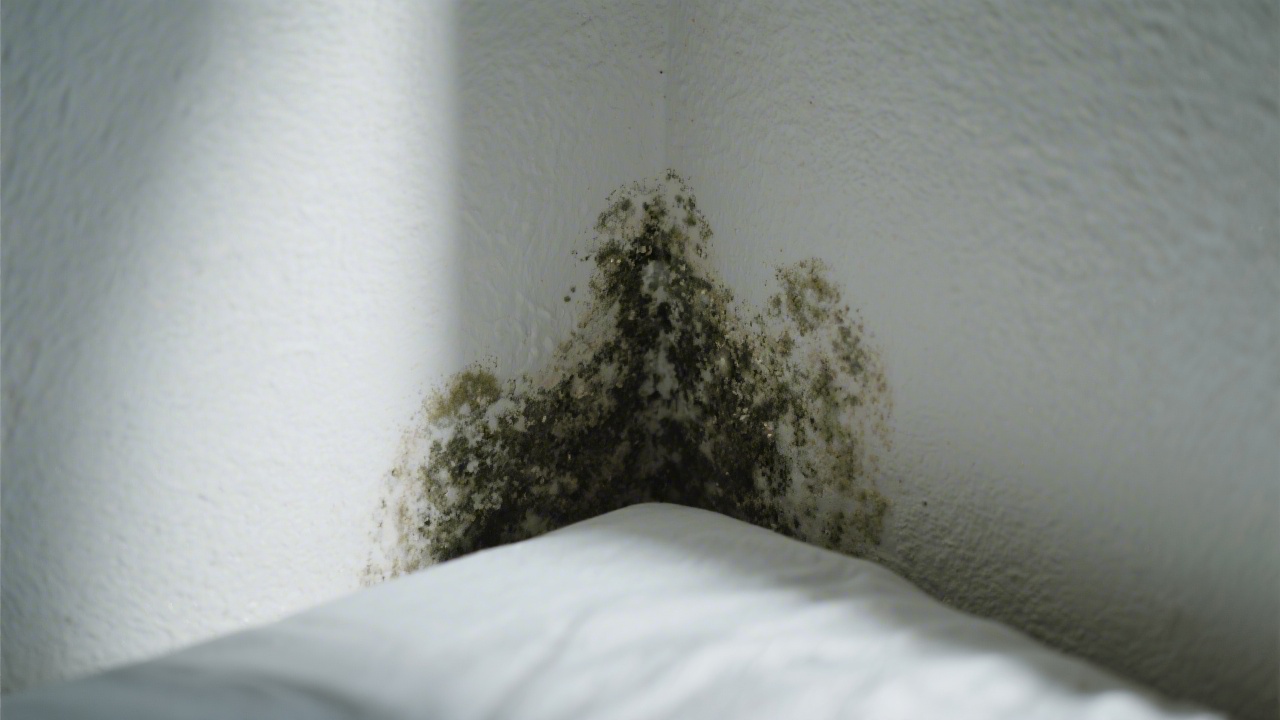
Visual Inspection
Check all these locations systematically:
- Corners where walls meet ceilings — particularly in rooms below bathrooms or exterior walls.
- Around window frames, especially where condensation occurs in winter.
- Behind furniture placed against exterior walls (cold exterior walls condense moisture from warm interior air).
- Inside closets on exterior walls.
- Under the mattress and on the platform or base.
- Around the HVAC vent if one is present in the bedroom.
Odor Assessment
A persistent musty or earthy odor that is stronger in the morning (when the room has been closed) and that does not respond to ventilation is a reliable indicator of active mold growth. If the odor is localized — stronger near a specific wall or corner — inspect that area carefully.
Symptom Pattern
Symptoms that improve when you leave the room or leave the home, are worst in the morning, and have emerged gradually over weeks or months (rather than suddenly, as a cold would) suggest environmental allergen exposure. Mold is a leading cause of this pattern.
Remediation and Prevention
Addressing the Moisture Source
Mold cannot grow without moisture. The remediation must include fixing the moisture source: leaks, condensation from poor ventilation, or excessive indoor humidity. Without this step, mold will recur after cleaning.
Humidity Control
Maintain bedroom humidity below 50% consistently. In humid climates or seasons, a bedroom dehumidifier running continuously (emptied daily or with a drain hose) is the most reliable prevention. Measure with a hygrometer — a $15 device that provides essential environmental data.
Mattress Protection
A waterproof mattress protector creates a moisture barrier that prevents sweat and humidity from penetrating the mattress core, which is the most common site of internal mattress mold. See our recommendations for best mattress for side sleepers as part of a comprehensive approach to the bedroom sleep environment, along with guides for sleep quality improvements and mattress for hot sleepers.
Frequently Asked Questions
What are the signs of mold in a bedroom affecting sleep?
Common signs: musty odor that persists after ventilation, visible dark spots on walls, ceilings, or around window frames, chronic nighttime congestion that clears when you leave the room, waking with a scratchy throat or headache that improves after being outside, and visible condensation on windows during colder months. Mold hidden behind furniture or inside walls may have no visible signs other than odor and respiratory symptoms.
What humidity level prevents bedroom mold?
Mold requires relative humidity above 60-70% at wall and surface level to grow. Keep indoor humidity between 30-50% to prevent mold. A hygrometer (indoor humidity meter, $10-20) is an essential bedroom tool if you live in a humid climate or experience condensation. Dehumidifiers for bedrooms are available in 20-30 pint capacity for approximately $150-300.
Can a mattress get mold without you knowing?
Yes. Mattresses in poorly ventilated rooms, on solid-base platforms, or in humid climates can develop internal mold that is not visible from the surface. Signs include persistent musty odor from the mattress, allergy symptoms that worsen specifically in bed, and visible staining on the mattress underside. Using a mattress on a slatted base (rather than a solid platform) improves airflow and significantly reduces mold risk.
How do you test for mold in a bedroom?
DIY mold test kits (Petri dish exposure tests, $10-30) can confirm mold presence but do not identify species or concentration accurately. Professional air quality testing ($250-500) using spore traps gives a quantitative result. The most reliable diagnostic approach is visual inspection of all surfaces (including behind furniture and inside closets) combined with humidity monitoring and a professional inspection if symptoms persist without visible cause.
Does painting over bedroom mold fix the problem?
No. Painting over mold traps spores temporarily but does not kill them. Mold will grow through paint, and the underlying moisture problem will eventually cause paint peeling and visible recurrence. Proper remediation requires removing the mold with biocidal cleaners (dilute bleach for non-porous surfaces, EPA-registered mold remediation products for porous materials), fixing the moisture source, and then repainting with mold-resistant paint.
Key Takeaways
Bedroom Mold and Sleep is a topic that depends heavily on individual needs and preferences. The most important thing is to consider your specific situation — your body type, sleep position, and personal comfort preferences — before making any decisions. When in doubt, take advantage of trial periods to test before committing.