
 by
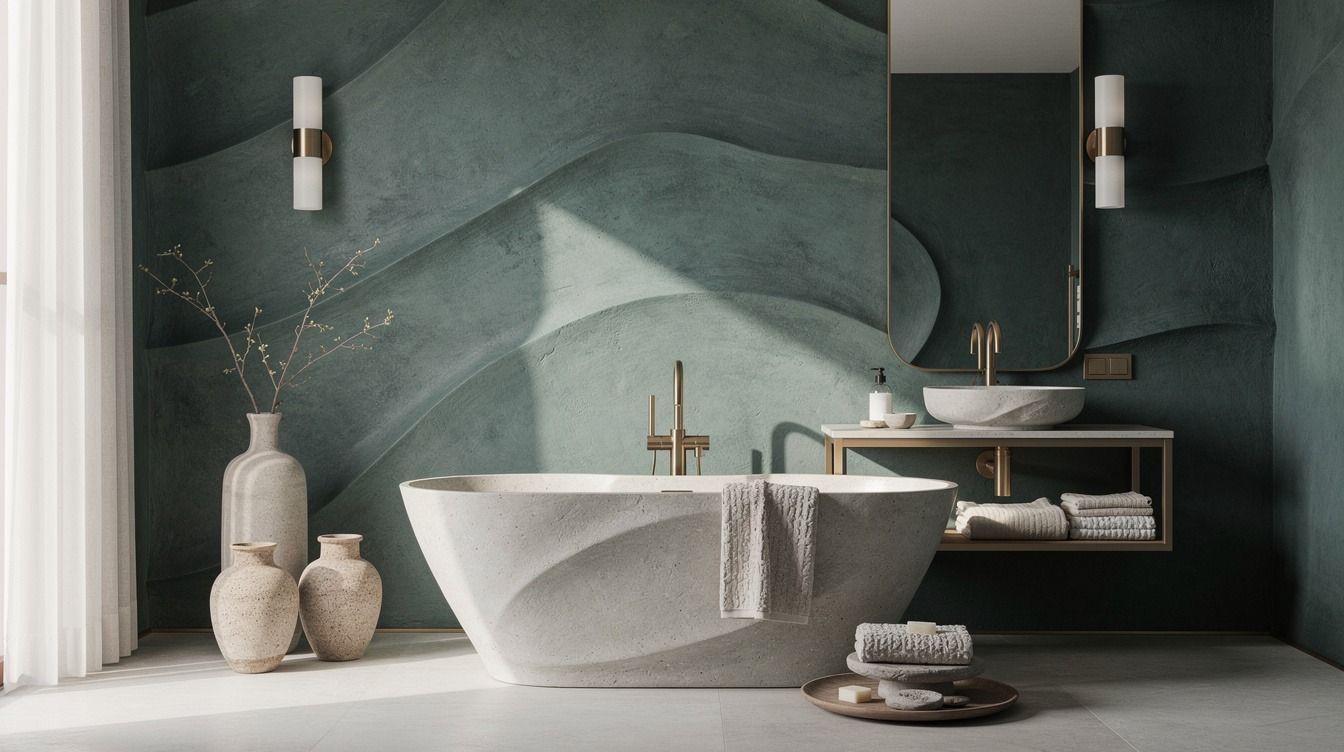
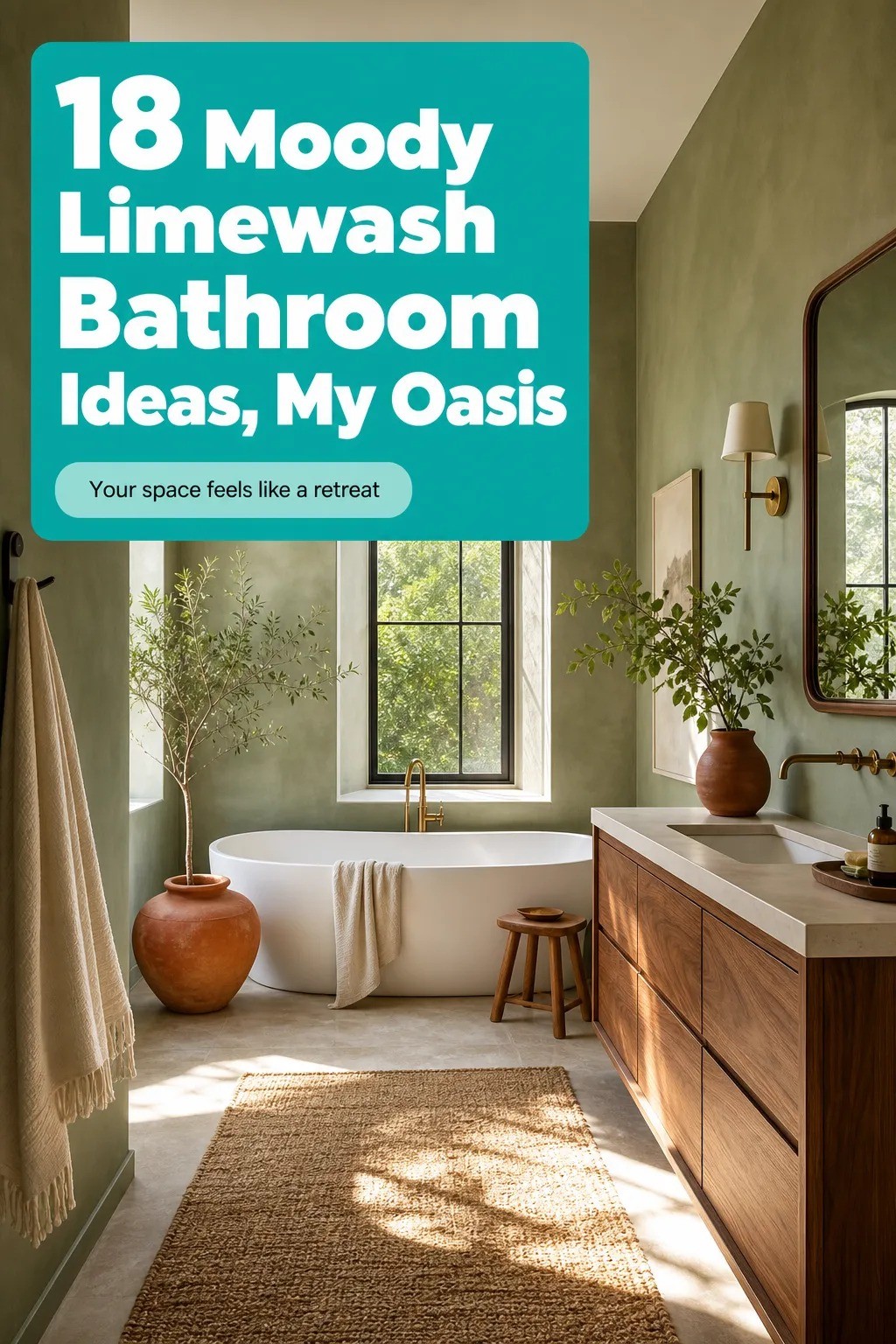
by Moody limewash bathroom walls can give you dramatic depth without a full renovation, and mine started with one weekend, one nervous paint test, and a very ordinary builder bathroom. I was working around a 32-inch vanity and beige floor tile I couldn't replace. The walls did the heavy lifting.
- Start with the Shadow-First Wall Plan
- Photograph the Full 2005 Starter-Home Package
- Paint a Clouded Base Instead of a Flat Navy Box
- Use the Two-Undertone Rule for a Small Moody Powder Room
- Swap the Light Bar for a Three-Height Light Stack
- Frame the Mirror Like It Belongs to the Wall
- Let Hand-Glazed Zellige Carry the Wet Zone
- Hang Belgian Flax Linen Where Plastic Used to Be
- Choose Warm Wood Over a Matching Vanity
- Build the Towel Ladder Moment, Then Stop
- Put a Real Finish on the Faucet Decision
- Try Sea Salt Before You Commit to a Nearly Black Wall
- Make the 21-Inch Clearance Feel Deliberate
- Pull in a Stone Note Without Buying a Stone Room
- Use the Quiet-Corner Test Before Adding Art
- Layer the Counter With the Five-Object Ceiling
- Spend Your Budget Where the Eye Lands First
- Let the Room Stay a Little Unfinished
1Start with the Shadow-First Wall Plan
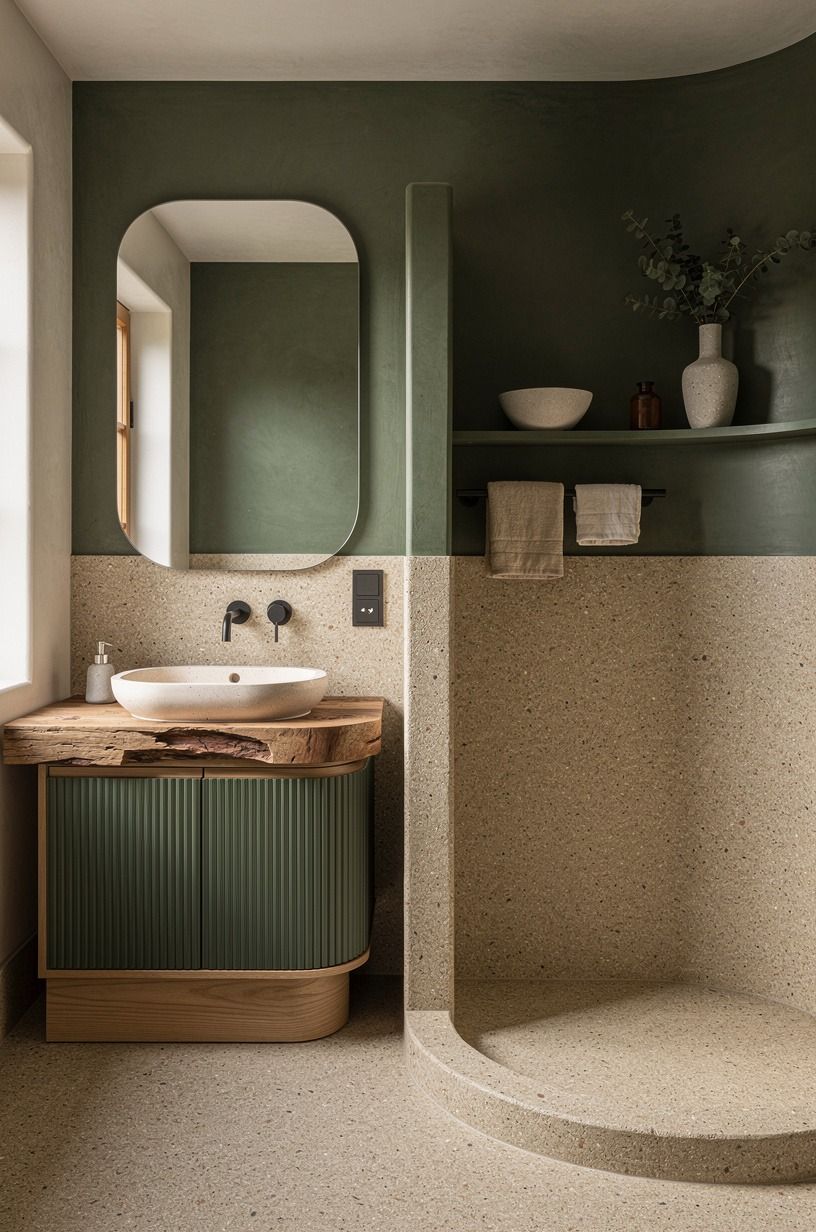
I picked the wall behind the mirror first, because you need one surface where the texture can gather and look intentional. Farrow & Ball Hague Blue No. 30 was my reference point, though I used a limewash finish that worked with forest green, rust, and natural oak rather than a flat painted wall. Reclaimed weathered teak kept the darkest variation feeling grounded and warm.
But don't coat every wall before you test your room. My small moody powder room looked rich with one sample board, then nearly black once the door closed.
I kept the remaining walls lighter, and the contrast gave your eye somewhere to rest. For softer inspiration, I kept returning to these limewash bathroom ideas for soft cloudy textured walls.
2Photograph the Full 2005 Starter-Home Package
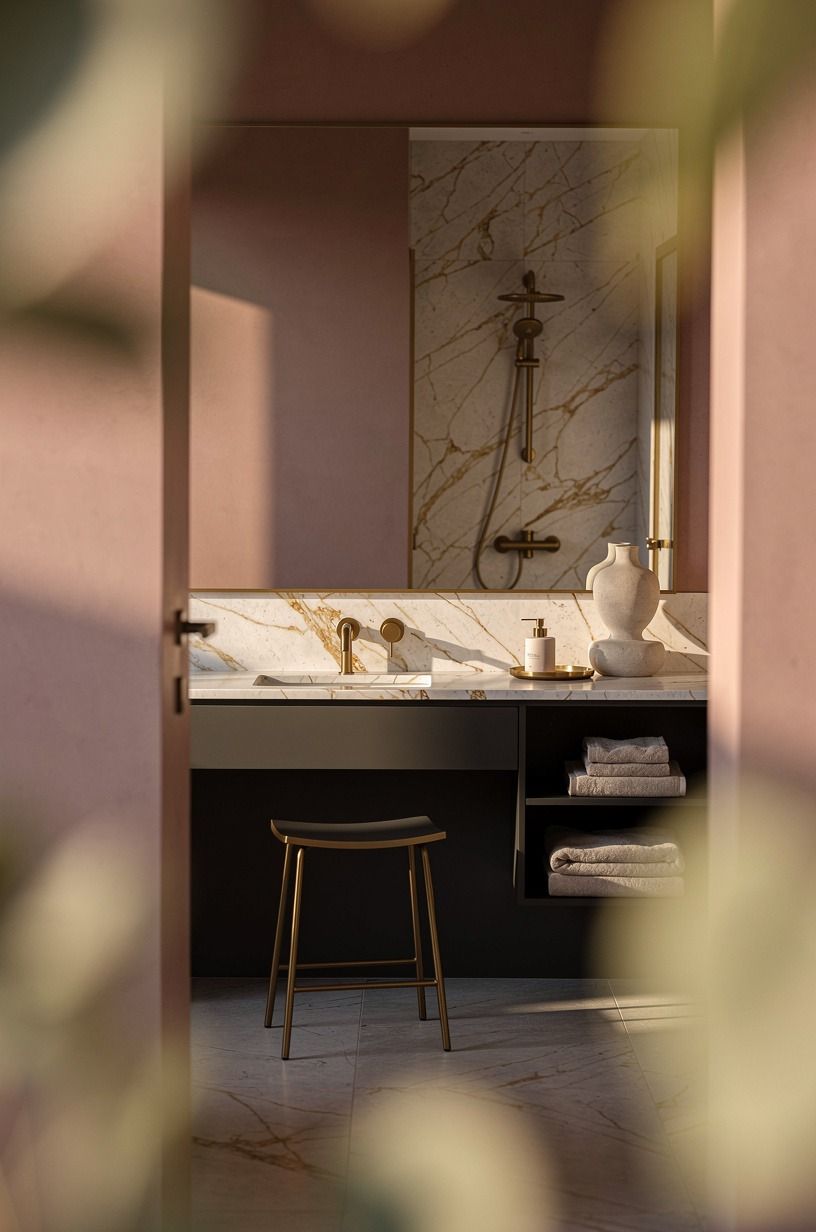
Here's what it looked like before: a dusty-rose-and-charcoal mix, brass details, and a Calacatta marble counter with gold veining that seemed to collect every drop of water. The standard 60x30-inch tub took up most of the room, while the walls had that faint gray cast that makes a bathroom feel like a waiting room.
I didn't rip out any of it. You don't always need demolition when your bones are usable.
I cleaned the grout, changed what touched the eye first, and let the old tile become the quiet background instead of the main event. A moody restroom needs honesty more than perfection.
3Paint a Clouded Base Instead of a Flat Navy Box
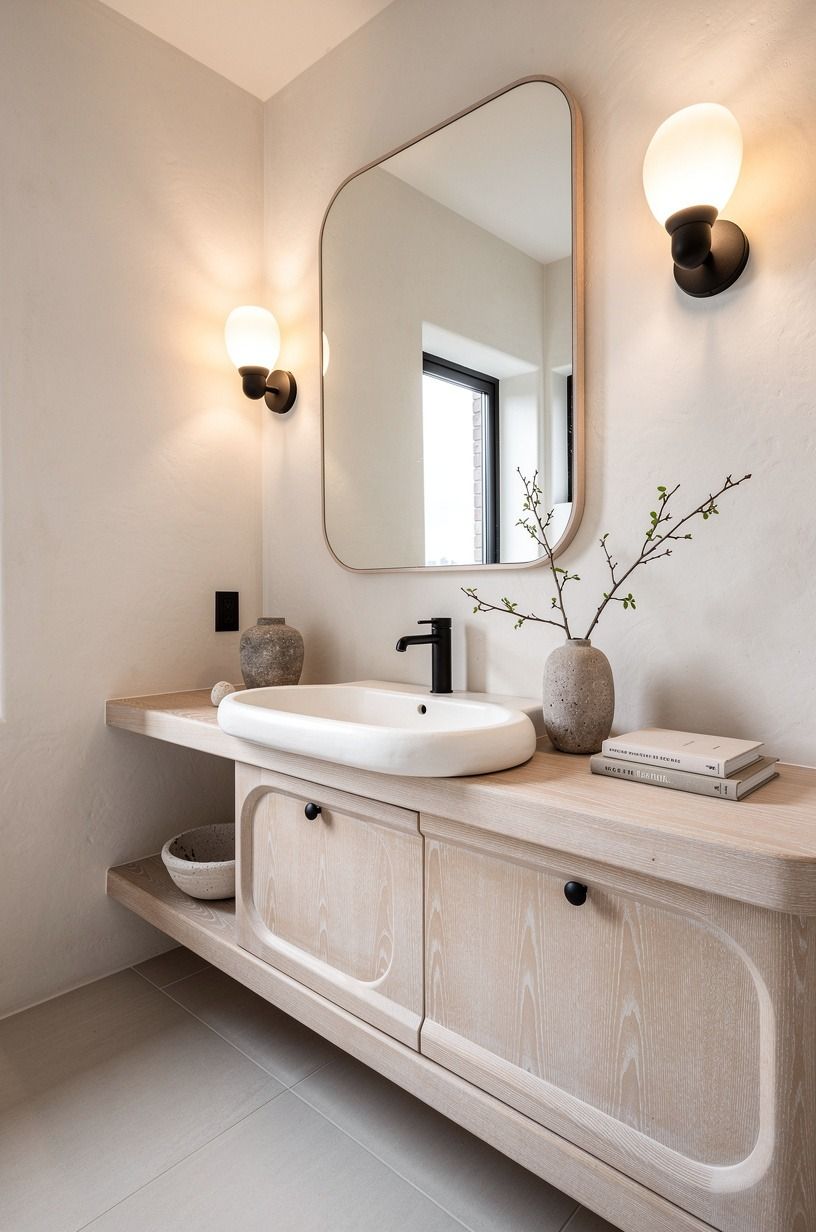
Limewash needs movement. I brushed the first coat in loose X shapes, then softened the second while the first was still dry enough to grab texture. Roman clay limewash looks better here than a dead-flat navy paint because it works beautifully with warm white, camel, black accents, and cerused white oak.
You'll want to work in small areas, especially around a mirror and toilet. I made the mistake of trying to finish one whole wall without stopping, and the overlap dried darker than the rest.
Slow down. Your bathroom will look more organic when the handwork stays visible.
4Use the Two-Undertone Rule for a Small Moody Powder Room
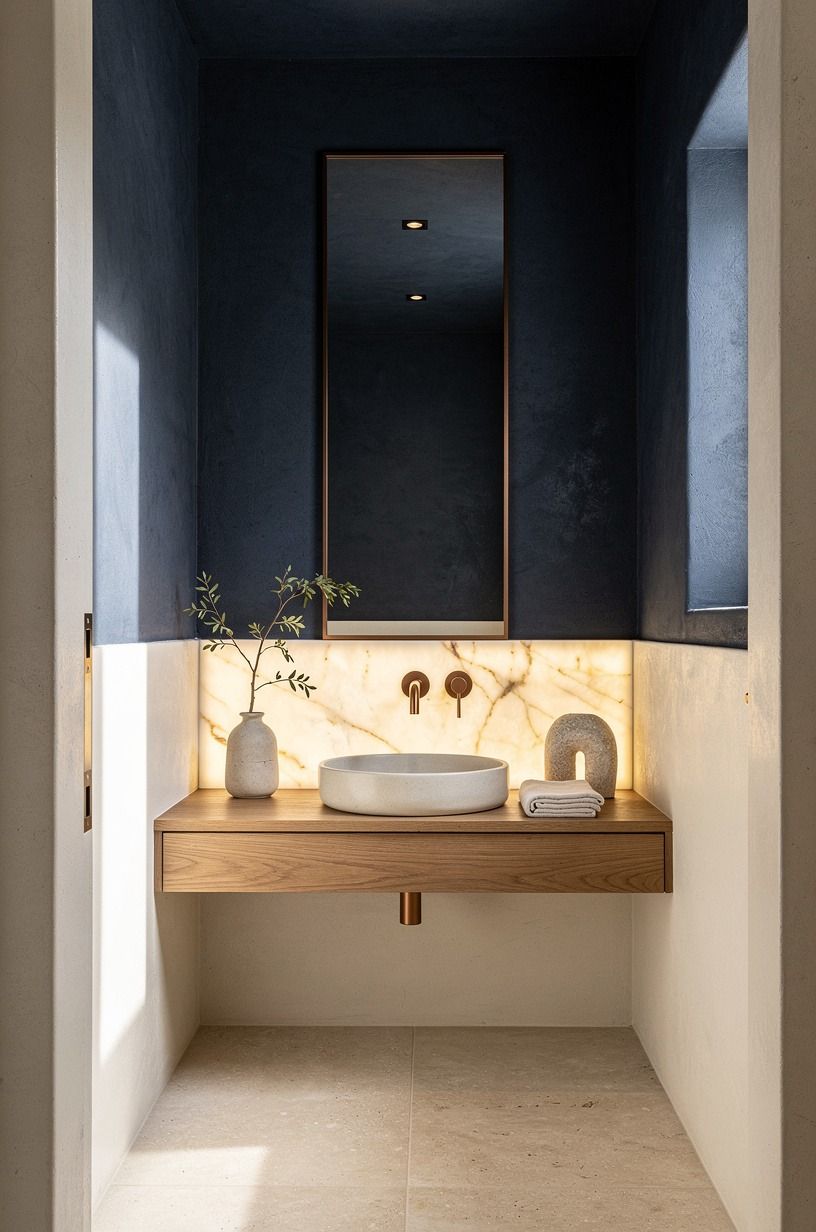
My rule was simple: two undertones only. I used midnight blue with copper and ivory, then repeated that warmth in the wood and towels. Backlit translucent onyx keeps a dark wall from reading chilly, while chrome made the same sample look a little clinical.
If your room faces north, I'd skip a cold charcoal. It can turn purple by afternoon, and you won't fix that with a beige bath mat. Benjamin Moore Chestertown Buff HC-9 is a smarter companion on trim or an adjoining hallway because its buttery undertone gives your moody bathroom some pulse.
5Swap the Light Bar for a Three-Height Light Stack
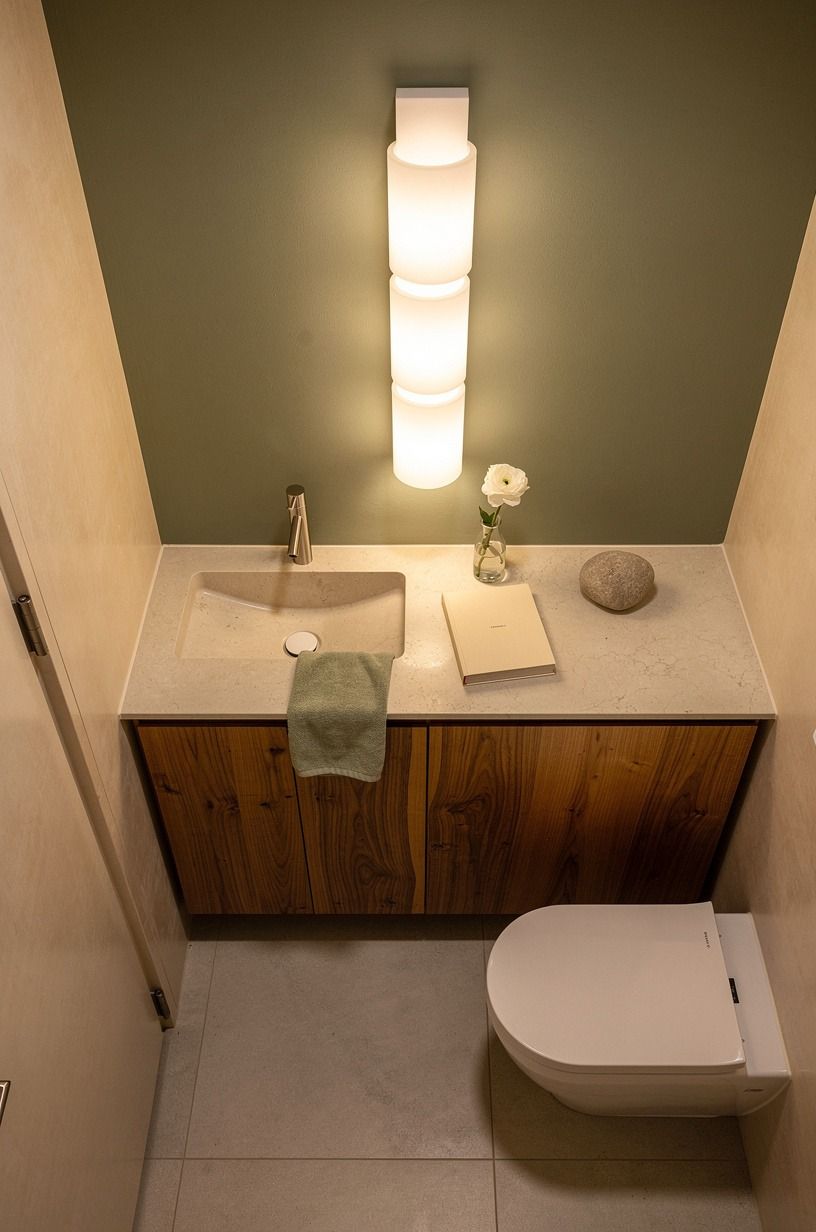
The old overhead bar was the first thing I removed. I replaced it with a layered mix of lighting that suited sage green, warm cream, natural wood, and book-matched walnut far better than a harsh strip ever could.
6Frame the Mirror Like It Belongs to the Wall
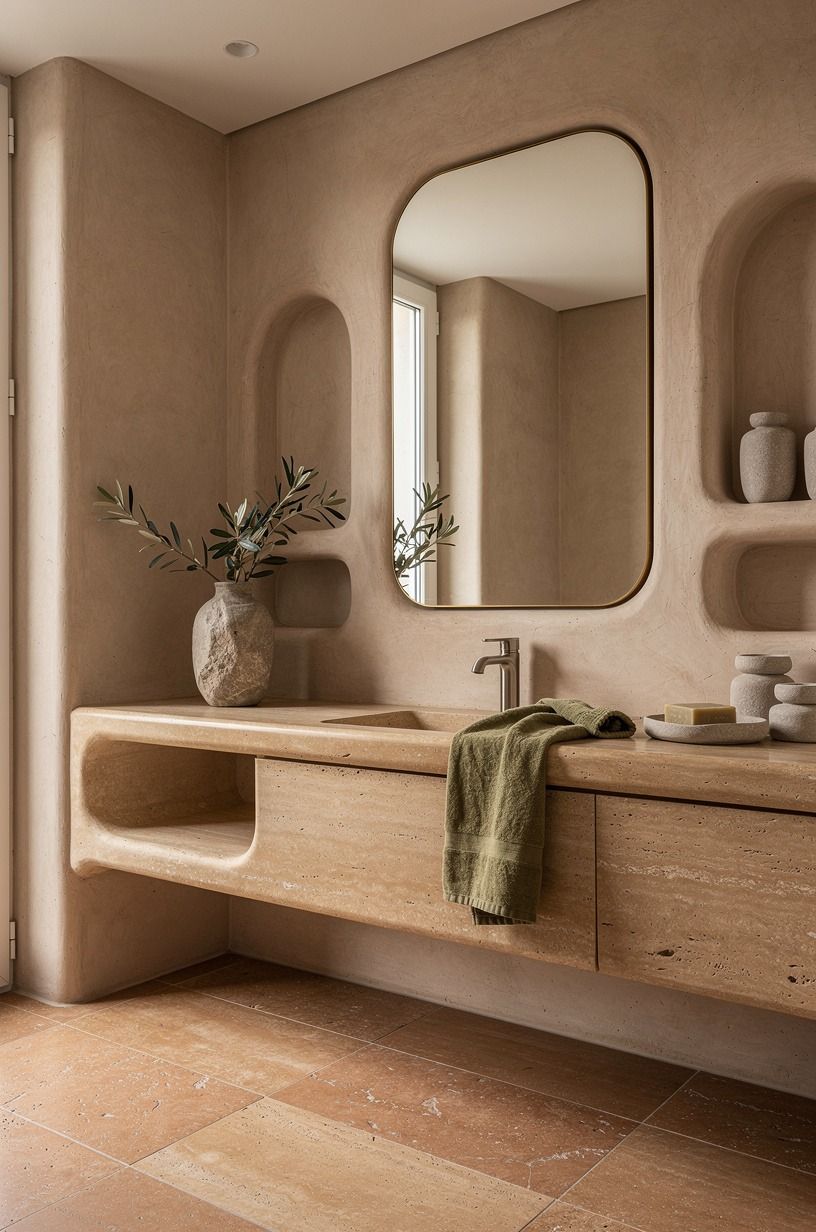
A frameless mirror can work, but mine looked stranded against the new finish. I hung a West Elm metal-framed mirror with a thin antique-brass edge, leaving enough terracotta, stone, olive, and warm travertine visible around it for the limewash to breathe. You don't want a giant sheet of glass erasing the part you just made interesting.
Measure twice before you commit. With a vanity height between 32 and 36 inches, I centered the mirror for the people using it, not for the ceiling line.
Your face should land in the middle of the reflection, and the sconce bulbs should sit near cheek height. Small adjustment, huge difference.
7Let Hand-Glazed Zellige Carry the Wet Zone
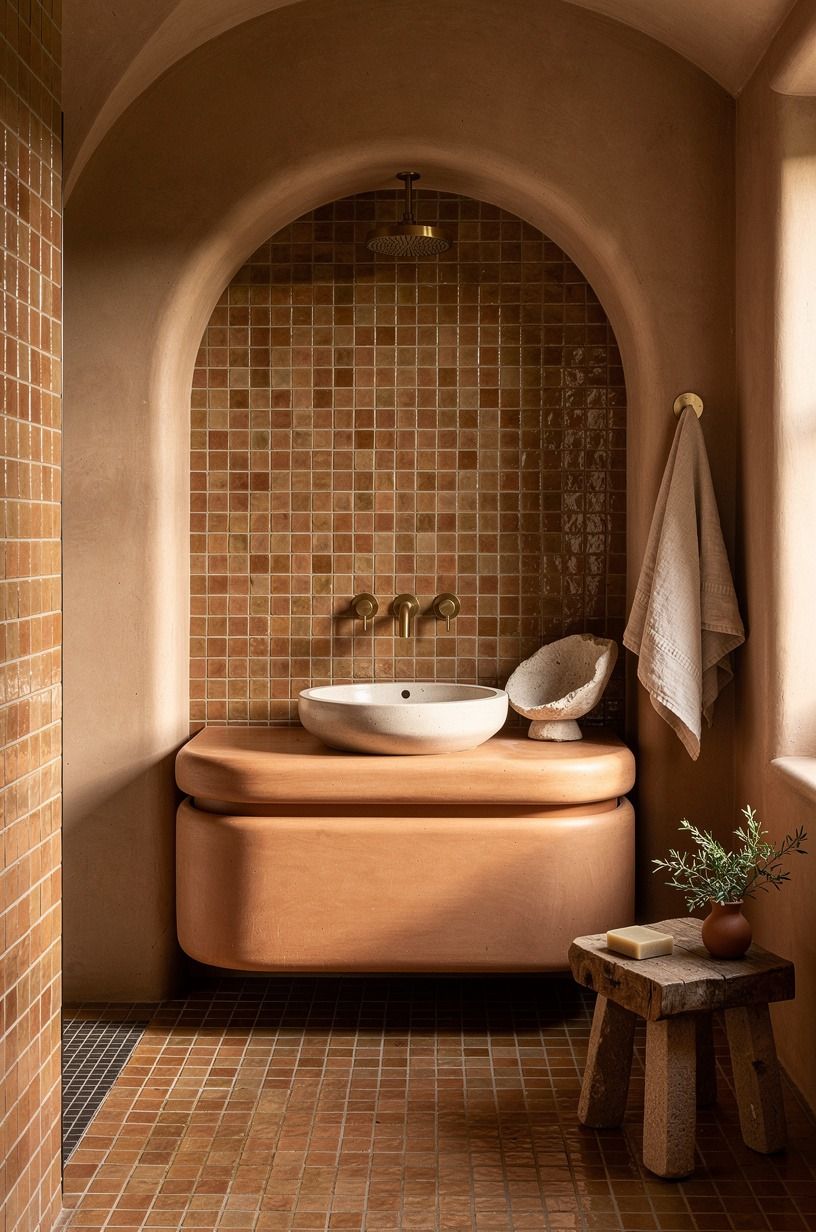
I wasn't ready to retile the shower, so I treated this as a future layer. If you are redoing yours, hand-glazed clay zellige is the one finish I'd choose over perfectly uniform subway tile. Pair it with linen tones and aged brass, especially unlacquered brass that develops a soft patina over time.
A comfortable shower needs at least 36x36 inches, so don't crowd that footprint with a bulky ledge just for styling. Keep your niches clean and let the tile do its quiet work. Zellige typically runs $15-$35 per square foot, and that variation is why it earns the price.
See more zellige tile bathroom ideas for handmade glossy character.
8Hang Belgian Flax Linen Where Plastic Used to Be
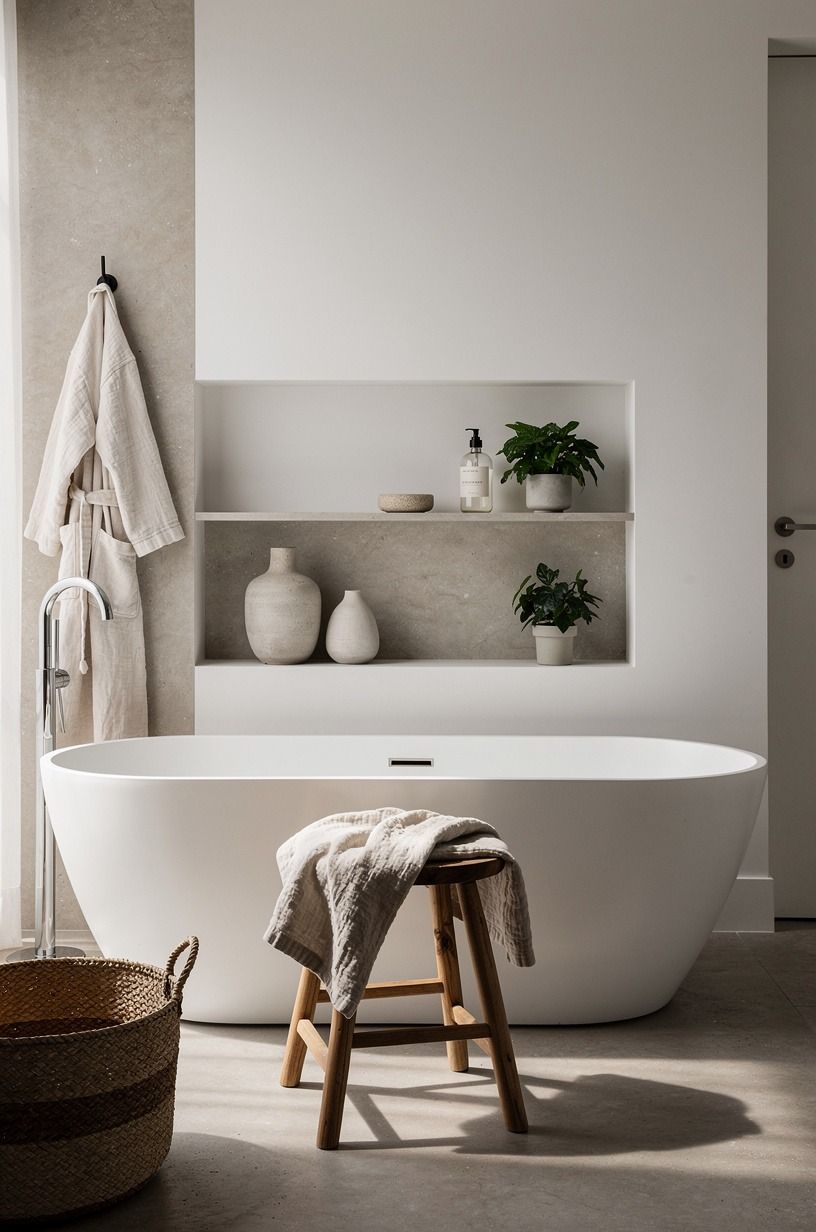
My shower curtain was shiny, stiff, and somehow louder than the entire room. I replaced it with Belgian flax linen in a plum-gray tone with a touch of rose gold nearby. The fabric had enough weight to feel refined, but it still moved when the window was cracked.
You should hang the rod closer to the ceiling than the shower edge. That extra vertical line makes your room feel taller, and the linen softens the oversized-chip terrazzo underfoot. I’d skip a gray curtain here.
Gray next to blue-black can look like you gave up halfway through.
9Choose Warm Wood Over a Matching Vanity
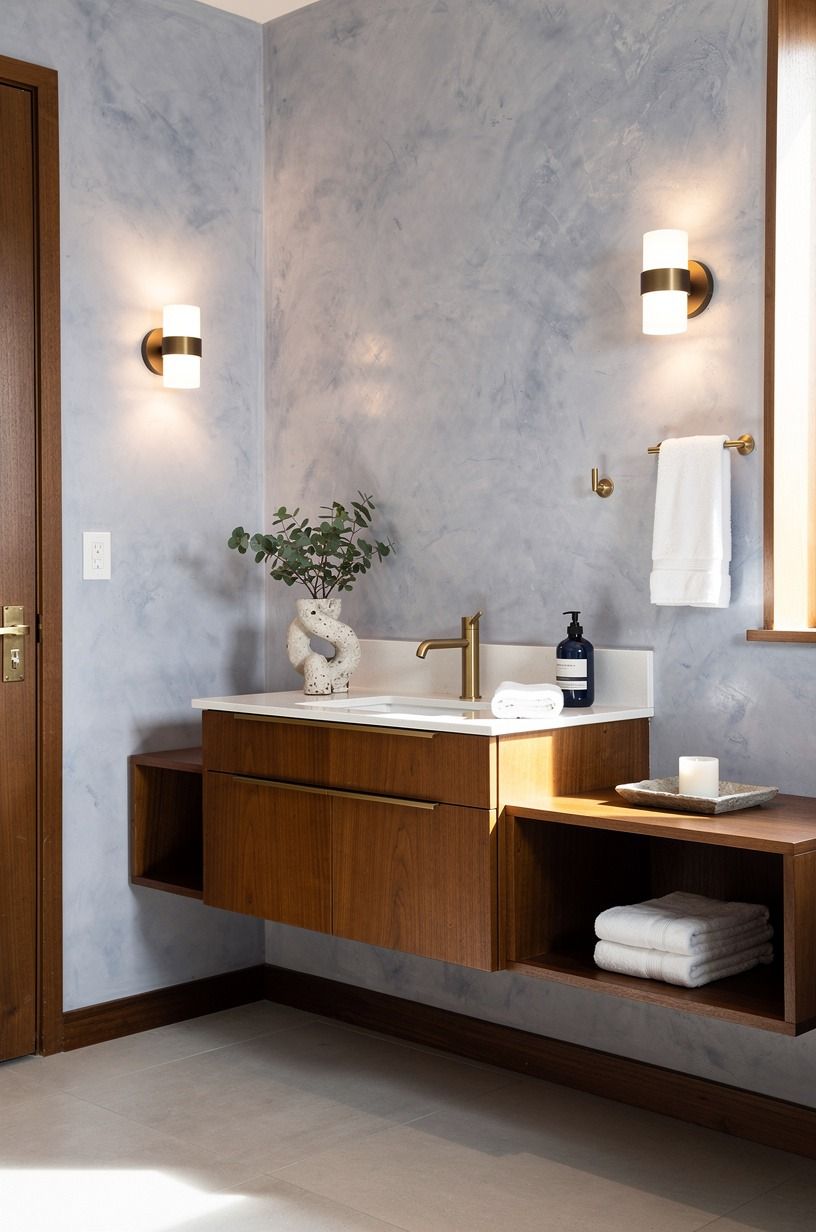
I considered painting the oak vanity dark. Then I put a dark sample beside the limewash and watched the whole room turn into one murky lump.
So I kept the wood, sanded the glossy orange tone down, and sealed it with a matte finish. Navy, white, walnut, and hand-applied Venetian plaster gave the room the contrast I wanted without forcing a matching vanity.
Your vanity doesn't need to match the walls. It needs to interrupt them.
A little grain, a little amber, a clean white counter. That's what made my moody modern home aesthetic feel lived-in instead of theatrical.
10Build the Towel Ladder Moment, Then Stop
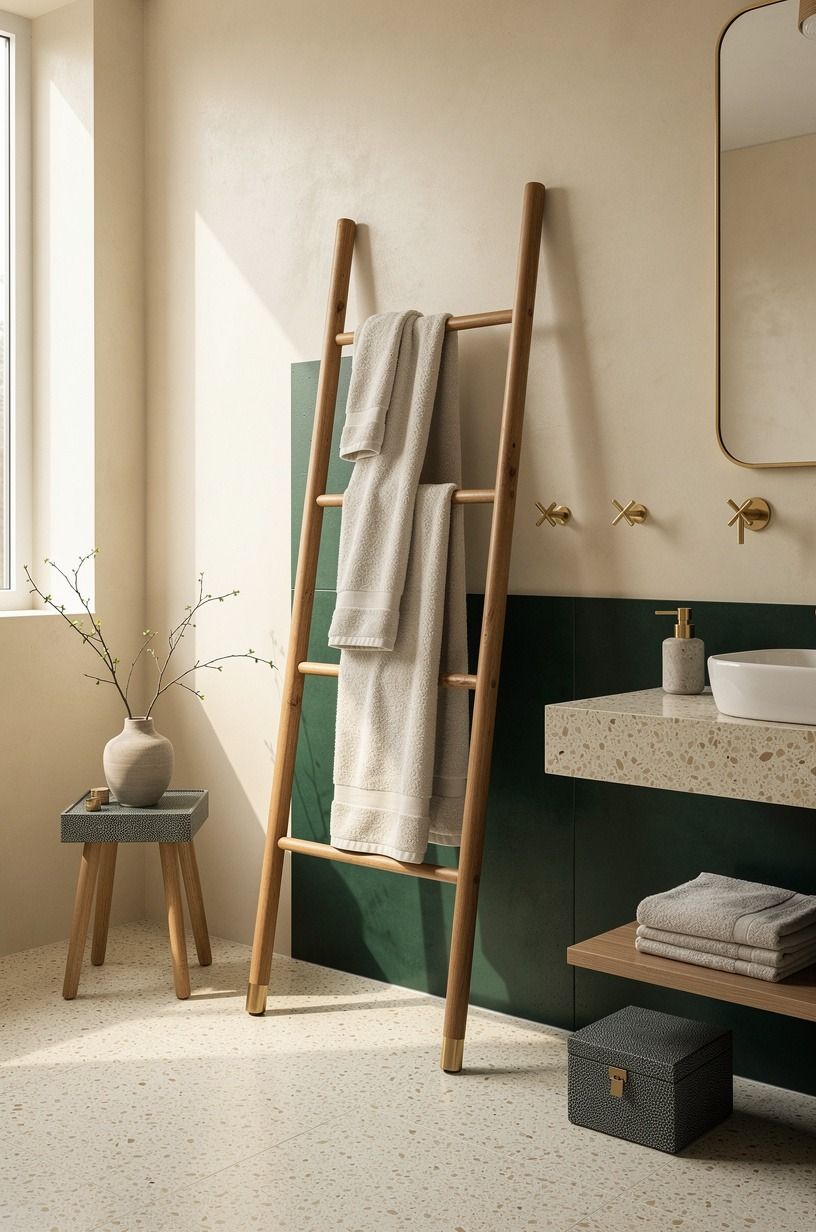
I leaned a narrow oak towel ladder beside the tub and folded two Turkish cotton towels over the top rung. Against emerald, gold, cream, and a few shagreen accents, it was enough. You can ruin a dark bathroom by treating every empty inch like a retail display, and I nearly did.
One textured towel, one hand towel, one small basket. Enough.
Your wall finish already has movement, so the objects should be calm. I like 600gsm Turkish cotton here because it feels substantial after a shower and doesn't look flimsy against a deep wall.
Soft, warm, done.
11Put a Real Finish on the Faucet Decision
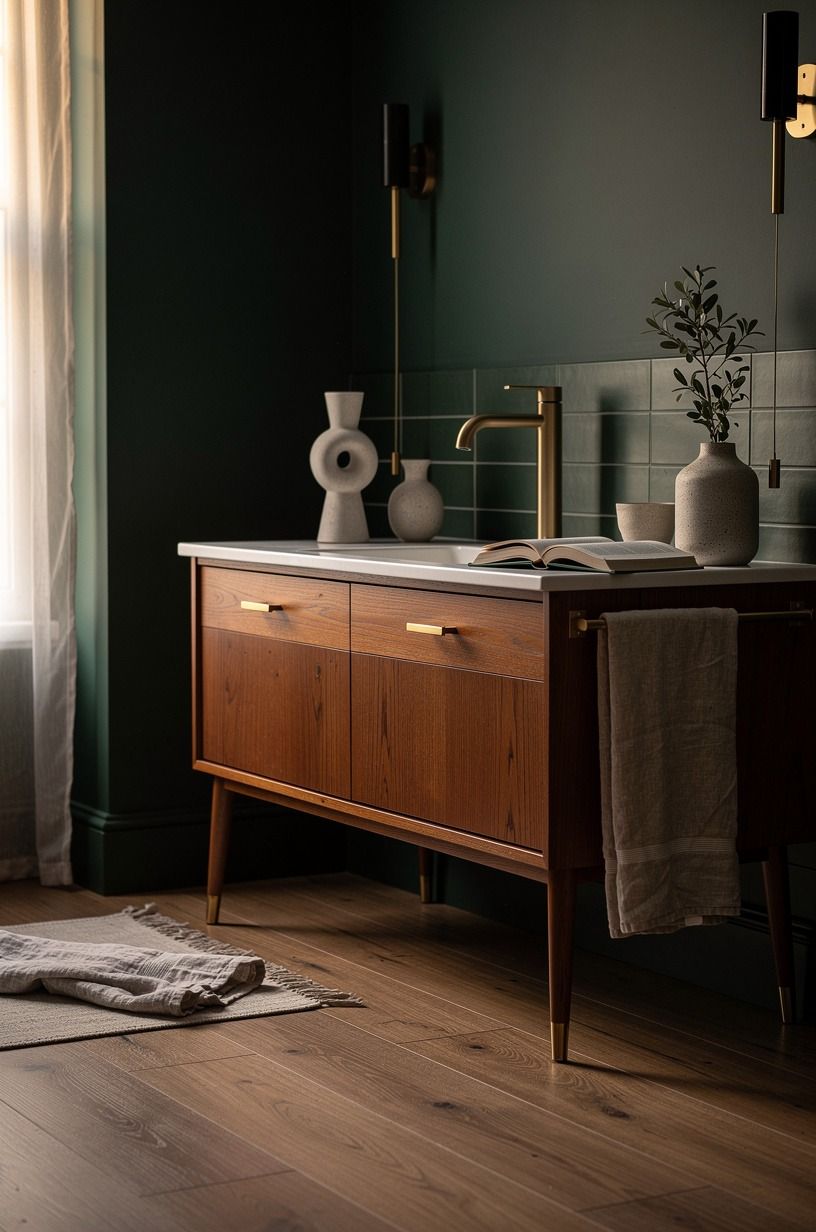
A brushed brass faucet was not the cheapest swap, but it changed the room faster than any accessory. Brushed brass faucet hardware typically costs $120-$450, and I chose the middle ground rather than the bargain option with a lacquered yellow finish. Forest green, rust, natural oak, and washed Belgian linen made the muted finish feel right at home.
You can keep your existing sink if the shape is decent. Mine was fine, just ignored.
The new faucet gave your eye a destination, and its curved spout broke up all those square edges from the vanity, mirror, and tile. Worth it!
12Try Sea Salt Before You Commit to a Nearly Black Wall
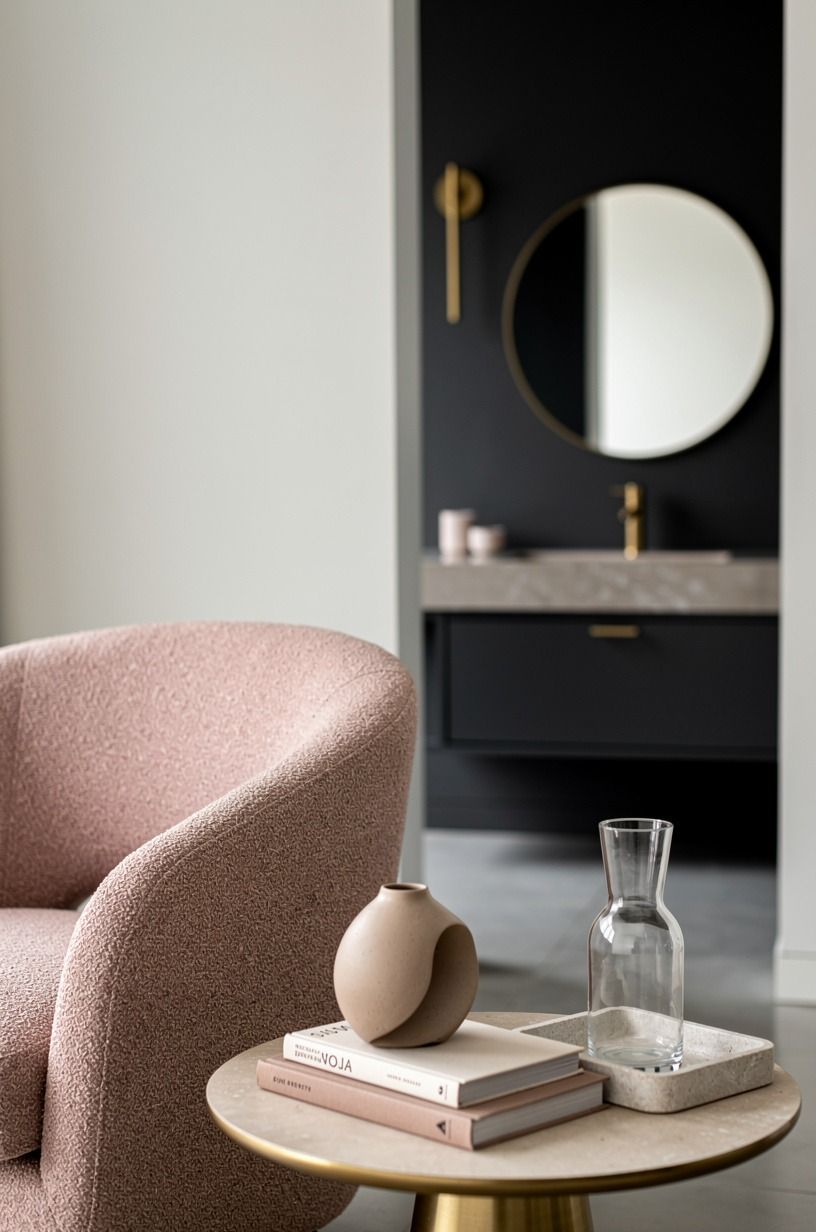
Not every moody limewash bathroom needs navy. I tested Sherwin-Williams Sea Salt SW 6204 in the nearby hall, and its green-gray softness made the dusty rose, charcoal, brass, and organic bouclé in the darker bathroom feel even deeper when the door opened. You could use it inside a brighter bathroom too, especially if you want a calming finish rather than full drama.
But don't expect it to behave like a pale neutral. In low light, it goes quiet and gray.
That's the point. If you want a wall that stays crisp white at all hours, choose something else. For me, the changing color felt more intimate.
13Make the 21-Inch Clearance Feel Deliberate
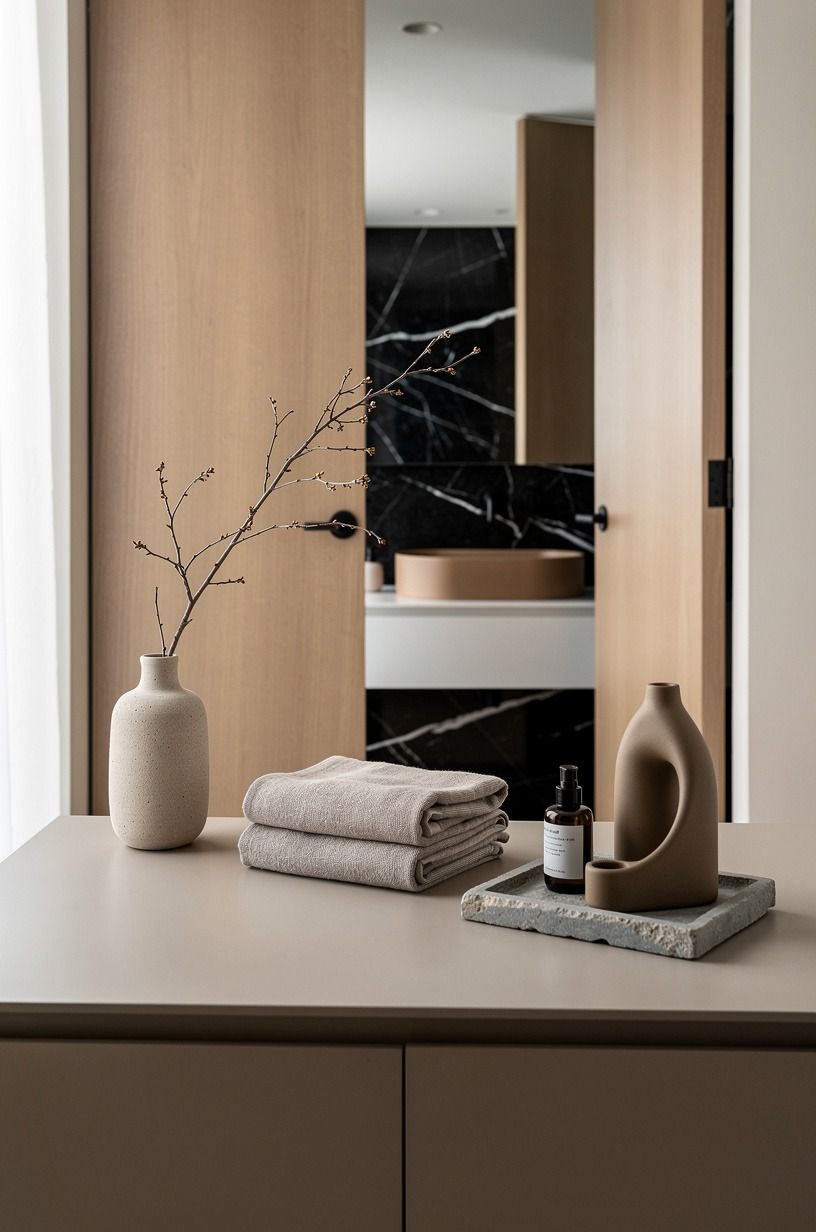
The space in front of a toilet should have at least 21 inches of clearance, and mine was exactly where it needed to be. Still, it looked cramped because the wall color stopped abruptly behind it. I carried the limewash around that corner, then used warm white, camel, black accents, and Nero Marquina black marble with white veins to make the small zone feel intentional.
You don't need a shelf above the toilet if it makes your shoulder brush it every time you sit down. I’d skip floating decor there. A moody toilet room feels better when circulation stays clear, even if that means fewer places for candles and tiny jars.
14Pull in a Stone Note Without Buying a Stone Room
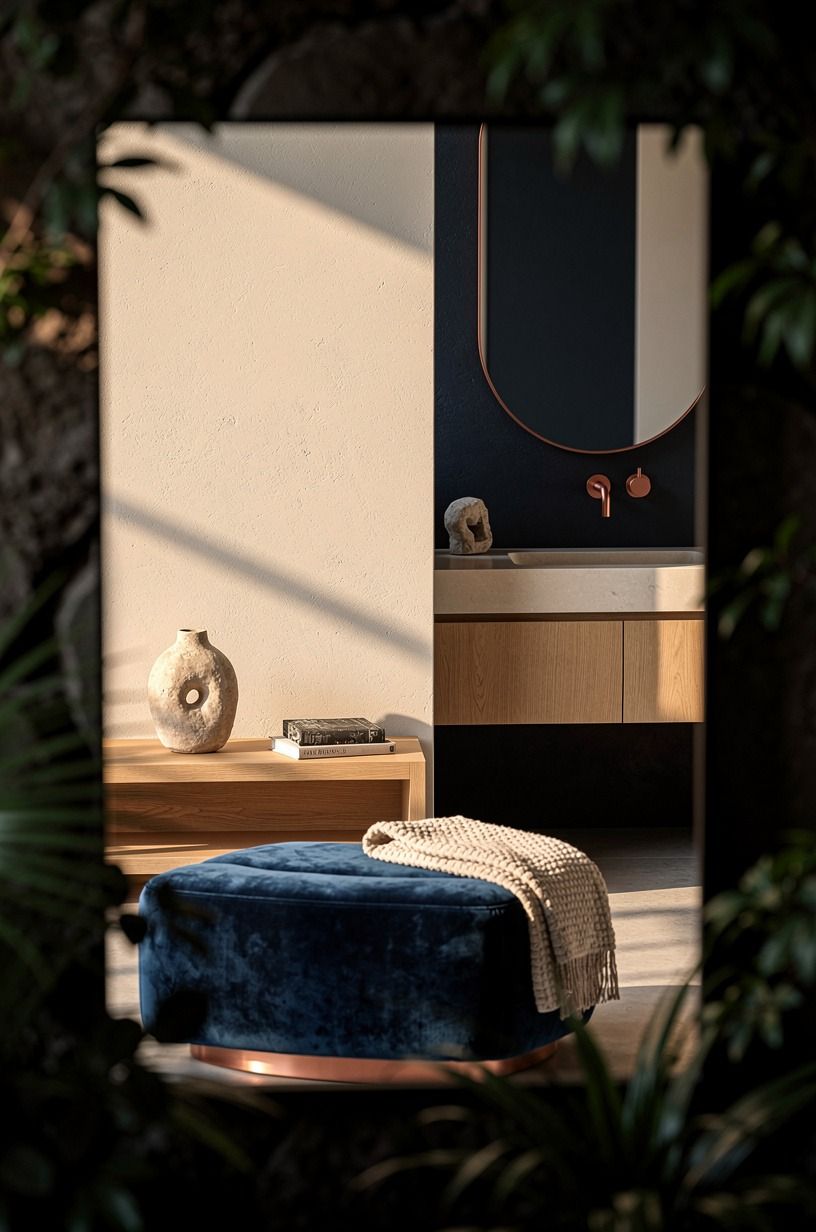
I wanted the depth of stone without the invoice. Midnight blue, copper, ivory, and deep-pile mohair velvet brought that same richness into the room without asking every surface to be hard or expensive.
15Use the Quiet-Corner Test Before Adding Art
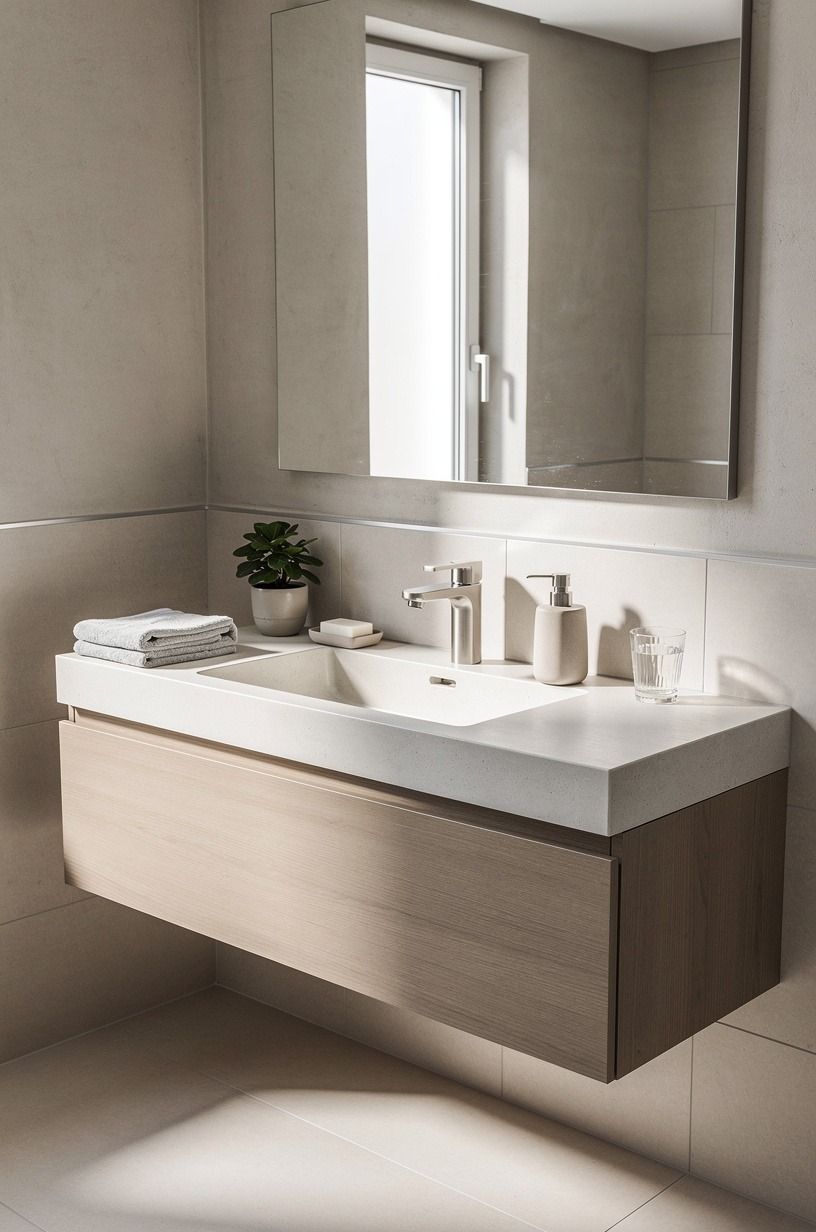
I put art on the wall once, took it down, and put it back up three days later. The quiet-corner test is this: stand in the doorway and ask whether your wall texture needs help, or whether you just feel nervous leaving it alone.
Mine needed one small antique landscape print in a dark wood frame, not a gallery wall. Sage green, warm cream, natural wood, and Carrara marble with subtle grey veining made restraint feel intentional.
Would you hang art in a shower? Of course not.
So don't make every bathroom wall perform. Your limewash is already the main character, and a single faded print gives it a little history without competing for attention.
For another approach to layered walls, I like these venetian plaster wall ideas for subtle depth filled texture.
16Layer the Counter With the Five-Object Ceiling
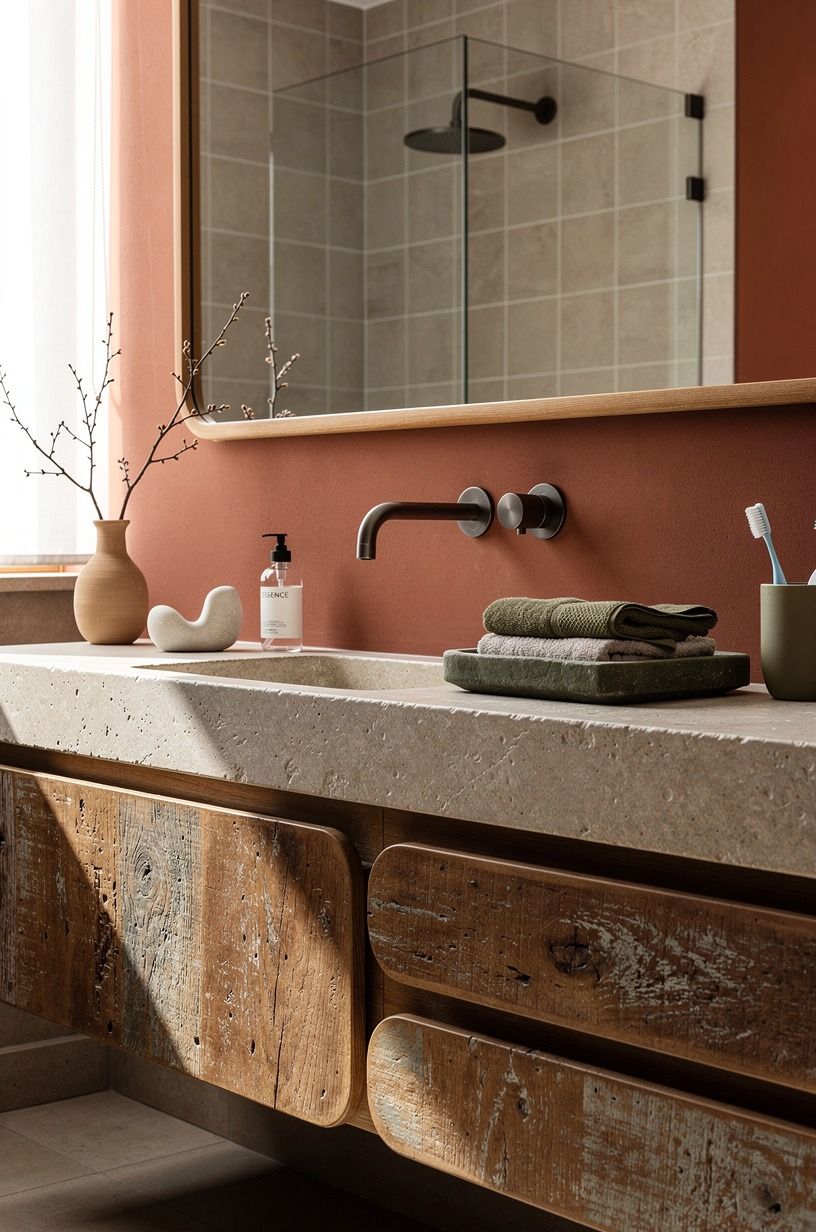
I gave myself a ceiling of five visible objects: soap, tray, hand towel, lamp, and one small vessel. Amber glass soap bottles made the counter feel intentional while hiding the loud labels that had been shouting from the sink. Terracotta, stone, olive, and reclaimed weathered teak made the slight mismatch feel warmer, not messier.
But don't buy five matching containers. That's where bathrooms start feeling staged. I mixed old glass, a squat ceramic cup, and one worn brass dish (a flea-market find), and the slight mismatch made the room more welcoming.
The moody finish needed that bit of human mess.
17Spend Your Budget Where the Eye Lands First
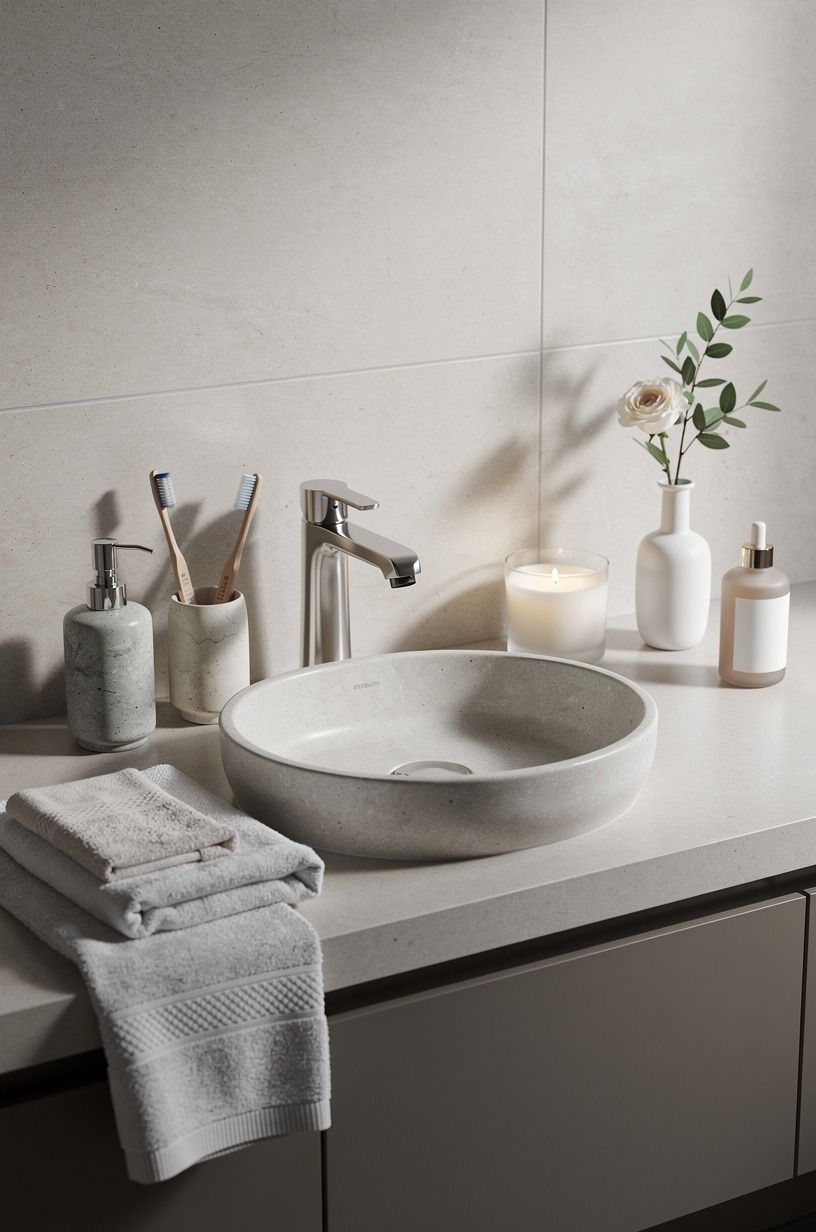
Here is the honest breakdown I used when deciding what to change. You can do a budget layer without touching plumbing, then save the larger work for a future bathroom renovation. My paint, mirror, faucet, and textiles changed the room before I had any reason to consider tile.
I stayed in the budget lane because the existing layout worked. Your biggest visual return is usually the wall finish and lighting, not a new toilet or a trendy vanity. Clay, linen, aged brass, and Calacatta marble with gold veining can feel surprisingly dramatic when you stop spending on filler.
18Let the Room Stay a Little Unfinished
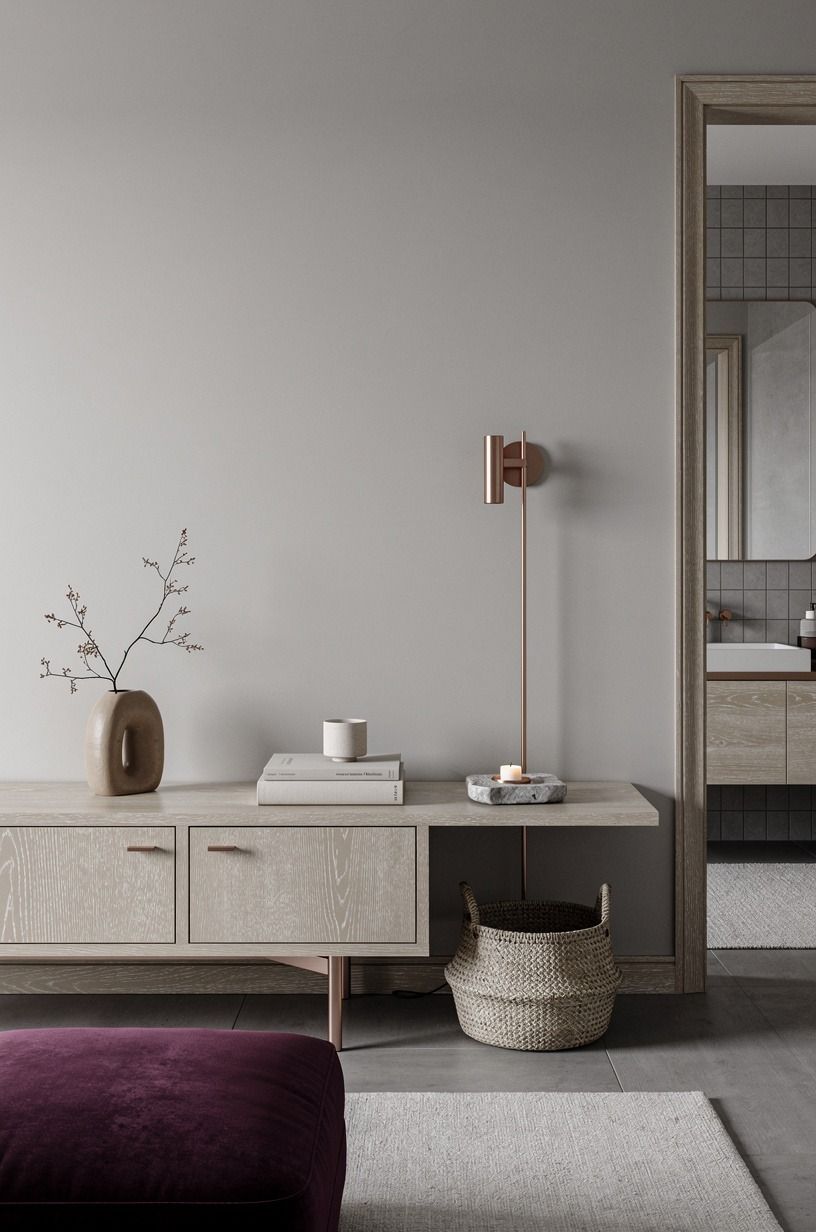
This is the part I had to learn. Plum, grey, rose gold, and cerused white oak gave the room enough softness that I stopped trying to polish every last decision.
Why I Think Moody Limewash Works Better Than a Full Renovation
I used to think a bathroom had to be stripped back to matter. New tile, new vanity, new fixtures, new everything.
That belief is expensive, exhausting, and often a little boring. What I wanted was not a showroom bathroom.
I wanted a room that made brushing my teeth at midnight feel less like a chore.
Limewash gave me that because it changes with the day. In early light, the wall is softer and almost smoky. At night, beside the brass sconces, it becomes dark and enveloping without looking flat.
Paint can cover a wall; limewash lets you notice it. That distinction sounds fussy until you live with it.
I also think dark bathrooms get unfairly treated as risky. They're only risky when you ignore light, warmth, and scale.
If your vanity is warm wood, your bulbs are gentle, and your mirror reflects the right parts of the room, a deep wall can make a small bathroom feel more intimate rather than smaller. Mine certainly did.
And I won't pretend every choice was romantic. I had to patch a missed brush mark, move the mirror once, and accept that the beige floor was staying. But those limits made the final room more honest.
You don't need permission to start with what you have. You need one strong decision, then the nerve to let it show.
How Much It Cost
My own refresh landed in the budget range: limewash materials, a mirror, lighting, faucet hardware, linen, and a few secondhand details. I spent where you can see and touch the room every day, then left the plumbing and tile alone.
If you're planning a bigger version, spend first on lighting and wall preparation. Your limewash will only look as good as the surface beneath it. Tile can wait.
What People Always Want to Know
What is the best moody limewash bathroom idea for a small bathroom?
A dark feature wall behind the mirror is the best starting point for a small bathroom because it gives you visible depth without swallowing every surface. Pair it with an IKEA HEMNES mirror or a slim brass frame, warm bulbs, and one pale textile.
Where can I buy moody limewash bathroom pieces on a budget?
Start with IKEA, Target Threshold, Wayfair, and Facebook Marketplace for the pieces that don't need to be custom. You'll get more character for less by buying a used wood mirror or brass tray than by ordering a matching bathroom set. See these limewash bathroom ideas for a calm organic modern retreat for more restrained pairings.
How much does a moody limewash bathroom makeover cost?
A simple makeover usually costs about $200 to $1,200 when you keep the layout and use paint, lighting, textiles, and hardware. The free part is editing what you own: remove labels, clear the counter, and move unnecessary storage out.
Can I create a moody limewash bathroom on a budget?
Yes, and you don't need new tile to make it feel intentional. Your cheapest moves are a sample pot, warmer bulbs, and secondhand brass. One deep wall plus a washed linen curtain will do more than a cart full of small decor.
Is a moody limewash bathroom worth it in a small space?
Yes, it’s worth it because a small bathroom lets you see the texture up close, which makes the finish feel more immersive and warm. Keep your mirror large, leave the floor visible, and don't crowd the 21-inch clearance in front of the toilet.
Is a moody limewash bathroom a good idea for a rental?
Yes, if you use removable choices around the permanent fixtures. Try peel-and-stick lighting covers, a tension-rod linen curtain, removable art, and landlord-approved paint. You can also borrow the mood from this earthy moody bedroom retreat without changing the walls.
Where I'd Start First
If I had to pick one, I'd start with the limewash feature wall. You can't fake the shifting, chalky depth with more accessories, and every brass or wood piece looks richer against it. Pin the wall idea for later and begin with one sample board tonight.