
 by
by For couples with different sleep needs:
The Saatva Solaire (split firmness, independent adjustment) — each side independently adjustable, so the night owl and the early riser both sleep on exactly the surface they need.
Chronotype Incompatibility Is a Real and Measurable Problem
Chronotype — your genetically influenced preference for earlier or later sleep timing — is not a habit or a choice. It's determined primarily by PER3 and CLOCK gene variants and shifts predictably across life stages (adolescents skew later; people over 50 skew earlier). When two people with incompatible chronotypes share a bed, the friction is structural, not behavioral.
Research from multiple countries consistently finds that approximately 30% of couples have significant chronotype differences. The effects show up in both sleep quality metrics and relationship satisfaction scores.
What the Research Shows
A 2014 study in Chronobiology International followed 76 couples and measured chronotype discrepancy alongside relationship satisfaction and sleep quality. Couples with larger chronotype differences reported:
- More conflict about bedtime and waking times
- Lower shared time awake together (a significant relationship quality predictor)
- Worse sleep quality for the partner whose chronotype was more frequently overridden
- Higher rates of "social jetlag" in the chronotypically disadvantaged partner
Social jetlag — the mismatch between biological and social sleep timing — is associated with higher rates of depression, metabolic syndrome, and cognitive impairment. When a night owl is consistently forced to wake early, or a morning person is consistently kept up late, both sleep quality and health outcomes suffer.
The Three Conflict Patterns
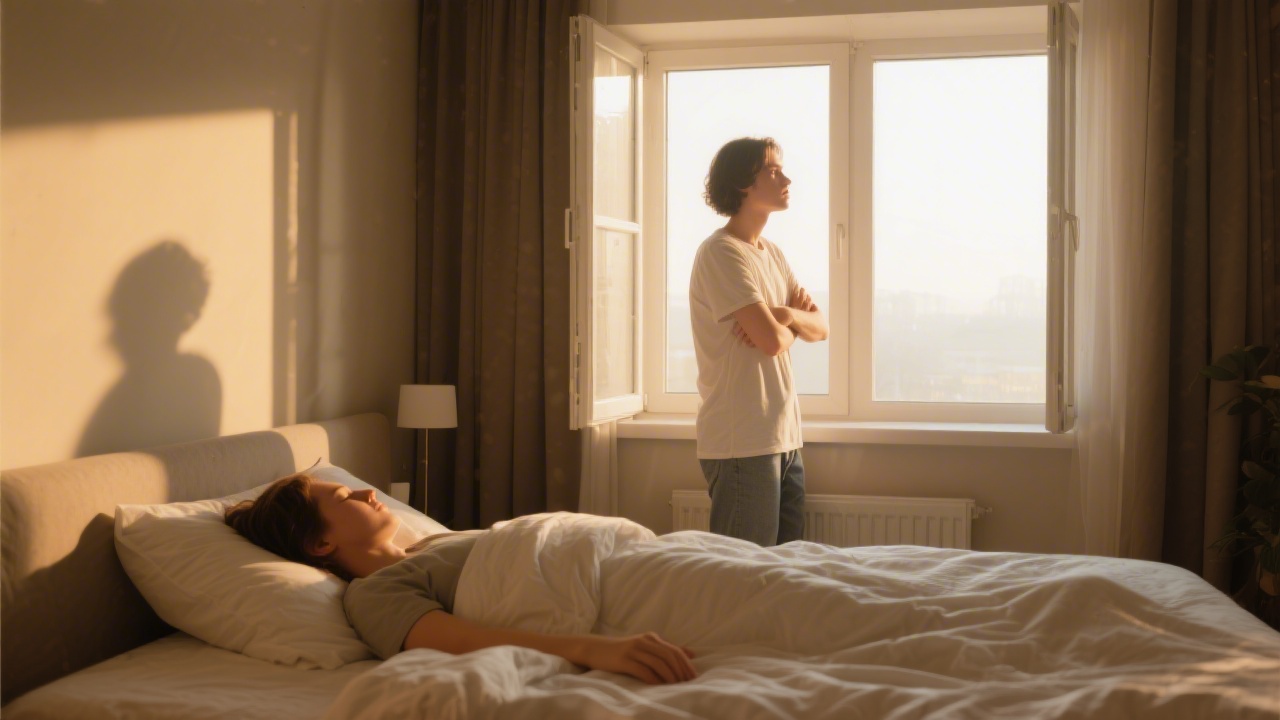
The bedtime standoff. The night owl wants companionship; the morning person is already tired. The morning person going to bed first feels like rejection. The night owl staying up feels like abandonment. Neither partner is wrong — they're running on different clocks.
The morning wake disruption. The early riser gets up at 6am, which wakes the night owl who didn't fall asleep until midnight. Six hours of sleep for the night owl becomes a chronic deficit. The early riser feels guilty; the night owl feels unheard. The mattress quality matters here: poor motion isolation turns every morning exit into a disruption event.
The weekend misalignment. Night owls try to catch up on weekends by sleeping late. Morning people wake early regardless and experience the weekend as "lost time" alone. Neither strategy resolves the underlying deficit — and the night owl's weekend recovery extends their chronotype later, making weekday mornings harder.
Strategies That Actually Work Long-Term
1. Define protected overlap time. Identify the hours when both partners are naturally alert and awake together — usually late morning or early afternoon. Protect this time for connection and shared activity. Stop relying on evening overlap for intimacy; design for the morning window instead.
2. Decouple bedtime from intimacy. One of the most damaging patterns is treating shared bedtime as a proxy for relationship quality. When one partner goes to bed earlier, the other experiences it as disinterest. Explicitly decoupling these — "going to bed early doesn't mean I don't want to be with you" — removes a significant source of chronic low-level conflict.
3. Optimize the morning exit. The early riser's morning routine shouldn't compromise the night owl's sleep. Blackout curtains to prevent light exposure, silent alarm options (vibrating watch or under-pillow alarm), and a mattress with excellent motion isolation all reduce the impact of an early exit. The white noise machine research is consistent: consistent ambient sound masks the acoustic disruptions of an early-riser morning routine.
4. Accept partial chronotype convergence. Long-term couples show gradual chronotype averaging — night owls shift slightly earlier, morning people slightly later. This doesn't eliminate the difference but reduces the friction. Acknowledge the convergence that's already happened rather than demanding full alignment.
5. Strategic sleep divorce. For couples with very large chronotype differences, separate sleep environments — even separate rooms — can resolve chronic sleep disruption while preserving the relationship. The key is explicit agreement that this is a sleep optimization strategy, not a relational statement. Sleep deprivation damages relationships far more than sleep divorce does.
6. Adjust sleep environment for independent comfort. One underutilized solution: a mattress with per-side adjustability. If the night owl runs warm and the morning person runs cool, if they prefer different firmness levels, a split-adjustable mattress removes the nightly negotiation about surface feel entirely — and reduces the grounds for low-level sleep resentment.
Can a morning person and night owl have a successful relationship?
Yes. Chronotype incompatibility is structural, not fatal. Successful couples manage it by defining shared overlap time, decoupling bedtime from intimacy, and optimizing the sleep environment for independent comfort — not by forcing one partner onto the other's schedule.
What is chronotype and can it change?
Chronotype is your genetically influenced sleep timing preference. It shifts with age (later in adolescence, earlier after 50) but doesn't change easily through behavior. Long-term couples show gradual partial convergence over years of shared living.
How do you sleep with a partner who has a different schedule?
Separate bedtimes without relational pressure, silent alarms, strong motion isolation in the mattress, white noise to mask morning sounds, and agreed-upon protected time for connection during natural overlap hours.
What is social jetlag and how does it affect couples?
Social jetlag is the mismatch between biological sleep timing and socially forced timing. When a night owl is chronically forced to wake early to match a partner's schedule, they accumulate sleep debt and health consequences associated with circadian misalignment.
Do chronotype differences get better over time?
Partially. Research shows long-term couples show gradual chronotype convergence — night owls shift slightly earlier, morning people slightly later. It doesn't eliminate the difference but reduces daily friction meaningfully.
Remove the nightly negotiation:
The Saatva Solaire (split firmness, independent adjustment) — each side independently adjustable for firmness and feel, so your different sleep preferences stop being a source of compromise.