
 by
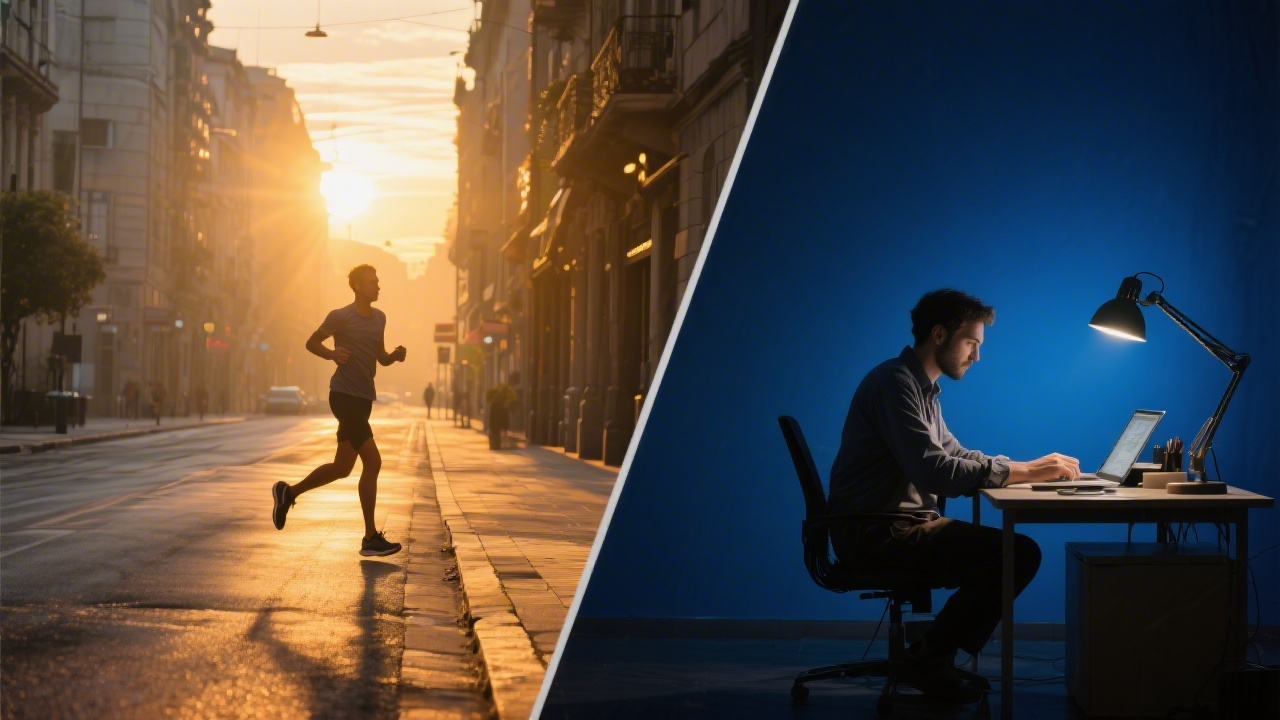
by The morning person vs. night owl divide is one of the most persistent myths in sleep science — not that the divide exists, but that it's a choice. Chronotype is substantially genetic, developmentally regulated, and largely resistant to behavioral override. Here's what the science actually says.
Our Recommended Mattress for Healthy Sleep
The Saatva Classic offers zoned lumbar support and premium coil-on-coil construction that promotes proper spinal alignment — key for restorative sleep that keeps your circadian rhythm on track.
The Genetic Basis of Morning vs. Evening Preference
In 2019, a genome-wide association study of 697,828 individuals published in Nature Communications identified 351 genetic loci associated with morning vs. evening preference. The effect sizes are small individually, but collectively explain a significant portion of chronotype variance. Key genes include:
- PER1, PER2, PER3: Period genes encode core components of the circadian feedback loop. Variants affect the period length and phase of the internal clock.
- CRY1, CRY2: Cryptochrome genes. A CRY1 variant (c.1657+3A>C) has been linked to familial delayed sleep phase disorder — affected carriers have an intrinsic circadian period of ~24.5 hours instead of ~24.2 hours, causing progressive sleep timing delay.
- CLOCK: The CLOCK gene product forms a heterodimer with BMAL1 to drive transcription of period and cryptochrome genes. Variants affect the precision and period of the oscillation.
Pros and Cons
What We Like
- Luxury innerspring with excellent lumbar support
- Multiple firmness options available
- Free white-glove delivery and mattress removal
- 365-night trial and lifetime warranty
What Could Be Better
- Higher price than many online brands
- Heavier than foam mattresses
- Not compressed in a box
- Some off-gassing possible initially
Performance Differences: What Research Shows
Morning types show better academic performance in conventional school systems — but this is largely an artifact of schedule alignment, not intrinsic cognitive advantage. When testing is done at matched circadian times (morning types tested in the morning, evening types in the evening), performance differences largely disappear.
A 2019 University of Birmingham study found that night owls forced to follow conventional schedules showed higher physiological stress markers, poorer reaction times, and greater sleepiness throughout the day — all of which normalized when they were allowed to follow their natural schedule.
The Productivity Myth
"Early risers are more successful" is a survivorship bias artifact. Fortune 500 CEOs who wake at 4am are noteworthy precisely because they're atypical — and many of them are genuine early chronotypes for whom 4am is natural, not heroic. Studies of work output and creative production show that when people work during their circadian peak, performance is equivalent regardless of whether that peak is 8am or 8pm.
That said, most institutional schedules — schools, financial markets, government hours — favor morning types. This represents a real systemic disadvantage for late chronotypes, not a character flaw.
How Much Can You Actually Change?
A 2019 study in Sleep Medicine tested a 3-week intervention combining fixed wake times, light therapy, structured meals, and exercise in self-identified night owls. Results: sleep midpoint advanced by 2 hours on average, with improvements in reaction time, grip strength, and mood. Critically, participants maintained the same total sleep — they fell asleep earlier, not just woke earlier.
The intervention worked because it targeted zeitgebers systematically — it wasn't just "set an alarm earlier." Behavioral zeitgeber manipulation can shift chronotype by 1-2 hours. Beyond that, you're fighting genetics.
When Night Owl Becomes a Clinical Disorder
When the delay is severe — typically 2+ hours beyond desired sleep time, with inability to advance despite trying — the diagnosis is delayed sleep phase syndrome (DSPS). This is estimated to affect 0.2-10% of the general population and up to 7-16% of adolescents. It requires clinical management, not lifestyle advice.
Practical Adjustments by Type
If you're a confirmed morning type: protect your evenings. Social pressure to stay out late creates acute sleep loss that can't be fully recovered. If you're a confirmed night owl with a conventional schedule: maximize zeitgeber alignment in the morning (light therapy), manage social jet lag by limiting weekend sleep deviation, and advocate for schedule flexibility where possible.
Either way, your mattress should support the quality of sleep you do get. Our guide to the best sleep quality improvements covers both behavioral and environmental interventions.
Our Recommended Mattress for Healthy Sleep
The Saatva Classic offers zoned lumbar support and premium coil-on-coil construction that promotes proper spinal alignment — key for restorative sleep that keeps your circadian rhythm on track.
Frequently Asked Questions
Is being a morning person or night owl more genetic or environmental?
Research suggests roughly 50% heritability. Genetics set the range; environment (light exposure, meal timing, social schedules) determines where within that range you land. You can shift within your genetic window, but not outside it.
Can night owls ever become morning people permanently?
Significant permanent shifts (more than 2 hours) are unlikely without clinical intervention. Sustained behavioral protocols can achieve 1-2 hour advances, but require consistent maintenance. Relaxing the intervention typically results in gradual reversion to the genetically preferred phase.
Why do teenagers naturally stay up late?
Puberty triggers a biological phase delay in the circadian clock driven by changes in melatonin timing and light sensitivity. This is neurological, not behavioral. The phase begins advancing again in the early 20s. Forcing early school start times on adolescents creates documented performance and mental health consequences.
Do morning people need less sleep than night owls?
No. Sleep need is separate from chronotype. Both morning and evening types require 7-9 hours of sleep. The difference is in the timing, not the amount. Morning people who sleep 6 hours are sleep-deprived, just as night owls who sleep 6 hours are.
Does blue light affect morning people and night owls differently?
Evening types show greater sensitivity to light-induced melatonin suppression in the evening, making blue light exposure particularly problematic for them. Morning types have already transitioned to lower alertness by 9-10pm and are less vulnerable to evening light disruption — but not immune to it.
The Verdict
Choose Morning Person if: You value what Morning Person offers in construction, materials, and sleep technology.
Choose Night Owl if: You prefer Night Owl's design philosophy and material choices. Compare pricing and trial periods.
Both serve different sleep needs. Choose based on your body type, sleep position, and comfort preferences.