
 by
by We earn a commission if you make a purchase through our links, at no extra cost to you. Full disclosure.
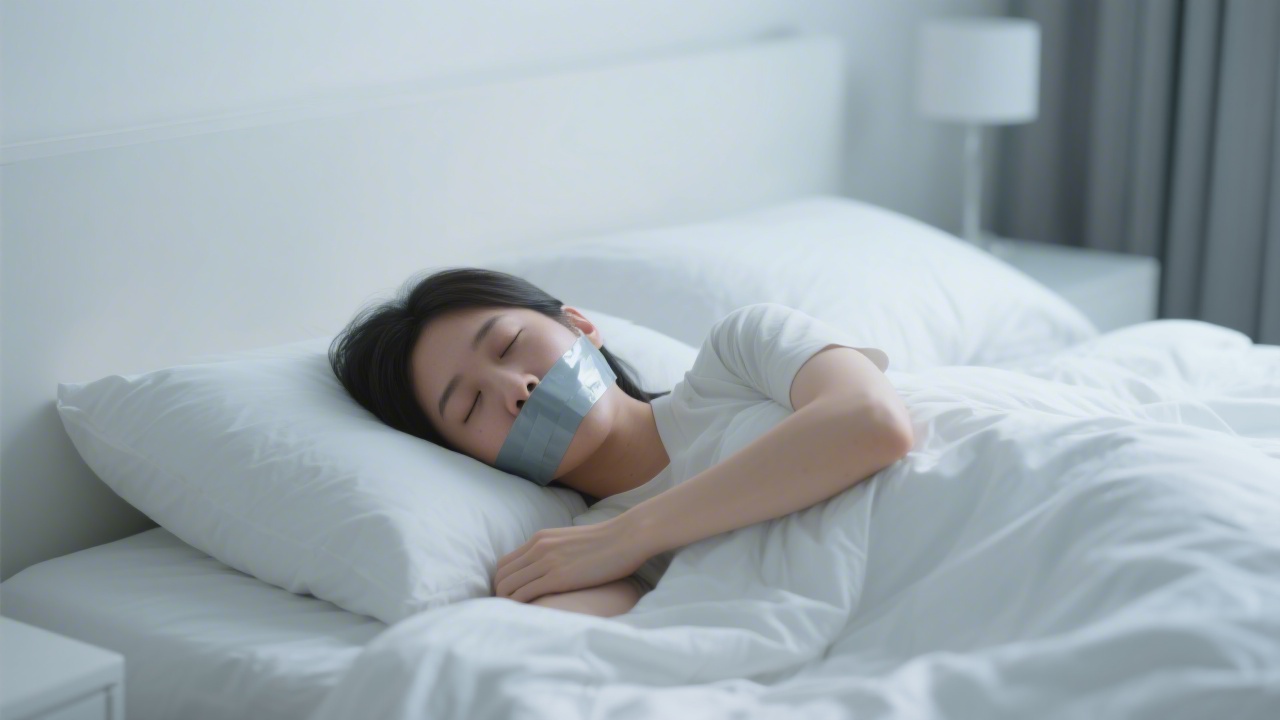
Mouth taping — placing a small piece of tape over the lips during sleep to encourage nasal breathing — went from obscure biohacker practice to mainstream in roughly 2021, largely off the back of James Nestor's book Breath. The claimed benefits: reduced snoring, better sleep quality, improved nitric oxide production, and less dry mouth. But the practice also carries real risks that wellness influencers tend to downplay. Here's the full picture.
Sleep Quality Starts with Your Surface
Breathing optimization is a meaningful intervention — but it works best when your sleep surface supports proper alignment. An unsupportive mattress forces compensatory posture changes that can affect nasal passage patency and airway position.
What the Science Says About Mouth Taping
Nasal breathing during sleep is genuinely superior to mouth breathing on several metrics. Nasal breathing produces nitric oxide (NO) — a potent vasodilator that improves oxygen uptake efficiency by up to 10–15%. The nasal passages filter, humidify, and warm air before it reaches the lungs. Mouth breathing bypasses these functions, drying out oral tissues and increasing infection susceptibility.
A 2015 pilot study in the Journal of Clinical Sleep Medicine found mouth taping reduced snoring intensity in mild snorers. A 2022 study in Healthcare (MDPI) found tape reduced snoring and daytime sleepiness scores in mouth-breathing participants. However: sample sizes were small (under 30), follow-up periods short, and neither study included participants with untreated sleep apnea.
The critical gap: no RCT has specifically examined mouth taping's effect on sleep architecture (slow-wave sleep, REM proportions) using polysomnography. The mechanism is biologically plausible; the clinical evidence is thin.
Best Mouth Tape Options Compared
| Product | Price | Adhesive Strength | Skin Sensitivity | Shape |
|---|---|---|---|---|
| Somnifix | $20/28 strips | Medium (elastic) | Hypoallergenic | H-shape with vent |
| Nexcare Sensitive Skin | $8/50 strips | Gentle | Best for sensitive skin | Small strip (DIY trim) |
| Hostage Tape | $30/30 strips | Strong | May irritate sensitive skin | Rectangular |
| 3M Micropore (medical) | $6/roll | Gentle | Excellent (paper tape) | Roll (cut to size) |
Our recommendation for beginners: Start with 3M Micropore surgical tape (paper tape, not plastic) or Nexcare Sensitive. These are gentle enough to remove without skin irritation. Somnifix is purpose-built with an air vent for comfort. Avoid any tape with strong plastic adhesive on the face.
Who Should Try Mouth Taping / Who Absolutely Should Not
Reasonable candidates: Habitual mouth breathers with no nasal obstruction, mild snorers without apnea, people experiencing dry mouth or throat on waking, and those wanting to experiment with nasal breathing habituation for daytime as well as nighttime.
Contraindications — do not try mouth taping if: You have diagnosed or suspected obstructive sleep apnea (OSA). This is critical — OSA patients can have obstructed airflow events and need the ability to mouth breathe as a safety mechanism. Severe nasal congestion or structural issues (deviated septum, enlarged turbinates) will make nasal-only breathing uncomfortable or dangerous. Vomiting risk (nausea, GERD, post-operative states). Claustrophobia. Children should never use mouth tape without physician guidance.
Verdict: Low-Risk for the Right Candidate, High-Risk for Others
For mouth-breathing adults without apnea who already have clear nasal passages, mouth taping is a cheap, low-risk experiment with plausible biological mechanisms. The risk profile is excellent for the right candidate. For anyone with undiagnosed sleep apnea, it's potentially dangerous. Get screened for apnea before experimenting — the STOP-BANG questionnaire takes 2 minutes and identifies high-risk individuals. The biohacking community has oversimplified this one.
Also Worth Addressing: Your Sleep Surface
Head position and spinal alignment directly affect airway patency. A mattress that sinks under lumbar weight can tilt the neck and compromise nasal breathing. Support matters.
How to Test Before Buying: A Practical Buyer's Guide
Buying a mattress online without testing it first is now the norm -- but it does not have to be a gamble. Understanding what to look for, and how to evaluate a mattress during the trial period, significantly increases your chances of a successful purchase.
The 30-Day Rule
Your body needs time to adjust to a new sleep surface. Sleep researchers recommend giving any new mattress at least 30 nights before making a final judgment -- especially if you are coming from a worn-out mattress. Initial discomfort in the first 1-2 weeks is normal as muscles adjust to proper alignment.
Key Factors to Evaluate During Your Trial
- Morning stiffness: Does it resolve within 15-30 minutes? Persistent stiffness beyond that suggests poor support.
- Pressure points: Any tingling or numbness in hips, shoulders, or knees? Consider a softer option.
- Temperature: Do you wake up sweating or kicking off covers? Evaluate breathability.
- Motion transfer: If you sleep with a partner, can you feel them move? Test motion isolation.
- Edge support: Sit on the edge -- does it compress significantly? Important for getting in and out of bed.
When to Use the Trial Period
Do not wait until day 99 of a 100-night trial to decide. If you are experiencing consistent issues after 4-6 weeks, initiate the return or exchange process. Most premium brands -- including Saatva -- make this straightforward with free pickup and no restocking fees.
Matching Mattress to Sleeper Type
No single mattress works for everyone. As a general guide: side sleepers need softer feels (medium to medium-soft) for shoulder and hip pressure relief; back sleepers perform best on medium-firm for lumbar support; stomach sleepers need firm options to prevent lower back arch. Combination sleepers -- those who move between positions -- benefit most from responsive latex or hybrid constructions.
Frequently Asked Questions
Is mouth taping safe?
Safe for healthy adults without sleep apnea or significant nasal obstruction. Dangerous for people with obstructive sleep apnea, as taping the mouth removes a safety breathing pathway during apnea events. Always rule out sleep apnea first.
Does mouth taping stop snoring?
Can reduce snoring in mouth breathers where snoring is caused by oral airway vibration. Does not help snoring caused by nasal obstruction or throat anatomy. Two small studies show measurable reduction in mild-to-moderate snorers.
What kind of tape should I use for mouth taping?
Medical-grade paper tape (3M Micropore) is safest and cheapest. Purpose-built mouth tapes like Somnifix include a venting hole for safety and are designed for facial skin. Never use duct tape, packing tape, or any tape with strong plastic adhesive on skin.
Can mouth taping cause sleep apnea?
It doesn't cause apnea, but it can be dangerous for people who already have it. Apnea patients rely on oral breathing during obstruction events. Taping the mouth during an apnea event reduces emergency breathing options.
How long does it take to adjust to mouth taping?
Most people adapt within 3–7 nights. Initial discomfort is common. Start with a small piece of tape that creates gentle lip pressure rather than a full seal. Use a tape with a ventilation hole (Somnifix) during the adjustment period.
Related reading: Best Mattress for Back Sleepers | Best Pillow for Neck Pain | Best Mattress for Neck Pain | Best Mattress for Hot Sleepers