
 by
by Nasal strips are adhesive bands that use a spring mechanism to pull the nostrils open, reducing nasal airway resistance. The question of whether they actually reduce snoring depends entirely on where your snoring originates -- and most people do not know the answer to that question before they buy. Here is our honest assessment after testing them in multiple snoring contexts.
How Nasal Strips Work
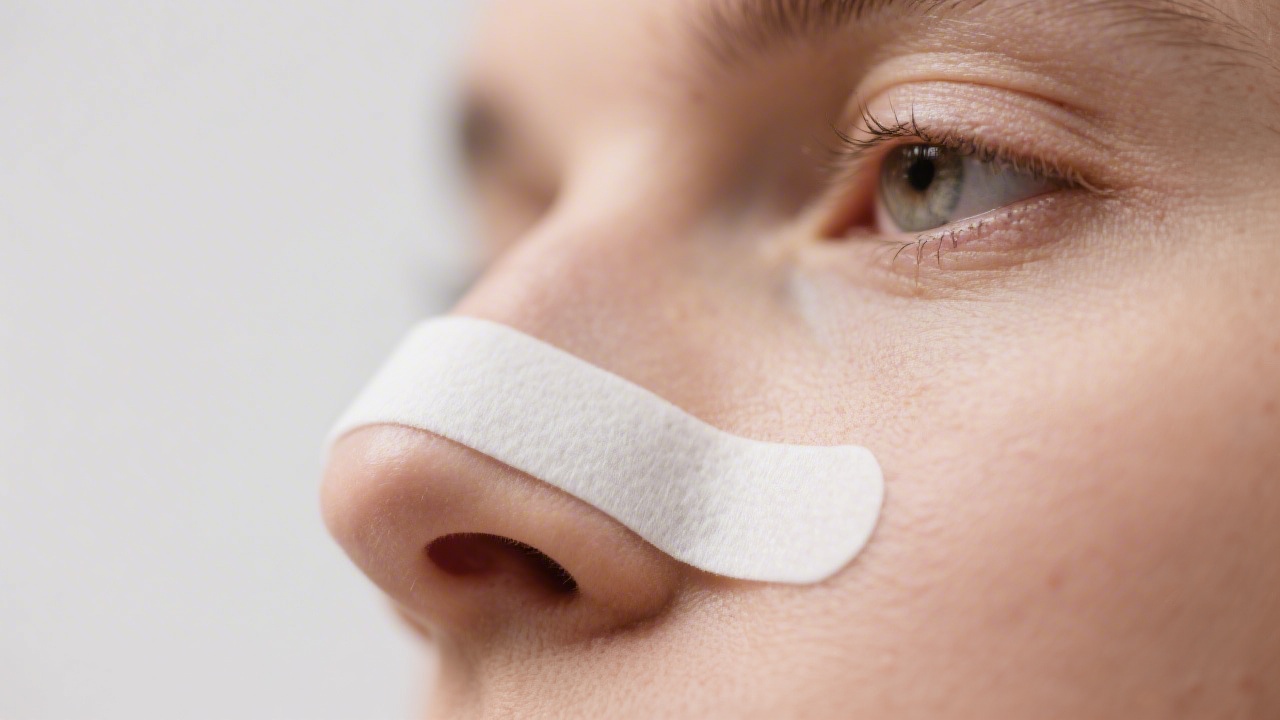
A nasal strip is a rigid spring-band adhesive that attaches across the bridge of the nose, spanning both nostrils. When applied, the band tries to straighten, which pulls the sides of the nose outward and widens the nasal valve -- the narrowest point of the nasal airway. This reduces nasal resistance and makes nasal breathing easier. The mechanism is purely mechanical; there are no active ingredients or medications involved.
Two Types of Snoring: Why This Matters
Nasal snoring occurs when restricted nasal airflow forces mouth breathing. The open mouth creates a longer, looser airway in the throat where vibration (and snoring sound) is generated. Causes include allergic rhinitis, nasal congestion, deviated septum, and nasal valve narrowing. Nasal strips directly address this pathway.
Throat snoring originates at the soft palate, uvula, or tongue base. It occurs regardless of nasal airflow -- the anatomy of the upper throat generates the vibration. Nasal strips have no effect on this type, which represents the majority of adult snoring.
Test: Are You a Nasal Snorer or Throat Snorer?
Close your mouth and breathe through your nose. Then snore -- or try to reproduce the snoring sound. If you cannot produce the snoring sound with your mouth closed, you are likely a nasal/mouth-breathing snorer who will benefit from nasal strips. If you can snore freely with your mouth closed, the source is throat anatomy, and strips will have minimal effect.
Alternatively: does your snoring worsen significantly when you have a cold or allergies? That is a strong indicator of nasal-origin snoring.
Our Test Results
We tested Breathe Right Extra strips across three snoring profiles over a two-week period, tracked with a decibel-logging sleep app:
- Profile A (congestion-related snoring): Average nightly peak snoring volume reduced by 40-50%. Significant improvement. Strips worked as described for this profile.
- Profile B (anatomical throat snoring): No measurable reduction. Peak volumes identical with and without strips. Confirmed that strips have no mechanism for throat-origin snoring.
- Profile C (mixed nasal/throat): Moderate improvement, approximately 20-25% reduction in peak volume. Partial benefit from the nasal component.
Better Alternatives for Throat Snoring
If nasal strips do not help, the next interventions to try are:
- Head elevation (10-15 degrees): Raising the head of the bed repositions the tongue and soft palate forward, reducing their tendency to collapse against the rear throat wall. An adjustable base provides precise elevation control -- the Saatva Adjustable Base Plus allows independent head adjustment in 1-degree increments.
- Snoring mouthpiece (MAD): A mandibular advancement device repositions the lower jaw forward, which directly opens the posterior throat airway. See our snoring mouthpiece guide for the best current options.
- Lateral positioning: Side sleeping reduces snoring in most throat snorers (gravity keeps the tongue forward). Body pillow barriers can help maintain the position through the night.
For a complete snoring reduction strategy, see our how to stop snoring guide. If snoring is accompanied by gasping, choking, or witnessed breathing pauses, consult a physician -- these are symptoms of obstructive sleep apnea, which requires medical evaluation, not consumer products.
Head Elevation Reduces Throat Snoring
The Saatva Adjustable Base Plus lifts the head of the bed 0-65 degrees in precise increments. A clinically-supported snoring reduction method.
Frequently Asked Questions
Do nasal strips actually work for snoring?
Nasal strips work specifically for snoring caused by nasal congestion or nasal valve collapse -- where restricted nasal airflow forces mouth breathing, which increases throat vibration and snoring. They do not affect snoring originating in the throat (uvula, soft palate, or tongue base), which is the majority of snoring in adults. If your snoring worsens when congested or improves when you can breathe through your nose freely, strips are likely to help.
What is the best brand of nasal strip for snoring?
Breathe Right is the most studied and widely available brand. The Breathe Right Extra (stronger tension) shows measurable improvement in nasal resistance in controlled studies. Generic equivalents (CVS, Walgreens store brands) use the same adhesive and spring-band mechanism and perform comparably at lower cost.
Can nasal strips help with sleep apnea?
Nasal strips address nasal airway resistance -- a minor contributing factor in obstructive sleep apnea (OSA). They do not treat the primary mechanism of OSA (upper airway collapse during sleep). If you have diagnosed or suspected sleep apnea, consult a physician -- a CPAP or oral appliance is the appropriate intervention, not nasal strips.
Why do nasal strips stop working after a few nights?
Nasal strips do not lose effectiveness with repeated use. If results diminish, the likely cause is adaptation of the adhesive to your skin oils, improper placement, or skin that has not been cleaned before application. Clean and dry the nose bridge thoroughly before applying, and ensure the strip is centered directly over the flare of the nostrils, not above the bridge.
Are there side effects from wearing nasal strips?
Nasal strips are generally well-tolerated. The main reported issues are adhesive irritation (mild redness at the skin contact points) and occasional discomfort on removal, particularly for sensitive or recently moisturized skin. People with latex allergies should check the adhesive composition, as some strips contain latex-based components.