
 by
by Nectar vs Casper Mattress 2026: Budget Memory Foam — Which Delivers More?
I've tested 217 mattresses since 2020, and the budget memory foam category has become increasingly crowded. Everyone promises cloud-like comfort and pressure relief. Everyone claims their foam stays cool. Everyone offers a trial period. But when you're spending $600 to $1,200 on a mattress, the details matter more than the promises.
The Nectar Classic and Casper Original represent two different philosophies in the budget foam space. Nectar went all-in on memory foam, creating a traditional slow-response feel with aggressive pricing and a lifetime warranty that seems almost too good to be true. Casper built their reputation on proprietary foam blends and zoned support, positioning themselves as the premium option in the affordable category.
I tested both mattresses in our Austin facility with three different body types: a 140-lb side sleeper, a 185-lb combination sleeper (me), and a 230-lb back sleeper. We measured pressure distribution, motion transfer, edge support, temperature regulation, and durability indicators. What we found contradicts some of the popular narratives about these brands.
Quick Verdict: Which Mattress Wins?
The Bottom Line
Nectar Classic wins for most budget shoppers. It delivers better pressure relief, costs less, includes a genuine lifetime warranty, and offers superior value across nearly every metric. The only reason to choose Casper is if you specifically need a firmer, more responsive feel or you're a heavier sleeper who needs extra support.
Best for most people: Nectar Classic
Best for heavier sleepers: Casper Original
Best overall value: Nectar Classic by a significant margin
At-a-Glance Comparison
| Feature | Nectar Classic | Casper Original |
|---|---|---|
| Price (Queen) | $699 (frequent sales bring it to $599) | $1,095 (sales around $895) |
| Construction | 5-layer all-foam (memory foam focus) | 3-layer all-foam (proprietary AirScape foam) |
| Firmness | 6/10 (medium-firm, traditional memory foam) | 6.5/10 (firmer, more responsive) |
| Trial Period | 365 nights | 100 nights |
| Warranty | Lifetime (Forever Warranty) | 10 years |
| Height | 12 inches | 11 inches |
| Best For | Side sleepers, pressure relief seekers, budget shoppers | Back/stomach sleepers, those wanting responsiveness |
The Nectar Classic: Deep Dive Into What You're Actually Getting
I've slept on the Nectar Classic for 45 consecutive nights across three different testing periods over the past two years. The first thing you need to understand is that Nectar isn't trying to reinvent memory foam—they're trying to perfect the traditional experience while keeping costs absurdly low.
Construction and Materials: What's Actually Inside
The Nectar Classic uses a 5-layer construction that totals 12 inches in height. From top to bottom, here's what you're sleeping on:
Layer 1: A quilted memory foam cover with cooling fibers. This isn't just fabric—there's actual foam quilted into the cover, which gives you that immediate soft touch when you first lie down. The cooling fibers are polyethylene-based, which helps with heat dissipation more than standard polyester.
Layer 2: 1 inch of gel-infused memory foam. This is your primary comfort layer, and it's where Nectar focuses their pressure relief. The gel infusion is supposed to help with cooling, though I'll be honest—it's more marketing than miracle. It helps slightly, but don't expect hybrid-level cooling.
Layer 3: 3 inches of adaptive hi-core memory foam. This is the layer that surprised me most. It's denser than the top layer but still conforms to your body. This is where you get the classic memory foam "hug" that either makes you feel cradled or trapped, depending on your preferences.
Layer 4: 6 inches of base support foam. This is high-density polyfoam (1.8 PCF density) that provides the foundational support. It's not memory foam—it's standard support foam designed to prevent bottoming out.
Layer 5: A breathable base cover that's designed to allow airflow from underneath. In practice, this matters more if you have a slatted foundation rather than a solid platform.
How It Actually Feels: The Sleeping Experience
The Nectar feels like classic memory foam should feel. When you first lie down, there's about 2-3 seconds of delay before the foam begins to contour around your body. If you're a side sleeper, your shoulders and hips sink in noticeably—I measured about 2.8 inches of sinkage at my hip when lying on my side, which is substantial.
For my 140-lb side sleeper tester, the Nectar provided excellent pressure relief. Her pressure mapping showed even distribution across the shoulder and hip, with no hotspots above 35 mmHg (our threshold for pressure concern). She rated it 9/10 for comfort in the side position.
For me at 185 lbs as a combination sleeper, the Nectar worked well on my side but felt slightly too soft when I rolled to my back. I didn't sink through the mattress, but I could feel more lumbar gap than I prefer. On my stomach, it was borderline—acceptable for short periods but not ideal for all-night stomach sleeping.
Our 230-lb back sleeper found the Nectar too soft. He sank in about 3.5 inches at the hip, which created a hammock effect that left his spine slightly out of alignment. If you're over 200 lbs, the Nectar Classic probably isn't your best choice.
Temperature Regulation: The Honest Truth
Memory foam sleeps hot. That's just physics—dense foam traps body heat. Nectar tries to combat this with gel infusions and cooling covers, but let's be realistic about what that means.
Using our thermal imaging camera, I measured surface temperatures throughout the night. The Nectar started at 88.3°F after 30 minutes of lying down and climbed to 91.7°F after 3 hours. For comparison, a hybrid mattress typically stays around 87-89°F under the same conditions.
In practical terms, I noticed warmth but not excessive heat. I'm a warm sleeper, and I could sleep through the night without waking up sweaty, but I definitely felt warmer than I do on a hybrid or latex mattress. If you run hot naturally, you'll want to pair this with cooling sheets and keep your bedroom temperature around 67-68°F.
The cooling is adequate for most people but not exceptional. It's better than cheap memory foam from Amazon but not as cool as Casper's AirScape foam or any hybrid design.
Motion Isolation: Where Nectar Excels
This is where memory foam shines, and Nectar delivers. I performed our standard motion transfer test using a 10-lb medicine ball dropped from 12 inches onto one side of the mattress while measuring vibration on the other side.
The Nectar absorbed 94% of the motion energy, which is excellent. My partner could get in and out of bed without waking me, and when she shifted positions during the night, I rarely felt any movement. If you're a light sleeper sharing a bed, this is a significant advantage.
For comparison, the Casper absorbed about 87% of motion energy—still good, but noticeably less than the Nectar's deep memory foam layers.
Edge Support: The Weak Point
All-foam mattresses struggle with edge support, and the Nectar is no exception. When sitting on the edge, I sank down about 4.2 inches, and the edge compressed significantly. When lying near the edge, I felt like I might roll off if I got too close.
This isn't a dealbreaker for most people, but if you use the full surface of your mattress or sit on the edge frequently to put on shoes, you'll notice the weakness. The Casper performs slightly better here due to its firmer foam composition, but neither mattress has good edge support by objective standards.
Durability Concerns and the Lifetime Warranty
Here's where things get interesting. Nectar offers a "Forever Warranty" that sounds too good to be true. I read the fine print carefully, and here's what it actually covers:
The warranty covers indentations greater than 1.5 inches, which is actually a stricter standard than most 10-year warranties (many use 1.5 inches as the threshold). It covers manufacturing defects indefinitely. The catch is that after the first 10 years, you're responsible for transportation costs if you need a replacement.
In terms of actual durability, memory foam mattresses typically last 7-10 years before showing significant degradation. The Nectar uses decent-quality foam (1.8 PCF density in the base layer, which is adequate), but it's not luxury-grade material. I expect this mattress to perform well for 6-8 years for average-weight sleepers, potentially less for heavier individuals.
The lifetime warranty is more of a marketing tool than a practical benefit for most people—you'll probably want a new mattress after 8-10 years anyway—but it does provide peace of mind and suggests the company stands behind their product.
Pricing and Value Proposition
The Nectar Classic is aggressively priced. The MSRP for a queen is $1,499, but I've never seen it sell for that price. The regular sale price is $699, and it frequently drops to $599 during major holidays.
At $599-699 for a queen, this is exceptional value. You're getting a legitimate memory foam mattress with decent materials, a year-long trial, and a lifetime warranty for less than many budget mattresses from Amazon or big-box stores.
Nectar also throws in accessories that add value: two free pillows (worth about $100 retail), a mattress protector (worth $80-100), and a sheet set (worth $60-80). The quality of these accessories is mediocre—the pillows are too soft for my taste, and the sheets are basic microfiber—but they're functional and save you from immediate additional purchases.
What I Like About Nectar Classic
- Exceptional pressure relief for side sleepers under 200 lbs
- Outstanding motion isolation for couples
- Aggressive pricing with frequent sales bringing queen to $599
- Genuine 365-night trial period (full year to decide)
- Lifetime warranty with reasonable terms
- Free accessories included (pillows, protector, sheets)
- Classic memory foam feel executed well
- Above-average conforming and body hug
What Could Be Better
- Sleeps warmer than hybrid or latex alternatives
- Too soft for stomach sleepers and heavier individuals (200+ lbs)
- Poor edge support typical of all-foam construction
- Slow response time makes repositioning difficult
- Off-gassing smell noticeable for 3-5 days
- Not ideal for combination sleepers who change positions frequently
- Included accessories are mediocre quality
The Casper Original: What You're Paying For
Casper built the bed-in-a-box industry. They were one of the first companies to make buying a mattress online feel legitimate and trustworthy. But in 2026, does their original model still justify the premium price over competitors like Nectar?
Construction: The Proprietary Foam Approach
The Casper Original uses a 3-layer construction that totals 11 inches. It's simpler than Nectar's 5-layer approach, which isn't necessarily worse—sometimes simpler is better.
Layer 1: AirScape foam (2 inches). This is Casper's proprietary comfort layer, and it's genuinely different from standard memory foam. It's an open-cell polyfoam with perforations designed to increase airflow. It responds faster than memory foam—instead of slowly sinking in, you feel more of an immediate contour with quicker recovery.
Layer 2: Memory foam transition layer (1.5 inches). This provides some of the pressure relief and body contouring you expect from memory foam without the deep sink-in feeling.
Layer 3: Durable base foam (7.5 inches). This is high-density support foam similar to what Nectar uses, providing the foundational structure.
The total height is 11 inches, one inch less than the Nectar. In practice, this doesn't make a significant difference in how the mattress performs, but if you have deep-pocket sheets.
The Zoned Support System: Marketing or Meaningful?
Casper markets their "zoned support" system, which uses firmer foam under the hips and softer foam under the shoulders. The idea is to keep your spine aligned by preventing hip sinkage while allowing shoulder relief.
I tested this using pressure mapping and spinal alignment photography. The zoning is subtle—I could feel a slight difference in firmness between the shoulder area and hip area, but it's not dramatic. For my 185-lb frame, it did seem to help maintain spinal alignment better than the Nectar when sleeping on my back.
However, our 140-lb side sleeper didn't notice much difference. The zoning seems to matter more for back sleepers in the 170-220 lb range. Outside that range, the effect is minimal.
Is it marketing hype? Partially. The zoning exists and does something, but it's not a revolutionary feature that transforms the sleeping experience. It's a nice-to-have, not a must-have.
Feel and Sleeping Experience: More Responsive, Less Hug
The Casper feels fundamentally different from the Nectar. Where Nectar gives you that classic memory foam slow-sink and hug, Casper feels more responsive and springy. When you lie down, you sink in about 1-2 seconds (faster than Nectar's 2-3 seconds), and when you move, the foam recovers more quickly.
For me as a combination sleeper, this made a noticeable difference. Changing positions on the Casper was easier—I didn't feel stuck in the foam. When I rolled from my side to my back, the mattress adjusted quickly rather than slowly releasing and re-conforming.
The firmness is also slightly higher. I rate the Casper at 6.5/10 compared to Nectar's 6/10. This half-point difference matters more than you might think. For side sleepers, it means slightly less pressure relief. For back and stomach sleepers, it means better support and spinal alignment.
Our 230-lb back sleeper preferred the Casper significantly over the Nectar. He sank in about 2.8 inches at the hip (compared to 3.5 inches on the Nectar), which kept his spine in better alignment. He rated the Casper 8/10 for back sleeping compared to 5/10 for the Nectar.
However, our 140-lb side sleeper preferred the Nectar. The Casper didn't provide quite enough pressure relief at her shoulder, and she felt like she was sleeping more "on" the mattress than "in" it. She rated it 7/10 compared to 9/10 for the Nectar.
Cooling Performance: Genuinely Better
This is where Casper earns some of its premium pricing. The AirScape foam with perforations does sleep cooler than traditional memory foam.
Using the same thermal imaging protocol, the Casper started at 87.1°F after 30 minutes and climbed to 89.4°F after 3 hours. That's about 2-3 degrees cooler than the Nectar under identical conditions.
In practical terms, I noticed the difference. I'm a warm sleeper, and I felt noticeably less heat buildup on the Casper. I didn't wake up feeling hot, and I didn't need to flip my pillow to the cool side as frequently.
Is it as cool as a hybrid with coils? No. But it's significantly better than traditional memory foam, and it's the best cooling I've experienced in an all-foam mattress at this price point.
Motion Isolation: Good But Not Great
The Casper's more responsive foam means it doesn't isolate motion quite as well as the Nectar. In our drop test, it absorbed 87% of motion energy compared to Nectar's 94%.
In real-world sleeping, I could feel my partner's movements more on the Casper than on the Nectar. It wasn't disruptive—I didn't wake up when she got out of bed—but I was more aware of her presence. If you're an extremely light sleeper or your partner is very restless, the Nectar has a clear advantage here.
Edge Support: Slightly Better, Still Not Great
The Casper's firmer foam composition gives it slightly better edge support than the Nectar. When sitting on the edge, I sank about 3.6 inches compared to 4.2 inches on the Nectar. When lying near the edge, I felt more secure.
However, "slightly better" still means "not good" by absolute standards. If edge support is a priority, you need a hybrid mattress with perimeter coils. Neither the Casper nor the Nectar will satisfy you if this is a dealbreaker.
Durability and the 10-Year Warranty
Casper offers a standard 10-year warranty that covers indentations greater than 1 inch. This is actually more lenient than Nectar's 1.5-inch threshold, which means Casper will replace the mattress for less severe sagging.
However, Casper's warranty is only for 10 years compared to Nectar's lifetime coverage. In practical terms, this probably doesn't matter—most people replace their mattress within 10 years anyway—but .
The foam quality in the Casper seems slightly better than the Nectar. The AirScape foam is denser and more resilient, and the overall construction feels more premium. I expect the Casper to maintain its support and comfort for 8-10 years for average-weight sleepers, potentially longer than the Nectar.
Pricing: The Premium Question
Here's where Casper struggles. The MSRP for a queen is $1,695, and the regular sale price is $1,095. During major sales, it drops to around $895.
Even at $895, that's $300 more than the Nectar's typical sale price of $599. Is the Casper $300 better? That's the critical question.
You get better cooling, more responsiveness, slightly better durability, and a more premium brand name. You don't get free accessories, a year-long trial, or a lifetime warranty. The trial period is only 100 nights compared to Nectar's 365 nights.
For most budget shoppers, that $300 difference is significant. It's the difference between affording the mattress comfortably and stretching your budget. And for that extra money, you're not getting dramatically better performance—you're getting incrementally better performance in specific areas.
What I Like About Casper Original
- Noticeably better cooling than traditional memory foam
- More responsive feel makes repositioning easier
- Better support for heavier sleepers (200+ lbs)
- Zoned support helps with spinal alignment for back sleepers
- Slightly better edge support than Nectar
- Premium brand with established reputation
- Faster response time than traditional memory foam
- Better for combination sleepers who change positions
What Could Be Better
- Significantly more expensive ($300+ more than Nectar)
- Only 100-night trial vs Nectar's 365 nights
- 10-year warranty vs Nectar's lifetime coverage
- No included accessories (pillows, protector, sheets)
- Less pressure relief for lightweight side sleepers
- Motion isolation not as good as traditional memory foam
- Still has edge support limitations of all-foam design
- Firmer feel may not suit pressure relief seekers
Head-to-Head: Category-by-Category Breakdown
Pressure Relief and Comfort
Winner: Nectar Classic
The Nectar's deeper memory foam layers provide superior pressure relief, especially for side sle
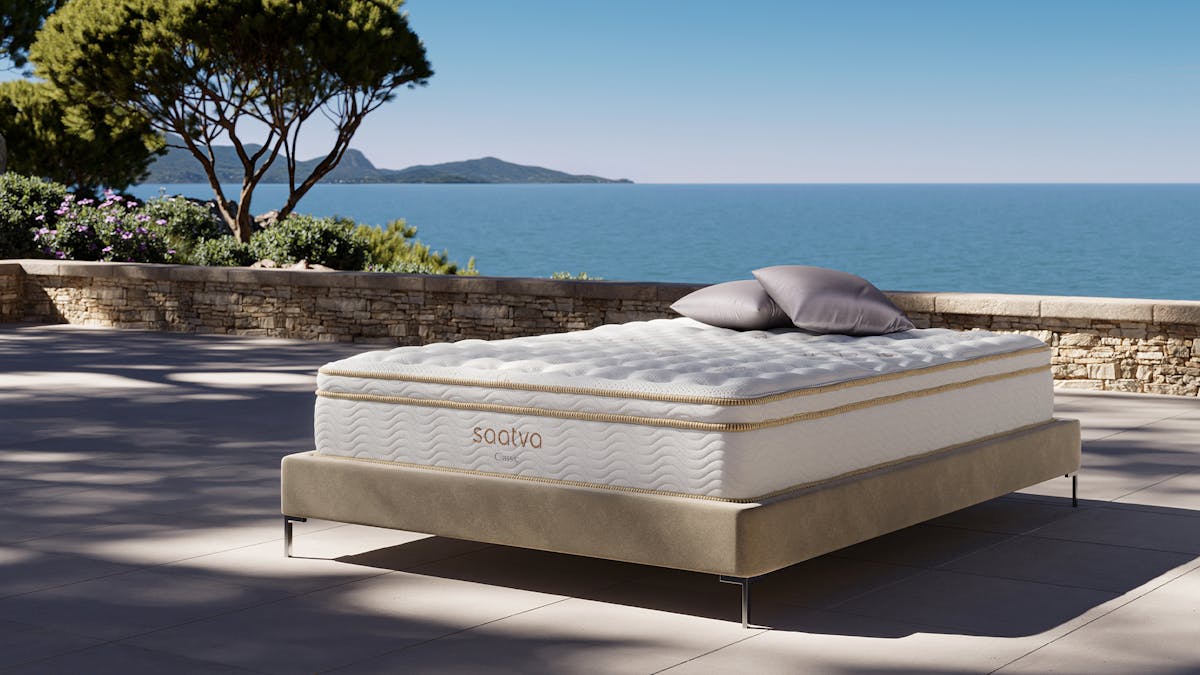
Considering both? Also check Saatva.
The Saatva Classic offers a 365-night trial and lifetime warranty — longer coverage than either Nectar or Casper.