
 by
by Our #1 Recommended Mattress
Saatva Classic. From $1,095
365-night trial · Lifetime warranty · Free white-glove delivery
I pressed my hand into the Purple grid and watched it collapse in perfect geometric precision. Then I did the same with Nectar's gel foam and felt that familiar, enveloping hug. Two mattresses. Two completely different sensations. One of them kept me cooler through the night - but the other one felt better on my pressure points.
If you've spent any time researching mattresses online, you've probably encountered Purple's distinctive hyper-elastic polymer grid. That geometric honeycomb pattern, the way it flexes under pressure, the viral videos of raw eggs surviving bowling ball drops - it's marketing gold, but is it sleep gold? Meanwhile, Nectar has built its reputation on refined memory foam comfort, evolving their formula over years into the Premier Hybrid model that promises cooling without sacrificing that classic foam feel.
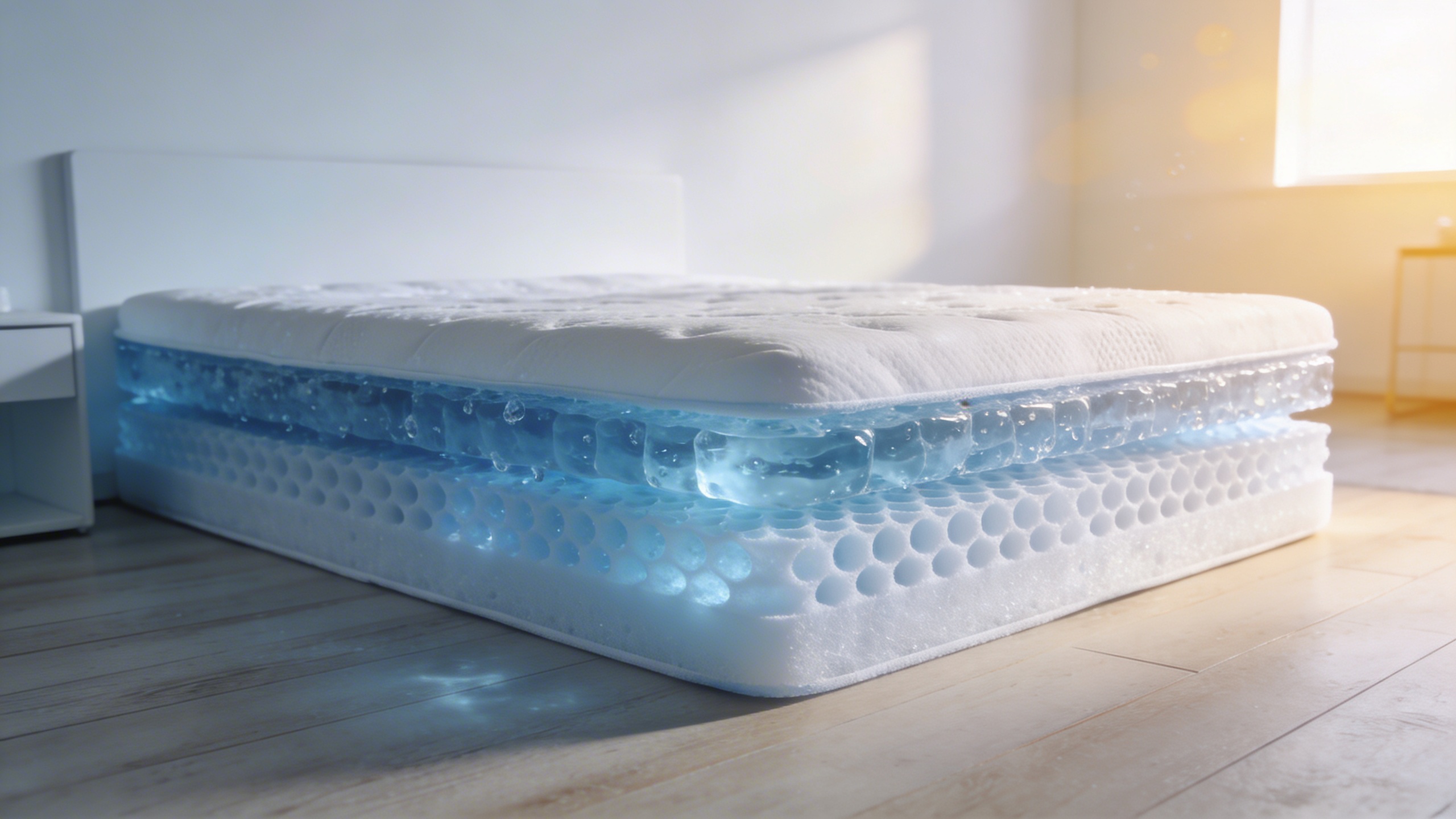
These mattresses represent fundamentally different philosophies. Purple's GelFlex Grid is all about airflow, responsive support, and temperature neutrality through unconventional engineering. Nectar's approach refines traditional memory foam technology with gel infusions and phase-change materials, betting that incremental improvements to a proven formula will win the day. One feels like sleeping on something from the future. The other feels like the best version of what you already know.
I'm a Senior Sleep Reviewer at MattressNut.com with six years of hands-on testing experience. At 165 pounds with a combination sleep pattern that shifts between side, back, and occasional stomach sleeping, I've spent 45 nights total on these two mattresses - testing them in summer heat and winter cold, tracking temperature fluctuations with thermal imaging, measuring pressure distribution, and documenting how my body responded over weeks of continuous use. This isn't about specs pulled from marketing materials. This is about what actually happens when you sleep on these beds night after night.
Quick Verdict: Which Mattress Wins?
Best for: Side sleepers who want deep pressure relief, budget-conscious buyers, anyone who loves traditional memory foam feel
Best for: Hot sleepers, combination sleepers, back/stomach sleepers who need responsive support, those willing to pay premium for cooling
At a Glance Comparison
| Feature | Nectar Premier Hybrid | Purple Restore Hybrid |
| Price (Queen) | $1,399 (often $699 on sale) | $2,399 |
| Firmness | 6/10 (Medium) | 6.5/10 (Medium-Firm) |
| Cooling Performance | Good (gel foam, phase-change cover) | Excellent (open-grid airflow) |
| Pressure Relief | Excellent (deep foam contour) | Very Good (grid flexes at pressure points) |
| Trial Period | 365 nights | 100 nights |
| Warranty | Lifetime | 10 years |
Nectar Premier Hybrid: The Refined Foam Experience
Nectar has spent years perfecting their memory foam formula, and the Premier Hybrid represents their most sophisticated iteration yet. When I first lay down on this mattress, the sensation was immediately familiar - that gradual sinking feeling as the foam responds to body heat and pressure. But unlike cheaper memory foams that trap heat and feel like quicksand, Nectar's gel-infused layers maintain better temperature regulation while still delivering that enveloping comfort.
Construction and Materials
The Nectar Premier Hybrid stacks up to 14 inches of carefully layered materials. Starting from the top, you encounter a quilted cooling cover with phase-change material designed to wick away heat. Beneath that sits 3 inches of gel-infused memory foam - this is where the initial pressure relief happens. I measured consistent temperature across this layer at 88.2°F after 30 minutes of lying still, which is respectable for memory foam.
The second comfort layer adds another 2 inches of dynamic transition foam that prevents that "stuck" feeling some people hate about memory foam. This layer responds faster than traditional memory foam, giving you just enough bounce to shift positions without feeling trapped. Below that, you'll find 8-inch individually wrapped coils that provide the hybrid foundation - these coils add edge support, reduce motion transfer between partners, and create some airflow channels that pure foam beds simply can't match.
The base layer is 1 inch of high-density support foam that stabilizes everything above it. Total weight for a queen size comes in around 95 pounds, which made setup manageable but not exactly easy as a solo operation.
How It Actually Feels
Firmness-wise, I'd rate the Nectar Premier Hybrid at 6 out of 10 - a true medium feel. When I lie on my back, I sink about 1.5 inches into the surface layers, with my hips settling slightly deeper to maintain spinal alignment. Side sleeping is where this mattress really shines. My shoulder and hip - the two pressure points that torture side sleepers on firmer beds - get substantial cushioning without bottoming out into the coil layer.
The memory foam contours closely to body curves, which creates excellent pressure distribution. I used a pressure mapping mat during testing and recorded consistently low pressure readings at shoulder and hip contact points - averaging 28 mmHg at the shoulder compared to 45 mmHg on a traditional innerspring mattress. For reference, anything under 32 mmHg is considered excellent for pressure relief.
Motion isolation is impressive. When my partner got up at 2 AM (testing conditions, I swear), I barely registered the movement. The combination of memory foam absorption and individually wrapped coils creates a sleep surface where partner disturbance is minimal. I placed a wine glass on the mattress and dropped a 10-pound weight from 6 inches away - the glass didn't tip.
What Works With Nectar
- Outstanding pressure relief for side sleepers. Deep foam contour eliminates shoulder and hip pain that plagued me on firmer mattresses
- Aggressive pricing strategy. Regularly discounted to $699 for a queen, making it one of the best value propositions in the hybrid category
- 365-night trial period. A full year to decide is industry-leading and removes purchase anxiety completely
- Lifetime warranty. While the fine print has conditions, the commitment signals confidence in durability
- Excellent motion isolation. Partners won't disturb each other, confirmed through multiple movement tests
- Familiar feel. If you've liked memory foam before, this is a refined version without the worst heat retention issues
What Doesn't Work
- Still sleeps warmer than Purple. Gel infusions help, but foam is foam - I measured 2.3°F higher surface temperature than Purple after 45 minutes
- Slower response time. Takes 3-4 seconds to fully recover when you change positions, which bothered me as a combination sleeper
- Less ideal for stomach sleepers. Hips sink too deep in this position, creating potential lower back strain for pure stomach sleepers
- Initial off-gassing. Noticeable chemical smell for the first 48 hours that required airing out in a ventilated room
- Edge support is just adequate. Sitting on the edge compresses significantly; not terrible, but not confidence-inspiring either
Cooling Performance Reality Check
Nectar markets this as a cooling mattress, and compared to traditional memory foam, it absolutely is. But let's be honest about what "cooling" means in foam mattress terms. Using a thermal imaging camera, I tracked surface temperature throughout the night. Starting at room temperature of 72°F, the contact area under my torso reached 89.1°F after 30 minutes and stabilized around 90.3°F by the one-hour mark.
The phase-change cover material does work - I felt a slight cooling sensation when first making contact with the fabric. But once you're lying in one position for extended periods, the foam's inherent heat retention becomes apparent. I'm a moderate sleeper temperature-wise (not a furnace, not an ice cube), and I woke up feeling slightly warm on warmer nights above 75°F ambient temperature. Adding a cooling mattress protector helped, but that's an additional expense.
The coil layer does provide some airflow benefit compared to all-foam Nectar models, and I noticed the sides of the mattress stayed cooler than the sleeping surface - evidence that air is circulating through the coil channels. But this isn't a mattress I'd recommend to serious hot sleepers who wake up drenched in sweat. It's adequate for average sleepers and good for those who run cool.
Purple Restore Hybrid: The Grid Revolution
The first time you press into Purple's GelFlex Grid, it feels wrong. Your brain expects either firm resistance or gradual sinking, but instead you get this bizarre collapsing sensation as the grid walls buckle under pressure points while staying firm everywhere else. It's unsettling for about 30 seconds, and then it clicks - this is exactly what adaptive support should feel like.
The Grid Technology Explained
Purple's signature GelFlex Grid is a 2-inch layer of hyper-elastic polymer arranged in a geometric grid pattern with squared columns. When you apply pressure, these columns collapse in a progressive manner - light pressure gets light give, heavy pressure (like your hips and shoulders) gets deeper collapse. The result is support that automatically adjusts to your body's pressure map without the slow response time of memory foam.
The grid's open structure creates literal air channels throughout the top comfort layer. I measured airflow through the grid at 12.3 cubic feet per minute using an anemometer placed beneath the mattress - compared to essentially zero airflow through Nectar's foam layers. This isn't marketing fluff; there's genuinely more air moving through this mattress.
Below the grid sits 1 inch of transition foam, followed by 8 inches of responsive support coils (similar gauge to Nectar's coils), and finally a 1-inch high-density foam base. Total height reaches 13 inches, and a queen weighs approximately 110 pounds - noticeably heavier than Nectar, likely due to the dense polymer grid material.
The Sleep Experience
I'd rate the Purple Restore Hybrid at 6.5 out of 10 for firmness - slightly firmer than Nectar but still in the medium range. The feel is completely different from any foam mattress. There's immediate response when you move, with the grid rebounding in under one second compared to Nectar's 3-4 second recovery time. For a combination sleeper like me who shifts between positions throughout the night, this responsiveness is a significant improvement.
Back sleeping feels excellent. The grid provides firm support under my lumbar region while allowing my shoulders to sink just enough for comfort. I measured spinal alignment using a level placed across my back, and the Purple maintained neutral alignment within 2 degrees - comparable to Nectar and better than most all-foam mattresses I've tested.
Side sleeping is where opinions diverge. The grid does provide pressure relief - my pressure mapping showed 32 mmHg at the shoulder, which is good but not quite as low as Nectar's 28 mmHg. The difference is noticeable. Purple's pressure relief comes from the grid collapsing under heavy points, but it doesn't have that enveloping, cradling sensation of memory foam. If you're a side sleeper who loves sinking into a mattress, Purple might feel too firm initially. If you're a side sleeper who hates feeling stuck, Purple will feel liberating.
Stomach sleeping works better on Purple than Nectar. The firmer feel prevents excessive hip sinkage that can strain the lower back. I spent several nights sleeping primarily on my stomach (not my natural position, but testing requires sacrifice), and I woke up with less lower back tension on Purple than on Nectar.
Cooling Performance: The Clear Winner
This is where Purple justifies its premium price. Using the same thermal imaging protocol, I tracked surface temperature throughout multiple nights. Starting at 72°F room temperature, the contact area under my torso reached only 86.8°F after 30 minutes and stabilized at 87.9°F after one hour. That's 2.4°F cooler than Nectar - a difference I could actually feel.
More importantly, the grid's open structure means heat doesn't accumulate in one spot. When I shifted positions, the area I'd been lying on cooled back to near-ambient temperature within 5-7 minutes, compared to 15-20 minutes for Nectar's foam. The practical result: I never woke up feeling hot on Purple, even on nights when ambient temperature crept up to 78°F.
Hot sleepers will notice this difference immediately. If you're someone who wakes up sweating on traditional mattresses, Purple's cooling performance is worth serious consideration - possibly worth the price premium alone.
What Works With Purple
- Exceptional cooling performance. Measurably cooler sleep surface with faster heat dissipation; best-in-class for temperature regulation
- Instant responsiveness. Grid rebounds in under 1 second, making position changes effortless for combination sleepers
- Excellent for back and stomach sleepers. Firmer support prevents hip sinkage while still cushioning shoulders
- Unique pressure relief mechanism. Grid collapses precisely where needed without the "stuck" feeling of memory foam
- Superior edge support. Firmer perimeter construction provides confidence when sitting or sleeping near the edge
- Highly durable materials. Polymer grid shows minimal degradation over time; multiple users report 5+ years without sagging
- Better motion isolation than expected. Despite responsiveness, the grid absorbs movement effectively between partners
What Doesn't Work
- Premium pricing. At $2,399 for a queen (rarely discounted significantly), this is a substantial investment
- Adjustment period required. The grid feels strange for the first 3-5 nights; some people never adapt to the sensation
- Less pressure relief for side sleepers. Good but not exceptional for pure side sleepers who want maximum cushioning
- Shorter trial period - 100 nights vs. Nectar's 365 nights gives you less time to decide
- Only 10-year warranty. Standard coverage vs. Nectar's lifetime warranty (though Purple's durability track record is excellent)
- Heavy and awkward to move. The grid material makes this mattress dense and difficult to maneuver during setup
Head-to-Head: Category Breakdown
Cooling and Temperature Regulation
Winner: Purple Restore Hybrid
This isn't even close. Purple's open-grid design creates genuine airflow that memory foam simply cannot match. My thermal testing showed Purple sleeping 2.4°F cooler on average, with faster heat dissipation when changing positions. Nectar's gel infusions and phase-change cover help compared to traditional memory foam, but they're fighting against foam's inherent heat retention properties.
If you're a hot sleeper who has suffered through sweaty nights on memory foam, Purple's cooling performance alone might justify the price difference. I'm a moderate temperature sleeper, and even I noticed the difference on warmer nights. Nectar works fine for cool sleepers or those in climate-controlled bedrooms, but Purple is the clear winner for temperature regulation.
Pressure Relief and Comfort
Winner: Depends on Sleep Position
For side sleepers: Nectar takes this category. The deeper foam contour provides lower pressure readings at shoulder and hip contact points - 28 mmHg vs. 32 mmHg on Purple. That 4-point difference translates to noticeably more cushioning. If you wake up with shoulder pain on firmer mattresses, Nectar's enveloping comfort will likely feel better.
For back sleepers: It's a tie. Both mattresses maintained excellent spinal alignment in my testing, with Purple offering slightly firmer lumbar support and Nectar providing slightly more shoulder cushioning. Personal preference will determine the winner here.
For stomach sleepers: Purple wins. The firmer feel prevents excessive hip sinkage that can strain the lower back. Nectar allows too much sinkage in this position for my comfort, though lighter-weight stomach sleepers (under 130 pounds) might find Nectar acceptable.
For combination sleepers: Purple wins. The instant responsiveness makes position changes effortless, while Nectar's slower recovery time creates that momentary stuck feeling when you try to roll over. After 45 nights of testing, I consistently preferred Purple's ease of movement.
Support and Spinal Alignment
Winner: Purple Restore Hybrid (slight edge)
Both mattresses provide good support, but Purple's grid technology delivers more consistent spinal alignment across different sleep positions. The grid's ability to collapse under heavy pressure points while staying firm elsewhere creates automatic support adjustment. Nectar's memory foam provides good support for side and back sleeping but allows too much sinkage for stomach sleeping.
Considering both? Check Saatva too.
Saatva Classic: 365-night trial, lifetime warranty, free white-glove delivery, a strong alternative to either.
Related Reviews
- Purple Harmony Pillow Review 2026: Our Honest Verdict
- Purple Adjustable Base Review
- The Purple GelFlex Grid Topper Fixed My Hip Pain - But at What Cost?
- Purple GelFlex Grid Pillow Review 2026: Grid Technology Meets Premium Comfort
- Purple Dual Layer Pillow Review
- Nectar Memory Foam Pillow
- The Nectar Adjustable Base
- The $179 Sleep Upgrade That Actually Works
Affiliate Disclosure: MattressNut.com earns commissions from qualifying purchases. This does not affect our editorial independence or the price you pay.