
 by
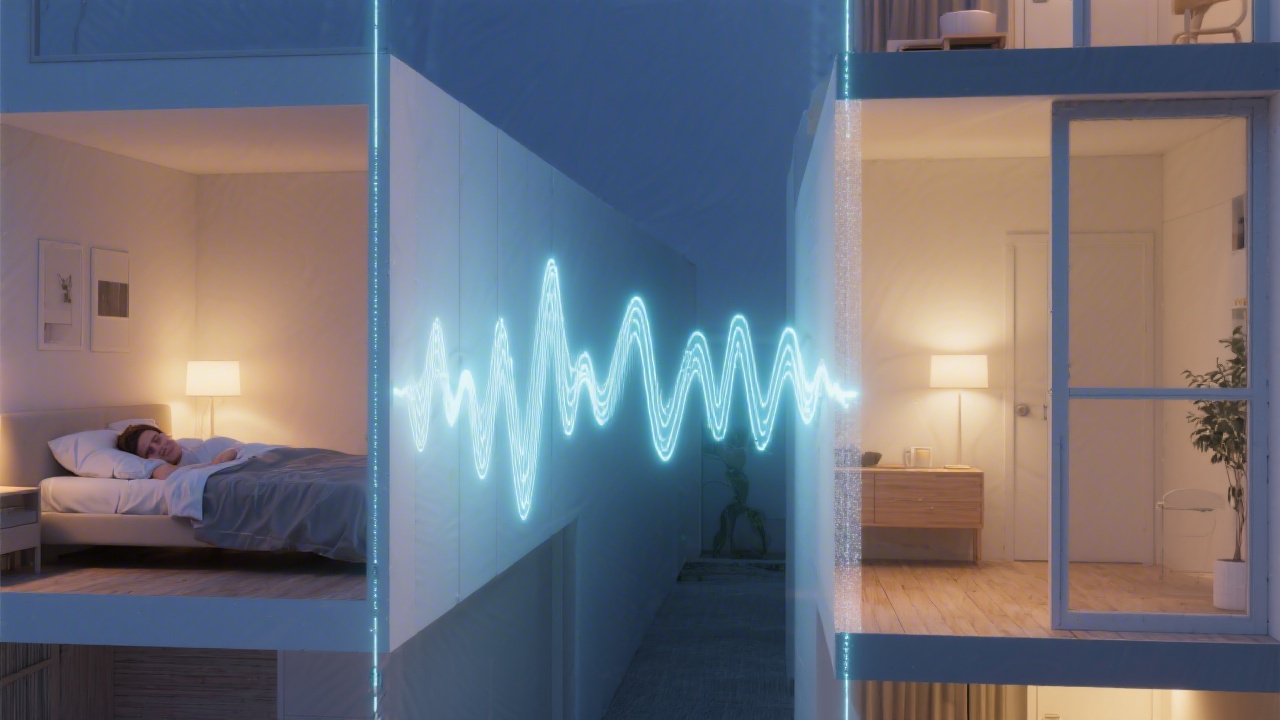
by Neighbor noise is the leading reported sleep disruption for apartment and condo residents. Unlike traffic or airplane noise, it is also personal — footsteps overhead, music through walls, and late-night conversations can feel intrusive in a way that affects both sleep quality and stress levels.
Why Apartment Noise Is Different
Building structure transmits two fundamentally different types of noise that require different solutions:
- Airborne noise — Sound transmitted through air, entering through walls, gaps, and structural vibrations. Music, conversation, TV. Reduced by mass (dense materials) and absorption (soft materials).
- Impact noise — Vibration transmitted directly through building structure. Footsteps, dropped objects, furniture movement. Significantly harder to address because it bypasses air-gap insulation entirely.
Most apartment residents deal with both. Impact noise from above — footsteps during morning routines at 6am — is the most common complaint and the hardest to solve.
Solutions Ranked by Effectiveness and Cost
1. Sound Masking (Most Practical for Renters)
White, pink, or brown noise machines do not block sound but reduce the perceptual contrast between quiet baseline and noise peaks. Position the machine between you and the noise source — on the wall shared with the noisy neighbor, not across the room. Brown noise (deeper, more bass) is more effective at masking low-frequency impact sounds like footsteps. Cost: $30-150.
2. Mass-Loaded Vinyl on Shared Walls
MLV is a dense flexible material that adds mass to walls without major construction. Sheets can be mounted on shared walls (with landlord permission) and covered with fabric panels for appearance. Provides 10-20 dB of additional wall attenuation for airborne noise. Less effective for impact noise. Cost: $1-3 per square foot.
3. Bookshelves Against Shared Walls
Floor-to-ceiling bookshelves filled with books are among the most effective renter-friendly solutions. The mass and irregular surfaces absorb and diffuse sound. Combined with a foam backing between the shelf and wall, this can provide meaningful improvement for airborne noise. Cost: varies by shelf.
4. Door Gap Sealing
Significant sound transmission occurs through door gaps, especially in older buildings. Acoustic door sweeps ($15-40) on bedroom doors and foam weatherstripping on door frames provide incremental improvement. If noise enters from hallways, this can provide meaningful reduction.
5. Earplugs
Foam earplugs provide 25-33 dB NRR attenuation and are the most reliably effective solution for acute situations. Custom-molded audiologist earplugs ($100-200) provide better long-term comfort. The primary limitation is discomfort during extended use, particularly for side sleepers.
Talking to Neighbors and Landlords
A friendly, non-accusatory conversation with neighbors resolves many noise issues. Most people are unaware of how much sound their normal activities transmit. For persistent issues:
- Document with timestamps and decibel recordings.
- Check your lease and local noise ordinance for specific provisions.
- Submit written requests to management — this creates a record and establishes the legal basis for habitability claims.
- Most jurisdictions have a noise ordinance with specific dB limits after 10pm or 11pm and an enforcement contact (non-emergency police line or city enforcement).
Your Sleep Setup Matters Too
When noise causes repeated awakenings, your ability to return to sleep depends partly on your sleep environment. A mattress that creates pressure points leads to physical discomfort that compounds noise-related arousal. For best mattress for side sleepers who need to maximize sleep quality despite environmental disruption, a supportive, pressure-relieving mattress makes returning to deep sleep faster. Consider our guides for best mattress for back pain and sleep quality improvements.
Frequently Asked Questions
What are the most effective solutions for neighbor noise at night?
Ranked by effectiveness: (1) White or brown noise machines placed between you and the noise source — most practical for renters. (2) Acoustic foam panels or mass-loaded vinyl on shared walls. (3) Bookshelves filled with dense items against shared walls. (4) Door sweeps and gap sealing. (5) Earplugs. Combining two or three approaches typically provides meaningful improvement.
Can I legally require my landlord to address neighbor noise?
In most jurisdictions, landlords have a duty to provide a habitable dwelling, which courts have interpreted to include freedom from excessive noise that prevents sleep. Document noise incidents with timestamps and decibel readings, make requests in writing, and check your local noise ordinance for specific dB limits and enforcement contact information.
What type of noise is hardest to block — footsteps, music, or talking?
Impact noise (footsteps, furniture moving) is hardest to block because it travels through building structure rather than air. Airborne noise (music, conversation) is more effectively reduced by mass and absorption. White noise masking works for both, but structural impact noise often requires the upstairs neighbor to use area rugs or acoustic underlayment.
Do acoustic panels on shared walls actually work?
Acoustic foam panels primarily reduce echo and reverberation within a room — they have minimal effect on blocking noise transmission between rooms. For blocking neighbor noise, you need mass: mass-loaded vinyl (MLV) sheeting, dense bookshelves, or a decoupled drywall system. MLV sheets attached to shared walls can provide 10-20 dB of additional attenuation.
Is white noise safe to use every night for sleep?
Research on nightly white noise use shows no negative effects at appropriate volumes (45-65 dB). Keep the machine at least 7 feet from your head and under 70 dB to avoid any long-term hearing concerns. Many users find brown or pink noise more comfortable for extended use than white noise.
Key Takeaways
Neighbor Noise and Sleep is a topic that depends heavily on individual needs and preferences. The most important thing is to consider your specific situation — your body type, sleep position, and personal comfort preferences — before making any decisions. When in doubt, take advantage of trial periods to test before committing.