
 by
by The phrase "neutral spine" appears frequently in physical therapy and ergonomics, but it is rarely defined precisely enough to be actionable for mattress selection. A neutral spine during sleep is not simply "a comfortable position" — it is a measurable biomechanical state with specific equipment requirements that vary by sleep position and body morphology.
What Neutral Spine Means Precisely
A neutral spine is one in which each vertebral segment is positioned at the midpoint of its range of motion — neither flexed, extended, nor laterally rotated beyond a functional baseline. The intervertebral discs are under equal compression across their entire cross-section, the posterior spinal ligaments are at resting tension, and the paraspinal muscles are minimally active.
For the lumbar spine, neutral typically involves a mild lordotic curve of approximately 30–50 degrees measured by Cobb angle. For the cervical spine, the natural lordosis is approximately 20–40 degrees. Deviation from these ranges during extended sleep causes ligamentous creep, sustained muscular activation, and — in the lumbar discs — asymmetric loading that can accelerate degenerative changes.
Neutral Spine for Back Sleepers
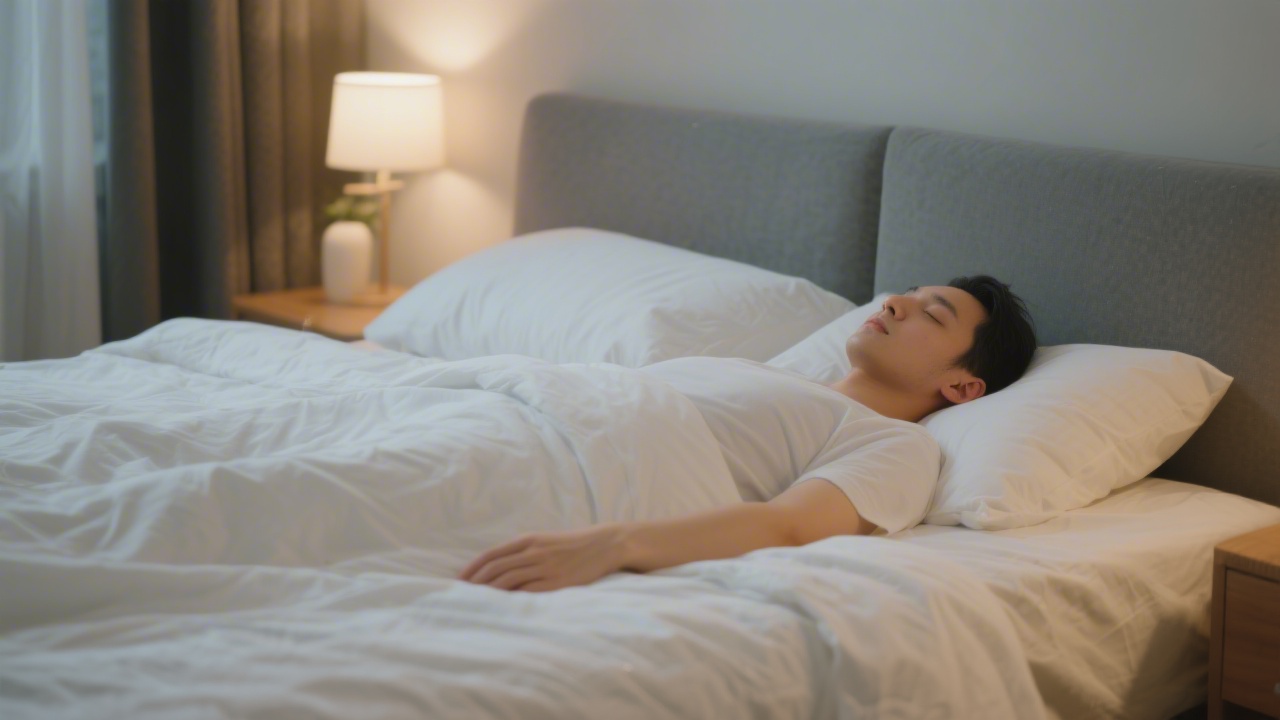
The back sleeping position is the closest approximation of neutral for most people, but requires a mattress that supports the lumbar region without allowing hip sinkage. When the hips sink past the shoulder line on a soft mattress, the pelvis rotates posteriorly, flattening the lumbar lordosis. When the hips sit high on a firm mattress and the lumbar region has no contact with the surface, the lordosis is unsupported and the paraspinal muscles contract to compensate.
Mattress firmness: Medium to medium-firm (5–6.5 on a 10-point scale) for most back sleepers. Heavier individuals (over 230 lbs) typically need firm (7+) to prevent hip sinkage. Lighter individuals (under 130 lbs) can use medium-soft without losing alignment.
Pillow loft: Low to medium (3–5 inches). The pillow should fill the space between the back of the head and the mattress surface without pushing the head into cervical flexion. A pillow placed under the knees reduces lumbar extension and is particularly effective for those with hyperlordosis.
Neutral Spine for Side Sleepers
Side sleeping requires the mattress to achieve two opposing goals simultaneously: yield to the shoulder and hip to prevent lateral bowing, and resist them enough to keep the spine from dropping below the neutral line. The key measurement is the distance between the outer shoulder and the outer hip — the pelvis is typically wider than the shoulders in women and approximately equal in men. This width determines the degree of mattress contouring required.
Mattress firmness: Medium-soft to medium (4–5.5) for most side sleepers under 200 lbs. Heavier side sleepers need medium to medium-firm (5.5–6.5) to prevent the hip from sinking past neutral. A mattress that is too firm for the body weight will push back against the shoulder and create upward bowing; too soft creates downward bowing at the hip.
Pillow loft: The pillow must bridge the gap between the ear and the mattress — in practice, this equals the shoulder width plus the degree of shoulder sinkage into the mattress. For most adults, medium to high loft (5–7 inches) is required for side sleeping. A pillow between the knees is not optional for neutral alignment — it prevents hip drop and internal hip rotation.
Neutral Spine for Stomach Sleepers
Stomach sleeping inherently compromises cervical neutrality because the head must rotate 70–90 degrees to one side. The lumbar spine is simultaneously pushed into hyperextension by the anterior pelvic tilt that occurs when lying prone. Achieving true neutral spine in the prone position is not possible without a sleep surface with a facial cutout and specialized prone pillow systems used in massage therapy.
The practical mitigation is: firm mattress (to limit hip sinkage and reduce hyperextension), no head pillow or a very flat one (to minimize cervical rotation), and a thin pillow under the lower abdomen (to reduce pelvic tilt). These measures reduce the deviation from neutral but do not achieve it.
The Role of Mattress Construction
Foam-only mattresses achieve contouring through density and ILD (indentation load deflection) gradients. Hybrid and innerspring mattresses achieve it through coil gauge, coil count, and zoning. For neutral spine, zoned construction — where the lumbar zone uses firmer coils and the shoulder zone uses more yielding ones — is the most reliable architecture because it addresses the conflicting support requirements across body zones without requiring a single compromise firmness.
The Saatva Classic uses a dual-coil system (micro-coils over larger steel coils) with a reinforced lumbar zone, available in Plush Soft, Luxury Firm, and Firm profiles. This range allows selection by body weight and position rather than requiring a single universal firmness.
Internal Resources
- Spinal Alignment During Sleep: What It Means and Why It Matters
- Pressure Points During Sleep: What They Are and How to Relieve Them
- Hip Alignment During Sleep: Why It Matters and How to Fix It
Frequently Asked Questions
Key Takeaways
- What Neutral Spine Means Precisely: a key factor in making the right sleeping decision.
- Neutral Spine for Back Sleepers: a key factor in making the right sleeping decision.
- For the lumbar spine, neutral typically involves a mild lordotic curve of approximately 30–50 degrees measured by Cobb angle.
- For the cervical spine, the natural lordosis is approximately 20–40 degrees.
- When the hips sink past the shoulder line on a soft mattress, the pelvis rotates posteriorly, flattening the lumbar lordosis.
Our Top Pick: Saatva Classic
Voted best luxury innerspring mattress with exceptional lumbar support and white-glove delivery.
Check Price & AvailabilityWhat does neutral spine feel like during sleep?
In a truly neutral position, you should feel minimal muscular effort to maintain your position — the mattress is doing the supporting work. If you feel yourself "holding" your back position, the surface is either too firm (requiring muscular effort to stay in contact) or too soft (requiring core engagement to prevent sinking). Waking without stiffness that correlates with your sleep position is the functional test.
Can a pillow alone achieve neutral spine for side sleepers?
A head pillow corrects cervical alignment, and a knee pillow corrects hip and lumbar alignment, but neither compensates for a mattress that is fundamentally wrong for the body weight. If the mattress is too firm and the shoulder cannot sink appropriately, even the correct pillow height will not achieve lateral spinal neutrality because the starting point — the shoulder position — is elevated incorrectly.
How do I find the right pillow loft for side sleeping?
Stand facing a wall with your shoulder touching it. Measure the horizontal distance from the wall to the side of your head at ear level — this is the approximate pillow loft needed for side sleeping. Subtract approximately 0.5–1 inch for shoulder sinkage into a medium mattress, more for softer mattresses. This gives you the target loft in uncompressed pillow height; most fill pillows compress to 60–70% of their listed height under head weight.
Does sleeping on the floor achieve a neutral spine?
For back sleepers, a firm floor with a thin mat can maintain lumbar alignment, but only if the body is not forced into hyperextension by hip anatomy. For side sleepers, the floor is categorically wrong — it cannot contour to the shoulder and hip, guaranteeing lateral spinal bowing. The therapeutic claims for floor sleeping are largely anecdotal and are not supported by spinal biomechanics literature.
Should partners with different body weights use the same firmness?
No — and this is one of the most underrated problems in mattress selection. A mattress that achieves neutral spine for a 200 lb back sleeper will be too firm for a 130 lb side sleeper. Split firmness (two different firmness zones in one mattress) or separate single mattresses on a king base are the correct solutions when sleep partners have meaningfully different body weights or positions.