
 by
by The nightstand is the last thing you see before sleep and the first thing you reach for when you wake. What sits on it — and what does not — has a measurable effect on sleep onset, sleep maintenance, and morning cognitive tone. Nightstand organization is one of the smallest, fastest, and highest-ROI sleep improvements available.
Our Pick
Saatva Classic Mattress
Innerspring support with Euro pillow-top comfort. The top-rated mattress to pair with any storage or organization upgrade.
The Problem With Cluttered Nightstands
A cluttered nightstand is cognitively stimulating. Multiple objects in your visual field at bedtime — phone, charger, remote, headphones, water bottle, several bottles of various supplements, stack of books — each represents an object with an associated task, memory, or decision. This is the opposite of the mental clearing sleep requires.
Sleep onset requires a progressive reduction in cognitive arousal. Visual complexity near the bed works against this process. The nightstand is uniquely problematic because it is within arm's reach and eye level when lying down — the most prominent visual position in the bedroom during the transition to sleep.
What Belongs on a Nightstand
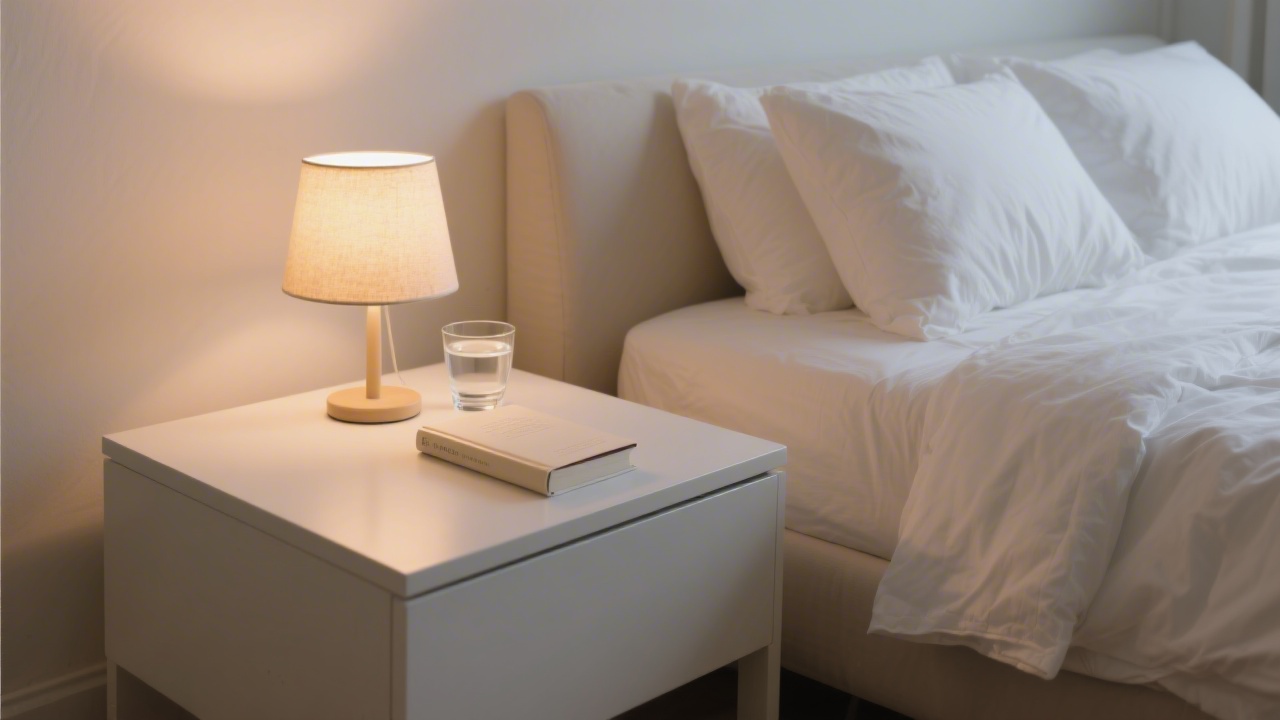
Lamp
The most important nightstand item after water. Warm light (2700K or below) for 30-60 minutes before sleep signals melatonin production. Replace overhead ceiling lights with a nightstand lamp in the final hour before bed. Smart bulbs that auto-dim to 10% brightness at a set time are worth the modest investment.
Water
A glass or covered bottle of room-temperature water. Night breathing and the mild dehydration that occurs during sleep make water the single most used nightstand item. Covered is better than open — open glasses collect particulate and dust overnight.
Book (physical, not e-reader)
A physical book is one of the few cognitively engaging but non-stimulating activities available before sleep. Reading moves the eyes in a controlled, linear pattern, reduces heart rate, and is associated with 68% faster sleep onset in some studies. The physical book specifically matters — e-readers emit blue-spectrum light and share a form factor with devices associated with social media and work.
Sleep aids (if used)
Earplugs, eye mask, melatonin gummies, nasal strips — whatever is part of your regular sleep preparation. Keep to the minimum required. A single container is better than several.
What Does Not Belong on a Nightstand
- Phone — the single most impactful item to remove. Charge across the room.
- Work materials — laptop, notebooks with work content, printed documents
- Excessive supplements — more than 2-3 bottles creates visual clutter and implies an elaborate routine that delays sleep preparation
- Remote controls — implies TV in the bedroom, which is itself a sleep hygiene issue
- Keys, wallet, and daily carry items — place these in an entry area, not the sleep space
- Unread mail or bills — financial anxiety immediately before sleep is among the strongest sleep disruptors
The Nightstand Reset as a Nightly Ritual
A 2-minute nightstand reset before bed — clearing everything that does not belong, setting out only what you need — functions as a behavioral cue that initiates the sleep preparation sequence. The act of clearing the space signals to the brain that a transition is occurring. This kind of environmental cue priming is well-supported in behavioral sleep medicine.
Dual Nightstands and Partner Households
In shared bedrooms, nightstand organization is twice as important because each partner's nightstand contributes to the shared sleep environment. A partner with a cluttered, brightly-lit nightstand setup affects the other person's sleep environment. A brief household agreement about nightstand standards — not rules, but a shared preference — can significantly improve shared bedroom sleep quality.
Our Pick
Saatva Classic Mattress
Innerspring support with Euro pillow-top comfort. The top-rated mattress to pair with any storage or organization upgrade.
Related: How Closet Organization Affects Sleep | Bedroom Storage Ideas
Frequently Asked Questions
What should be on a nightstand for good sleep?
The essentials: a lamp with warm low-color-temperature light (2700K or below), a glass of water, whatever you use for sleep aid (earplugs, eye mask, melatonin if applicable), and one leisure item — a physical book or magazine. Everything beyond this adds cognitive stimulation that works against sleep onset.
Should your phone be on your nightstand?
No. The phone on the nightstand is one of the most consistently supported sleep hygiene recommendations. Blue light exposure, notification sounds, and the availability of stimulating content all delay sleep onset. If you use your phone as an alarm, move it to a charger across the room — the forced physical movement to turn off an alarm is also better for preventing oversleeping.
How do I stop reaching for my phone in bed?
The most effective approach is friction-based: charge the phone in a different room. Replace the dopamine loop with a physical book. Use a traditional alarm clock or a sunrise alarm for morning wake-up. These physical changes are more effective than digital screen time limits because they remove access rather than requiring willpower.
Does nightstand clutter affect sleep quality?
Yes. Nightstand clutter creates visual stimulation at the exact moment you are trying to wind down. A cluttered surface with multiple active items (multiple devices, several bottles, opened mail, keys, wallet) signals an active, task-filled state to the brain — the opposite of the calm signal the bedroom should send.
What is the right nightstand height for sleep?
The nightstand surface should be within 3-4 inches of mattress-top height. Too low, and reaching for water at night requires awkward bending that disrupts sleep. Too high, and items on the nightstand are above eye level when lying down, creating a looming visual presence. Most standard nightstands (25-28 inches) pair well with 24-27 inch mattress heights.
Key Takeaways
Nightstand Organization for Better Sleep is a topic that depends heavily on individual needs and preferences. The most important thing is to consider your specific situation — your body type, sleep position, and personal comfort preferences — before making any decisions. When in doubt, take advantage of trial periods to test before committing.