
 by
by Our Top Mattress Pick for Better Sleep
The Saatva Classic is engineered for spinal alignment and temperature regulation — two non-negotiables for restorative sleep at any stage of a habit-building journey.
Why Phones in Bed Are a Different Kind of Problem
Phone use in bed is not just a "screen before sleep" problem. It is a high-frequency, highly reinforced habit with three simultaneous mechanisms working against sleep: blue light suppressing melatonin, cognitive arousal from content processing, and a neurological reward loop that makes stopping feel actively effortful. Treating it as a simple habit to replace underestimates the challenge.
The behavior typically occurs in a state of low prefrontal cortex engagement — you are already tired. This is precisely the state in which willpower-dependent habit change is weakest. Any strategy that relies on deciding to stop in the moment will fail with sufficient frequency to prevent full habit break. The solution must be structural.
The Mechanism: Why the Loop Is So Strong
Social media, news feeds, and most mobile content are designed around variable reward scheduling — the same psychological mechanism that makes slot machines addictive. You do not know if the next scroll will be boring or interesting, which is more neurologically activating than a predictable reward. This variable schedule produces dopamine anticipation that is stronger than the dopamine from the reward itself.
Combined with the physical comfort of bed and the transition state between waking and sleep, this creates a perfect storm for habit persistence: high motivation to continue, low motivation (and reduced capacity) to stop, and a comfortable physical environment that does not signal any competing demand on your attention.
Environment Design: The Only Reliable Intervention
The research on habit disruption is consistent: cue elimination is more effective than cue-response substitution, which is more effective than willpower inhibition. To break the phone-in-bed habit, you must make phone access in bed structurally difficult — not merely uncomfortable.
Step 1: Relocate the Charging Station
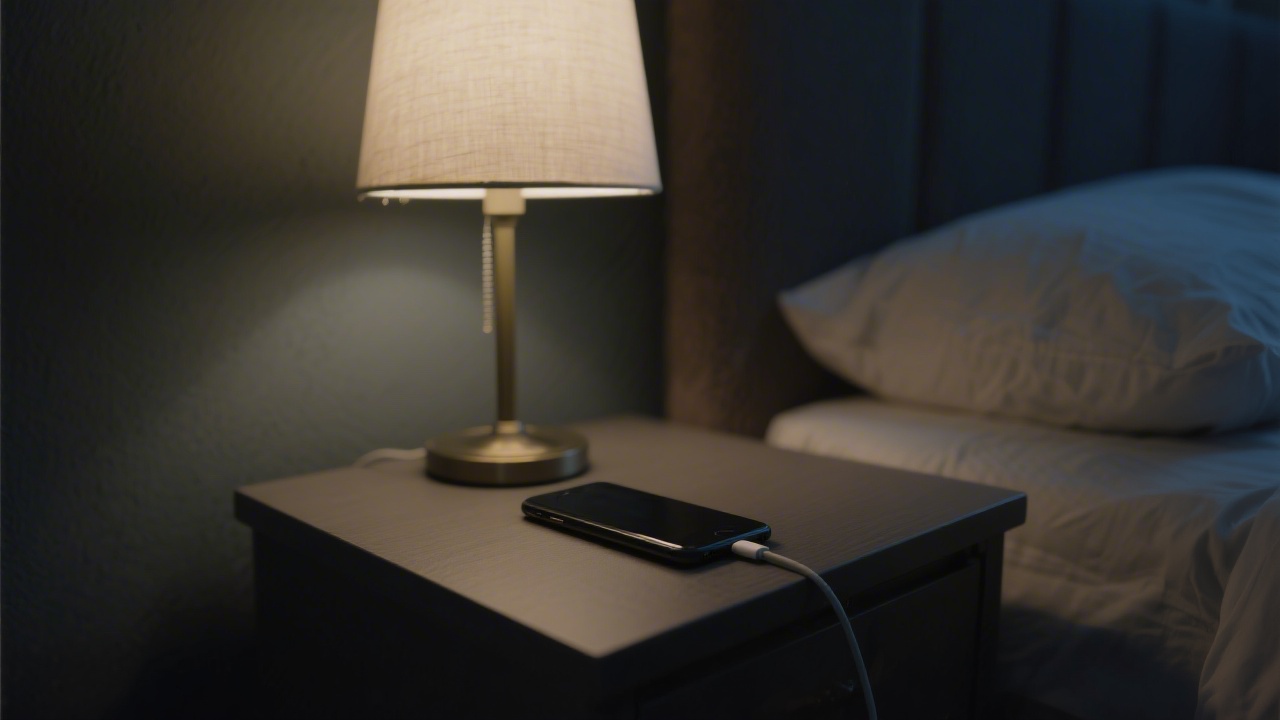
Move all phone charging to a non-bedroom location: a hallway, a kitchen counter, a living room. Do this tonight. Do not place a charger in the bedroom. The phone's nightly charge creates a powerful daily cue (battery low → plug in → phone in room → phone in bed). Breaking the charging location breaks the entire downstream chain.
Step 2: Replace the Alarm Function
The most common objection is alarm dependency. A basic digital alarm clock ($15-20) solves this completely. Waking to a dedicated alarm clock is also marginally better from a sleep-quality perspective — the absence of the phone means no possible late-night notification pulls back attention to the device.
Step 3: Install a Competing Habit
The behavioral void left by phone removal must be filled. Place two or three physical books on the nightstand. Keep a notepad for the mental offload habit (see Sleep Habit Stacking). Have a specific "bedtime book" that you only read in bed — this creates a new association between the bed context and the replacement behavior.
Handling Partial Compliance and Edge Cases
The "Just Checking One Thing" Pattern
This is the most common partial-compliance failure mode. "One thing" rarely stays one thing due to the variable reward loop. The rule must be binary: phone not in bedroom from [specific time] onward. Any exception reopens the full habit loop. If you need to check something genuine, get out of bed, go to where the phone is charging, check it, and return. The friction of this sequence will naturally reduce "one thing" checks to genuine emergencies.
Partner Phone Use
If a partner continues phone use in bed, light from their screen will affect your melatonin suppression and your ability to sleep. A sleep mask solves the light component. A direct conversation about the shared impact on sleep quality solves the behavioral component. This is an accountability conversation worth having — see Sleep Accountability for a framework.
Timeline for Breaking the Habit
With complete phone removal from the bedroom, the habit begins to extinguish rapidly because the primary cue (phone physically present) is eliminated. Most people report the urge to reach for a phone before sleep largely subsiding within 7-14 days. The replacement book habit takes 3-4 weeks to feel natural. By week 6, the bedroom becomes genuinely associated with wind-down rather than stimulation — a fundamental shift in sleep architecture support.
Related guides: Sleep Environment Habits, Sleep Habit Stacking, Sleep Schedule Maintenance, Nighttime Phone Habits.
Frequently Asked Questions
Why is willpower insufficient for breaking the phone-in-bed habit?
Phone use in bed activates the same dopamine release mechanisms as other variable-reward activities. The neurological reward loop is strong enough that willpower — which relies on prefrontal cortex executive control — is systematically overwhelmed by limbic system drive, especially when you are already tired and prefrontal function is reduced.
What is the most effective single change to reduce nighttime phone use?
Physical relocation of the phone to a room other than the bedroom is the highest-leverage single change. Convenience is the primary driver of habit repetition. When reaching for your phone requires getting out of bed, walking to another room, and returning, the habit's initiation friction multiplies enough to break the automatic reach in most situations.
What should replace phone use in bed?
The replacement needs to fulfill the same functional need: cognitive stimulation, emotional comfort, or transition away from other tasks. Physical books are the most research-supported replacement — they are cognitively engaging without being stimulating, have no blue-light impact, and have no algorithmically optimized feedback loops. Audiobooks or podcasts are a reasonable alternative.
How do you handle using your phone as an alarm without having it in the bedroom?
A dedicated alarm clock eliminates this dependency entirely. Basic alarm clocks cost under $20 and are more reliable than phone alarms (no silent mode, no battery risk, no app update disruptions). This single investment removes the most common rationalization for keeping the phone in the bedroom.
Does the type of phone content matter for sleep impact?
Yes significantly. Passive scrolling through social feeds activates higher arousal and emotional engagement than, for example, reading a long article. Video content, news feeds, and any content with variable reward mechanics (likes, comments, surprising information) is substantially more activating than static reading. All are problematic for sleep, but not equally so.
Our Top Mattress Pick for Better Sleep
The Saatva Classic is engineered for spinal alignment and temperature regulation — two non-negotiables for restorative sleep at any stage of a habit-building journey.
Key Takeaways
Nighttime Phone Habits is a topic that depends heavily on individual needs and preferences. The most important thing is to consider your specific situation — your body type, sleep position, and personal comfort preferences — before making any decisions. When in doubt, take advantage of trial periods to test before committing.