
 by
by Quick verdict: Novilla makes affordable foam and hybrid mattresses that fit guest rooms, dorms, first apartments, and other budget-sensitive setups. The Bliss models offer useful pressure relief and motion isolation, but the lighter support foam reported in the source review raises reasonable durability concerns. My spec-based verdict is that Novilla works best as a lighter-duty mattress, not as my first choice for a primary bed expected to handle years of nightly compression.
Novilla mattress review at a glance
My materials-based verdict is fairly simple. Novilla delivers the familiar comfort of memory foam at an accessible initial price. You get close contouring, little internal noise, and good control of partner movement. You give up some edge stability, airflow, responsiveness, and confidence in the support core’s long-term resilience.
The distinction between the Bliss and Vitality lines matters. Bliss is the classic all-foam option, while Vitality adds pocketed coils. That coil unit gives the hybrid a clearer structural advantage for airflow and ease of movement, although the exact comfort layers still need to be checked on the current model listing.
- Best fit: Guest rooms, temporary living arrangements, students, lighter sleepers, and shoppers working within a strict budget.
- Main strengths: Pressure relief, quiet performance, motion isolation, and compressed-box convenience.
- Main weaknesses: Limited perimeter reinforcement, slower movement on the foam models, and uncertainty around long-term support.
- My biggest concern: The base-foam density reported in the source review is light for a mattress expected to withstand concentrated nightly loading.
The Nut’s take is not that every inexpensive foam mattress is automatically flimsy. Foam density, layer thickness, firmness, sleeper weight, foundation quality, and frequency of use work together. Novilla’s value case becomes more convincing when the mattress will be used occasionally and less convincing when it will carry concentrated loads every night.
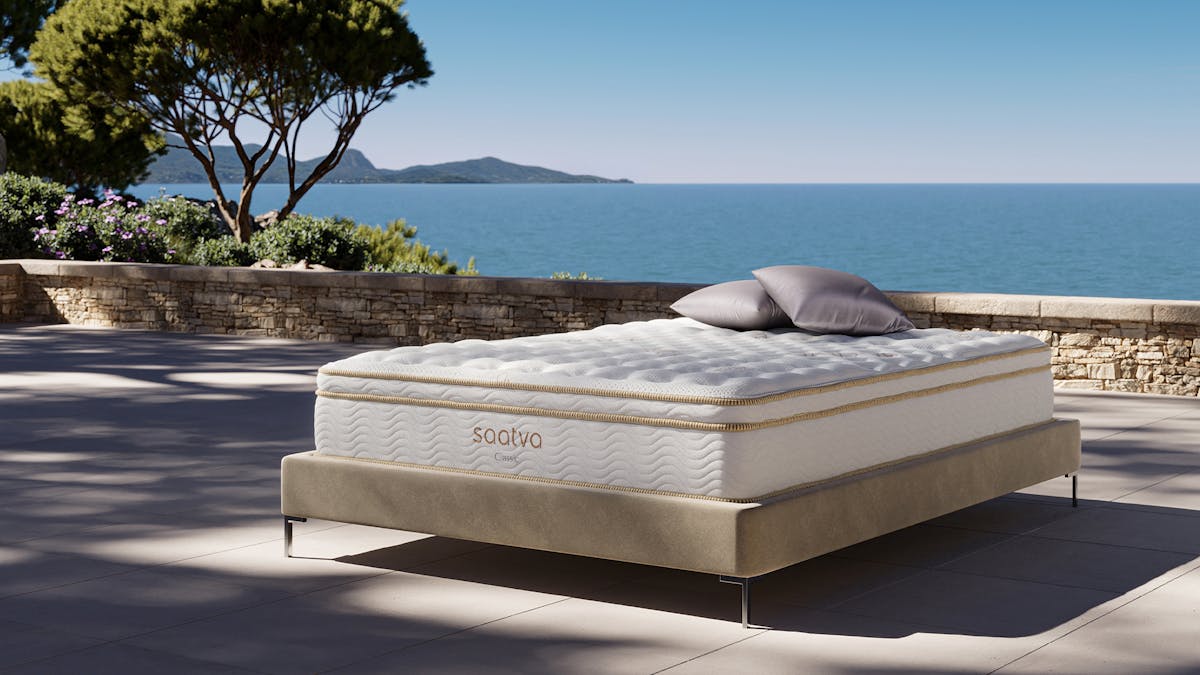
For shoppers comparing Novilla with a more substantial primary-bed design, the Saatva Classic is the alternative I would examine. According to Saatva’s published product page, it uses a coil-on-coil structure and comes in three firmness choices and two heights. The manufacturer also lists a 365-night home trial, lifetime warranty, and white-glove delivery under its published terms.
Save up to $600 on the Saatva Classic →
“I spent ten years sleeping on a $250 mattress. I told myself it was fine. My back disagreed, every single morning.”
Read why our editor finally switched to Saatva →
Who should buy a Novilla mattress?
Novilla makes the most sense when initial cost and easy delivery matter more than maximum durability. According to the pricing captured in the source review, a queen started around $230. That can be reasonable for a lightly used room or a living arrangement where the mattress is unlikely to remain in service for the long haul.
- Guest-room shoppers: Occasional use places less cumulative stress on the comfort and support foams, making the inexpensive construction easier to justify.
- College students and first-apartment renters: The boxed format is easier to maneuver than a full-size delivered mattress, while the source review’s entry price is more approachable than premium hybrid pricing.
- Light and average-weight side sleepers: Memory foam can cushion the shoulder and hip without requiring the sleeper to compress an especially thick or firm comfort system.
- Average-weight back sleepers: The medium-firm description in the source review may provide a workable balance between surface contouring and support while the foam is in good condition.
- Couples bothered by movement: Continuous foam layers tend to absorb motion instead of passing it across the bed through connected springs.
- People needing a temporary mattress: Novilla can cover a short-term need without requiring the budget associated with a heavier, more complex bed.
I would match the model to the job. Bliss is the clearer choice if low motion transfer and a hugging foam feel are priorities. Vitality makes more sense for shoppers who want extra airflow and a quicker response from the support system.
The room itself matters too. A foam mattress used in a cool, ventilated guest room faces a different job from one used nightly in a warm bedroom by two people. That distinction is more useful than treating a single owner rating or firmness label as a complete answer.
Who should avoid Novilla?
I would be more cautious if the mattress will carry greater loads, receive intensive nightly use, or needs to provide a firm sitting edge. Those demands tend to expose the limitations of light foam sooner than occasional use does.
- Sleepers weighing 230 lb or more: The 230 lb threshold cited in the source review marks a group likely to compress the comfort system more deeply and place greater stress on the base foam.
- Stomach sleepers: A softer foam surface can let the pelvis settle farther than the chest and legs, which may make neutral alignment more difficult to maintain.
- Hot sleepers: Gel and open-cell foam are intended to moderate heat buildup, but neither creates the broad internal air channels found around coils.
- People who regularly sit at the edge: The all-foam models do not have a dedicated reinforced perimeter in the reviewed construction, so concentrated edge compression is more noticeable.
- Long-term primary-bed shoppers: A low purchase price becomes less compelling if comfort softening causes the mattress to be replaced earlier.
- People with significant mobility needs: A stable perimeter can make getting into bed, standing, and repositioning easier than a border that folds noticeably under weight.
Body weight is only part of the equation. Sleep position, how close a couple sleeps to the sides, room temperature, foundation quality, and sensitivity to slow-moving foam can all change how suitable a Novilla feels.
I would also be cautious about buying from a marketplace listing without confirming the exact variation. Sellers may group several heights, sizes, and constructions on one page. Reviews and feature bullets can therefore describe a different version from the mattress selected in the cart.
What Novilla mattresses are made of
Novilla sells all-foam and hybrid mattresses. The Bliss gel memory foam line is the familiar budget option, while the Vitality Hybrid adds pocketed coils. Layer arrangements can vary by model and height, so I would compare the current seller specification with the law tag attached to the delivered mattress.
The construction should be read from top to bottom. The cover affects the immediate surface, the memory foam shapes pressure relief, the transition foam controls sink, and the support core carries the load. A prominent cooling label or tall profile does not tell me enough about durability by itself.
Bamboo-rayon cover
The reviewed Bliss construction uses a soft bamboo-rayon cover intended to improve surface breathability. A breathable textile can help warmth and moisture leave the immediate sleep surface, but it cannot fully offset heat retained deeper inside a solid foam core.
The cover also should not be assumed removable merely because it has a zipper or visible seam. Follow the model-specific care instructions, particularly because the source material does not market every Novilla mattress as fiberglass-free.
A mattress cover is only one part of the temperature equation. A thick waterproof protector, dense sheets, and deep body contouring can reduce the cooling benefit of an airy surface fabric.
Gel-infused memory foam
The comfort layer supplies the slow, body-contouring response associated with memory foam. It is the main source of the Bliss model’s pressure relief and motion control. Gel infusion is designed to manage warmth better than conventional memory foam, although the finished bed remains less internally ventilated than a mattress built around open coil space.
Memory foam responds to heat and pressure, so its feel can change with room temperature and body weight. A cooler room may make it feel firmer at first, while sustained contact allows the foam to soften and conform more closely.
That response helps explain why two owners can describe the same model differently without either account being wrong. A lighter side sleeper in a cool room may experience a firmer, slower surface than a heavier sleeper who warms and compresses more of the comfort layer.
Polyfoam transition layer
A transition layer separates the softer memory foam from the firmer base. Its quicker response can reduce the abruptly hard sensation that might occur if soft memory foam rested directly on a rigid support core.
This layer also helps control how deeply the sleeper reaches into the mattress. Its effectiveness depends on thickness, firmness, and density, details that should be checked for the exact model rather than inferred from the Novilla name alone.
If the transition layer softens, the sleeper may feel more of the support core even when the upper memory foam still looks intact. That is why judging durability from the visible surface alone can be misleading.
Open-cell airflow foam
Novilla describes an airflow-focused foam layer in the Bliss construction. An open-cell structure can permit some movement of air within the material, but those passages remain much smaller than the open areas surrounding mattress coils.
I treat “airflow foam” as a construction description, not proof that a bed will sleep cool for everyone. Sheets, protectors, room climate, body heat, and how deeply a sleeper sinks into the surface all influence temperature.
The practical question is not merely whether a foam contains air channels. It is whether heat can travel through the complete mattress and escape. A solid support core still limits the amount of open internal space available for circulation.
Foam support core
The base foam is the structural foundation of the all-foam models. The source review reports a density range of 1.2-1.5 lb/ft3 and compares it with a commonly used 1.8 lb/ft3 resilience benchmark for polyfoam. Density is not the sole measure of durability, but it is a useful clue because it describes how much polymer material is packed into a given volume.
A lighter core can still feel supportive when new. My concern is repeated loading. Lower-density polyfoam generally has less material available to resist fatigue, making gradual softening and loss of support more plausible over time.
Density and firmness are different measurements. A low-density foam can initially feel firm, while a denser foam can be formulated to feel softer. Firmness describes resistance at that moment; density gives a more useful clue about the amount of material available to handle repeated compression.
Vitality Hybrid coil unit
The Vitality Hybrid places pocketed coils in its support system. Individually wrapped coils can react more independently than a connected innerspring, while the space around them permits greater internal airflow. The coil unit also gives the mattress a livelier response than the Bliss foam core.
Pocketing the coils can reduce, but not erase, movement transfer. The hybrid is still likely to feel bouncier than Bliss because springs store and return energy more readily than dense foam.
The presence of coils does not settle the whole durability question. The comfort foams above the springs still receive direct nightly compression. A strong coil unit can remain functional while softened upper foam changes alignment or comfort.
Foam certification and manufacturing
Novilla states that its polyurethane foams are CertiPUR-US certified. According to the certification program, that designation addresses specified content, emissions, and performance criteria for polyurethane foam. It does not establish how long the complete mattress will remain supportive or comfortable.
The source review identifies Novilla mattresses as manufactured in Indonesia rather than the USA. Manufacturing location by itself does not determine quality, so the more useful checks are the model’s component specifications, law tag, seller identity, return terms, and warranty requirements.
I would treat certification, country of manufacture, and owner ratings as separate pieces of evidence. None replaces a complete layer specification or the written ownership policies for the exact mattress.
Novilla models and listed pricing
The figures below come from the pricing recorded in the source review and may change on Amazon or through another seller. Confirm the model name, height, seller, and checkout total before ordering.
| Model | Height | Type | Queen price in source review |
|---|---|---|---|
| Novilla Bliss 10" | 10 inches | All-foam | ~$230 |
| Novilla Bliss 12" | 12 inches | All-foam | ~$290-$330 |
| Novilla Bliss 14" | 14 inches | All-foam | ~$350-$400 |
| Novilla Vitality 12" Hybrid | 12 inches | Hybrid | ~$300-$500 |
As listed in the source review, the range extends from Twin through California King. A taller mattress is not automatically more durable. Layer quality, density, sleeper weight, and the location of softer foams matter at least as much as total profile.
| Size | Dimensions in source review | Bliss 10" price in source review |
|---|---|---|
| Twin | 39 x 75 inches | ~$159 |
| Full | 54 x 75 inches | ~$199 |
| Queen | 60 x 80 inches | ~$230 |
| King | 76 x 80 inches | ~$279 |
| Cal King | 72 x 84 inches | ~$299 |
The taller Bliss options may offer more cushioning, but height alone does not tell me how well the bed will resist impressions. I would rather know the density and thickness of each layer than choose solely by the largest profile shown in a product photo.
Before paying, compare the delivered mattress specification with the listing you ordered. Marketplace pages can group several heights and constructions, making it easy to read a feature that applies to another variation.
Also check the selected seller, fulfillment method, and written return instructions. The same mattress name can appear under listings with different service procedures, and those differences matter once a compressed bed has expanded.
How Novilla performs
Comfort and firmness
The source review describes the Novilla Bliss at around 6 out of 10 on its firmness scale, placing it near medium-firm by that review’s terminology. The memory foam softens under body heat and distributes pressure across a broader area. Side sleepers may appreciate the cushioning around the shoulder and hip, while some back sleepers may find the surface supportive if they do not sink through the comfort layers.
Firmness is subjective. A lighter sleeper applies less force and may experience the same foam as firmer, while a heavier sleeper generally reaches farther into the transition and support layers. Room temperature can also change the initial response of memory foam.
The Vitality Hybrid should feel less enveloping because the coil support system pushes back more quickly than a solid foam base. That does not necessarily make it firm, but it should make movement feel less delayed.
I put more weight on how the full layer stack behaves than on a single firmness number. A bed can feel pleasantly medium-firm at first yet allow too much torso sink after the comfort foam warms and compresses.
Pressure relief
Pressure relief is one of the Bliss model’s more convincing qualities. Slow-response foam conforms around prominent joints instead of pushing sharply against them. Side sleepers who feel pressure at the shoulder or hip are the clearest audience for this kind of contour.
The tradeoff is deeper engagement with the foam. If the sleeper sinks substantially, turning and sitting up can require more effort. A pressure-relieving surface also still needs enough underlying support to keep the torso from settling excessively.
More cushioning is not always better. If the hip passes too far through the upper layers, the mattress can lose the even support that made it comfortable at first. That balance depends on body weight and the specifications of the chosen height.
Motion isolation
Motion isolation is another genuine strength. Foam absorbs energy locally, so a partner turning over tends to create less disturbance than on a highly responsive connected innerspring. This can help couples with different schedules or sleepers who wake easily when the other side moves.
The Vitality Hybrid may pass along slightly more motion because its coils add bounce. Individually wrapped springs generally localize compression better than connected units, but they cannot reproduce the nearly springless response of an all-foam core.
Bed-frame movement can complicate owner impressions of motion transfer. A flexible or loose foundation may shake beneath an otherwise quiet foam mattress, so the support system under the bed should be checked before blaming the mattress alone.
Edge support
Edge support is a weak point on the reviewed all-foam models. Without a reinforced rail or firmer perimeter coils, the side compresses noticeably under concentrated weight. Couples who spread across the entire bed may therefore perceive less usable space.
The softer border also matters when sitting to dress or using the edge to push up. The Vitality Hybrid’s coil structure should create a more stable foundation than Bliss, but shoppers needing strong perimeter reinforcement should inspect the exact model rather than assume every hybrid has a dedicated edge system.
Edge performance has two parts: lying support and seated stability. A border may feel acceptable while lying down yet fold more deeply under the concentrated force of sitting. Anyone relying on the edge for mobility should pay attention to that distinction.
Cooling
Novilla uses gel-infused memory foam, an airflow layer, and a breathable cover to manage warmth in the reviewed Bliss construction. Those features are designed to help, yet Bliss remains an all-foam mattress with limited open space inside its core.
The Vitality Hybrid has the construction advantage for hot sleepers because air can circulate around its pocketed coils. Bedding, room temperature, mattress protectors, and the sleeper’s depth of sink also affect temperature, so the support core is only part of the cooling picture.
Owner descriptions such as “cooling” and “hot” are useful but highly personal. I would give more weight to the open internal structure of the hybrid than to a cooling label printed on an otherwise solid foam mattress.
Responsiveness and ease of movement
Bliss has the slower contour associated with memory foam, moderated somewhat by its transition layer. Combination sleepers may find it less agile than a hybrid after settling into the comfort material.
Vitality should respond faster because compressed coils regain their shape more quickly than a solid foam base. People who frequently change position or dislike feeling enclosed by foam are more likely to prefer that construction.
The bed’s initial showroom-style push does not tell the whole story. Memory foam often feels slower after it has warmed beneath the body, which is the condition that matters during actual sleep.
Durability
Durability is my main concern with Novilla. The source review reports a base-foam density of 1.2-1.5 lb/ft3, below the 1.8 lb/ft3 polyfoam reference point used in that review for stronger long-term resilience. Lower-density material contains less polymer by volume and generally has less resistance to repeated compression.
According to verified owner reviews cited from Amazon in the source article, some buyers reported body impressions within 6-12 months. Those reports do not prove that every Novilla mattress will develop the same issue, but they are relevant when considered alongside the reported foam density.
The original review estimates a comfortable service period of 6-7 years, with faster wear possible under heavier or more concentrated loads. That estimate is not a manufacturer promise. Actual performance depends on the individual foam, sleeper weight, foundation, rotation practices, and frequency of use.
Rotation and a flat, supportive foundation may encourage more even wear. They cannot increase the density of the foam or reverse permanent softening once the internal structure has fatigued.
I separate cosmetic impressions from meaningful support loss. A small visible change does not always alter sleep quality, while internal softening can affect posture even before the surface shows a dramatic dip. The warranty definition may also differ from what an owner considers uncomfortable.
Off-gassing
The source review estimates Novilla’s initial odor at around 4 days and cites a 7-day comparison norm. Smell intensity and duration vary by mattress, room size, ventilation, temperature, and personal sensitivity, so those figures should be treated as review estimates rather than fixed outcomes.
CertiPUR-US certification indicates that the polyurethane foam meets the program’s specified emissions criteria. It does not mean a newly unboxed mattress will have no manufacturing odor. Allowing air to circulate around the expanded mattress is the sensible approach.
Odor is not a reliable shortcut for judging durability or firmness. A mattress with little initial smell can still use light foam, and a noticeable boxed-foam odor can dissipate without changing the bed’s structural quality.
Back-pain support
The medium-firm description may suit average-weight back and side sleepers seeking pressure distribution with a reasonably level posture. A mattress can feel comfortable without addressing the underlying cause of pain, and Novilla should not be treated as a medical intervention.
Heavier sleepers and people who need firmer zoned support may prefer a coil-based design with more resistance under the torso. Anyone experiencing persistent, severe, or worsening pain should seek advice from an appropriate healthcare professional rather than relying only on a mattress change.
For mattress selection, the useful construction question is whether the surface relieves pressure without letting the midsection settle too far. That balance can change as foam warms and ages, so an initially comfortable feel does not establish long-term support.
Noise
The Bliss all-foam models contain no springs, leaving little inside the mattress that can squeak. Noise heard around the bed is more likely to originate in the frame, adjustable base, foundation, or contact with a wall.
Vitality contains coils, although individually wrapped units are designed to move independently and are usually quieter than old connected spring assemblies. Frame stability remains important because even a quiet mattress can reveal movement in a loose foundation.
A developing sound should be isolated before drawing conclusions. Check frame joints, center supports, slats, and wall contact separately from the mattress.
Sex
The Bliss construction favors motion absorption over bounce. Some couples may appreciate the quiet surface, while others may find the slow response and softer edge restrictive. Vitality’s coil unit should provide a livelier surface and easier repositioning.
There is no universally better feel here. The relevant construction choice is between closer contouring with minimal bounce and a faster, more buoyant response.
Edge stability also contributes to usable space. That gives the hybrid a construction advantage for couples who want a broader responsive surface, provided the selected Vitality model has adequate perimeter support.
Trial, shipping, and warranty
Ownership terms deserve close attention because they determine how the mattress can be evaluated and what happens if a defect develops. The following figures are from the policies stated in the source review, so buyers should verify the current written terms for their seller and model.
- Sleep trial: The source review lists a 30-night sleep trial and says the policy has a 30-day minimum-use condition before a return may be initiated.
- Limited warranty: The manufacturer policy cited in the source review lists a 10-year limited warranty for qualifying defects, subject to its written exclusions and requirements.
- Shipping: The source article describes free compressed-box shipping and an expected arrival window of 5-7 business days.
- Construction orientation: The reviewed mattress is one-sided because its comfort material belongs above the transition and support layers.
- Adjustable-base use: The flexible construction is described as compatible with an adjustable foundation, provided the base meets the manufacturer’s support requirements.
The warranty’s impression threshold, foundation rules, proof-of-purchase requirement, and handling of normal softening matter more than the headline duration. A mattress can lose comfort before an impression meets the written definition of a covered defect.
Marketplace purchases add another layer. The retailer’s return procedure may differ from the brand’s direct policy, and oversized-item pickup can involve specific instructions. Confirm who is selling and fulfilling the mattress before checkout.
Save the order confirmation, product label, and written policy that applied on the purchase date. Those records can matter if a later listing changes or if the seller requests documentation for a return or warranty review.
Novilla Bliss versus Vitality Hybrid
| Feature | Novilla Bliss | Novilla Vitality Hybrid |
|---|---|---|
| Support core | Polyfoam | Pocketed coils |
| Surface response | Slower and more contouring | Quicker and more buoyant |
| Motion control | Stronger construction advantage | Good for a coil design, but potentially bouncier |
| Airflow | More restricted through the core | More open space around coils |
| Edge stability | Limited in the reviewed design | Potentially steadier, depending on the exact perimeter |
| Ease of movement | More enveloping | Easier to reposition on |
Bliss is the more coherent choice for a sleeper specifically seeking the quiet, hugging character of memory foam. Vitality is the better construction match for anyone prioritizing airflow and mobility.
Neither label settles the durability question on its own. Comfort-layer quality still matters in a hybrid, and a coil unit cannot prevent soft foam above it from developing impressions. Check every available layer specification before deciding.
If two listings disclose different amounts of construction detail, I favor the one that clearly identifies the layer stack and applicable policies. Vague feature language makes it harder to judge how one variation differs from another.
Novilla versus the Saatva Classic
These mattresses occupy different construction and price categories. Novilla prioritizes a low initial cost and compressed-box convenience. Saatva Classic prioritizes a heavier coil-based structure, firmer perimeter, in-room delivery service, and a longer evaluation period under the manufacturer’s terms.
| Feature | Novilla Bliss | Saatva Classic |
|---|---|---|
| Core construction | All-foam | Coil-on-coil hybrid |
| Firmness choice | Medium-firm description | 3 options, per Saatva’s product page |
| Trial | 30 nights, per the source review | 365 nights, per Saatva’s policy |
| Warranty | 10-year limited warranty, per the source review | Lifetime warranty, per Saatva’s terms |
| Delivery format | Compressed in a box | White-glove delivery, per Saatva’s service policy |
| Edge support | Limited on the reviewed foam models | Reinforced perimeter |
| Airflow | Restricted by the foam core | Open space through the coil layers |
The original comparison assigns the Saatva Classic a 9.2/10 score. That source evaluation favors its reinforced lumbar area, responsive coil structure, and three firmness options for primary-bedroom use. According to Saatva’s stated policy, returns carry a $99 fee, and the mattress arrives full-size rather than compressed.
This is not a like-for-like price comparison. Novilla’s appeal is affordability, while Saatva’s appeal is the more substantial support architecture and service package. A guest-room buyer may reasonably favor Novilla; a shopper planning intensive nightly use may put more value on coils and perimeter reinforcement.
The upgrade case rests on construction and service, not on a promise that one mattress will suit every body. Firmness selection, sleep position, body weight, and budget still need to line up with the chosen model.
My verdict on Novilla
Novilla is a sensible budget mattress when expectations match the materials. Bliss provides close contouring, quiet performance, and effective motion isolation. The compressed format also makes it practical for rooms that are awkward to reach with a full-size mattress.
The weakness is in the support material. The lighter base-foam density reported by the source review gives me less confidence in long-term resistance to softening than I would have in denser polyfoam or a well-built coil system. That concern matters less in a guest room than on a primary bed carrying nightly loads.
Amazon owner ratings cited in the source review averaged 4.3-4.5 stars across tens of thousands of reviews at the time of that analysis. Those averages indicate broad buyer satisfaction at the budget price, but shoppers should also read recent verified reviews that discuss impressions, edge softness, and changes in comfort over time.
Bottom line: Based on the source review’s roughly $230 queen price, I would consider Novilla for a guest room, dorm, first apartment, or short-term setup. For a primary mattress where support durability is the priority, I would compare the Vitality Hybrid with more substantial coil designs before defaulting to the cheapest Bliss model.
My confidence is highest in the construction-level conclusions: solid foam isolates movement, pocketed coils permit more airflow, and lighter base foam deserves closer durability scrutiny. My confidence is lower where listings do not disclose complete layer specifications, because a shared model family name does not prove identical materials across every height and seller.
Saatva Classic as the long-term alternative
Saatva’s manufacturer page describes the Classic as using dual coil layers, a reinforced lumbar area, and three firmness options. Its published service terms include white-glove in-room setup and old-mattress removal. The source comparison lists financing from ~$158/mo with Affirm and an offer of up to $600 in savings; confirm current financing and promotion terms directly at checkout.
I see Saatva Classic as the appropriate comparison for shoppers who have moved beyond temporary or occasional use. The point is not that a higher-priced mattress is automatically better, but that its coil structure, perimeter design, and delivery terms address several of the weaknesses identified in the reviewed Novilla construction.
How to choose the right Novilla model
Start with the support system
Choose between foam and coils before choosing height. Bliss makes sense if the priority is motion absorption and a close contour. Vitality is the more logical starting point if airflow, bounce, or ease of movement matters more.
This choice affects the basic character of the mattress more than a small change in overall profile. Foam produces a quieter, slower cradle, while coils create a more open and responsive base.
Check the exact layer specifications
Do not assume every Bliss or Vitality listing uses identical materials. Compare the layer order, foam density if disclosed, comfort thickness, coil description, cover instructions, and total profile for the exact variation in the cart.
Take screenshots or save the written specifications that apply to the selected size and height. Marketplace pages can change, and a record helps if the delivered law tag or construction description does not appear to match the order.
Match durability expectations to use
A mattress for occasional guests does not face the same loading as a nightly primary bed. The lower the expected use, the easier it is to accept lighter materials in exchange for a lower initial cost.
For nightly use, consider how body weight is distributed and whether one side will receive substantially more compression. Couples and sleepers who remain in one position can create more concentrated wear than an occasional guest.
Read the return terms before opening the box
Compressed mattresses expand after unboxing and can be difficult to repack. Know who handles a return, which minimum-use conditions apply, and what documentation or photographs may be requested before removing the packaging.
Confirm the procedure in writing rather than relying on a general marketplace banner. The seller, brand, and fulfillment provider may each play a different role in resolving a return.
Use a suitable foundation
A weak, widely spaced, or sagging base can make a mattress feel softer and may conflict with warranty requirements. Follow the manufacturer’s current foundation specifications and verify that the frame remains level and adequately supported.
Inspect the center support and slats before installing the mattress. A visibly bowed base can imitate mattress sag and makes a fair comfort or durability assessment difficult.
Check the fire-barrier disclosure
The source material does not establish that every Novilla variation is fiberglass-free. Ask for the current fire-barrier composition for the exact model, then compare that response with the law tag on the delivered mattress.
Do not unzip or remove the cover unless the manufacturer’s instructions expressly say it is removable. A visible zipper alone is not enough evidence that the cover is intended for routine removal or washing.
Frequently asked questions
Is the Novilla mattress good?
It is a reasonable value within the budget category. Based on the source review, the all-foam models provide useful pressure relief and motion isolation at around $230 for a queen. The compromises are weaker edge support, more restricted airflow, and less confidence in long-term foam resilience.
How long does a Novilla mattress last?
The source review estimates 6-7 years of comfortable use, with potentially faster wear under heavier or highly concentrated loads. Its reported 1.2-1.5 lb/ft3 base-foam density is the main materials concern in that assessment. Actual lifespan varies with sleeper weight, use, foundation support, and differences between individual foam batches.
Is Novilla suitable for back pain?
Some average-weight back and side sleepers may appreciate its medium-firm description and contouring pressure relief. Heavier sleepers or people requiring stronger zoned support may prefer a coil-based design. A mattress is not a substitute for professional assessment of persistent pain.
Does Novilla use fiberglass?
The source material does not market the reviewed Novilla mattresses as fiberglass-free. Check the law tag and obtain the manufacturer’s current fire-barrier disclosure for the exact model before purchasing. Do not remove the cover unless the manufacturer expressly identifies it as removable.
What is Novilla’s return policy?
The policy recorded in the source review provides a 30-night sleep trial with a 30-day minimum-use requirement before initiating a return. Verify the current seller-specific procedure before ordering, especially through a marketplace.
What does the Novilla warranty cover?
According to the manufacturer policy cited in the source review, Novilla provides a 10-year limited warranty for qualifying manufacturing defects. Coverage depends on the written conditions, including foundation requirements and the depth of a qualifying impression. Ordinary comfort softening may not meet the policy’s definition of a defect.
Is the Novilla mattress flippable?
No. The reviewed construction has a fixed orientation, with comfort foam above the transition and support materials. Rotation may distribute wear more evenly, but turning the mattress upside down would place the firm base at the sleep surface.
Is Novilla good for couples?
Bliss is appealing for couples who prioritize motion isolation and quiet performance. Couples who sleep near the sides may find its weak edge limiting, while those who sleep warm or change positions frequently may prefer the Vitality Hybrid’s coil support.
How long does Novilla take to expand?
The source article does not provide a distinct expansion period. Follow the instructions included with the exact mattress and let it recover in a ventilated room before evaluating its final height, shape, or feel.
Which Novilla model sleeps cooler?
Vitality Hybrid has the construction advantage because its pocketed-coil core leaves more open space for air movement. Bliss includes gel and airflow-focused foam, but its solid support core remains more restrictive.
Should I choose the 10", 12", or 14" Bliss?
Use the layer specifications rather than assuming the tallest option is best. The source listings identify 10-inch, 12-inch, and 14-inch Bliss profiles, but extra height may simply add cushioning. Foam density, layer thickness, body weight, and firmness preference give a more useful picture of support and durability.
Does the Novilla mattress need a box spring?
The key requirement is a flat, supportive foundation that complies with Novilla’s current warranty terms. An existing box spring should be checked for sagging, broken components, and inadequate support before placing a new mattress on it.
Is the Novilla Vitality better than Bliss?
Vitality is better suited to sleepers who value airflow, bounce, and easier movement. Bliss is better aligned with buyers seeking close pressure relief and minimal motion transfer. The better model depends on the sleeper and room, not simply on the presence of coils.
Can a Novilla mattress work on an adjustable base?
The source review describes Novilla’s flexible construction as adjustable-base compatible. Confirm that the exact model and base meet the manufacturer’s current requirements, especially if the foundation has unusual articulation or spacing.
Are taller Novilla mattresses more durable?
Not necessarily. The source listings include several Bliss heights, but total profile does not disclose the density or resilience of the added material. I would prioritize the specifications of the support and transition layers over height alone.
Why do Novilla reviews disagree about firmness?
Body weight, sleep position, room temperature, and the selected model can change how the foam feels. Marketplace reviews may also be combined across several sizes or heights, so confirm that an owner is discussing the same variation you are considering.
What should I inspect after delivery?
Compare the model name and law tag with the order, inspect the cover and seams, and make sure the mattress is resting on a level, compliant foundation. Keep the packaging information and proof of purchase in case the seller requests documentation.
The final call
Novilla works best as affordable foam for a lighter-duty setting. I like the Bliss model’s pressure relief, quiet surface, and control of partner movement. I am less convinced by the lighter support foam for intensive long-term use, particularly for heavier sleepers and people who rely on a firm edge.
If I were choosing within Novilla, I would use Bliss for a guest room or motion-sensitive sleeper and look more closely at Vitality for better airflow and movement. I would also verify the current layer specifications, fire-barrier disclosure, seller-specific return procedure, and foundation rules before ordering.
For shoppers willing to move beyond the budget category, Saatva’s published terms give buyers 365 nights to evaluate the Classic at home, along with a lifetime warranty and white-glove delivery. Those policies do not make it the right purchase for every budget, but its coil-on-coil structure is the stronger materials match for long-term primary-bed support.
My final take: Novilla is defensible for occasional use, temporary housing, or a strict spending limit. For nightly use where airflow, edge stability, and resistance to support loss matter most, I would favor a more substantial coil-based mattress and treat the Saatva Classic as the comparison point.
OUR PICK
A good budget bed, but if you can stretch, we tend to recommend the Saatva Classic: 365-night trial and lifetime warranty, per saatva.com.
If you buy through links on this page, we may earn a commission at no extra cost to you.