
 by
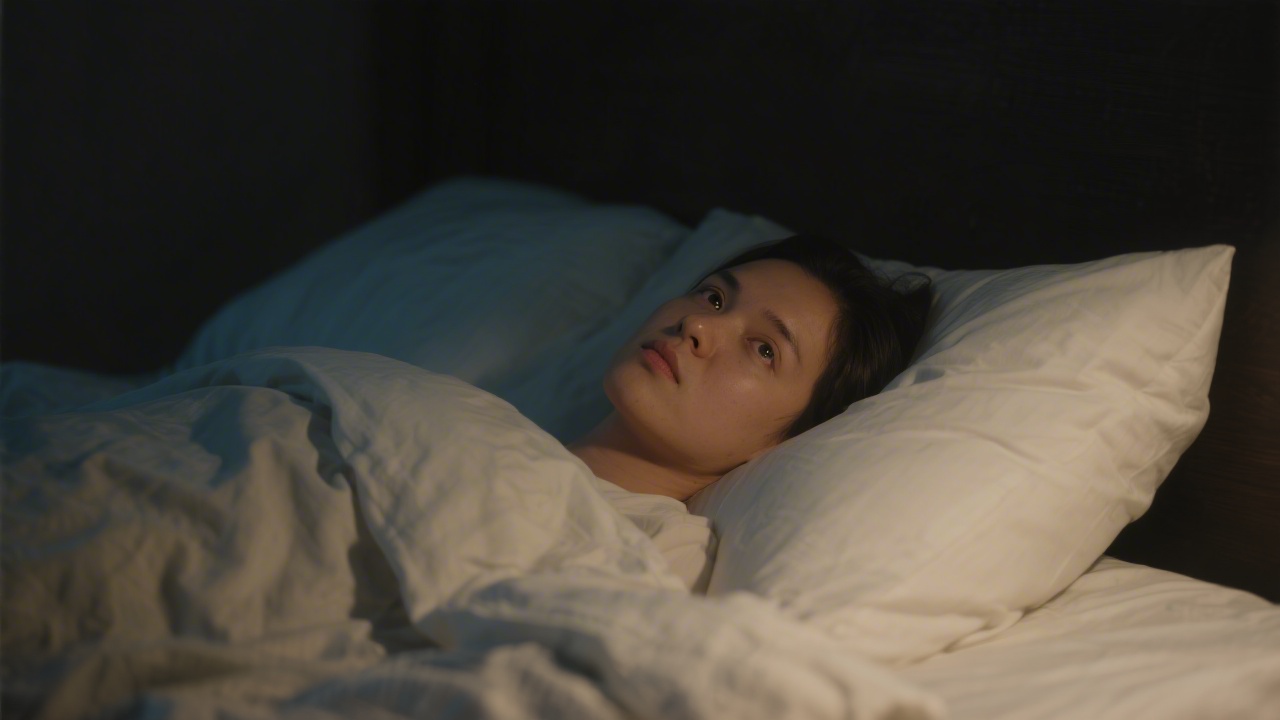
by Paradoxical intention is one of the most counterintuitive sleep interventions in clinical practice: you lie in bed with eyes open in the dark and try to stay awake as long as possible — without stimulation. This is not a folk remedy. It is a well-researched behavioral technique for sleep performance anxiety, one of the most common maintaining factors of chronic insomnia.
The Psychology Behind Trying Not to Sleep
Sleep is one of the few physiological processes that cannot be forced by direct effort. Trying harder to sleep increases cortical arousal, elevates heart rate, and generates the very wakefulness you are attempting to avoid. This is called sleep performance anxiety — the fear of not sleeping produces the arousal that prevents sleep.
Paradoxical intention breaks this cycle by removing the goal of sleep. By sincerely trying to stay awake (passively, without stimulation), you eliminate sleep effort. Without effort, arousal drops. Without arousal, sleep occurs more readily. The paradox resolves itself.
How to Practice Paradoxical Intention
The Setup
- Lie in your usual sleeping position in the dark.
- Keep your eyes open — but passively. Do not stare or strain.
- Your single instruction to yourself: "I will try to stay awake for as long as I can." Mean it.
- Do nothing else. No phone. No audiobook. No podcasts. No problem-solving. Just passive wakefulness.
The Mental Stance
The key word is "try." This is not a relaxation technique. You are not telling yourself "it's fine if I don't sleep." You are actively, sincerely attempting to stay awake — but passively, without any stimulation. The sincere attempt is what removes the secondary anxiety about not sleeping: you cannot be anxious about failing to sleep when your stated goal is to stay awake.
Common Mistakes
- Using stimulation as a crutch. Paradoxical intention requires passive wakefulness. Adding podcasts or TV reintroduces cortical stimulation and defeats the purpose.
- Treating it as "relaxation." The mechanism is not relaxation — it is removal of effort. These are physiologically different. Telling yourself "just relax" is another form of sleep effort.
- Not believing the instruction. If you are secretly still trying to sleep while pretending to try to stay awake, the technique loses its paradoxical effect. The sincerity of the instruction matters.
The Evidence Base
Paradoxical intention has a moderate evidence base in CBT-I research. A 2021 meta-analysis found it significantly reduced sleep onset latency and subjective insomnia severity, particularly in participants with high pre-sleep cognitive arousal. Effect sizes are generally smaller than sleep restriction but comparable to relaxation-based techniques. Its primary advantage is that it requires no special equipment, no sleep diary, and is non-distressing to begin.
Who It Works Best For
Paradoxical intention is most effective for sleep-onset insomnia driven by performance anxiety — the "will I be able to sleep tonight?" spiral. It is less effective for sleep maintenance insomnia (waking at 3 AM), circadian disruption, or insomnia driven primarily by physiological hyperarousal unrelated to performance anxiety.
For performance anxiety specifically, paradoxical intention can be combined with cognitive shuffling for a compound approach: try to stay awake (removing sleep effort), then fill the waking time with shuffled images (reducing cognitive engagement). This combination addresses both the motivational and cognitive components of sleep-onset failure.
Combining with Stimulus Control
Paradoxical intention works best when stimulus control is also in place. If your bed has become associated with wakefulness and anxiety through months of lying awake trying to sleep, the paradoxical instruction is fighting against a strong conditioned arousal response. Implementing the bed-as-sleep-only rule — part of evidence-based sleep hygiene — alongside paradoxical intention produces better outcomes than either technique alone.
Your Sleep Environment Matters
Paradoxical intention requires lying still in darkness without stimulation. Physical discomfort makes this harder — if your mattress causes pressure points or your spine is misaligned, the sensory input competes with the technique. A well-engineered mattress like the Saatva Classic that provides pressure-free support allows you to lie still comfortably for extended periods, which is what the technique requires.
Our Recommendation
Passive wakefulness is more effective in a comfortable sleep environment. The Saatva Classic reduces physical distractions so your attention stays on the technique, not on hip pressure or back discomfort.
Frequently Asked Questions
How long does paradoxical intention take to work?
Many people fall asleep faster on their first night of correct practice. The technique works immediately or not at all in each session — there is no multi-week priming phase like sleep restriction. If it does not reduce sleep onset anxiety within 2-3 sessions, the issue may be deeper cognitive or physiological.
Can you combine paradoxical intention with sleeping pills?
Yes, but with awareness: sedative medications reduce performance anxiety directly through pharmacological action, partially overlapping with paradoxical intention's mechanism. The combination is not harmful, but the goal of paradoxical intention is to build a drug-independent response to sleep-onset anxiety. Most CBT-I protocols aim to taper medication as behavioral techniques take effect.
Is paradoxical intention the same as reverse psychology on yourself?
Loosely. But the mechanism is not deception — it is the genuine removal of a behavioral goal (sleep) that was creating counterproductive arousal. "Fooling" yourself would not work; the sincerity of the instruction is what removes the arousal.
What if trying to stay awake makes me more anxious?
This occasionally happens when the technique is misapplied — particularly when people interpret "try to stay awake" as "worry about staying awake." Passive wakefulness is the goal, not active worry. If the instruction increases rather than decreases arousal, the cognitive component of your insomnia may need direct attention through cognitive restructuring.
Does paradoxical intention work for children with insomnia?
The technique has been used in adolescent CBT-I protocols. For young children, the concept requires modification. Adult trials form the basis of most evidence. Pediatric sleep difficulties warrant evaluation by a pediatric sleep specialist rather than adult protocol self-application.