
 by
by Recommended: Saatva Classic Mattress
A supportive, pressure-relieving sleep surface can meaningfully reduce the physical tension that amplifies anxiety at night. Saatva's luxury innerspring hybrid is consistently rated among the best for anxious sleepers.
The Performance-Sleep Paradox
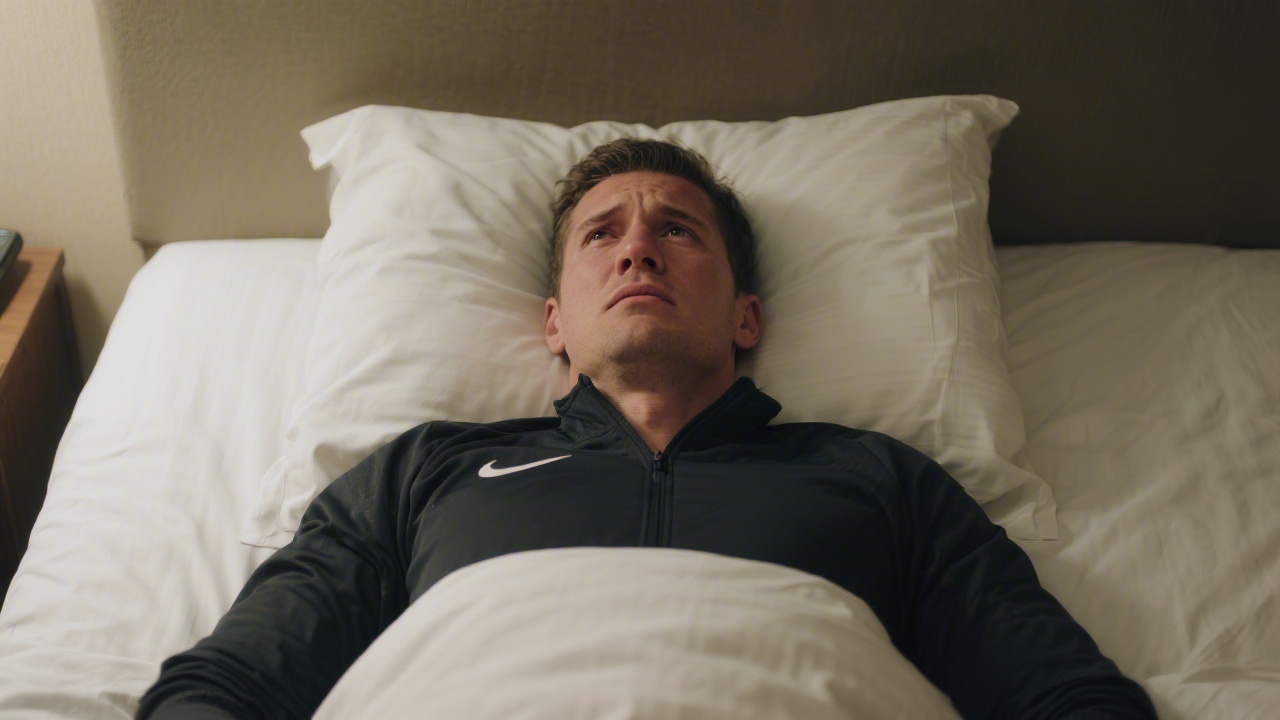
The night before a high-stakes performance — a championship, a critical presentation, a board exam — is precisely when sleep is most important and most difficult. This paradox is universal among elite performers: the higher the stakes, the more restorative sleep is needed to support optimal functioning, and the harder anxiety makes it to obtain that sleep.
Research by Erlacher et al. (2011) surveyed elite Olympic athletes and found that 65% reported sleep problems the night before competition, with anxiety identified as the primary cause. The finding is consistent across domains: academic performers before board exams, executives before critical presentations, surgeons before complex procedures. Performance anxiety disrupts sleep through the same hyperarousal mechanism in all high-stakes domains. anxiety and sleep
The Neuroscience of Pre-Performance Hyperarousal
Performance anxiety activates the sympathetic nervous system via perceived social-evaluative threat — the anticipation of being judged and found wanting by a significant audience. This is not a modern neurotic construction; it reflects an evolutionarily ancient threat system. In ancestral environments, loss of social standing had genuine survival consequences, and the brain treats high-stakes social evaluations with the same urgency as physical threats.
The resulting hyperarousal is physiologically identical to the fight-flight response: elevated cortisol, increased heart rate, increased core body temperature, heightened sensory awareness. Each of these mechanisms directly opposes the physiological requirements for sleep onset — specifically, the requirement for declining core body temperature and parasympathetic dominance. best mattress for sleep anxiety
What Elite Performers Actually Do
Sports science and performance psychology have converged on a pre-performance sleep protocol based on controlled studies of elite athletes:
- Reframe anxiety as activation: Research by Alison Wood Brooks (2014, Harvard) demonstrated that reappraising pre-performance anxiety as "excitement" rather than "anxiety" produced measurable performance improvements. The physiological states are nearly identical; the cognitive label changes the motivational valence. Saying "I am excited" rather than "I am anxious" is not just optimism — it has neuroscience behind it.
- Standardize the pre-performance night: Elite performers consistently report that pre-performance nights go better when they follow a standardized routine — the same pre-sleep behaviors, the same sleep environment, the same wake time. The nervous system responds to familiar cues with reduced novelty-detection alertness.
- The "two nights rule": Sleep science shows that the night two nights before a performance matters more than the night immediately before. Athletes who protect sleep from two to three nights out are more resilient to pre-competition night disruption. Prioritize sleep building in the days before the event.
- Avoid sleep-chasing: The performance-night compulsion to "force" sleep by going to bed earlier, trying harder, or taking unnecessary sleep aids often backfires by introducing sleep performance anxiety. Going to bed at normal time and accepting that some pre-performance alertness is normal and not harmful is the protocol most consistently associated with good outcomes.
The Role of Sleep Quality Infrastructure
Elite performers who travel for competitions consistently report that unfamiliar sleep environments — hotel beds, different temperature, mattress quality — add a variable of sleep disruption on top of the performance anxiety baseline. sleep hygiene tips Many athletes travel with their own pillow specifically to reduce environmental novelty. A high-quality, well-calibrated home sleep environment provides a reference standard that minimizes environmental variables on high-stakes nights. insomnia remedies
Managing the Morning After Poor Pre-Performance Sleep
Despite best practices, pre-performance sleep is sometimes poor. The research consensus is reassuring: the performance impact of a single night of disrupted sleep on a rehearsed, well-prepared skill is smaller than the anxiety predicts. Adrenaline and heightened activation on performance day partially compensate for reduced sleep quality. The catastrophic prediction ("I'll fail because I didn't sleep") is itself a primary driver of performance anxiety and should be explicitly challenged.
Recommended: Saatva Classic Mattress
A supportive, pressure-relieving sleep surface can meaningfully reduce the physical tension that amplifies anxiety at night. Saatva's luxury innerspring hybrid is consistently rated among the best for anxious sleepers.
Frequently Asked Questions
How much does one bad night before a performance affect outcomes?
Less than perceived. Research on athletes and surgeons consistently shows that a single night of poor sleep before a well-rehearsed performance reduces output by 5–15% on average — meaningful but not catastrophic. The anxiety about the sleep loss typically produces more impairment than the sleep loss itself.
Should I take melatonin the night before a big performance?
Low-dose melatonin (0.5–1mg) 30 minutes before target sleep time is reasonable for circadian phase advancement (e.g., early wake time for a morning event). It is not effective for anxiety-driven sleep disruption and will not significantly reduce pre-performance hyperarousal.
What is NSDR and does it help before performances?
Non-Sleep Deep Rest (NSDR, also called yoga nidra) is a body-scan-based protocol that produces measurable recovery (dopamine replenishment, reduced cortisol) without requiring sleep. A 20-minute NSDR session on a pre-performance afternoon can partially compensate for anticipated nighttime sleep disruption.
Do elite athletes sleep more than average people?
Most sports scientists recommend 8–10 hours for athletes in training. Many elite performers deliberately extend sleep in the days leading up to competition to build a sleep reserve. LeBron James and Roger Federer have both cited 10–12 hour sleep targets. Sleep banking before high-stakes events is an evidence-supported strategy.
Why does performance anxiety sleep disruption often include very early waking?
Early morning awakening (2–4am) is specifically associated with cortisol-driven arousal and is a classic pattern of high-stakes anticipatory anxiety. The cortisol morning rise, combined with performance rumination, prevents return to sleep in the final hours of the night when REM sleep is most concentrated.
Key Takeaways
Performance Anxiety and Sleep is a topic that depends heavily on individual needs and preferences. The most important thing is to consider your specific situation — your body type, sleep position, and personal comfort preferences — before making any decisions. When in doubt, take advantage of trial periods to test before committing.