
 by
by A phone-free hour before bed is one of the highest-evidence, lowest-cost sleep interventions available. Studies consistently show improvements in sleep onset latency of 15–20 minutes, with additional benefits for sleep quality scores, morning alertness, and next-day mood. The barrier is not knowledge — almost everyone who struggles with pre-sleep phone use knows they should stop. The barrier is implementation: understanding the specific psychological mechanisms that make putting the phone down feel difficult, and designing workarounds that do not rely on willpower.
Why Phones Specifically (Not All Screens)
Television creates cognitive arousal and blue light exposure, but it is fundamentally passive. Phones are different in two important ways. First, they are interactive — every swipe, tap, and notification response activates reward circuits. Second, they are personally social — every notification represents a potential social obligation (a message to respond to, a post to react to), which triggers low-level vigilance. This vigilance state is physiologically incompatible with the parasympathetic dominance required for sleep onset.
The Three Barriers
Barrier 1: Alarm Dependence
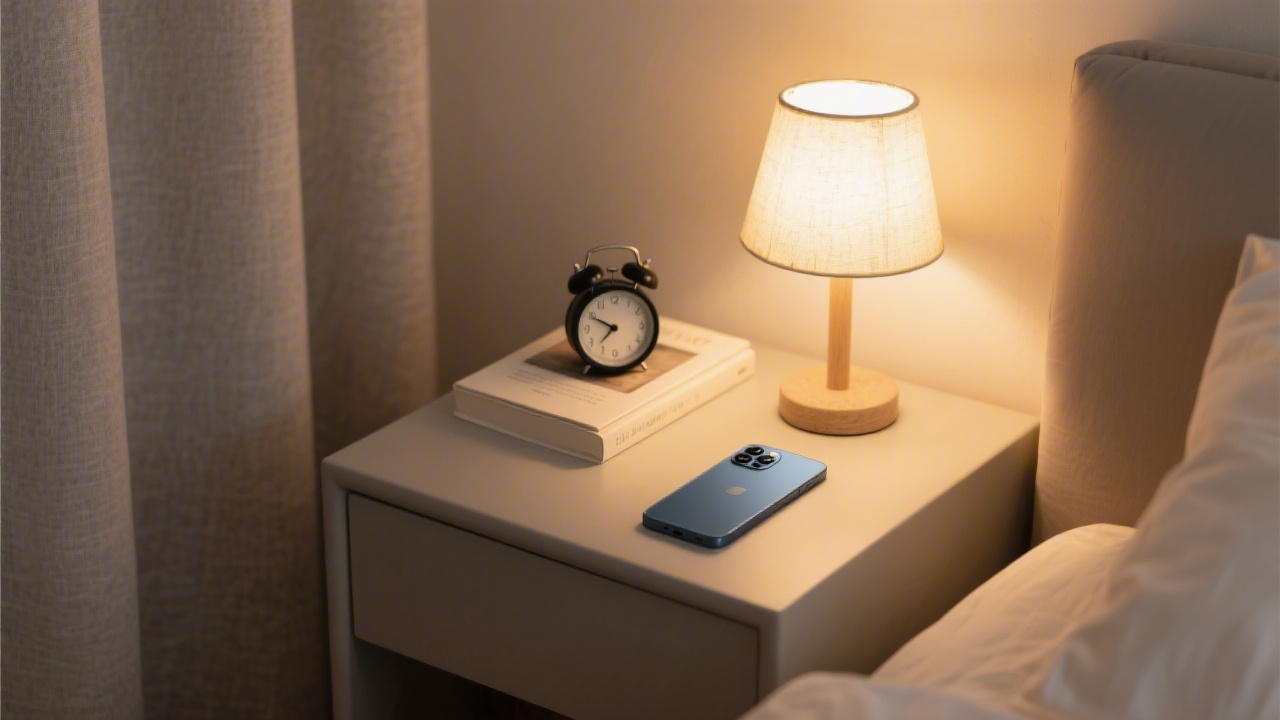
The most common reason people report keeping their phone bedside is that it serves as their alarm clock. This is a straightforward structural fix: buy a standalone alarm clock (under $15 at any pharmacy or online) and eliminate the last legitimate reason to have the phone in the bedroom. This single change removes the rationalization that enables the other 47 minutes of scrolling that "just happen" while the alarm is being set.
Barrier 2: FOMO and Incomplete Loops
The feeling that something important might happen or have been sent creates a low-grade tension that makes putting the phone down feel risky. This is driven by the same mechanism as the worry-dump problem — unresolved open loops in working memory maintain a state of alert readiness. The fix is closing those loops deliberately: take 5 minutes at T-60 to process any pending messages and consciously decide that the responses can wait until morning. Write down anything that feels urgent. The physical act of writing externalizes the "alert" and allows the brain to release it. See our complete worry dump guide for the technique.
Barrier 3: Boredom and Transition Discomfort
For many people, the phone fills a transition gap — the period between "done with the day" and "actually sleepy." Without the phone, this gap feels uncomfortable. The solution is not to eliminate the gap but to fill it with something that serves sleep rather than fighting it. Physical book reading, gentle stretching, a brief conversation with a partner, a warm shower — these are not inferior substitutes for phone use. They are behaviorally appropriate transition activities that allow the nervous system to decelerate rather than maintain stimulation.
The Graduated Implementation Approach
Cold-turkey phone elimination at bedtime has a high failure rate because it requires sustained willpower against a highly conditioned habit loop. A graduated approach is more sustainable:
- Week 1: Phone away 15 minutes before bed. No exceptions. One week of consistent success before extending.
- Week 2: Phone away 30 minutes before bed. You will notice your sleep onset improving — use this as positive reinforcement.
- Week 3: Phone away 45 minutes before bed. By this point, most people report that the phone-free period is beginning to feel natural rather than effortful.
- Week 4+: Full phone-free hour. For many people, week 4 is the first time they experience the full benefit — a noticeably reduced sleep onset latency and higher-quality sleep in the first half of the night.
What To Do Instead
The phone-free hour needs to be filled with something. The highest-compliance alternatives:
| Activity | Sleep Benefit | Notes |
|---|---|---|
| Physical book reading | Stress reduction, passive engagement | Fiction preferred over non-fiction |
| Warm bath or shower | Core temperature drop trigger | Most physiologically direct benefit |
| Light stretching | Cortisol reduction, body scan | 10–15 minutes max |
| Journaling / worry dump | Mental offload, reduces rumination | 5–10 minutes, pen on paper |
| Audiobook or calm podcast | Passive, non-interactive | Set sleep timer; avoid news/finance |
| Quiet conversation | Social bonding, oxytocin | No problem-solving or planning topics |
For the No-Phone-Bedroom Completist
The phone-free hour is a subset of the broader no-phone-bedroom protocol, which advocates for removing the phone from the bedroom entirely as a structural change rather than a nightly willpower exercise. If you can implement the full protocol, do so. The phone-free hour is the minimum viable version for those who face genuine constraints (such as on-call responsibilities or shared living arrangements where the bedroom is the only private space).
Frequently Asked Questions
Is it the blue light or the content that's the bigger problem?
The content. Research comparing blue light filtered vs. non-filtered phone use consistently shows that content-driven arousal is the dominant mechanism — not the light spectrum. People who use blue light glasses and continue scrolling show modest improvements; people who simply stop using their phones show far larger improvements. Both variables matter, but content is primary.
Can I use my phone as a white noise machine?
Yes, with a critical constraint: start the white noise app before the phone-free period begins, set it to run on a timer, place the phone face-down and ideally in a different part of the room, and do not interact with it after that point. A dedicated white noise machine (Lectrofan, Marpac Dohm) eliminates this issue entirely for under $50.
My job requires me to be available for urgent calls. What do I do?
Most smartphones allow "emergency bypass" settings where specific contacts can call through Do Not Disturb. Configure this for the 3–5 people whose calls genuinely require immediate response, set all other notifications to silent, and place the phone across the room. You remain reachable for true emergencies without the pull of notification checking.
What if I wake at 3 AM and want to check the time?
Buy a $10 bedside digital clock. Checking the time on a phone at 3 AM carries a 90%+ probability of also seeing a notification that triggers enough arousal to prevent return to sleep. A clock shows only the time. This is genuinely a better tool for this specific function.
How much can a phone-free hour really improve sleep?
A 2023 study of 45 adults with poor sleep found that a 30-minute pre-sleep screen-free period improved sleep onset latency by an average of 15.4 minutes and self-reported sleep quality scores by 18% after two weeks. The phone-free hour (60 minutes) consistently shows larger improvements than shorter screen-free windows in the available literature.
Complete Your Sleep Setup
The right mattress turns a good routine into exceptional sleep. The Saatva Classic is our top pick for pressure relief and lasting support.
Key Takeaways
The Phone-Free Hour Before Bed is a topic that depends heavily on individual needs and preferences. The most important thing is to consider your specific situation — your body type, sleep position, and personal comfort preferences — before making any decisions. When in doubt, take advantage of trial periods to test before committing.