
 by
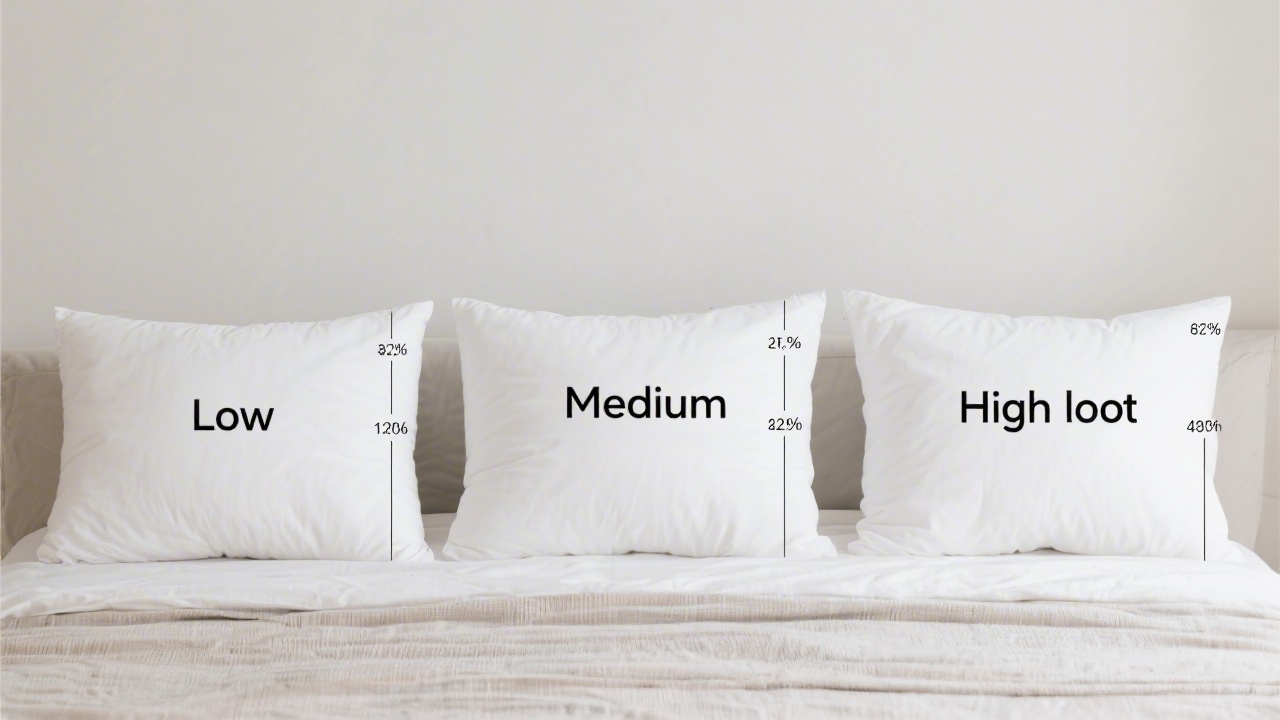
by Pillow loft — the compressed height of your pillow under head weight — is the most mechanically important property for spinal alignment during sleep. Get it wrong and your neck muscles compensate all night. Get it right and morning stiffness often disappears within a few days.
The Baseline Numbers by Position
| Sleep Position | Loft Range | Goal |
|---|---|---|
| Side sleeper | 4–6 inches | Bridge gap from mattress to head; spine horizontal |
| Back sleeper | 3–4 inches | Support cervical curve without forward head push |
| Stomach sleeper | 1–3 inches | Minimize neck rotation and extension |
| Combination sleeper | Adjustable (4–5 default) | Must adapt to multiple positions throughout night |
The Two Modifiers: Body Weight and Mattress Firmness
The baseline numbers above assume average body weight (130–200 lbs) and a medium-firmness mattress. Two factors adjust these numbers:
Body Weight Modifier
Your head weight (approximately 10–11 lbs for most adults) compresses the fill by a predictable amount. Heavier overall body weight correlates with larger head size and more compression force. The adjustment:
- Under 130 lbs: Subtract 0.5 inch from baseline
- 130–200 lbs: Use baseline as-is
- 200–250 lbs: Add 0.5 inch to baseline
- Over 250 lbs: Add 1 inch to baseline
Mattress Firmness Modifier
A firm mattress keeps your body at the surface level, reducing the vertical gap between neck and mattress. A plush mattress lets you sink, increasing that gap.
- Extra firm mattress: Subtract 0.5 inch
- Firm mattress: Subtract 0.25 inch
- Medium mattress: No adjustment
- Plush mattress: Add 0.5 inch
- Pillow-top or very soft: Add 0.75–1 inch
The Formula
Target loft = Position baseline + Weight modifier + Mattress modifier

Example (side sleeper, 175 lbs, plush mattress):
= 5 inches (baseline mid-range) + 0 (weight) + 0.5 (plush) = 5.5 inches
How to Verify Your Current Pillow's Loft
Most pillows list a loft measurement, but listed loft is measured uncompressed and flat — not under head weight on your actual mattress. To measure effective loft:
- Place your pillow on your mattress in its normal sleeping position
- Apply moderate pressure with your hand in the center, simulating head weight
- Measure from the mattress surface to the compressed top of the pillow
- That number is your effective loft
If your effective loft is more than 0.75 inches from your target, it's worth adjusting. For combination sleepers who need a range, see our guide to the best pillow for combination sleepers.
Shoulder Width: The Side Sleeper Variable
Shoulder width creates the gap your pillow needs to fill when you're on your side. Broader shoulders require more loft. If you're a side sleeper with notably wide shoulders (athletic build, large frame), add 0.5–1 inch above your formula target. Narrow-shouldered side sleepers may need to reduce by 0.25–0.5 inches.
Once you know your target loft, use our pillow selection guide to match fill type to that number, or see our soft pillow guide if you're targeting the lower end of the range.
Frequently Asked Questions
What happens if my pillow is too high?
A pillow that's too high pushes your head into forward flexion — chin toward chest. This creates chronic strain on the posterior neck muscles and upper trapezius. You'll typically notice this as tightness at the base of the skull or between the shoulder blades.
What happens if my pillow is too low?
A pillow that's too low allows your head to drop toward the mattress, creating lateral neck flexion for side sleepers. You'll notice this as pain on the side of your neck and sometimes radiating into the shoulder. For back sleepers, a low pillow causes hyperextension.
Does shoulder width affect pillow loft?
Yes, significantly for side sleepers. Broader shoulders create a larger gap between your head and the mattress when lying on your side, so they require more loft. The standard 4-6 inch range assumes average shoulder width. Broad-shouldered sleepers typically need the upper end or above.
How do I measure my current pillow's loft?
Lay the pillow flat on a hard surface (not the mattress) and press gently in the center to simulate head weight. Measure from the surface to the top of the compressed pillow. That's your effective loft — the number that actually matters for alignment.
Can I use multiple pillows to achieve the right loft?
Not reliably. Stacked pillows shift during sleep, creating inconsistent support. A single pillow at the correct loft is always preferable. If you can't find the right height in a standard pillow, use an adjustable fill pillow and remove or add fill until you hit your target.
Ready to upgrade your sleep?