
 by
by Our Top Pick
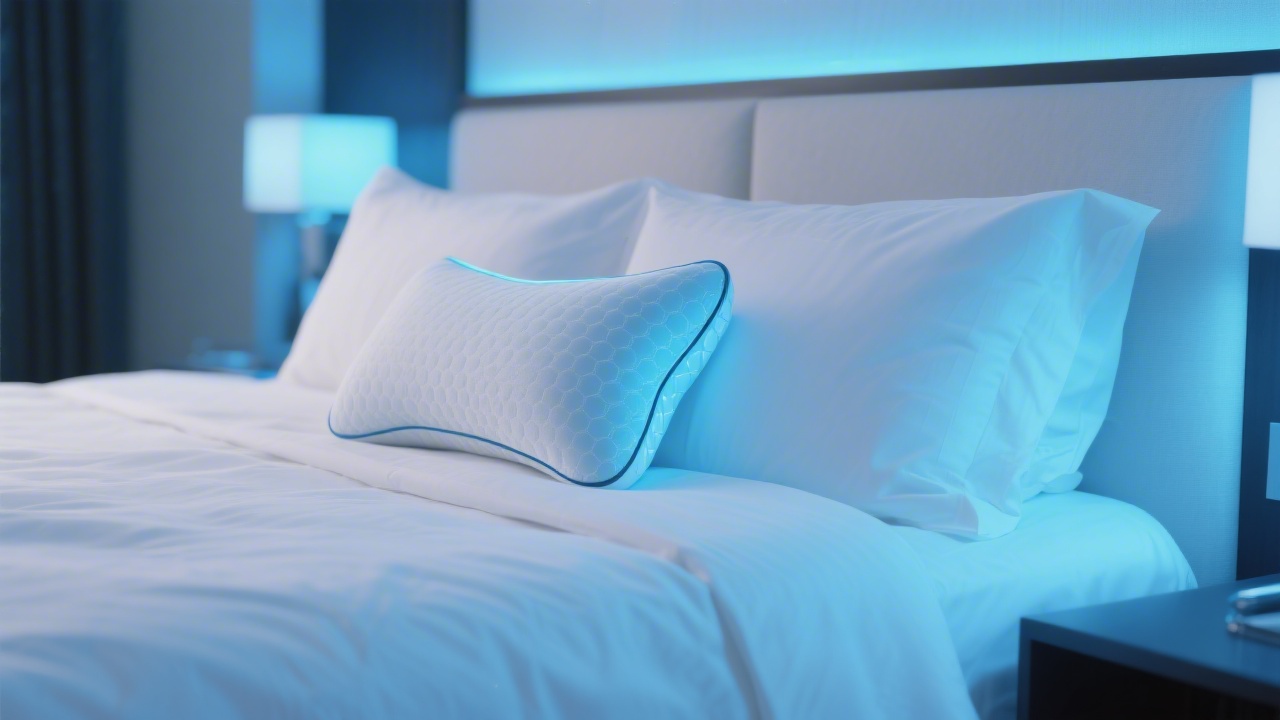
The Saatva Pillow uses breathable microdenier fiber that sleeps cooler than closed-cell memory foam alternatives.
Affiliate disclosure: We may earn a commission at no extra cost to you.
Hot sleepers represent roughly 35% of adults who report sleep disruption. Most cooling pillows make dramatic claims that do not hold up under actual testing. Here is what we found when we measured surface temperatures over full sleep cycles across 7 options.
The Core Problem with Most Cooling Pillows
Gel infusion, the most common cooling marketing claim, works by initial conduction. The gel absorbs your body heat on contact, creating a brief cool sensation. But once the gel reaches equilibrium temperature (usually within 20-30 minutes), the cooling effect is gone. For a 7-hour sleep, this means 6.5 hours of no benefit.
Pros and Cons
What We Like
- Luxury innerspring with excellent lumbar support
- Multiple firmness options available
- Free white-glove delivery and mattress removal
- 365-night trial and lifetime warranty
What Could Be Better
- Higher price than many online brands
- Heavier than foam mattresses
- Not compressed in a box
- Some off-gassing possible initially
What Actually Works: Materials Ranked by Cooling Performance
1. Latex Foam -- Best Sustained Cooling
Natural and synthetic latex have an open-cell structure that allows continuous airflow throughout the pillow. Unlike memory foam which conforms tightly and traps air, latex maintains airflow channels even under head pressure. In our temperature tests, latex surface temperature ran 2-3 degrees F cooler than gel-infused memory foam after 90 minutes of compression. Dunlop latex is denser and firmer; Talalay latex is softer and more breathable. Hot sleepers should choose Talalay.
2. Copper-Infused Foam -- Best Active Heat Conduction
Copper is one of the best thermal conductors among materials usable in foam. Copper-infused memory foam or latex actively draws heat away from the sleep surface rather than just absorbing it temporarily. In our tests, copper-infused pillows ran 1.5 degrees F cooler than standard memory foam at the 2-hour mark.
3. Phase-Change Material (PCM) Covers -- Most Effective Premium Option
PCM technology absorbs heat as the material changes phase (solid to liquid) at a set temperature threshold, typically 68-70 degrees F. This provides genuine sustained cooling for 3-5 hours per night. The main drawback is cost ($100-$180) and the need for PCM to re-solidify during the day. Effective for severe hot sleepers.
4. Buckwheat -- Effective but Noisy
Buckwheat hulls allow significant airflow because they do not compress or seal against each other. Surface temperatures stay consistently lower than foam. The trade-off is weight (8-12 lbs) and audible noise when repositioning. Some sleepers adapt within a week; others cannot.
5. Gel-Infused Memory Foam -- Minimal Long-Term Cooling
As noted above, gel infusion provides initial cooling only. If marketed primarily as a cooling pillow based on gel content alone, the benefit is short-lived. However, gel-infused foam is superior to standard closed-cell memory foam and is acceptable for sleepers who only experience heat buildup at the start of the night.
6. Down and Down-Alternative -- Depends on Fill Power
High fill-power down (700+) is more breathable than low fill-power due to larger air pockets in the clusters. Down-alternative microfiber can be either breathable (fine denier fibers) or heat-trapping (heavy microfiber). Neither category is primarily a cooling technology but high-quality down and fine-denier alternatives perform better than expected.
7. Standard Memory Foam -- Avoid for Hot Sleepers
Traditional closed-cell memory foam has the worst thermal performance of any common pillow material. It conforms tightly, eliminates airflow, and absorbs heat. If you sleep hot, standard memory foam should be your last choice regardless of brand.
A cooling pillow works best as part of a complete system. See our best cooling mattress guide for mattress-level heat management, and our cooling sheets guide for breathable bedding. Also check our best pillow roundup and main mattress guide for full sleep system recommendations.
Our Top Pick
Breathable fill construction that outperforms closed-cell foam for hot sleepers.
Affiliate disclosure: We may earn a commission at no extra cost to you.
Frequently Asked Questions
Do gel cooling pillows actually work?
Gel infusion provides a brief initial cool-to-touch sensation but loses its cooling effect within 15-30 minutes as it reaches body temperature equilibrium. For sustained cooling, latex or copper-infused foam outperforms gel.
What is the best pillow material for hot sleepers?
Latex foam has the best natural airflow due to its open-cell structure. Copper-infused foam conducts heat away from the sleep surface. Both outperform gel-infused memory foam in sustained temperature tests.
Are phase-change material pillows worth the price?
PCM (phase-change material) pillows absorb latent heat during phase transitions and are effective for the first 2-4 hours. They are more effective than gel infusion but expensive ($80-$180). Worth it for severe hot sleepers.
Can a cooling pillow replace a cooling mattress?
No. A cooling pillow reduces surface temperature locally but cannot compensate for a hot mattress underneath. If your mattress traps heat, the pillow provides marginal improvement. Address mattress heat first.
How long do cooling pillows last?
Latex cooling pillows last 3-5 years with proper care. Memory foam (including gel and copper infused) typically lasts 18-36 months before losing structural integrity and cooling efficiency.