
 by
by Our Top Mattress Pick for This Setup
The Saatva Classic pairs well with the bedroom improvements in this guide — supportive, temperature-regulating, and built to last.
Affiliate disclosure: We earn a commission if you buy through our links, at no extra cost to you.
What the Research Actually Shows
The claim that bedroom plants dramatically improve sleep is frequently overstated. The real evidence is more nuanced: some plants improve indoor air quality modestly, some have documented relaxation effects via scent, and all plants contribute to a visually calming environment. None of these effects are large in isolation, but combined with other environmental improvements, they contribute meaningfully.
Plants with Sleep-Relevant Evidence
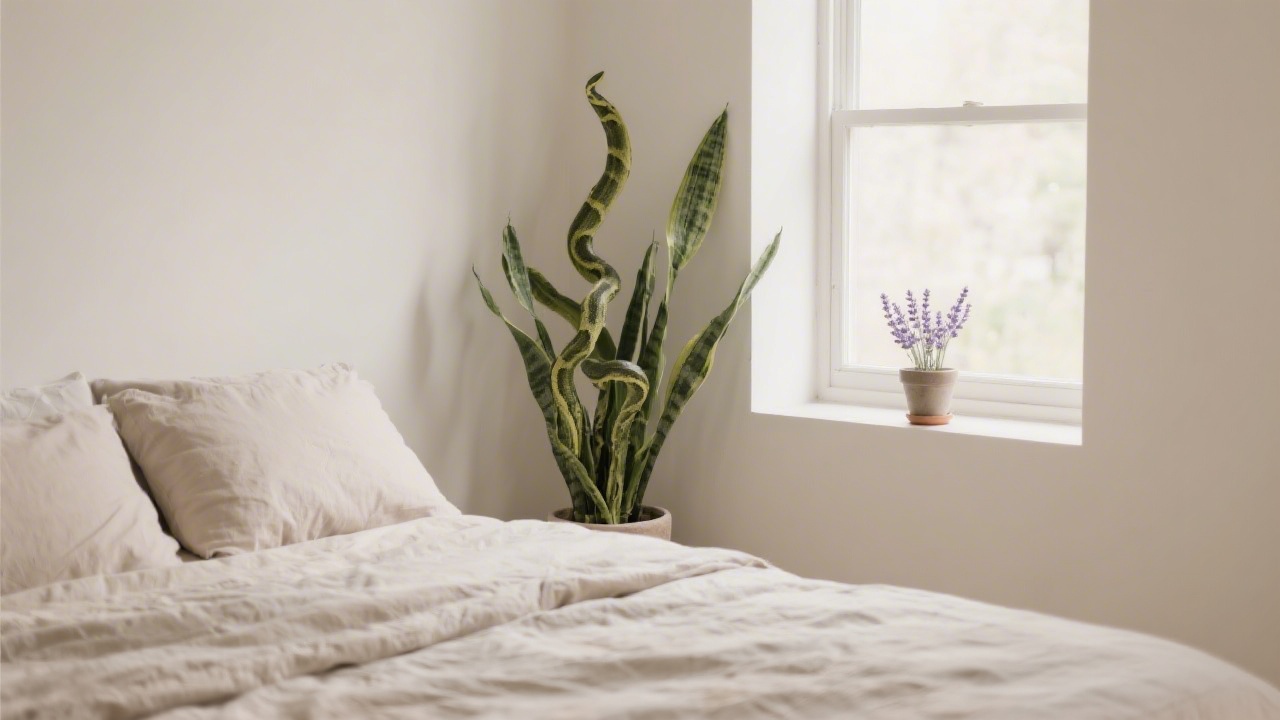
Lavender (Lavandula angustifolia)
Lavender has the strongest sleep-specific evidence of any plant. Multiple controlled trials show that lavender scent reduces anxiety, lowers heart rate, and improves sleep quality scores. A 2015 study in the Journal of Alternative and Complementary Medicine found lavender aromatherapy improved sleep quality in college students with sleep complaints by 14.5% compared to baseline.
Note: A potted lavender plant produces significantly less scent than a diffuser. For therapeutic scent levels, place 2-3 small pots near a warm lamp to enhance volatilization, or supplement with dried lavender bundles near the pillow.
Care: Needs 6+ hours of direct sun. Best on a south-facing windowsill. Not a low-maintenance plant.
Snake Plant (Sansevieria trifasciata)
One of the few plants that performs CAM photosynthesis — it absorbs CO2 and releases oxygen at night rather than during the day. It also removes formaldehyde and benzene from indoor air in NASA's clean air testing. Snake plants are extremely hardy, tolerating low light and irregular watering.
Care: Water every 2-6 weeks depending on season. Tolerates almost any light condition. One of the best plants for people who do not consider themselves gardeners.
Peace Lily (Spathiphyllum)
Tops NASA's clean air list for removing the widest range of airborne chemicals including formaldehyde, benzene, trichloroethylene, and ammonia. Also adds humidity to dry indoor environments, which can reduce snoring and irritation from dry air.
Care: Low light tolerant. Water when soil is dry — it will visibly droop when thirsty, which makes care intuitive. Toxic to pets and children.
Aloe Vera
Another CAM plant that releases oxygen at night. Low maintenance, requires minimal watering, and doubles as a household remedy. The evidence for air quality improvement is weaker than snake plant or peace lily, but its practicality makes it a reasonable bedroom choice.
Jasmine (Jasminum polyanthum)
A small 2010 study found that jasmine scent was associated with reduced anxiety and improved sleep quality. The effect size was similar to lavender. Jasmine requires more care than the other plants on this list — bright indirect light, regular watering — but the scent benefit is real.
Plants to Avoid in the Bedroom
- Eucalyptus: The strong scent can be stimulating for some people and is too intense for a bedroom environment
- Rosemary: Research suggests rosemary scent enhances alertness and memory — useful in a study, counterproductive before sleep
- Any large plant that might fall: The unconscious awareness of unstable objects near the bed can raise low-level anxiety
Placement Guidelines
Position plants in corners or on surfaces at least 3 feet from the bed. Keep them away from direct lines of sight from the pillow — plants in the visual periphery contribute to a natural, calming aesthetic without creating focus points that the brain checks repeatedly.
Combine plant selection with the right paint color and a decluttered surface arrangement for the full environmental benefit.
Our Top Mattress Pick for This Setup
The Saatva Classic pairs well with the bedroom improvements in this guide — supportive, temperature-regulating, and built to last.
Affiliate disclosure: We earn a commission if you buy through our links, at no extra cost to you.
Frequently Asked Questions
Do bedroom plants actually improve sleep?
Some plants have documented effects on air quality and anxiety reduction, but the evidence for direct sleep improvement is modest. Lavender aromatherapy has the strongest sleep-specific evidence. Snake plants and peace lilies improve air quality markers modestly in controlled settings.
Is it bad to have plants in your bedroom at night?
The concern that plants consume too much oxygen at night is largely unfounded for typical bedroom plants. The CO2 output of a few houseplants is negligible compared to a sleeping human. CAM plants like aloe and snake plant actually photosynthesize at night, slightly improving oxygen levels.
Where should you put plants in a bedroom?
Avoid placing plants directly beside the bed where they might cause anxiety about insects or falling over. A corner, dresser top, or windowsill 3+ feet from the bed is ideal.
What is the best plant for bedroom air quality?
The peace lily (Spathiphyllum) has the strongest evidence for removing formaldehyde, benzene, and trichloroethylene from indoor air in NASA's Clean Air Study. It also tolerates low light and irregular watering.
Can lavender really help you sleep?
Multiple small randomized trials have found that lavender aromatherapy reduces anxiety and improves self-reported sleep quality. The effect is real but modest — roughly equivalent to a relaxation technique. A potted lavender plant produces less scent than an essential oil diffuser.