
 by
by Voted best luxury innerspring mattress with exceptional lumbar support and white-glove delivery.
Check Price & Availability FAQPage", "mainEntity": [{"@type": "Question", "name": "What percentage of snorers only snore on their back?", "acceptedAnswer": {"@type": "Answer", "text": "Studies consistently find that 56–60% of habitual snorers snore predominantly or exclusively in the supine (back) position. This group — called positional snorers — responds best to lateral positioning interventions."}}, {"@type": "Question", "name": "How do you know if you are a positional snorer?", "acceptedAnswer": {"@type": "Answer", "text": "The most reliable method is partner observation — ask them whether snoring is louder or more frequent when you are on your back. A sleep tracking app with audio recording can also capture snoring position correlation. Formal positional diagnosis requires a sleep study with position data."}}, {"@type": "Question", "name": "What is the best positional therapy device for snoring?", "acceptedAnswer": {"@type": "Answer", "text": "Vibrating positional trainers (like Night Shift or Zzoma) have the strongest RCT evidence, producing 50–70% AHI reduction in positional OSA. Traditional tennis-ball technique has similar efficacy but lower long-term compliance. Specialty pillows that physically block supine positioning offer a lower-tech alternative."}}, {"@type": "Question", "name": "Can sleeping on your side cure snoring?", "acceptedAnswer": {"@type": "Answer", "text": "For purely positional snorers, sustained side sleeping often eliminates snoring entirely. However, compliance is the challenge — most people revert to supine positioning during deep sleep without a device to prompt them back. Positional therapy devices address this compliance gap."}}, {"@type": "Question", "name": "Is positional therapy appropriate for severe sleep apnea?", "acceptedAnswer": {"@type": "Answer", "text": "Positional therapy is primarily appropriate for mild-to-moderate positional OSA and positional snoring. For severe OSA (AHI >30), positional therapy reduces events but typically cannot normalize AHI alone. It is used as an adjunct to CPAP or oral appliances in severe cases, not as a standalone treatment."}}]}Sleeping position is one of the most powerful and overlooked variables in snoring management. The supine (back sleeping) position causes the tongue and soft palate to fall backward under gravity, narrowing or obstructing the oropharyngeal airway. For the majority of habitual snorers, this gravitational mechanism is the primary driver.
Editor’s Pick: Saatva Adjustable Base Plus
Head elevation (7–45°) reduces soft-tissue collapse in the airway — shown to lower AHI scores in positional and mild OSA. The Saatva Adjustable Base Plus adds lumbar support and zero-gravity preset for full-night positioning.
Why Sleeping Position Matters
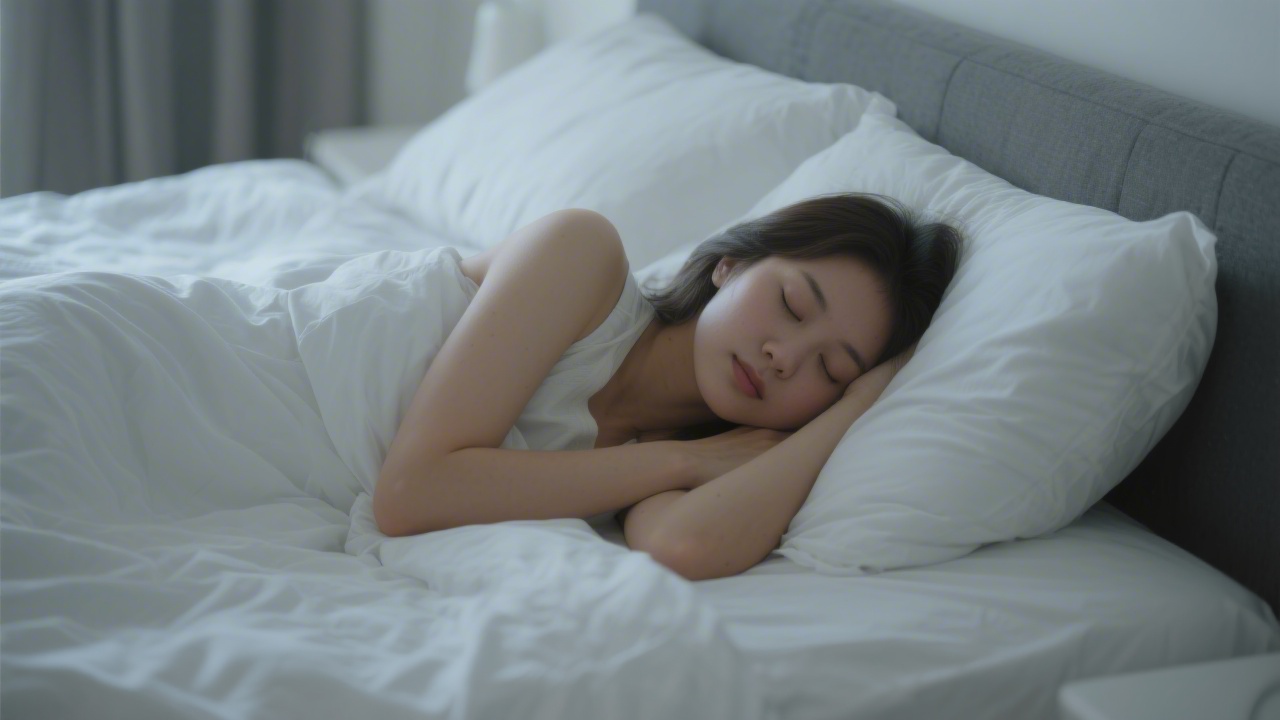
Multiple polysomnography studies measuring position-specific AHI find that 56% of habitual snorers snore exclusively or predominantly supine. In these patients, transitioning to sustained lateral (side) sleeping can eliminate snoring entirely — without any device, medication, or surgery.
The mechanism is straightforward: in the lateral position, gravity no longer pulls the tongue and soft palate posteriorly. The airway maintains larger cross-sectional area, reducing turbulence and vibration.
Positional OSA — defined as supine AHI at least twice the non-supine AHI — is the formal diagnostic category. Patients meeting this criterion are particularly strong candidates for positional therapy as a primary or adjunctive treatment.
Who Responds to Positional Therapy
Positional therapy is most effective in patients with:
- Confirmed positional OSA (supine AHI ≥2x non-supine AHI)
- Mild-to-moderate OSA severity (AHI <30)
- Lower BMI (<30)
- Younger age
- Snoring without confirmed OSA
Patients with severe OSA, high BMI, or non-positional OSA typically require CPAP as primary treatment, with positional therapy playing an adjunctive role.
Positional Therapy Methods: Evidence Review
1. Vibrating Positional Trainers (High Evidence)
Devices like Night Shift and Zzoma wear at the back of the neck or around the torso and deliver gentle vibrations when the user rolls supine. Randomized trials show 50–70% AHI reduction in positional OSA patients, with compliance rates of 75–85% at 3 months — comparable to CPAP in this population. Night Shift received FDA clearance for positional OSA treatment.
2. Supine Prevention Vests and Belts (Moderate Evidence)
Devices with a rigid attachment at the back that makes supine sleeping physically uncomfortable without waking the patient. Zzoma is the most studied example. Comparable efficacy to vibrating trainers in crossover trials but lower patient preference ratings due to perceived discomfort.
3. Tennis Ball Technique (Moderate Evidence, Low Compliance)
Sewing a tennis ball or foam block into the back of a sleep shirt is the original positional therapy. Efficacy is similar to modern devices in the short term, but compliance drops sharply after 3–6 months due to discomfort. Still a valid low-cost entry point for testing positional therapy response.
4. Positional Pillows and Wedges (Low-Moderate Evidence)
Wedge pillows and positional body pillows physically support the lateral position but do not prevent supine rolling with the same reliability as wearable devices. Head elevation via wedge or adjustable base adds a secondary mechanism — reducing gravitational airway collapse even in supine position. An adjustable base provides the most controllable and maintainable head elevation for this purpose.
5. Head Elevation
Elevating the head of the bed 7–45 degrees does not address position directly but significantly reduces airway collapse severity. Studies show 30–50% AHI reduction with head elevation alone in mild positional OSA. The Saatva Adjustable Base Plus allows precise, motorized elevation that can be maintained throughout the night without pillow stacking.
Integrating Positional Therapy with Other Treatments
Positional therapy is rarely used in isolation for confirmed OSA. The most effective protocols combine it with:
- Weight loss: Removes the underlying anatomical predisposition. See our sleep apnea and weight loss guide.
- Oral appliances: MADs work synergistically with lateral positioning — combination therapy achieves lower AHI than either alone in positional patients.
- CPAP: Positional therapy can reduce required CPAP pressure in positional patients, improving mask comfort and compliance.
- Nasal treatment: Clearing nasal obstruction reduces compensatory mouth breathing that worsens positional snoring.
Cases Where Positional Therapy Is Not Sufficient
For snoring and OSA that persist in all positions (non-positional), lateral sleeping provides marginal benefit. Patients in this category require different first-line interventions: CPAP for moderate-to-severe OSA, oral appliances for mild-to-moderate, or surgical evaluation.
Signs of non-positional snoring:
- Snoring equally loud in all positions (confirmed by partner or recording)
- Severe OSA diagnosis
- Marked obesity with neck circumference >17″ (male) or >15″ (female)
For the broader snoring treatment landscape, see our snoring remedies ranked by evidence. For the OSA treatment overview, see our obstructive sleep apnea guide.
Editor’s Pick: Saatva Adjustable Base Plus
Head elevation (7–45°) reduces soft-tissue collapse in the airway — shown to lower AHI scores in positional and mild OSA. The Saatva Adjustable Base Plus adds lumbar support and zero-gravity preset for full-night positioning.
Frequently Asked Questions
What percentage of snorers only snore on their back?
Studies consistently find that 56–60% of habitual snorers snore predominantly or exclusively in the supine position.
How do you know if you are a positional snorer?
Partner observation is the most reliable method. A sleep tracking app with audio can also capture snoring position correlation. Formal positional diagnosis requires a sleep study with position data.
What is the best positional therapy device for snoring?
Vibrating positional trainers (like Night Shift) have the strongest RCT evidence, producing 50–70% AHI reduction in positional OSA.
Can sleeping on your side cure snoring?
For purely positional snorers, sustained side sleeping often eliminates snoring entirely. Compliance devices help maintain the position through the night.
Is positional therapy appropriate for severe sleep apnea?
Positional therapy is primarily appropriate for mild-to-moderate positional OSA. For severe OSA, it is used as an adjunct, not standalone treatment.