
 by
by Pressure points during sleep are not simply areas of discomfort — they represent zones of sustained tissue compression that can impair local circulation, activate nociceptors, and disrupt sleep architecture. Understanding the mechanism helps you select mattress properties that actually address the problem rather than layering cushioning on an inadequately supportive base.
The Biomechanical Mechanism
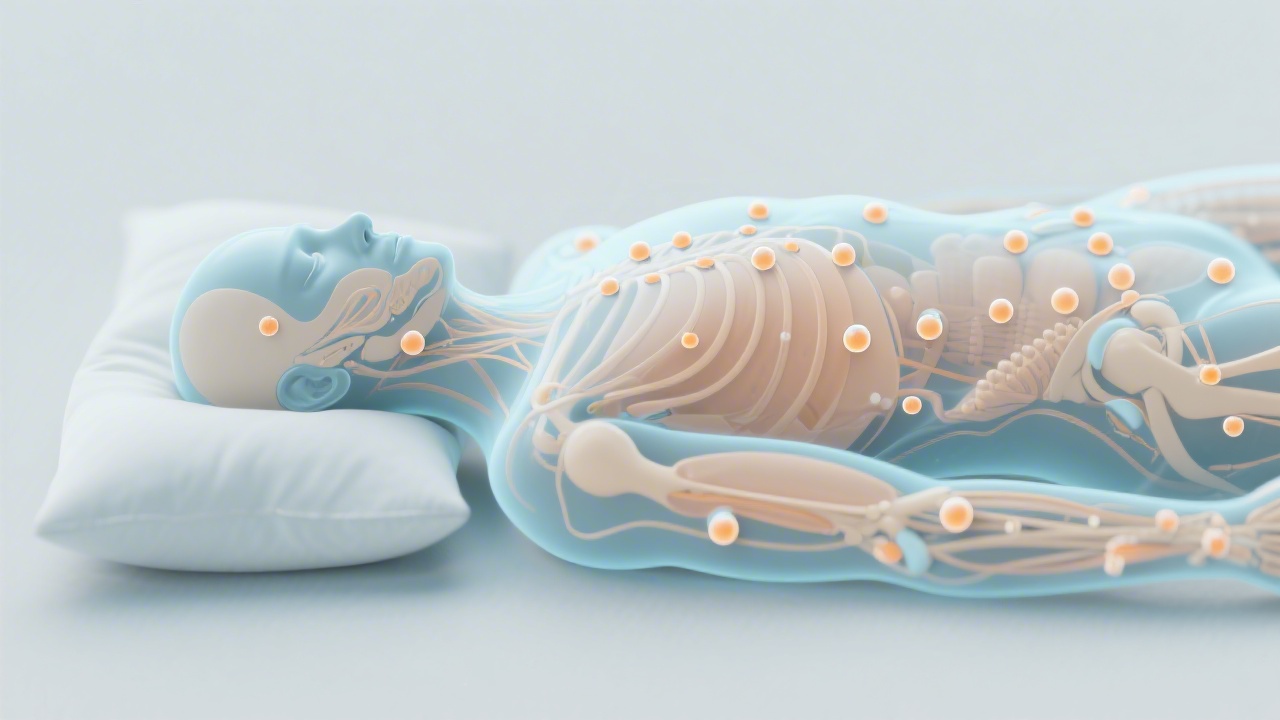
Pressure points form wherever a bony prominence concentrates body weight onto a small contact area against the sleep surface. The relationship is governed by the pressure equation: P = F/A (pressure equals force divided by area). A soft tissue pad distributes force over a wider area; a bony prominence concentrates it. This is why the greater trochanter (lateral hip), the acromion (shoulder tip), the lateral femoral condyle (outer knee), and the lateral malleolus (outer ankle) are the classic pressure-point locations for side sleepers.
When sustained pressure exceeds approximately 32 mmHg — the capillary closing pressure — local perfusion is compromised. Tissue ischemia activates pain signaling, which is typically experienced as numbness followed by aching. The body's response is to shift position, fragmenting sleep continuity. Frequent position changes during sleep, often attributed to restlessness, are frequently a pressure-relief response.
Position-Specific Pressure Point Profiles
Side Sleepers
Side sleeping generates the highest localized pressure of any sleep position because the body's weight is concentrated on two main contact zones: the hip and the shoulder. The hip (greater trochanter) typically bears 60–80 mmHg on a firm mattress — well above capillary closing pressure. The shoulder acromion bears similar loads. The lateral knee and ankle are secondary pressure points that become significant when the mattress is firm enough to resist hip and shoulder sinkage, forcing the legs into direct contact with the surface.
Back Sleepers
Back sleeping distributes weight across a larger contact area: the sacrum, scapulae, heels, and calves. Sacral pressure is the most clinically significant for back sleepers — the sacrum is a large, flat bone with minimal soft tissue coverage. Heel pressure can reach problematic levels on firm mattresses, particularly in older adults with reduced subcutaneous fat.
Stomach Sleepers
Stomach sleeping concentrates pressure on the anterior iliac crests, the chest/sternum, and the forehead or cheek. These are often less symptomatic during sleep but can contribute to facial skin compression and anterior shoulder discomfort.
Mattress Properties That Relieve Pressure Points
Contouring vs. Support: The Distinction Matters
Pressure relief requires contouring — the mattress surface deforms around the prominence rather than pushing back against it. Support refers to the mattress's resistance to full-body sinkage. The best mattresses for pressure-point relief combine a conforming comfort layer with a supportive base: the comfort layer distributes load by increasing contact area; the support layer prevents the body from sinking past the neutral alignment zone.
Comfort Layer Materials
Memory foam has the highest pressure-relief coefficient among common mattress materials because it responds to both pressure and heat, flowing around bony prominences. Natural latex also contours well and returns more quickly than memory foam. Microcoils in the comfort layer of hybrids can provide localized contouring while maintaining breathability. Polyfoam comfort layers are the least effective at pressure point relief because they compress uniformly rather than conforming to shape.
Firmness Level
For dedicated side sleepers with pressure point complaints, medium-soft to medium (4–5.5) is typically needed to allow the shoulder and hip to sink into the comfort layer. However, if the mattress is only soft without a firm support core, the entire body sinks, negating the pressure relief — the bony prominences are still at the bottom of a body-shaped depression, and spinal alignment is compromised. The combination of soft contouring surface over firm support core is the functional requirement.
Position-Specific Solutions Beyond the Mattress
- Hip pressure (side sleepers): A mattress topper of 2–3 inches of medium-density memory foam or latex. A pillow between the knees also redistributes hip load by reducing the pelvic drop angle.
- Shoulder pressure (side sleepers): Shoulders-first positioning — keeping the shoulder slightly forward rather than directly under the body — reduces direct acromion contact. Shoulder cutout pillows are available for severe cases.
- Sacral pressure (back sleepers): A pillow under the knees reduces sacral contact pressure by slightly elevating the pelvis and reducing posterior pelvic tilt.
- Heel pressure (back sleepers): An ankle pillow or positioning wedge eliminates heel contact with the mattress entirely.
The Saatva Classic uses a Euro pillow top with a memory foam and fiber blend that provides immediate surface contouring, backed by a dual-coil support system. This construction addresses both requirements: surface pressure distribution and full-body support.
Internal Resources
- Shoulder Alignment During Sleep: The Side Sleeper's Challenge
- Hip Alignment During Sleep: Why It Matters and How to Fix It
- How Your Body Weight Should Influence Mattress Selection
Frequently Asked Questions
Key Takeaways
- The Biomechanical Mechanism: a key factor in making the right sleeping decision.
- Position-Specific Pressure Point Profiles: a key factor in making the right sleeping decision.
- The relationship is governed by the pressure equation: P = F/A (pressure equals force divided by area).
- A soft tissue pad distributes force over a wider area; a bony prominence concentrates it.
- When sustained pressure exceeds approximately 32 mmHg — the capillary closing pressure — local perfusion is compromised.
Our Top Pick: Saatva Classic
Voted best luxury innerspring mattress with exceptional lumbar support and white-glove delivery.
Check Price & AvailabilityWhy do I wake up with a numb hip even on a soft mattress?
Numbness despite a soft mattress typically means the mattress has insufficient support beneath the comfort layer. The soft surface allows sinkage past neutral alignment, putting pressure on deeper tissues and potentially compressing the sciatic or femoral nerve. A mattress topper alone on a worn-out or too-soft base will not resolve this — the support core is the functional variable.
Can pressure points during sleep cause long-term injury?
In healthy adults, the body's natural position-changing behavior prevents the sustained compression required for pressure injuries (bedsores). However, chronic pressure point activation disrupts sleep stages, reduces slow-wave sleep, and increases cortisol. Over time, sleep fragmentation from pressure-induced position changes has measurable effects on recovery, cognitive function, and pain sensitization.
Is memory foam always better for pressure points than innerspring?
Memory foam in the comfort layer is more effective at pressure distribution than standard polyfoam or a plain innerspring surface. However, a hybrid mattress with a memory foam or latex comfort layer over a coil support system often outperforms an all-foam mattress because the coil base provides more consistent support and airflow. The comfort layer material matters more than whether the mattress is foam-only or hybrid.
Does body weight affect which pressure points are most problematic?
Yes significantly. Heavier sleepers generate higher absolute pressure at all contact points. On a given mattress, a 250 lb side sleeper will experience higher hip and shoulder pressures than a 150 lb sleeper because the force component of the pressure equation is larger. This is why heavier side sleepers need a mattress with a thicker, higher-density comfort layer to achieve the same degree of pressure distribution as a lighter sleeper on a standard comfort layer.
How quickly should a pressure point resolve after changing position?
Normal reactive hyperemia (the flush of blood returning to compressed tissue) resolves within 1–5 minutes after repositioning. Numbness that persists beyond 10 minutes after changing position, or aching that continues throughout the day in the same location, may indicate nerve involvement rather than simple pressure and warrants evaluation by a healthcare provider.