
 by
by Our #1 Recommended Mattress
Last Updated: March 2026 — Content reviewed and verified by our editorial team.
Quick Verdict
Puffy vs Puffy Lux — the right choice depends on your sleep style and budget. See our full breakdown below.
For most people wanting a premium innerspring hybrid with white-glove delivery, Saatva Classic is our top recommendation regardless of which you're comparing.
Saatva Classic. From $1,095
365-night trial · Lifetime warranty · Free white-glove delivery
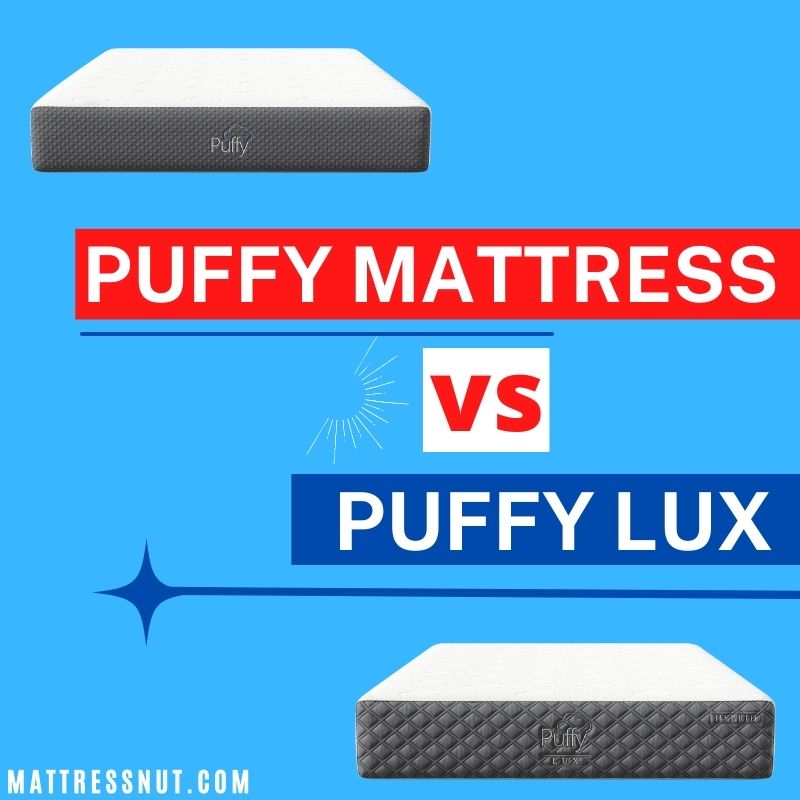
Puffy makes this comparison unusually straightforward, both mattresses share the same brand DNA, the same base foam, and the same lifetime warranty. The real question is whether the Puffy Lux's extra layers and softer feel justify a $400 price jump over the standard Puffy Original.
Short answer: it depends entirely on how you sleep. Let's break down exactly what you get with each mattress, who benefits most from upgrading, and where your money is better spent.
Quick Comparison: Puffy vs Puffy Lux
| Feature | Puffy Original | Puffy Lux |
|---|---|---|
| Price (Queen) | ~$995 | ~$1,395 |
| Layers | 4 | 6 |
| Feel | Medium / neutral foam | Medium-soft / plush |
| Zoned Support | No | Yes. Zoned Cloud Technology |
| Pressure Relief | Good | Excellent |
| Motion Isolation | Excellent | Excellent |
| Best For | Back/stomach sleepers, budget buyers | Side sleepers, pressure point issues |
| Cover | Stain-Resistant Cooling Cover | Stain-Resistant Cooling Cover |
| Warranty | Lifetime | Lifetime |
| Trial | 101 nights | 101 nights |
The Puffy Original: What You're Getting
The Puffy Original is a 4-layer all-foam mattress built around a medium feel. It's what launched the Puffy brand and still represents their most popular entry point. At around $995 for a Queen, it sits in competitive territory for a quality foam bed.
Construction Breakdown
The Puffy Original uses four distinct foam layers stacked to deliver comfort without overcomplicating things:
- Layer 1 (Top): Climate Adaptive Foam. Puffy's proprietary comfort layer that responds to body heat and pressure. Designed to feel cooler in warmer rooms and softer in cooler environments. About 1.5 inches thick.
- Layer 2: Pressure Relief Foam. A transition layer that cushions joints and prevents the "stuck in quicksand" feeling common with older memory foams.
- Layer 3: Climate Adaptive Foam (second pass). Adds extra cushioning and ensures the pressure relief layer doesn't feel abrupt underfoot.
- Layer 4: Core Support Foam. High-density base that keeps the mattress structurally stable and prevents premature sagging. This is the backbone of the mattress.
The cover is Stain-Resistant and designed with a light quilted texture. It's not removable or washable, which is a minor drawback, though Puffy's foam layers themselves resist liquid penetration reasonably well.
How the Puffy Original Feels
On the firmness scale, Puffy Original lands around a 5-6 out of 10. That puts it squarely in medium territory, not soft enough to feel like you're sinking, not firm enough to feel like you're floating on top.
Back sleepers typically report excellent support here. The foam contours without collapsing, keeping the lumbar in alignment. Stomach sleepers on the lighter side (under 180 lbs) can work with it, though heavier stomach sleepers may want something firmer.
What stands out is how neutral the Puffy Original feels compared to traditional memory foam. There's minimal heat retention for an all-foam bed, and you don't get that deep "sinking into quicksand" sensation. It responds fairly quickly when you shift positions.
The Puffy Lux: What the Extra Money Buys
The Puffy Lux adds two additional layers and introduces a technology not found in the standard Puffy: Zoned Cloud Technology. At ~$1,395 for a Queen, you're paying $400 more, and that money goes into specific engineering decisions, not just marketing.
Construction Breakdown
- Layer 1 (Top): Climate Adaptive Foam. Same proprietary top layer as the Puffy Original, providing the temperature-responsive comfort surface.
- Layer 2: Body Adapting Dual Cloud Foam. This is the first layer exclusive to the Lux. It adds a softer, more contouring feel that increases pressure relief significantly, particularly around shoulders and hips.
- Layer 3: Zoned Cloud Technology Foam. The second Lux-exclusive layer. This one is engineered with varying firmness zones, softer under the shoulders for pressure relief, firmer under the hips and lumbar for spinal support. This targeted approach is what makes the Lux noticeably better for side sleepers.
- Layer 4: Pressure Relief Foam. Carries over from the Original, serving as a transition buffer.
- Layer 5: Climate Adaptive Foam (additional pass). Extra cushioning before hitting the base.
- Layer 6: Core Support Foam. Same high-density base as the Original.
The result is a mattress that feels noticeably plush compared to the Puffy Original while still maintaining enough structure to avoid the "sleeping in a hammock" feeling some all-foam beds create.
How the Puffy Lux Feels
The Puffy Lux registers around a 4-5 out of 10 on firmness, medium-soft rather than medium. That extra softness is deliberate and comes from the Body Adapting Dual Cloud Foam layer.
Side sleepers notice the difference immediately. The zoned construction allows shoulders to sink in slightly while keeping hips elevated and supported. This keeps the spine in a neutral position without requiring sleepers to consciously position themselves.
For back sleepers who prefer a plusher surface without sacrificing support, the Lux works well, especially for those under 200 lbs. Heavier back sleepers may find it too soft for ideal lumbar support.
Stomach sleepers should generally steer clear. The Lux's softer feel tends to let hips drop too far, which creates spinal extension rather than neutral alignment.
Head-to-Head: Where Each Mattress Wins
Pressure Relief
Puffy Lux wins. The Dual Cloud Foam layer adds meaningful contouring that the Original simply doesn't have. If you wake up with shoulder or hip pain, or if you've always wanted your mattress to feel more "cradling," the Lux's extra layer makes a real difference.
The Puffy Original offers solid pressure relief for its price point, but it's more neutral, it supports without actively contouring. Think of the difference between a hand resting on your shoulder versus cupping it.
Spinal Alignment
This one splits by sleep position. The Puffy Original's medium feel is better for back and stomach sleepers who need a flatter, more supportive surface. The Puffy Lux's Zoned Cloud Technology gives it an edge for side sleepers specifically, the differential firmness zones keep the spine aligned without requiring perfect pillow placement to compensate.
Motion Isolation
Both are excellent here. All-foam construction absorbs motion well, and neither mattress transfers movement in any meaningful way. If you share a bed with a restless partner, either mattress will handle it. No meaningful difference between the two.
Temperature / Sleeping Cool
Both use the Climate Adaptive Foam layer on top, so their cooling performance is similar. The Lux has more foam overall, which theoretically traps slightly more heat, but in practice, the difference is negligible for most sleepers. Neither is a hot sleeper's dream (you'd want coils or copper infusion for that), but neither is problematic either.
Edge Support
All-foam beds generally have softer edges than hybrid mattresses, and both the Puffy and Puffy Lux follow that pattern. Edge support is adequate but not exceptional on either model. If you tend to sleep right at the edge of your mattress, a hybrid with a reinforced perimeter would serve you better than either of these.
Durability and Longevity
Both carry Puffy's lifetime warranty, which covers sagging over 1.5 inches and manufacturing defects. That's a genuine lifetime warranty, not the "limited lifetime" language some brands use. The high-density core foam in both mattresses is built to resist premature breakdown.
Expected lifespan for either mattress with normal use: 7-10 years before you'd notice significant softening. The Lux's additional layers don't meaningfully impact this either way.
Is the Puffy Lux Worth the $400 Upgrade?
Upgrade to the Puffy Lux if:
- You sleep primarily on your side, the Zoned Cloud Technology makes a tangible difference for shoulder and hip pressure
- You have existing shoulder, hip, or knee joint pain that wakes you up at night
- You've slept on medium mattresses and always found them slightly too firm
- You're a lighter sleeper (under 150 lbs) who needs extra cushioning to feel properly supported
- You share a bed and both you and your partner prefer a plush feel
Stick with the Puffy Original if:
- You sleep on your back or stomach, the medium feel serves these positions better
- You prefer a neutral foam feel that doesn't feel overly soft or contouring
- Budget is a genuine constraint - $995 is already a serious mattress purchase
- You weigh over 230 lbs, heavier sleepers typically compress the Lux's softer layers too far
- You've tried medium mattresses and found them comfortable without wanting more softness
Where the Puffy Royal Fits In
Puffy also makes a third tier: the Puffy Royal, priced at approximately $2,195 for a Queen. If the Original is the base and the Lux is the step up, the Royal is the brand's flagship.
The Royal adds additional layers beyond the Lux, including a cashmere-blend cover and further refined zoned construction. It's aimed at sleepers who want the maximum plush-yet-supported feel the brand offers. For most buyers comparing the Original and Lux, the Royal isn't a necessary consideration, but it exists as a ceiling if budget isn't a factor.
How Puffy Compares to Innerspring Options
Both Puffy mattresses are all-foam, which means they're built around contouring and motion isolation rather than bounce and airflow. Some sleepers, particularly those who run hot, prefer a more responsive surface, or simply want that traditional "on top of the mattress" feel, may find that a quality innerspring or hybrid serves them better.
If you're considering that direction, the Saatva Classic is a strong alternative worth looking at. It's a luxury innerspring hybrid with dual coil construction, available in three firmness options (Plush Soft, Luxury Firm, Firm), and generally praised for its edge support and spinal alignment. Unlike the Puffy lineup, it also has a Euro pillow top and a removable organic cotton cover. Saatva pricing starts at $1,695 for a Queen, so it's in a similar range to the Puffy Lux, but with a fundamentally different construction and feel.
Puffy's Trial, Shipping, and Warranty
Both the Puffy Original and Puffy Lux ship free to the contiguous US and come compressed in a box. Setup requires no tools, you cut the packaging, unroll the mattress, and it reaches full height within a few hours.
The 101-night trial is standard for the category and gives you about three months to assess whether the mattress works for your sleep. Puffy's return process is handled through donation or recycling rather than requiring you to ship the mattress back, which is the industry norm.
The lifetime warranty is transferable and covers:
- Sagging greater than 1.5 inches
- Physical defects in materials or workmanship
- Cover defects that affect performance
One caveat: the warranty requires a proper foundation. Puffy sells their own platform base, but any solid platform, slatted base with slats no more than 4 inches apart, or adjustable base works. Placing either mattress directly on the floor voids the warranty.
Our Pick
Saatva Classic
365-night trial · Lifetime warranty · White-glove delivery
Related Guides
Our Pick
Saatva Classic
365-night trial · Lifetime warranty · White-glove delivery
Frequently Asked Questions
Is the Puffy Lux significantly softer than the Puffy Original?
Yes, noticeably so. The Lux lands around a medium-soft feel (4-5/10 firmness) compared to the Original's medium feel (5-6/10). The Body Adapting Dual Cloud Foam layer is responsible for most of that difference, it adds a cushioning layer that the Original simply doesn't have. If you've tried a medium foam mattress and always wanted it slightly softer, the Lux addresses that directly.
Can the Puffy Original work for side sleepers?
It can for some, but it's not ideal. Side sleepers under 150 lbs with minimal joint sensitivity may find the Original perfectly comfortable. But for most side sleepers, particularly those with shoulder or hip pressure issues, the Lux's Zoned Cloud Technology provides noticeably better contouring and pressure relief. The zoning allows the shoulder to sink while keeping the hip supported, which the Original's uniform construction can't replicate.
Do both Puffy mattresses work on adjustable bases?
Yes. Both the Puffy Original and Puffy Lux are compatible with adjustable bed frames. The all-foam construction flexes well without damaging the layers, and Puffy specifically lists adjustable base compatibility. This makes either mattress a reasonable choice if you're investing in an adjustable foundation for reading, watching TV in bed, or managing conditions like acid reflux or snoring.
How long does the Puffy Original or Lux take to break in?
Most sleepers report the mattress feels noticeably different during the first 2-4 weeks as the foam adjusts to your body weight and sleep patterns. Full break-in typically takes 30 days. Puffy recommends sleeping on the mattress for at least 30 nights before making a judgment, which aligns with when the foam layers have had time to settle and conform to your typical sleep positions. This is well within their 101-night trial window.
Is the Puffy Lux worth it compared to the Puffy Royal?
For most sleepers, the Lux hits the sweet spot. The Royal (at ~$2,195 Queen) adds premium materials like a cashmere cover and further refined construction, but the performance difference between the Lux and Royal is less dramatic than the jump from Original to Lux. Unless you specifically want the Royal's cover material or maximum available plushness from the Puffy lineup, the Lux delivers most of the value at a lower price point.
The Bottom Line
The Puffy vs Puffy Lux decision comes down to one question: how do you primarily sleep?
Side sleepers and anyone dealing with shoulder or hip pressure points should lean toward the Puffy Lux. The Zoned Cloud Technology isn't a marketing term, it functionally changes how the mattress supports different body regions, and that difference is real for people who need it.
Back sleepers, stomach sleepers, and anyone happy with a neutral medium foam feel will find the Puffy Original does everything it needs to do at $400 less. There's no reason to pay for layers you won't benefit from.
Both mattresses come with the same lifetime warranty, the same 101-night trial, and the same Stain-Resistant cover. The price difference reflects engineering, not brand positioning. Decide based on your sleep position and sensitivity to pressure, not which name sounds more premium.