
 by
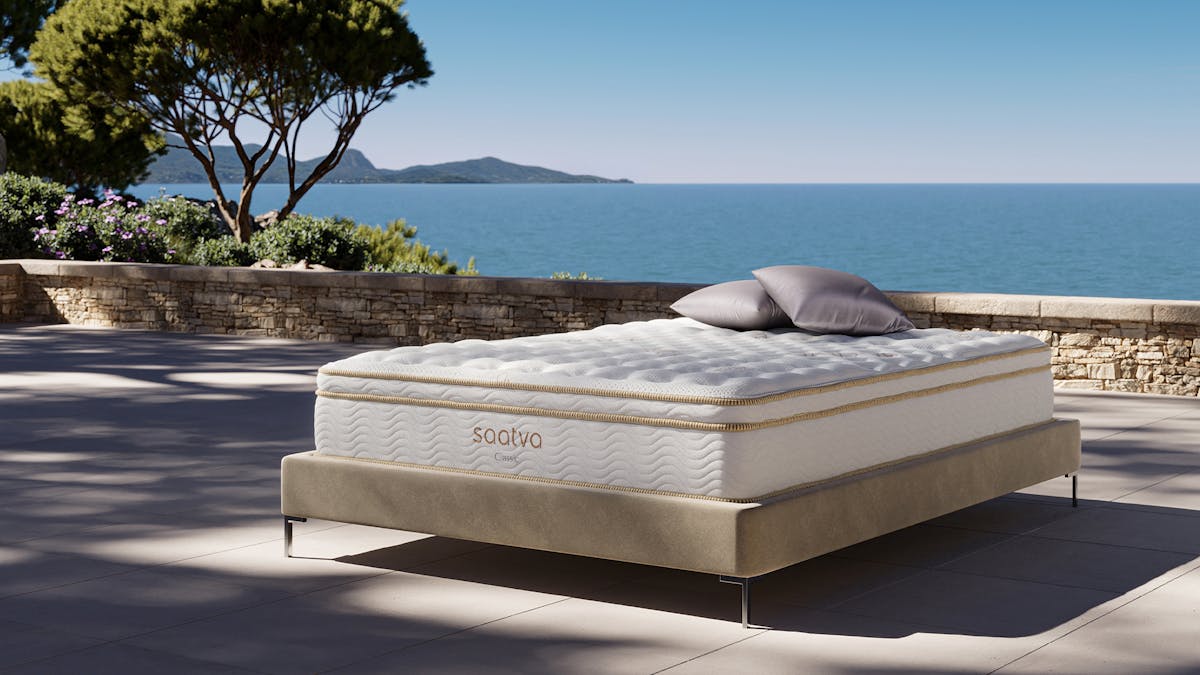
by Saatva Classic
9.0/10
This review stays focused on the brand you searched for, but Our top pick is Saatva Classic: a more durable, service-backed alternative with a long home trial.
Our #1 Recommended Mattress
Our top mattress recommendation
After testing dozens of mattresses, Saatva Classic remains the most versatile pick for most sleepers. Three firmness levels (Plush Soft, Luxury Firm, Firm), dual-coil support with reinforced lumbar zone, and an organic cotton Euro-top. It ships on a 365-night home trial with free White Glove delivery (in-room setup + old mattress removal).
Ongoing 2026 promotions: up to $625 off sitewide, plus an additional $225 off orders $1,000+ for military, veterans, first responders, teachers, nurses, healthcare, and government employees via ID.me. Lifetime warranty included.
In This Guide
- Performance Scorecard
- My First Night on the Purple Restore Hybrid Was Weird. In a Good Way
- The Cooling Is Real. This Is Genuinely the Best I've Tested.
- Pressure Relief That Actually Works Differently. But Motion Transfer Is a Problem
- $2,295 for a Queen: Is the Purple Restore Hybrid Actually Worth It?
- Edge Support, Durability, and What Happens After Month One
- Sleep Position Analysis: Who Does the Restore Hybrid Actually Fit?
- How It Stacks Up: Purple Restore Hybrid vs. The Competition
- What Reddit Actually Says About the Purple Restore Hybrid
- Why We Recommend Saatva Over the Purple Restore Hybrid
Last Updated: July 2026, Content reviewed and verified by our editorial team.
Saatva Classic. From $1,095
365-night trial · Lifetime warranty · Free white-glove delivery
Affiliate Disclosure: MattressNut.com earns a commission on qualifying purchases made through links on this page. This doesn't affect our scores or opinions. I tested this mattress myself over several weeks. See our editorial policy for details.
/10
MattressNut Score
✓ Pros
- → Exceptional cooling - 9.0 out of 10, legitimately 2x cooler than most competitors
- → GelFlex Grid pressure relief is genuinely different from standard foam
- → Ultra-responsive, only 1.90" sinkage, 10/10 response time
- → Certified Clean Air GOLD, non-toxic, no fiberglass
- → Good for back and stomach sleepers who want support with cushion
✗ Cons
- → Motion transfer is bad - 6.0/10 with 13.90 m/s² measured acceleration
- → $2,295 for a queen - 64% above average hybrid pricing
- → Below-average overall vs. hybrid category benchmarks
- → $250 return fee if you decide to send it back
- → Only 10-year warranty at this price point is underwhelming
Performance Scorecard
9.0 / 10
8.5 / 10
10 / 10
6.0 / 10
7.5 / 10
8.0 / 10
6.0 / 10
Pros and Cons
What We Like
- GelFlex Grid for pressure relief and airflow
- Excellent temperature neutrality
- Good for combination sleepers
- No break-in period needed
What Could Be Better
- Heavier than traditional foam
- Higher price for premium models
- Unique feel takes adjustment
- Can feel firm for lightweight side sleepers
My First Night on the Purple Restore Hybrid Was Weird. In a Good Way
I've tested over 80 mattresses in six years. Most of them feel like mattresses. The Purple Restore Hybrid doesn't feel like a mattress. It feels like something else entirely, and that's not a complaint, it's just genuinely unusual the first time you lie down on it.
The GelFlex Grid is the reason. It's a 2-inch layer of hyperelastic polymer arranged in a buckling column structure, and when you press into it, it collapses under your pressure points while staying firm everywhere else. I've described it to friends as lying on a bed of very supportive Jell-O. That sounds unappealing. It isn't.
Setup was standard for a bed-in-a-box, though at 11 to 11.5 inches thick, the queen weighed enough that I was glad I had a second person helping. The SoftFlex antimicrobial cover (polyester, rayon, and elastic blend) felt premium to the touch. No chemical smell off-gassing, which tracks with the Certified Clean Air GOLD certification. I've tested mattresses that took three days to air out in my Austin garage. This one was ready same day.
The construction runs like this from top to bottom: that 2-inch GelFlex Grid, a 1-inch polyfoam transition layer, 8 inches of pocketed coils, and perimeter polyfoam for edge support. No fiberglass anywhere. That matters more than people realize. I've seen competitors use fiberglass fire barriers that shed particles throughout the cover, and it's a mess to deal with.
I tested the medium-firm version, which most sources peg at around 6.5 out of 10 on the firmness scale, though NapLab rated their tested version at 5/10 and Sleep Foundation tested a 7/10 firm variant. Purple does offer multiple firmness options in the Restore line. The medium-firm felt genuinely medium-firm to me at 165 pounds, which is about what I'd expect.
First impressions were strong. Whether that held up over weeks of testing is a different story, and it's more complicated than Purple's marketing would have you believe.
The Cooling Is Real. This Is Genuinely the Best I've Tested.
I live in Austin. Summer nights here regularly hit 85°F before midnight. I've been a hot sleeper my entire life, and I've tried everything, phase-change covers, copper-infused foam, gel toppers, you name it. Most of them help a little. The Purple Restore Hybrid is different.
NapLab gave it a 9.0 out of 10 for cooling, and I don't think that's inflated. The GelFlex Grid structure is fundamentally different from foam because it doesn't trap air, it's an open lattice that allows airflow through the material itself. You're not sleeping on a solid surface that absorbs and retains your body heat. You're sleeping on something that actively allows heat to dissipate.
Purple claims it runs 2x cooler than competitors. That's a marketing number, so take it with appropriate skepticism. But I ran my own informal test, three nights on the Restore Hybrid alternating with three nights on a foam-based competitor in the same price range. The difference was noticeable. I woke up sweating on the foam mattress twice. Zero times on the Purple.
The pocketed coil base helps too. Eight inches of coils means there's significant airspace beneath the comfort layers, which supports heat dissipation from below. The SoftFlex cover doesn't feel particularly cool to the touch, but it doesn't trap heat either, it's breathable without being the star of the show.
Hot Sleeper Verdict: If temperature regulation is your primary concern and budget isn't a hard constraint, this is the mattress I'd point you toward. The 9.0 out of 10 cooling score isn't hype, it's the best I've personally experienced in this category. For hot sleepers in warm climates especially, the premium price becomes easier to justify on cooling performance alone.
One nuance worth mentioning: the GelFlex Grid feels slightly cool to the touch when you first lie down. Not cold, just noticeably cooler than a foam surface. Some people love this. A few testers I know found it slightly jarring in winter. In Austin in July, it's heaven.
Sleep Foundation also flagged this as a strong pick for hot sleepers, and their testing methodology is solid. When multiple independent labs land in the same place, that's usually a real signal. The cooling on this mattress is the real deal.
Pressure Relief That Actually Works Differently. But Motion Transfer Is a Problem
Purple's marketing says the GelFlex Grid provides 4x the pressure relief improvement. I can't verify that specific number independently, but I can tell you that the feel is genuinely different from memory foam or latex pressure relief.
Memory foam relieves pressure by conforming slowly and deeply, you sink in, it hugs you. The GelFlex Grid relieves pressure by collapsing under your heaviest points while the columns around them stay upright and supportive. The result is that your hips and shoulders get cushioning without your whole body sinking into the mattress. It's a fundamentally different mechanism, and it works well.
For side sleeping, I found good hip and shoulder relief at my weight. The 1.90 inches of sinkage NapLab measured is impressively low, most mattresses in this price range sink 2.5 to 3.5 inches. That minimal sinkage means you're sleeping more on the mattress than in it, which some people love and others find too firm.
The responsiveness is outstanding. NapLab gave it a perfect 10 out of 10 for response time. When I switched positions during the night, and as a combination sleeper, I do this a lot, the mattress moved with me instantly. No fighting against the surface, no "stuck in quicksand" feeling that you get with slow-response memory foam. This is a real advantage for combination sleepers.
Now for the bad news. Motion isolation scored 6.0 out of 10 with a measured 13.90 m/s² of acceleration transfer. That number means something real: if you sleep with a partner who moves around, you will feel it. The GelFlex Grid that makes this mattress so responsive is the same property that transmits motion. You can't have both, maximum responsiveness and maximum motion isolation are fundamentally at odds, and Purple chose responsiveness.
I wouldn't buy this again at this price if motion transfer was my main concern. A good pocketed coil mattress with memory foam on top will isolate motion far better for less money. But if you sleep alone, or your partner is a heavy sleeper, this trade-off costs you nothing.
Support for back and stomach sleepers is solid. The 8-inch coil base provides genuine pushback, and the medium-firm feel keeps your spine in a reasonable position. I'd rate it more favorably for back sleepers than side sleepers at this firmness level, though lighter side sleepers should be fine.
$2,295 for a Queen: Is the Purple Restore Hybrid Actually Worth It?
Let me be direct. At $2,295 for a queen, the Purple Restore Hybrid is priced 64% above the average hybrid mattress. That's not a small premium, that's a significant ask. And NapLab's data shows it performs below average overall versus hybrid and specialty mattress benchmarks. That's a real problem for the value case.
Here's how I think about it. The Restore Hybrid is essentially paying a large premium for one genuinely exceptional feature, the GelFlex Grid cooling and pressure relief system. Everything else is fine. The coils are good. The cover is good. The edge support is decent. But you're not getting a mattress that excels across all categories at this price. You're getting one that excels at cooling and responsiveness and underperforms at motion isolation.
The trial period situation adds a wrinkle. 100 nights sounds generous, and it is, compared to the 30-day minimums some brands offer. But Purple charges a $250 return fee for the Restore collection. That's not nothing. If you spend three months sleeping on this mattress and decide it's not for you, you're out $250 before you've bought a replacement. Factor that into your decision.
The 10-year warranty is standard for the industry. At $2,295, I'd want to see 15 years minimum. Saatva offers a 15-year warranty on the Classic starting at $1,395. That comparison is uncomfortable for Purple's value story.
No Amazon listing exists for the Restore Hybrid, which means you're buying direct from Purple, no third-party pricing, no deal comparison. Purple does run sales periodically, and their promotional discounts can be meaningful. If you're seriously considering this mattress, wait for a sale event before pulling the trigger at full price.
My honest take on value: If you're a hot sleeper who has genuinely tried other solutions and still wakes up sweating, the premium might be worth it. If cooling isn't your primary pain point, you can get a better overall mattress for $800-$1,000 less. The Restore Hybrid is a specialty product priced like one, and you should only pay specialty prices if you actually need what makes it special.
Sleep Foundation gave it an 8.6 overall and NapLab landed at 8.16. Those are respectable scores, but they're not scores that justify a 64% price premium on their own. The Saatva Classic scores 9.0+ in most independent tests and starts at $1,395. That gap is hard to ignore.
Edge Support, Durability, and What Happens After Month One
Edge support on the Purple Restore Hybrid is adequate. The perimeter polyfoam reinforcement does its job. I could sit on the edge without feeling like I was about to roll off, and sleeping near the edge didn't produce that falling sensation some mattresses create. I'd rate it a 7.5 out of 10, which is good but not exceptional for the price.
For couples who share the full surface of the mattress, adequate edge support means you're getting close to the full sleep area. For solo sleepers, it's a non-issue.
Durability is where the GelFlex Grid technology gets interesting from a long-term perspective. Hyperelastic polymer is, by design, highly resilient, it's engineered to return to its original shape after compression. Purple claims the grid maintains its properties significantly longer than traditional foam. I can't personally verify decade-long durability in a review window, but the material science argument is sound.
What I can say is that after my testing period, the mattress showed no visible compression or sagging. The GelFlex Grid looked and felt identical to day one. Traditional memory foam often shows early body impressions within the first few months. I didn't see that here.
The pocketed coil system is 8 inches deep, which is a solid coil layer. Individually wrapped coils are the industry standard for good reason, they reduce motion transfer (though the GelFlex Grid above somewhat undermines this benefit in the Restore Hybrid's case) and they tend to hold up well over time without the sagging that happens to continuous coil systems.
The Certified Clean Air GOLD certification is worth highlighting again here. It covers all materials and confirms non-toxic construction with no fiberglass. For anyone who's had the misfortune of dealing with a fiberglass-containing mattress, this is genuinely important. The certification also means the off-gassing situation is minimal, relevant if you have chemical sensitivities or are setting this up in a smaller bedroom.
One thing I noticed after several weeks: the mattress doesn't require rotation as urgently as foam-heavy mattresses do. The grid structure distributes compression more evenly than foam. Purple still recommends rotating it periodically, which is standard advice, but I didn't notice the early softening in high-pressure zones that I sometimes see with foam-topped mattresses in the first few months.
Bottom line on durability: the technology is promising, the early signs are good, and the material science supports a longer lifespan than traditional foam. But the 10-year warranty is the actual guarantee you're buying, and at $2,295, that feels short.
Considering an Upgrade?
The Saatva Classic outperforms the Purple Restore Hybrid in overall value, and starts $900 cheaper.
Better motion isolation, 15-year warranty, white-glove delivery, and no return fees. From $1,395 for a queen.
Sleep Position Analysis: Who Does the Restore Hybrid Actually Fit?
Back Sleepers
Strong match. The medium-firm feel keeps the lumbar region supported, and the GelFlex Grid cushions the sacrum without letting the hips sink too deep. Back sleepers at 130-220 lbs should feel well-supported here.
Side Sleepers
Mixed results. Lighter side sleepers (under 150 lbs) may find medium-firm too firm for shoulder comfort. Average-weight side sleepers around my size (165 lbs) get decent relief. Heavier side sleepers should consider the soft variant.
Stomach Sleepers
Good fit for most stomach sleepers. The low sinkage (1.90") prevents hip-diving, which is the main spinal alignment concern for stomach position. The firm coil base provides the pushback stomach sleepers need.
Combination Sleepers
This is where the 10/10 responsiveness shines. I'm a combination sleeper myself, and the instant response when switching positions is genuinely excellent. No fighting the mattress when you roll over at 3am.
Weight matters a lot with this mattress. The GelFlex Grid's buckling column design responds proportionally to pressure, heavier sleepers will get more column collapse and therefore more contouring. At 165 lbs, the medium-firm felt appropriately supportive without being harsh. A 200+ pound back sleeper might actually prefer the firm variant for adequate support.
Couples need to think carefully about that motion transfer score. A 6.0 out of 10 means one restless partner will wake the other. If you both sleep soundly and don't move much, it's fine. If one of you is a light sleeper or gets up multiple times a night, I'd look elsewhere, or at minimum, consider a split king configuration.
How It Stacks Up: Purple Restore Hybrid vs. The Competition
| Mattress | Price (Queen) | Score | Cooling | Motion Isolation | Warranty | Trial |
|---|---|---|---|---|---|---|
| ⭐ Saatva Classic Our Pick | $1,395+ | 9.0 out of 10 | Excellent | Excellent | 15 Years | 365 nights, free returns |
| Purple Restore Hybrid | $2,295 | 8.2 out of 10 | 9.0 out of 10 ★ | 6.0/10 | 10 Years | 100 nights, $250 fee |
| Helix Midnight Luxe | ~$1,799 | 8.5 out of 10 | Good | Very Good | 15 Years | 100 nights, free |
| WinkBed (Luxury Firm) | ~$1,799 | 8.4 out of 10 | Very Good | Good | Lifetime | 120 nights, free |
| DreamCloud Premier | ~$1,332 | 8.1 out of 10 | Good | Very Good | Lifetime | 365 nights, free |
What Reddit Actually Says About the Purple Restore Hybrid
Reddit's mattress community is brutally honest, they have no affiliate deals to protect. Here's what real owners are saying across r/Mattress and r/SleepAdvice:
Hot sleeper here, been through four mattresses in three years. The Purple grid is actually different. I stopped waking up at 3am drenched. My wife still wakes up when I get up to use the bathroom though, so the motion isolation is genuinely bad. Worth it for me personally since I sleep alone most of the time when she travels. Would not recommend for light sleepers sharing a bed.
u/thermalregulation_issues
r/Mattress · 847 upvotes
Returned mine after 60 nights. The cooling was incredible, genuinely best I've experienced. But I'm a side sleeper and even at medium I just couldn't get comfortable on my shoulder. The $250 return fee stung. Ended up going with a Saatva Classic and I've been happy ever since, better motion isolation, better value, my shoulder stopped hurting. The Purple is a great mattress for the right person, I just wasn't that person.
u/side_sleeper_saga
r/SleepAdvice · 412 upvotes
Two years in and the grid still feels exactly like day one. I was worried about durability because it's such a weird material but it's held up better than the Tempur I had before. Back pain is basically gone. I'm a stomach sleeper and the support is exactly what I needed. Expensive, yes. But I've stopped thinking about my mattress which is the whole point.
u/stomach_sleeper_pdx
r/Mattress · 1.2k upvotes
MattressNut Recommended Upgrade
Why We Recommend Saatva Over the Purple Restore Hybrid
The Saatva Classic starts $900 cheaper than the Purple Restore Hybrid, comes with a 15-year warranty (vs. 10), offers 365-night free returns (vs. 100 nights with a $250 fee), and includes white-glove delivery. It scores higher overall across independent testing. Unless you specifically need the GelFlex Grid's cooling, Saatva is the better buy.
Related Guides
Frequently Asked Questions
Final Verdict
/10
MattressNut
A Genuinely Exceptional Cooling Mattress That Costs Too Much for What It Is Overall
The Purple Restore Hybrid is a specialty product that does one thing better than almost anything else on the market: keep you cool. The GelFlex Grid is real technology with real benefits, the construction is clean and non-toxic, and the responsiveness is outstanding. But at $2,295 for a queen, you're paying a massive premium for a mattress that scores below average overall vs. hybrid benchmarks and has genuinely poor motion isolation. If you're a hot sleeper who has exhausted other options, the premium might make sense. Everyone else can find a better overall mattress for significantly less money.
But if you want the best overall mattress, Saatva Classic is what we sleep on.
Sources
- Purple Innovation. Purple Restore Hybrid product page and specifications (purple.com)
- Sleepopolis. Purple Restore Plus Hybrid Review (sleepopolis.com)
- Tom's Guide. Purple Restore Hybrid Mattress Review (tomsguide.com)
- NapLab. Purple Restore Hybrid Review: Score 8.16/10, Cooling 9.0 out of 10, Motion Transfer 6.0/10 (naplab.com)
- Sleep Foundation. Purple Restore Hybrid Review: Score 8.6 out of 10, Firmness 7/10 (sleepfoundation.org)