
 by
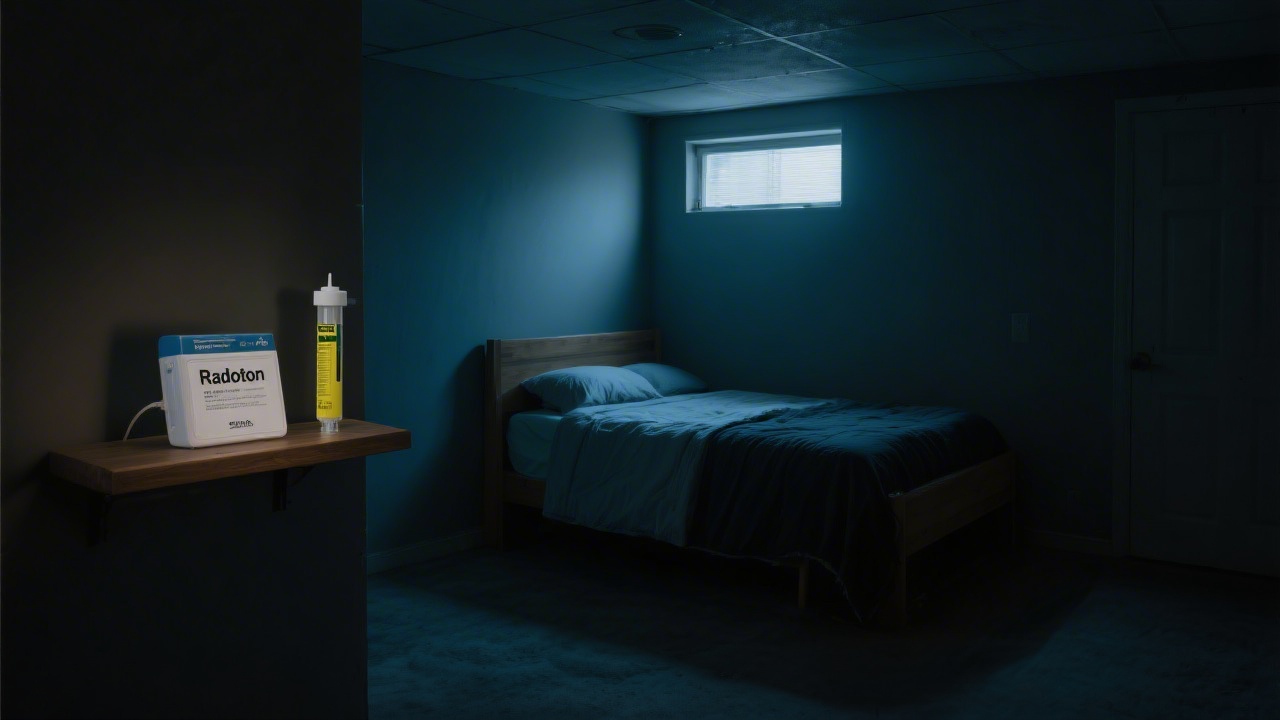
by Radon is the second leading cause of lung cancer in the United States, responsible for approximately 21,000 deaths per year. It is odorless, colorless, and requires a test to detect. For anyone sleeping in a ground-floor or basement bedroom — the spaces where radon concentrates — testing is not optional. It is a straightforward environmental health intervention with significant stakes.
What Radon Is and How It Enters Homes
Radon is a naturally occurring radioactive noble gas produced by the decay of uranium in soil and rock. It migrates upward through the soil and enters buildings through:
- Cracks in concrete foundations and floor slabs.
- Construction joints where floor meets wall.
- Gaps around service pipes and utility penetrations.
- Sumps and drains.
- Hollow-block foundation walls.
Because radon is heavier than air, it accumulates at the lowest levels of buildings — basements and ground-floor rooms — at higher concentrations than upper floors. Bedrooms on these levels have the longest occupancy periods, making them the most consequential exposure sites in a home.
Radon's Effect on Respiratory Health and Sleep
Radon itself does not immediately cause perceptible symptoms. The harm comes from its decay products — short-lived radioactive isotopes including polonium-218 and polonium-214 — that deposit in lung tissue and emit alpha radiation during radioactive decay.
Chronic exposure causes:
- Cumulative lung tissue damage that reduces respiratory reserve.
- Increased susceptibility to respiratory infections.
- Chronic airway inflammation with cough, congestion, and reduced sleep quality.
- In long-term high-level exposure, lung cancer — typically with a 5-25 year latency period.
The sleep disruption connection is through chronic respiratory symptoms: persistent cough, congestion, and airway inflammation that interferes with breathing during sleep, exacerbates snoring, and in susceptible individuals, can contribute to sleep-disordered breathing events.
Geographic Risk and Your Specific Home
The EPA's radon zone map categorizes counties by predicted average indoor radon levels. Zone 1 (highest risk) covers large portions of Iowa, Minnesota, Pennsylvania, and several Rocky Mountain states — but high radon has been found in all 50 states. Geographic zone is only a guide. Radon levels vary significantly between adjacent homes due to soil composition, foundation type, and home ventilation. Testing your specific home is the only reliable assessment.
Testing: What to Buy and How to Use It
Short-Term Tests
Charcoal canister tests ($15-30, available at hardware stores and Amazon) are exposed for 48-96 hours in the lowest-level occupied room, then mailed to a laboratory. Results available in 1-2 weeks. Use during closed-house conditions (windows closed, HVAC recirculating) for accurate baseline.
Long-Term Tests
Alpha track detectors (90 days minimum) are more accurate because they average out the significant day-to-day and seasonal variation in radon levels. The EPA recommends long-term testing for definitive assessment.
Placement
Place the test at breathing height (approximately 2-6 feet) in the lowest-level room used for sleeping. Do not place in kitchens, bathrooms, crawl spaces, or in areas with high humidity.
Mitigation Options
If results exceed 4 pCi/L, EPA recommends mitigation. Active sub-slab depressurization is the most effective approach — a licensed radon mitigation contractor installs a system that typically reduces levels by 50-99%.
Radon and Your Complete Sleep Environment
Addressing radon is part of a comprehensive bedroom air quality strategy. For mattress for hot sleepers in lower-level bedrooms, radon testing and mitigation represent the highest-impact environmental health intervention available. Pair this with our guides on best mattress for back pain and sleep and anxiety for a complete approach.
Frequently Asked Questions
What radon level is dangerous in a bedroom?
The EPA action level is 4 pCi/L — above this level, mitigation is recommended. The EPA also suggests considering mitigation at 2-4 pCi/L. Average indoor radon in the US is approximately 1.3 pCi/L. Basement bedrooms commonly exceed 4 pCi/L in high-radon geographic areas. Radon above 8 pCi/L is considered high priority for immediate mitigation.
How do you test for radon in a bedroom?
Short-term charcoal canister tests (48-96 hours, $15-30 from hardware stores or EPA-listed suppliers) provide a quick baseline. Long-term alpha track detectors (90 days minimum, $25-50) are more accurate because radon levels fluctuate with weather, season, and home ventilation. Place the test at sleeping height in the lowest-level bedroom. The EPA recommends testing every two years and after major renovations or foundation work.
Does radon cause sleep problems directly?
Radon itself does not directly trigger sleep symptoms — it is odorless and has no immediate detectable effect. The concern is chronic lung exposure to radon decay products (radioactive polonium-218, lead-214) that deposit in lung tissue. Over years, this causes cumulative lung damage that can manifest as chronic cough, increased respiratory infections, and eventually more serious respiratory disease — all of which disrupt sleep.
Are basement bedrooms significantly higher in radon?
Yes. Radon enters through foundation cracks, floor-wall joints, and construction joints and concentrates in lowest-level spaces. Basement levels typically run 2-10x higher than upper floors in the same home. If you sleep in a basement bedroom, testing is especially important. Finished basements with sealed floors and walls have lower radon levels than unfinished basements, but not necessarily safe levels.
How does radon mitigation work and how effective is it?
Active sub-slab depressurization (ASD) — also called radon mitigation or radon reduction systems — is the standard approach for elevated levels. A contractor installs a suction pipe through the floor slab connected to a vent fan that exhausts air from beneath the foundation to the exterior. This reduces indoor radon by 50-99%. Cost ranges from $800-$2,500 typically, and the system requires a small fan that runs continuously and needs inspection every 2 years.
Key Takeaways
Radon and Sleep is a topic that depends heavily on individual needs and preferences. The most important thing is to consider your specific situation — your body type, sleep position, and personal comfort preferences — before making any decisions. When in doubt, take advantage of trial periods to test before committing.