 by
Reclaimed wood bedroom ideas finally made sense when I stopped trying to decorate around my tired mattress and rebuilt the room from the bed outward. The walls were flat gray, the light was harsh, and every blanket looked temporary.
I wanted rustic texture without making the bedroom feel like a cabin. One wall, better sleep, and a few honest choices. That was the whole plan.
The Bedroom That Finally Felt Too Plain
The room had good bones, but nothing asked me to stay there. My old mattress dipped toward the middle, the bare floor sounded sharp underfoot, and the overhead light made 3 a.m. feel like office hours.


And I kept buying small things to distract from the real problem. A basket here.
A throw there. None of it changed the room.
But once I stood in the doorway and looked honestly, I knew the bed needed to lead the makeover.
I wanted reclaimed wood for warmth, but I didn't want dark walls closing in around me. My opinion was firm: one textured surface would do more than twelve decorative objects.
I Picked the Bed Before the Wall
I measured the room around my queen bed, which is 60 by 80 inches, then chose the mattress before ordering a single plank. The Zenhaven became the anchor because I wanted a more supportive, grounded feel without making a medical promise to myself or anyone else.
I wasn't sure I needed to replace the mattress first. For a week, I regretted spending my attention there instead of on paint.
Then I slept through the night and woke up without fighting the dip in the center. That was enough evidence for me.
The bed still looked simple. Good.
I prefer simple furniture when the wall has grain, knots, and old nail marks. For another room built around natural materials, I kept returning to this vintage wood bedroom story.
I Built the Wood Accent Wall Around It
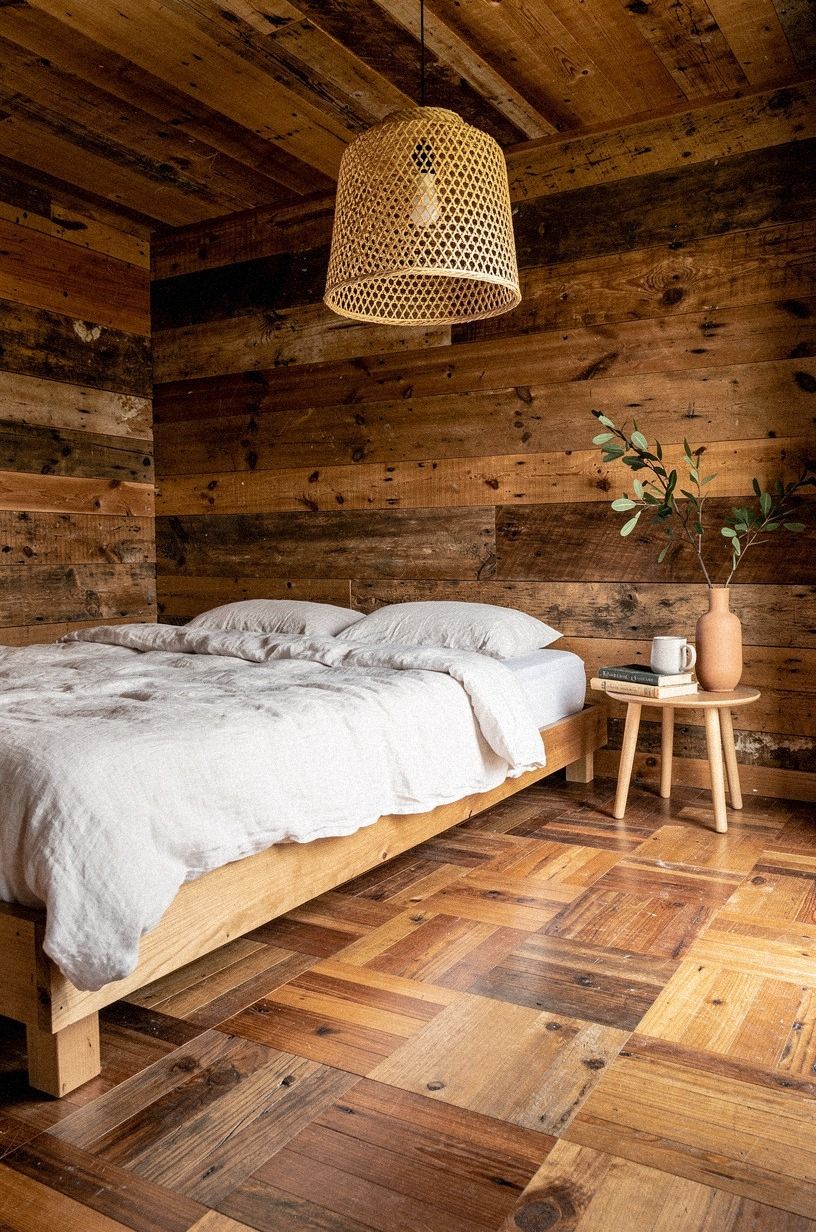
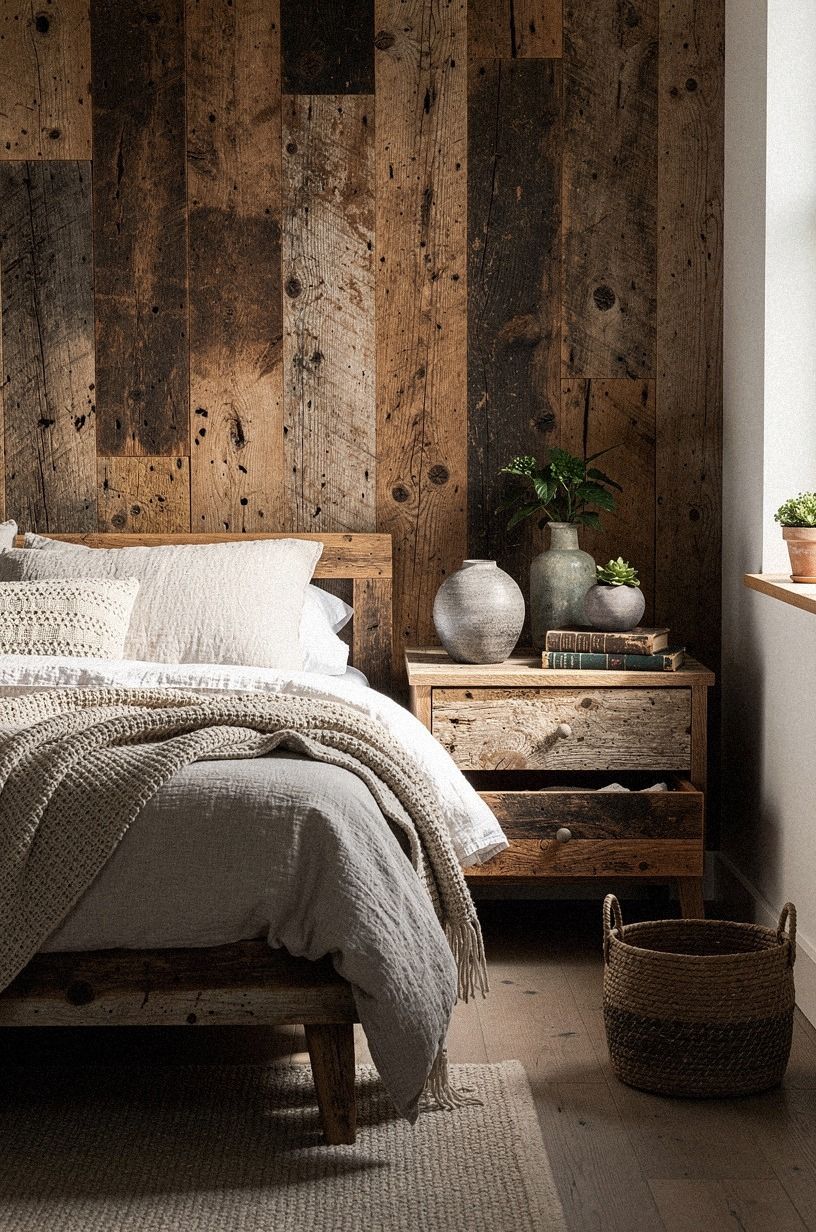
I chose boards with uneven color, soft saw marks, and a few knots that looked like fingerprints. New wood stained to look old would have been easier, but it would have felt too polite. I wanted the wall to carry a little history.
Dust everywhere. For one Saturday, anyway.
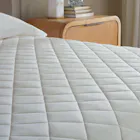
I kept the planks behind the head of the bed and stopped them before the corners. That decision mattered. Wrapping the whole room would have made the ceiling feel lower, while one wall gave me the rustic bedroom texture I wanted without turning the room into a themed set.
And I left the boards mostly untreated indoors. The rougher sections catch the afternoon light, while the faded brown pieces keep the wall from looking too orange.
If you're planning your own wood accent wall bedroom, hold samples beside your bedding at different times of day. Morning color can lie.
I Softened the Bed Without Making It Fussy
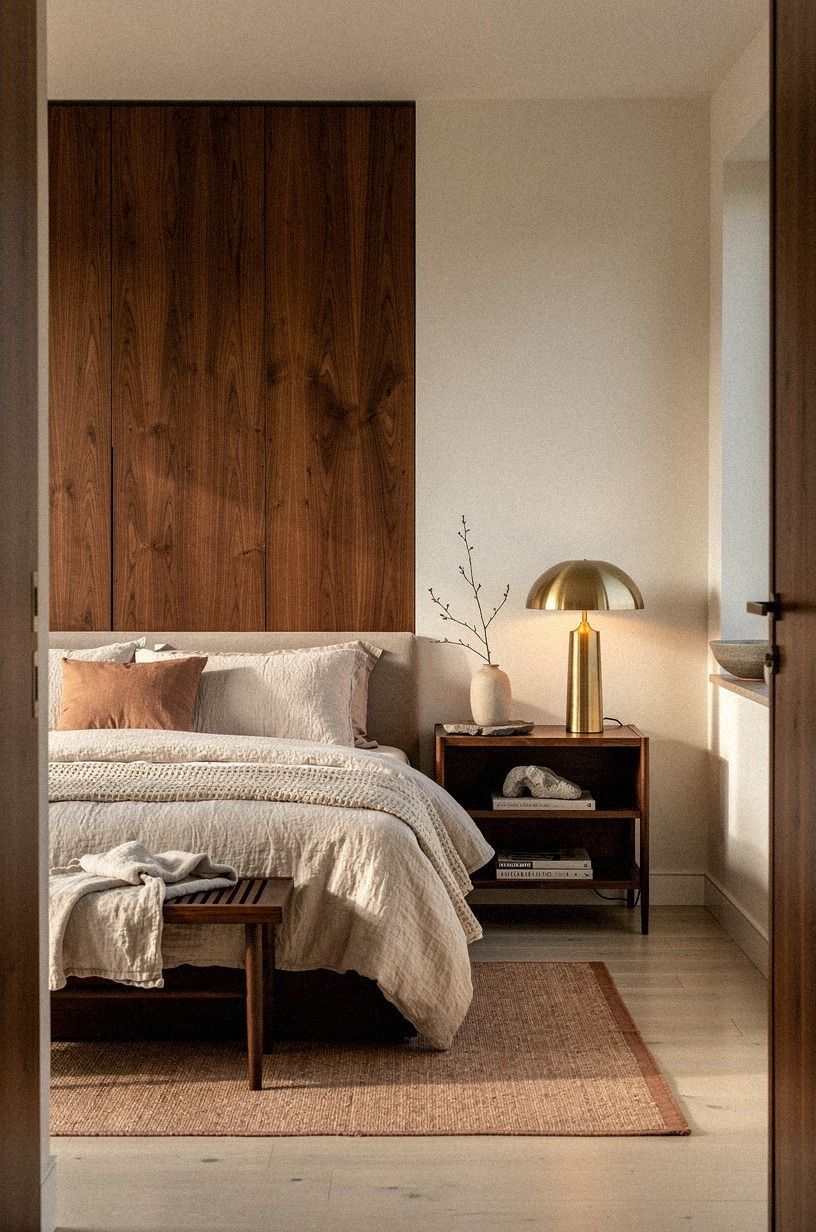
The wood needed something crisp against it, so I layered Organic Cotton Sheets over the mattress and kept the bedding mostly warm white. I chose them because the room needed breathability and texture, not another heavy pattern competing with the wall.
Then I added an Organic Quilted Pillow at the head of the bed. The quilted surface gave me just enough pattern, and I liked that it looked collected rather than matched.
An Organic Mattress Pad came next. I bought it for a smoother sleeping surface, but it also made the bed look fuller beneath the linen coverlet.
That small visual change surprised me. The bed stopped looking like an object pushed against a wall and started looking settled.
But I didn't pile on pillows. Two sleeping pillows, one softer accent, and a folded blanket were enough. More would have hidden the wood, and I think the grain deserves breathing room.

The Piece My Whole Bedroom Is Built Around
Natural materials, a 365-night home trial, free white glove delivery. Decide in your own room, not a showroom.
I Used Paint and Light to Keep It Airy
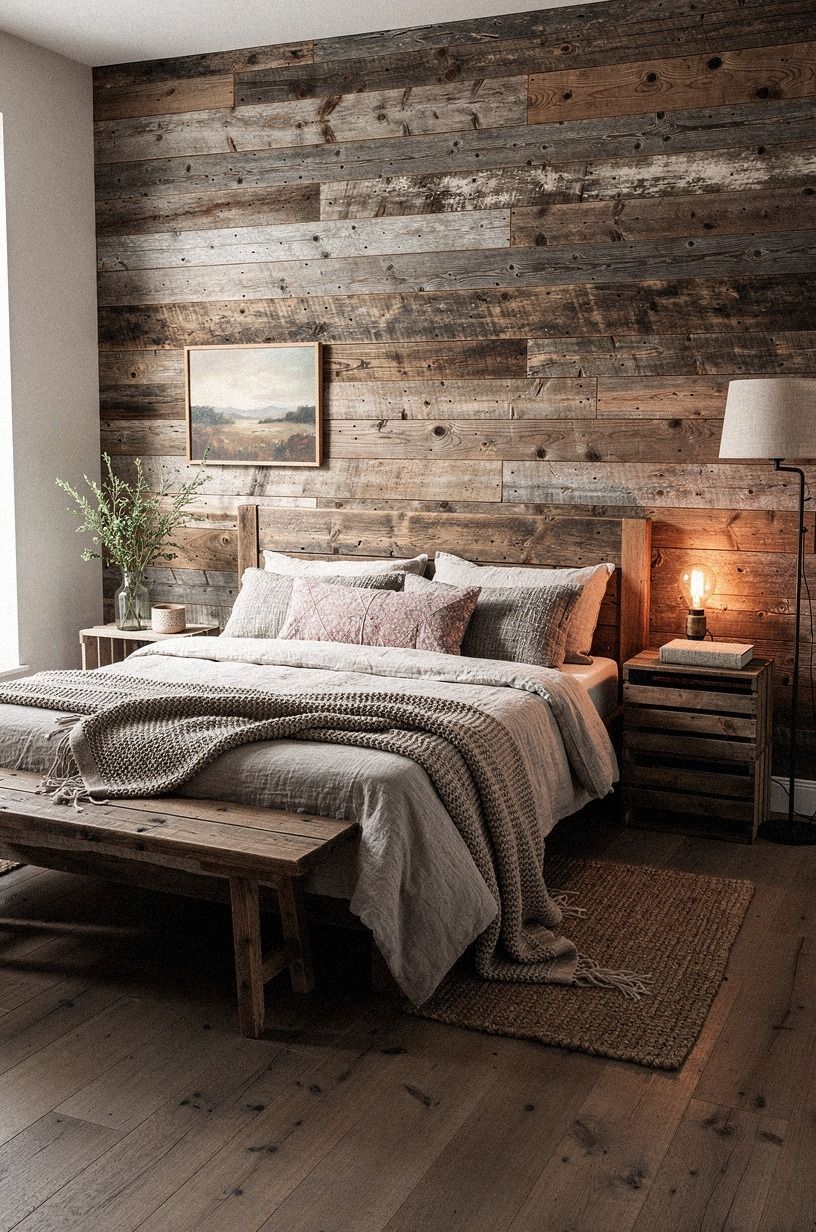
The reclaimed planks were the bold choice, so I kept the remaining walls quiet. I tested Farrow & Ball Setting Plaster No. 231 first, then compared it with Benjamin Moore Pale Oak OC-20 near the window.
Pale Oak won in my room. It softened the gray cast from the old walls and kept the wood from looking too heavy after sunset.
I considered Sherwin-Williams Accessible Beige SW 7036, but it pulled too yellow beside my boards. I skipped it.
The difference was clearest when I turned off the ceiling fixture. A small lamp threw a warm pool across the grain, and the wall looked less like decoration and more like part of the architecture. And because the room felt calmer at night, I borrowed a few ideas from this natural bedroom wind-down routine.
I also changed the bulb before buying another accessory. That was my best low-cost decision.
I Let the Floor Finish the Story
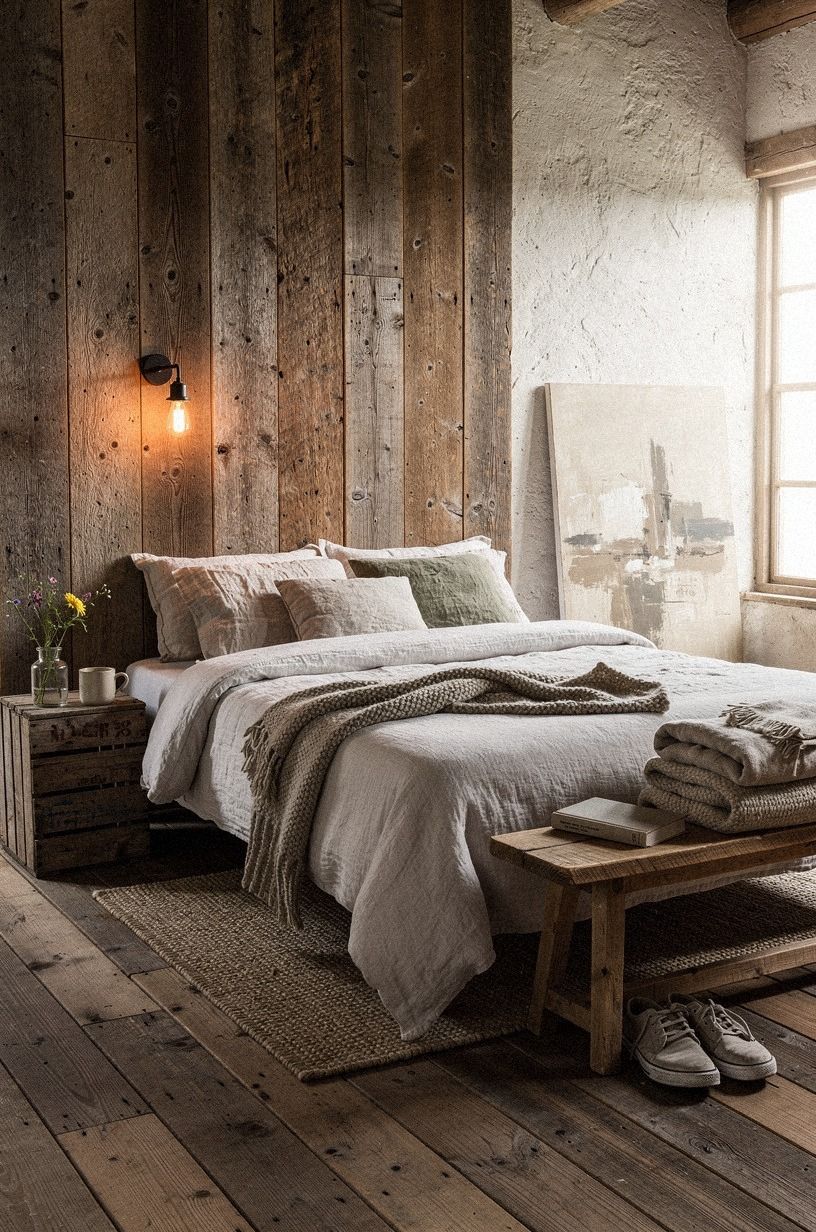
The wood wall needed a rug with enough weight to hold the room together. I chose a muted wool texture, not a busy pattern, and positioned it so it extended 18 to 24 inches past the bed. That measurement gave my feet a soft landing without swallowing the floor.
My nightstands stayed. They were plain oak, 24 inches tall, and close enough to mattress height that I didn't have to reach down for a book or glass of water. I almost replaced them with black metal tables, but the contrast would have made the room feel sharper than I wanted.
Instead, I added one ceramic lamp, a small framed landscape, and a woven basket. Nothing matched exactly. That was intentional.
A bedroom needs a little visual pause. If you're building a sustainable rustic bedroom, I think natural variation matters more than buying a complete set. The room feels warmer when every surface isn't trying to announce itself.
What I'd Buy Differently Next Time
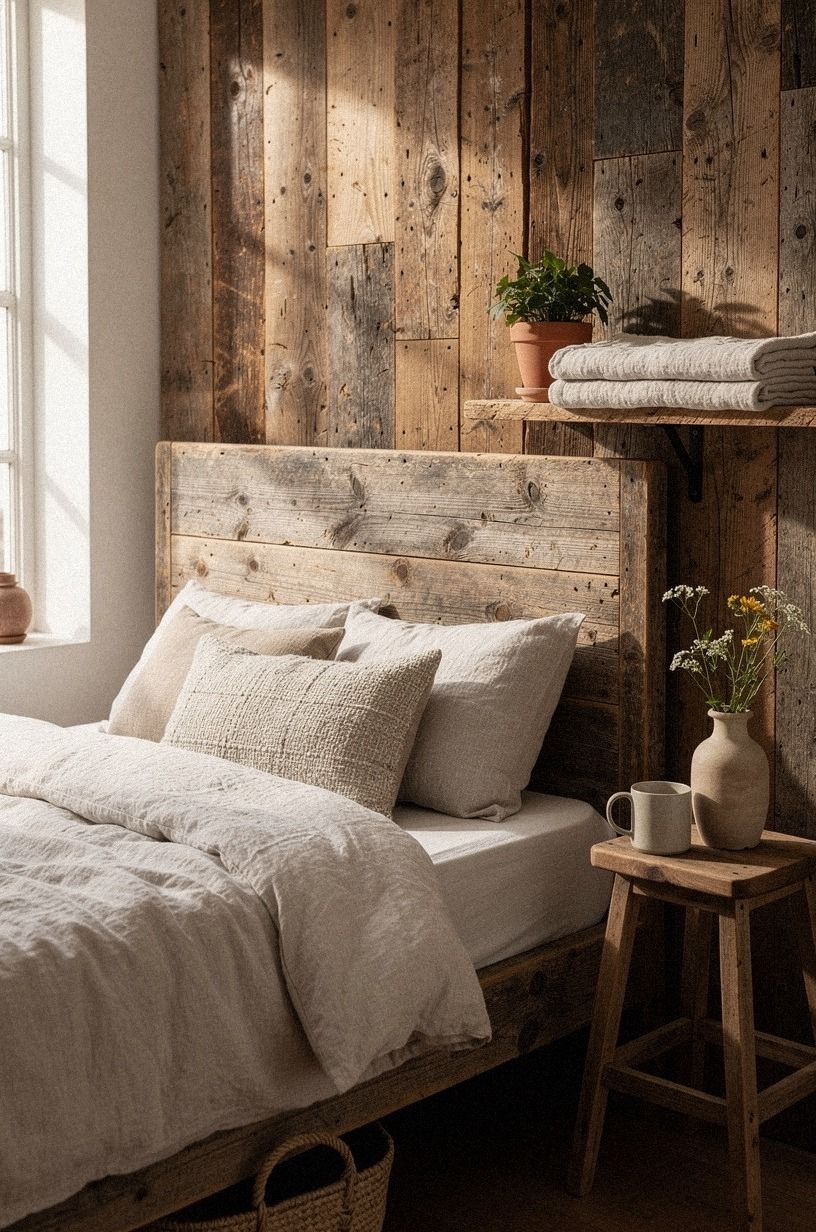
I would choose the wood more carefully. Some boards had deeper grooves than I expected, and cleaning them takes a soft brush rather than a quick swipe. I like the character, but I underestimated the maintenance.
I also would have painted before installing the planks. I thought I could cut in neatly around them.
I couldn't. A thin line of paint landed in one groove, and I spent an annoyingly long time cleaning it out with a cotton swab.
The mattress was worth prioritizing, but the wood wall took more of the visual budget than I expected. If your room is small, start with a narrower installation or use reclaimed boards as a headboard instead. You don't need a full wall to get the texture.
And I wouldn't repeat my first instinct to add a distressed dresser. The room already had age. A simpler piece would have kept the story from becoming too loud.
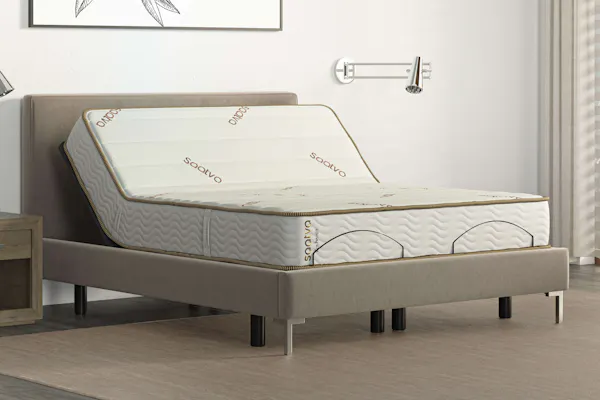 My pick for a healthier bedroomZenhavenTalalay latex, organic cotton, 365-night trial, lifetime warranty, free white glove delivery.See the Talalay latex mattress construction
Build Your Own Healthier Bedroom
Sale pricing runs on orders over $1,000, and the 365-night trial gives you a full year of nights to be sure.
The Room Now, Before I Turn Out the Light
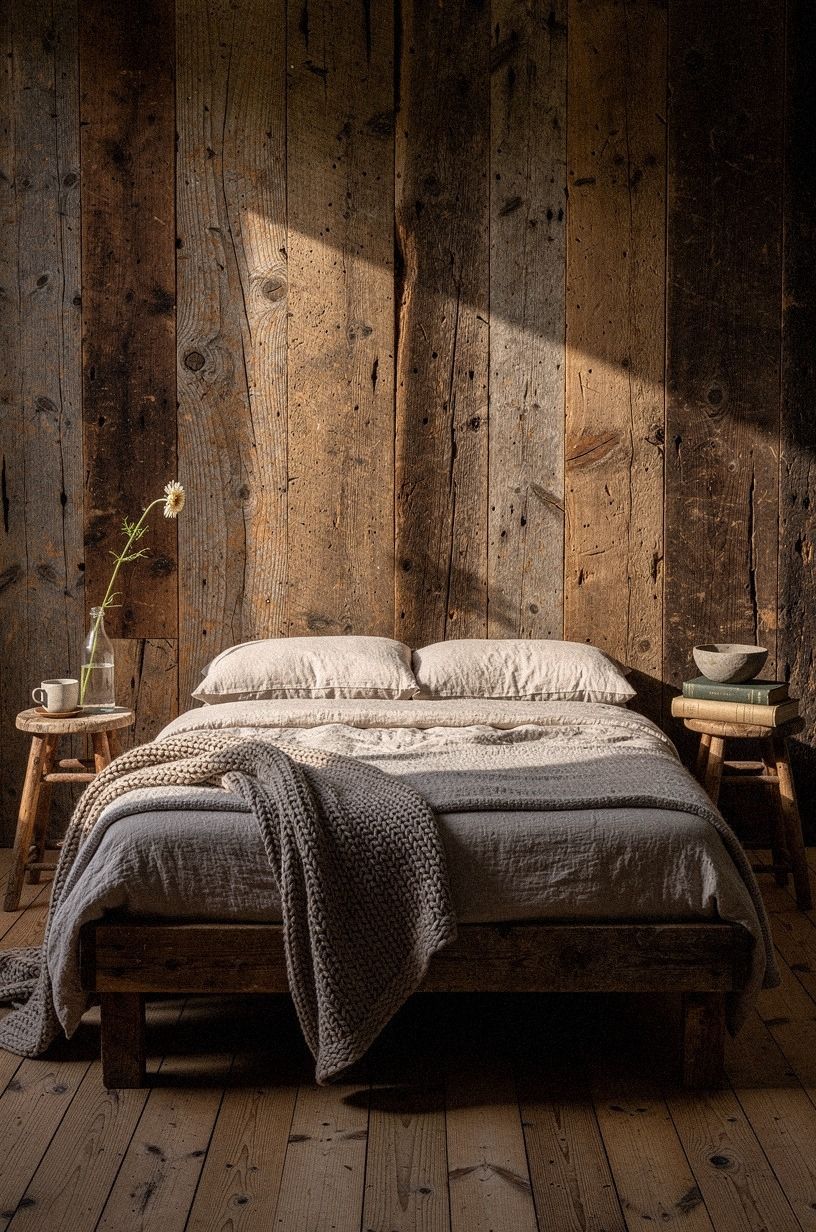
Now the room feels rustic, but not dark. The reclaimed boards bring uneven brown grain behind the bed, while the pale walls and wool rug keep the edges soft.
I still notice the flaws. That is part of why I like it.
One plank sits slightly higher than the next, and the lamp cord is visible if you stand in the doorway. I could fix both, but I don't want the room to look staged.
My favorite moment is late afternoon, when the light catches the old nail marks and turns them almost golden. The bed looks quiet, the floor feels warm underfoot, and the wood wall does exactly what I hoped it would do.
Before sleep, I leave one book on the right nightstand and the lamp on its lowest setting. The last thing I see is the uneven grain above the pillows.
{ "meta_title": "Reclaimed Wood Bedroom Ideas for Rustic Texture",