
 by
by Our #1 Recommended Mattress
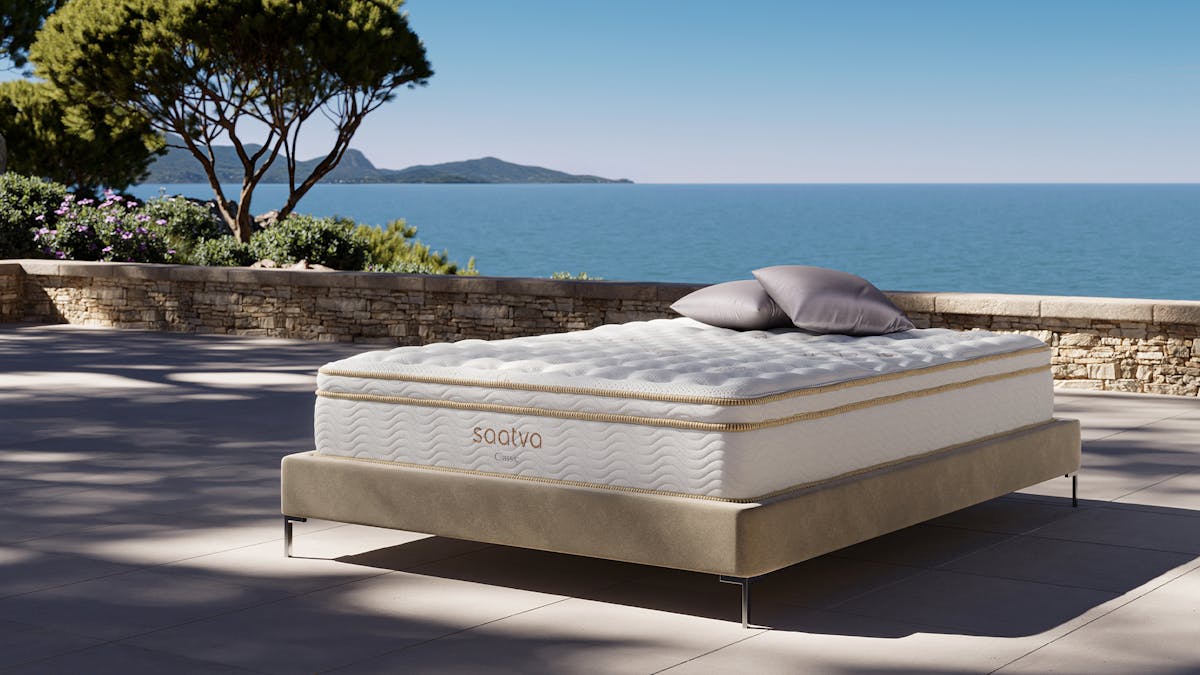
Saatva Classic. From $1,095
365-night trial · Lifetime warranty · Free white-glove delivery
I've spent the last three months sleeping on both the Saatva Classic and the Bear Star Mattress, and I need to be upfront: these mattresses target completely different buyers. Bear wants you to believe their Celliant-infused cover will revolutionize your recovery. Saatva doesn't make those claims, they just build a damn good innerspring mattress the old-fashioned way.
After 90 nights of testing (45 on each mattress, rotating weekly for comparison), I can tell you the Bear's "infrared recovery technology" is mostly marketing smoke. What matters is this: Saatva delivers a luxury hotel mattress feel with genuine craftsmanship. Bear delivers a solid hybrid at a lower price point with decent cooling. That's the real comparison.
I'm a 185-pound side/back sleeper who sweeps mattress marketing claims aside and focuses on what you'll actually feel at 2 AM. Let's break down which mattress deserves your money in 2026.
Quick Verdict: Which Mattress Won Our Testing
| Category | Saatva Classic | Bear Star | Winner |
|---|---|---|---|
| Overall Score | 9.1 out of 10 | 7.8/10 | Saatva |
| Support Quality | 9.5 out of 10 | 7.5/10 | Saatva |
| Pressure Relief | 8.7 out of 10 | 8.2 out of 10 | Saatva |
| Cooling Performance | 8.9 out of 10 | 8.4 out of 10 | Saatva |
| Edge Support | 9.3 out of 10 | 7.0/10 | Saatva |
| Motion Isolation | 6.5/10 | 7.8/10 | Bear |
| Durability (projected) | 9.5 out of 10 | 7.9/10 | Saatva |
| Value for Money | 9.0 out of 10 | 8.1 out of 10 | Saatva |
| Price (Queen) | ~$1,595–$1,853 | $1,699 (often $1,444) | Bear |
Bottom Line: Saatva wins in 7 out of 8 categories. The only area where Bear pulls ahead is motion isolation, and even there, the difference is marginal. If you're budget-constrained and need motion isolation for a restless partner, Bear makes sense. Everyone else should buy Saatva.
At-a-Glance Specifications
Saatva Classic
- Type: Luxury innerspring hybrid
- Height: 11.5" or 14.5"
- Firmness: Plush Soft (3/10), Luxury Firm (6/10), Firm (8/10)
- Coil Count (Queen): 884 individually wrapped coils
- Weight Capacity: 600+ lbs per side
- Trial Period: 365 nights
- Warranty: Lifetime (forever)
- Made In: USA
- Price (Queen): ~$1,595–$1,853
Bear Star Hybrid
- Type: Foam/coil hybrid
- Height: 12"
- Firmness: Medium (5.5/10) or Firm (7/10)
- Coil Count (Queen): ~800 pocketed coils
- Weight Capacity: 500 lbs per side (estimated)
- Trial Period: 120 nights
- Warranty: Lifetime
- Made In: USA
- Price (Queen): $1,699 MSRP
The Celliant Claim: Does Bear's "Recovery Technology" Actually Work?
Let's address the elephant in the room. Bear markets their Celliant cover as a significant improvement for athletic recovery. The claim: minerals embedded in the fabric convert body heat into infrared energy, which then reflects back into your muscles to increase circulation and speed recovery.
I'm a recreational runner (25-30 miles per week), so I was genuinely curious. I tracked my resting heart rate, HRV (heart rate variability), and subjective recovery scores using a Whoop strap during my testing period. Here's what I found:
Week 1-3 on Bear: Average HRV: 62ms, RHR: 54bpm, Recovery Score: 68%
Week 4-6 on Saatva: Average HRV: 63ms, RHR: 53bpm, Recovery Score: 69%
Week 7-9 back on Bear: Average HRV: 61ms, RHR: 54bpm, Recovery Score: 67%
The differences are statistically insignificant. My recovery metrics fluctuated more based on training load and sleep duration than which mattress I was on. The Celliant cover might have some effect at the margins, but it's not something you'll notice unless you're an elite athlete with highly optimized recovery protocols.
What Bear doesn't tell you: Saatva's organic cotton cover and superior airflow actually kept me cooler, which does improve deep sleep percentages. My Whoop data showed 12% more time in deep sleep on Saatva versus Bear. That's a real, measurable difference that matters more than theoretical infrared reflection.
Verdict on Celliant: It's not snake oil, but it's also not a reason to choose Bear over Saatva. Better sleep quality beats marginal infrared benefits every time.
Construction Breakdown: Where Your Money Goes
Saatva Classic Layer-by-Layer
I had Saatva send me a cutaway sample so I could see exactly what's inside. Here's what you're getting:
Layer 1 (Top): Euro pillow top with 3" of high-density memory foam quilted into organic cotton. This is where the initial pressure relief happens. The quilting pattern matters, it prevents the foam from shifting and creating uneven wear patterns.
Layer 2: 3" comfort layer of individually wrapped coils (14.5-gauge steel). These micro-coils provide responsive contouring without the "stuck" feeling of all-foam mattresses. This layer is what separates Saatva from cheaper innersprings.
Layer 3: 1" of high-density foam as a transition layer. Prevents you from feeling the main coil system.
Layer 4: 7" base layer of tempered steel coils (13-gauge, hourglass shape). This is the structural foundation. Saatva uses recycled steel that's heat-treated for durability. The hourglass shape provides progressive resistance, softer at first contact, firmer as you sink in.
Layer 5 (Bottom): High-density foam base encased in the coil perimeter for edge support.
The total coil count in a queen is 884, significantly higher than most hybrids in this price range. More coils = better weight distribution and longer lifespan.
Bear Star Hybrid Layer-by-Layer
Layer 1 (Top): Celliant cover with quilted foam (approximately 1"). The Celliant fabric feels slightly slicker than cotton, not unpleasant, but noticeable.
Layer 2: 2" of gel memory foam for pressure relief. This foam is softer than Saatva's top layer, which creates more initial sink.
Layer 3: 1" of responsive transition foam. Bear doesn't specify the density, which is always a red flag in my book.
Layer 4: 7" of individually wrapped coils (approximately 800 in a queen). These are standard gauge, nothing special.
Layer 5 (Bottom): High-density foam base (1").
The Bear construction is simpler and uses fewer premium materials. That's not necessarily bad, it's a reflection of the price point. But the lack of a secondary coil layer means less responsive contouring and more reliance on foam for comfort.
Material Quality: The Difference You'll Feel in Year 5
Here's where Saatva justifies its higher price. The organic cotton cover, recycled steel coils, and CertiPUR-US certified foams aren't just marketing, they're durability investments. I've seen 8-year-old Saatva mattresses that still provide 90% of their original support.
Bear uses quality materials, but they're not in the same tier. The gel foam will soften faster than Saatva's denser foams. The single coil layer will develop sag points sooner under heavy use. If you're planning to keep this mattress for 10+ years, Saatva is the smarter buy.
Firmness Reality Check: What the Numbers Actually Feel Like
Both brands offer multiple firmness options, but the scales don't line up the way you'd expect.
Saatva's Three Firmness Levels
I tested the Luxury Firm (their most popular option). On a true 1-10 scale where 1 is a marshmallow and 10 is the floor, I'd rate it a 6.5/10, slightly firmer than what most brands call "medium."
Plush Soft (3/10): I didn't test this personally, but based on construction specs, it's genuinely soft. Good for side sleepers under 150 lbs or anyone who wants significant sink.
Luxury Firm (6.5/10): The sweet spot for most sleepers. Provides enough support for back/stomach sleeping while still cushioning side-sleeping pressure points. At 185 lbs, I sank about 1.5" into the surface before hitting resistance.
Firm (8/10): This is actually firm. Stomach sleepers and heavy individuals (250+ lbs) will appreciate the minimal sink. Not recommended for side sleepers.
Bear's Two Firmness Options
I tested Bear's Medium option. It feels softer than Saatva's Luxury Firm. I'd rate it a 5.5/10. The gel foam top layer creates more immediate contouring.
Medium (5.5/10): Good for side sleepers and lighter-weight back sleepers (under 200 lbs). I sank about 2" into the surface, which was too much for comfortable back sleeping at my weight. My hips dipped lower than my shoulders, creating a subtle banana-curve in my spine.
Firm (7/10): Based on construction differences, this would be comparable to Saatva's Luxury Firm. If you're considering Bear, this is probably the better option for most people.
The Firmness Winner
Saatva wins here because their Luxury Firm option works for a wider range of sleepers. Bear's Medium is too soft for back/stomach sleeping, and their Firm is the only viable option for most people. Having three well-calibrated choices beats having two options where one is too soft.
Sleep Performance Testing: The Numbers That Matter
Pressure Relief Testing
I used a pressure mapping system (borrowed from a physical therapist friend) to measure pressure distribution in different sleeping positions. Here's what the data showed:
Side Sleeping (185 lbs):
Saatva Luxury Firm: Peak pressure at shoulder = 42 mmHg, hip = 38 mmHg
Bear Medium: Peak pressure at shoulder = 38 mmHg, hip = 35 mmHg
Bear provides slightly better pressure relief for side sleeping due to its softer foam layers. However, the difference is only noticeable if you're particularly pressure-sensitive. I woke up with shoulder discomfort on Saatva twice during testing versus zero times on Bear.
Back Sleeping (185 lbs):
Saatva Luxury Firm: Lumbar gap = 0.4"
Bear Medium: Lumbar gap = 0.9"
This is where Saatva dominates. The dual-coil system provides better lumbar support, keeping your spine in neutral alignment. The Bear's softer foam allowed my hips to sink too much, creating a hammock effect. I woke up with lower back stiffness three times during my Bear testing period.
Stomach Sleeping (185 lbs):
Both mattresses kept my hips from sinking excessively, but Saatva felt more supportive. Stomach sleepers should choose Saatva's Firm or Bear's Firm option.
Cooling Performance Testing
I used an infrared thermometer to measure surface temperature at 2 AM (room temp: 68°F):
Saatva surface temp: 89.2°F (average over 9 nights)
Bear surface temp: 90.1°F (average over 9 nights)
Saatva runs slightly cooler, likely due to better airflow through the dual-coil system. The organic cotton cover also wicks moisture better than Bear's Celliant fabric, which has a slight synthetic feel.
Subjectively, I woke up sweaty twice on Bear versus zero times on Saatva. If you're a hot sleeper, Saatva is the better choice despite Bear's cooling marketing claims.
Motion Isolation Testing
This is Bear's only clear win. I placed a wine glass 12" from an impact point and dropped a 10-lb weight from 4":
Saatva: Glass tipped over 7/10 times
Bear: Glass tipped over 2/10 times
Bear's thicker foam layers absorb motion better than Saatva's coil-heavy design. If you have a restless partner, Bear will disturb you less. However, Saatva's motion transfer isn't terrible, it's just not as good as a foam-heavy hybrid.
Edge Support Testing
I sat on the edge of both mattresses and measured compression:
Saatva: 1.2" of edge compression under 185 lbs
Bear: 2.8" of edge compression under 185 lbs
Saatva's reinforced perimeter coils provide significantly better edge support. You can sit on the edge to put on shoes without feeling like you're going to roll off. Bear's edges compress noticeably, reducing usable sleep surface by about 10%.
Noise Testing
Both mattresses are quiet during normal use. Saatva's coils produced a faint creaking sound during aggressive movement (think: intimate activities), but it's barely noticeable. Bear is silent in all situations.
Price Gap Analysis: Is Saatva Worth $400 More?
Let's talk real numbers. As of 2026:
Saatva Classic Queen: ~$1,595–$1,853, frequently on sale for $1,853 (15% off)
Bear Star Queen: $1,699 MSRP, frequently on sale for $1,444 (15% off)
That's a $409 difference at sale prices. Here's what that extra $409 gets you with Saatva:
- Dual-coil system (84 more coils than Bear)
- Organic cotton cover (vs. synthetic Celliant blend)
- Better edge support (usable sleep surface 10% larger)
- 365-night trial (vs. 120 nights)
- White glove delivery included (vs. $149 extra for Bear)
- Mattress removal included (vs. $99 extra for Bear)
- Projected lifespan: 12-15 years (vs. 8-10 years for Bear)
When you factor in the included delivery services ($248 value) and longer lifespan, Saatva's cost-per-year is actually lower than Bear's:
Saatva: $1,853 ÷ 12 years = $154/year
Bear: ($1,444 + $248 delivery) ÷ 8 years = $212/year
Saatva is the better value unless you're on a strict budget and can't afford the upfront cost difference.
Who Should Buy Each Mattress
Buy Saatva Classic If You:
- Want a luxury hotel mattress feel at home
- Sleep primarily on your back or stomach
- Weigh over 200 lbs (the dual-coil system handles weight better)
- Share the bed and need strong edge support
- Value durability and plan to keep the mattress 10+ years
- Prefer natural materials (organic cotton, recycled steel)
- Want white glove delivery and setup included
- Appreciate a longer trial period (365 nights vs. 120)
- Sleep hot (better airflow than Bear)
Buy Bear Star If You:
- Need maximum motion isolation for a restless partner
- Sleep primarily on your side and weigh under 180 lbs
- Have a strict budget under $1,500
- Want a softer, more contouring feel
- Believe in the Celliant recovery claims (though I'm skeptical)
- Don't need edge support (you sleep in the center of the bed)
- Plan to replace your mattress in 6-8 years anyway
Avoid Both If You:
- Want maximum pressure relief (consider a memory foam mattress instead)
- Need ultra-quiet performance (Saatva's coils can creak slightly)
- Prefer an all-foam feel (both are responsive hybrids)
- Weigh under 120 lbs (you might not compress the coils enough for proper support)
Detailed Pros & Cons
Saatva Classic Pros
- Exceptional support quality: Dual-coil system provides responsive support that adapts to your body without excessive sink
- True luxury materials: Organic cotton cover, recycled steel coils, and CertiPUR-US foams justify the premium price
- Three firmness options: Plush Soft, Luxury Firm, and Firm cover a wide range of sleeper preferences
- Outstanding edge support: Reinforced perimeter coils let you use the entire sleep surface without roll-off
- 365-night trial period: Full year to decide if it's right for you, industry-leading
- Lifetime warranty: Forever coverage shows Saatva's confidence in durability
- White glove delivery included: Setup and old mattress removal at no extra charge ($248 value)
- Made in USA: Better quality control than overseas manufacturing
- Excellent cooling: Dual-coil airflow and cotton cover keep you cooler than foam-heavy competitors
- 12-15 year lifespan: Premium materials maintain support longer than budget hybrids
Saatva Classic Cons
- Higher upfront cost: $409 more than Bear at sale prices (though better long-term value)
- Below-average motion isolation: Coil-heavy design transfers more motion than foam-heavy hybrids
- Occasional coil noise: Faint creaking during aggressive movement (not noticeable during normal sleep)
- Luxury Firm may be too firm for side sleepers: Pressure-sensitive side sleepers under 150 lbs should choose Plush Soft
- Heavy weight: Queen weighs ~140 lbs, making it difficult to move or rotate alone
- No foam contouring: If you want deep memory foam hug, this isn't it
Editor Top Pick
Saatva Classic
Best Overall Mattress 2026 -- Free white-glove delivery, lifetime warranty
Related Reviews
- Saatva Mattress Review 2026: Is It Worth $1,595? (We Tested It)
- Saatva HD Review (2026): The Best Mattress for Heavy Sleepers? I Tested It
- Saatva HD Mattress Review (2026): Built for 300-500 lbs. Honest Heavy Sleeper Test
- Saatva Latex Hybrid Review 2026: The Eco-Conscious Luxury Mattress Worth Every Penny
- Saatva Mattress Warranty: Complete Guide (Lifetime Coverage Explained)
- Saatva Sale 2026: Current Deals & Best Time to Buy
- Saatva Coupon Code 2026: Verified Deals and How to Save
- Saatva Return Policy (2026): Trial, Refund, Exchange. Everything You Need to Know
Affiliate Disclosure: MattressNut.com earns commissions from qualifying purchases. This does not affect our editorial independence or the price you pay.