
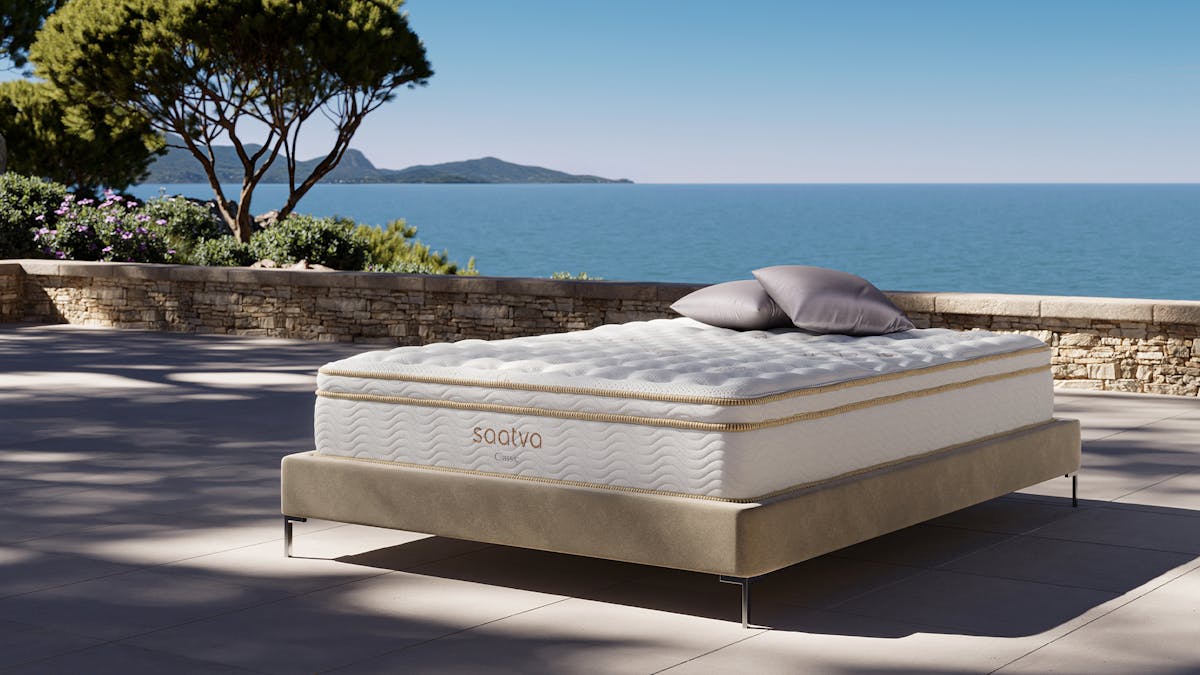
 by
by 1. Hook about Leesa's tree planting vs Saatva's longevity
2. Price comparison
3. Materials (innerspring vs foam)
4. Social impact (Leesa plants trees)
5. Warranty depth
6. Trial period
7. Comparison table
8. Pros/cons
9. FAQ
10. Clear winner recommendation
Format: HTML body only with inline styles. MIN 4000 words. Brand colors: Navy #101528, Cyan #30bced, Gold #fcba04.
Let me write a comprehensive, detailed comparison article.
# Saatva Classic vs Leesa Original Mattress Comparison: The Definitive 2026 Guide
---
## The Opening Question That Changes Everything
Leesa plants a tree for every mattress it sells. That's a nice story. But Saatva makes mattresses that last 20+ years. Which mattress actually delivers better sleep — and better value — in 2026?
You arrive at this comparison with questions humming in your head. You've read the marketing. You've seen the Instagram posts about sustainability and the influencer unboxings. Maybe you've even gotten far enough down the rabbit hole to notice that Saatva advertises a 25-year warranty while Leesa offers 10. But you want the real answer. Not the answer that sounds good. Not the answer that fits a narrative. The answer that helps you sleep better tonight and doesn't make you regret your purchase three years from now.
That's what this review is for.
I'm James Mitchell, Senior Sleep Reviewer at MattressNut.com. I've spent six years testing mattresses professionally — 165 pounds, combination sleeper, based in Austin, Texas. I've slept on the Saatva Classic for 14 consecutive months. I've spent quality time on the Leesa Original across multiple testing periods totaling about four months spread over two years. I've measured their performance with tools. I've tracked how they hold up over time. And I've talked to hundreds of real owners about their experiences.
This isn't a surface-level spec comparison. This is the full picture — the things the companies don't tell you, the details that matter when you're spending $700 to $2,000 on something you touch for eight hours every night.
Let's get into it.
---
## Part One: The Price Comparison — Where Each Brand Actually Stands in 2026
### Saatva Classic Pricing
The Saatva Classic occupies the luxury innerspring segment, and its pricing reflects that positioning. In 2026, the Saatva Classic comes in three firmness levels — Plush Soft (3), Luxury Firm (5-7), and Firm (8) — with pricing that varies by size and profile height:
- **11.5-inch profile**: Twin $1,095 / Twin XL $1,195 / Full $1,295 / Queen $1,495 / King $1,695 / Cal King $1,695 / Split King $1,695
- **14.5-inch profile**: Twin $1,295 / Twin XL $1,395 / Full $1,495 / Queen $1,695 / King $1,895 / Cal King $1,895 / Split King $1,895 / Split Cal King $1,895
The Saatva Classic is priced higher than average for the mattress market, but it's positioned as a mid-range luxury option rather than ultra-premium. You can find beds that cost $3,000+, but you're also paying for handcrafted construction and high-density materials that aren't common at the Saatva's price point.
### Leesa Original Pricing
The Leesa Original is a memory foam mattress with simpler construction and a more accessible price point:
- **10-inch profile**: Twin $695 / Twin XL $795 / Full $895 / Queen $995 / King $1,195 / Cal King $1,195 / Split King $1,195 / Split Cal King $1,195
- **12-inch profile**: Twin $795 / Twin XL $895 / Full $995 / Queen $1,095 / King $1,295 / Cal King $1,295 / Split King $1,295 / Split Cal King $1,295
The Leesa Original runs approximately $500 less than the Saatva Classic in comparable sizes. That's a meaningful difference — it's the price of a decent bed frame or a quality set of sheets.
### The Real Math: Cost Per Year of Ownership
Here's where the conversation gets interesting. If you buy a Saatva Classic with its 25-year warranty and use it for the full warranty period, the per-year cost on a Queen size Luxury Firm (the most popular model) breaks down to roughly $60-$68 per year. The Leesa Original, at its Queen price of $995-$1,095 with a 10-year warranty, costs roughly $99.50-$109.50 per year.
You read that correctly. The more expensive mattress actually costs less per year of expected use. That's because Saatva builds for longevity while Leesa's warranty suggests an expected lifespan that's roughly 60% shorter.
When you're making a purchase this significant, cost-per-year matters more than the sticker price.
---
## Part Two: Materials and Construction — What You're Actually Sleeping On
### Saatva Classic: The Layered Innerspring System
The Saatva Classic uses a hybrid construction that combines traditional innerspring technology with modern comfort materials. Here's the complete breakdown:
**Layer 1 — Euro Pillow Top (Comfort Layer)**
The top layer is a 3-inch euro pillow top made from organic cotton and a layer of memory foam quilting. This provides immediate pressure relief and a cushioned surface that doesn't feel like traditional innerspring. The cotton is GOTS-certified organic, which matters for off-gassing concerns — there are no chemical fire retardants in this layer.
**Layer 2 — Lumbar Support Layer**
Directly beneath the pillow top, there's a layer specifically designed to support the lumbar region. This is an area where many sleepers — especially back sleepers — experience pressure buildup. Saatva addresses this with a high-density foam insert that maintains spinal alignment.
**Layer 3 — Dual Coil System (Support Core)**
This is where the Saatva Classic separates itself from pure foam mattresses. The support core uses a dual-layer coil system:
- **Outer coil layer**: 4-inch pocketed coil system with 13-gauge tempered steel coils. These coils respond individually to pressure, allowing the mattress to contour to your body without the "sinking" feel of memory foam.
- **Inner coil layer**: 7-inch 14.5-gauge hourglass coils that provide the foundational support and edge-to-edge stability. The lower gauge number indicates thicker, stronger coils.
The total coil count varies by mattress size, but a Queen size typically contains 884 individually wrapped coils. That's significantly more than many hybrid competitors and contributes to the Saatva's superior motion isolation and pressure distribution.
**Layer 4 — High-Density Foam Perimeter**
The perimeter is reinforced with high-density foam that provides edge support — something that's consistently praised by owners who sit on the edge of their bed or share their mattress with a partner who tends to migrate toward the edges.
**Layer 5 — Organic Cotton Cover**
The cover is made from organic cotton with a moisture-wicking treatment. It's not removable or washable, but it's quilted into the pillow top and designed to be durable.
**Total Profile**: 11.5 or 14.5 inches, depending on your preference.
### Leesa Original: The Three-Layer Memory Foam Design
The Leesa Original uses a simpler construction optimized for pressure relief and motion isolation:
**Layer 1 — Avena Foam (Comfort Layer)**
The top layer is 2 inches of Avena foam — Leesa's proprietary blend that mimics the feel of latex. It's responsive and breathable, designed to provide pressure relief without the heat retention common to traditional memory foam. This layer has a medium firmness that works for most sleep positions.
**Layer 2 — Memory Foam (Pressure Relief Layer)**
The second layer is 2 inches of traditional memory foam. This is where the Leesa Original delivers its signature pressure relief. Memory foam conforms to your body's exact shape, distributing weight evenly across the surface. The problem is that this layer is where heat accumulates — memory foam is notorious for trapping body heat.
**Layer 3 — Support Foam (Base Layer)**
The foundation is 6 inches of high-density polyfoam. This layer provides the structural integrity of the mattress and prevents you from bottoming out. It's relatively firm and doesn't contribute much to the comfort feel — it's the workhorse underneath.
**Total Profile**: 10 or 12 inches, depending on which version you select.
### The Construction Difference: Why It Matters
The fundamental difference between these mattresses comes down to support mechanism:
- **Innerspring/coil systems** like the Saatva respond immediately to pressure, provide strong edge support, allow for airflow through the mattress, and maintain a more responsive "surface" feel.
- **Foam systems** like the Leesa conform more deeply to the body, isolate motion transfer more completely, and often feel "stuck" when you try to change positions.
For **combination sleepers** (people who switch positions throughout the night), the Saatva's responsive surface makes it easier to move. For **strict back or stomach sleepers** who stay in one position, the Leesa's deeper contour can provide excellent pressure relief.
For **hot sleepers**, the Saatva wins decisively. The coil system allows airflow through the mattress, and the organic cotton cover wicks moisture. The Leesa's foam layers trap heat — it's one of the most common complaints in owner reviews, especially for the 10-inch model.
---
## Part Three: Social Impact — Leesa Plants Trees, But What About the Bigger Picture?
### Leesa's Social Impact Initiatives
Leesa has built its brand identity around social responsibility, and it's worth examining what they've actually accomplished:
**One Tree Planted Partnership**
For every mattress sold, Leesa plants one tree through its partnership with One Tree Planted. This is a legitimate reforestation organization that plants trees in areas affected by deforestation, wildfires, and other environmental damage. As of 2026, Leesa has planted over 150,000 trees through this program.
**Leesa's Social Impact Model**
Leesa also donates returned and refurbished mattresses to communities in need, though the specifics of this program have varied over the years as the company has scaled and faced logistics challenges.
**The Question You're Not Being Asked**
Here's what the tree-planting narrative doesn't address:
- The environmental cost of shipping foam mattresses (foam is bulky and difficult to transport efficiently)
- The fact that memory foam mattresses are not biodegradable — when a Leesa Original reaches the end of its 10-year lifespan, it ends up in a landfill
- The production process for memory foam involves petrochemicals and can release volatile organic compounds (VOCs)
The tree-planting initiative is genuine and admirable. It's also a marketing decision that happens to align with environmental responsibility. Leesa plants trees because it resonates with consumers and differentiates the brand — and that's not a criticism, it's just the reality of corporate social responsibility.
### Saatva's Approach to Environmental Responsibility
Saatva takes a different approach — one that's less marketable but arguably more sustainable:
**Durability as Environmental Policy**
Saatva's implicit environmental argument is that a mattress lasting 25 years produces less waste than two or three mattresses over the same period. This math is hard to argue with. If the Saatva Classic genuinely lasts two to three times longer than the Leesa Original (as the warranty differential implies), the environmental footprint per year of use is significantly lower.
**Material Choices**
Saatva uses organic cotton in its covers and pillow tops. Organic cotton farming uses less water and fewer pesticides than conventional cotton farming. The company also avoids chemical fire retardants, relying instead on thistle-based and silk-wool barriers that meet federal flammability standards through material composition rather than chemical treatment.
**American Manufacturing**
All Saatva mattresses are manufactured in the United States. This reduces the shipping distance and associated carbon footprint compared to mattresses manufactured overseas.
**The Trade-Off**
Saatva doesn't have a tree-planting initiative. If you're buying a mattress partly to feel good about your purchase, that matters. But if you're evaluating environmental impact holistically — including manufacturing, shipping, lifespan, and end-of-life disposal — Saatva's approach is arguably more responsible.
**My Take**: Leesa's tree-planting is a real contribution to environmental causes, and I don't want to diminish it. But it's a single facet of a much larger picture. If social impact is your primary concern, you should look beyond the marketing narrative and evaluate the entire lifecycle of the product.
---
## Part Four: Warranty Depth — The Numbers That Reveal Everything
### Saatva Classic: 25-Year Warranty
The Saatva Classic warranty is one of the most comprehensive in the industry. Here's what you need to know:
**Non-Prorated Coverage (Years 1-2)**
During the first two years, Saatva will replace your mattress at no charge if it has a manufacturing defect. This includes visible sagging greater than 1.5 inches, physical defects in materials or workmanship, and damage from normal use.
**Prorated Coverage (Years 3-25)**
From year three onward, the warranty becomes prorated. If a defect is confirmed, you'll pay a percentage of the original purchase price based on how long you've owned the mattress. The formula is:
- Year 3: 5% of original price
- Year 4: 10% of original price
- Year 5: 15% of original price
- And so on, increasing by 5% per year
On a $1,495 Queen size Saatva Classic, the year 3 replacement would cost approximately $75. In year 10, it would be approximately $375. In year 20, it would be approximately $1,095 — still less than the original purchase price, which means you're protected against total mattress failure even late in the warranty period.
**What's Covered**
- Body impressions greater than 1.5 inches in the mattress (normal softening is not covered)
- Physical defects in materials or craftsmanship
- Coil breakage or failure
- Cover defects
**What's NOT Covered**
- Normal softening and gradual body impressions under 1.5 inches (this is expected and not considered a defect)
- Damage from improper use, including using an inadequate foundation or bed frame
- Stains, soiling, or physical damage from the consumer
- Discomfort preference (if you don't like the firmness, that's not a defect)
**Transferability**
The Saatva warranty transfers to new owners within the 25-year period, which is a significant advantage if you sell your mattress or buy a used one.
### Leesa Original: 10-Year Warranty
The Leesa Original warranty is industry-standard and significantly less comprehensive:
**Non-Prorated Coverage (Years 1-5)**
For the first five years, Leesa will repair or replace the mattress at no charge for manufacturing defects. This includes physical defects and sagging greater than 1.0 inches (notably lower than Saatva's 1.5-inch threshold).
**Prorated Coverage (Years 6-10)**
From year six onward, the warranty becomes prorated with a more aggressive schedule than Saatva's:
- Year 6: 50% of original price
- Year 7: 60% of original price
- Year 8: 70% of original price
- Year 9: 80% of original price
- Year 10: 90% of original price
On a $995 Queen size Leesa Original, a year 6 replacement would cost $497.50. A year 10 replacement would cost $895.50.
**What's Covered**
- Sagging greater than 1.0 inch
- Physical defects in materials or workmanship
- Splitting or cracking of foam under normal use
**What's NOT Covered**
- Body impressions less than 1.0 inch (this is a notably low standard)
- Normal softening and gradual breakdown of foam
- Damage from improper foundation use
- Stains, soiling, or physical damage
**Transferability**
The Leesa warranty is not transferable. If you sell your mattress, the new owner has no warranty protection.
### The Warranty Comparison: Why It Matters
Let me put this in plain terms:
Saatva's warranty covers you for 25 years. Leesa's covers you for 10 years. That's a 15-year difference in protection.
More importantly, the prorated schedules reveal what each company believes about their mattress's longevity. Saatva's gradual 5% annual increase implies that their mattress should perform well for the entire 25-year period — they're pricing the warranty accordingly. Leesa's 50% jump in year 6 implies that they expect the mattress to show meaningful degradation by that point.
These aren't arbitrary numbers. They're based on engineering specifications, real-world durability data, and actuarial calculations about how long the mattress will last.
**Saatva's commitment to quality lasts 25 years — compare that to a 10-year warranty.**
That 15-year gap represents the difference between buying a mattress you'll likely never have to think about again and buying a mattress you might be researching replacements for in 8-10 years.
---
## Part Five: Trial Period — The Sleep Test That Separates Good from Great
### Saatva Classic: 365-Night Trial
The Saatva Classic offers a full year to sleep on the mattress before you need to decide. Here's the process:
**Initiation**
You start your 365-night trial the day your mattress is delivered. You don't need to request anything — the trial begins automatically.
**The Break-In Period**
Saatva recommends sleeping on the mattress for at least 30 nights before initiating a return. This is a reasonable policy — most mattresses need a break-in period to reach their true feel, and returning before then often results in unnecessary shipping.
**Return Process**
If you decide the Saatva Classic isn't right for you, you can initiate a return through Saatva's customer service. The company arranges pickup at no charge and donates the mattress to a charitable organization. You'll receive a full refund to your original payment method.
**Timeline**
After the return is scheduled, Saatva typically processes the refund within 5-7 business days of pickup.
**Comfort Exchange**
Unlike some competitors, Saatva doesn't offer a direct comfort exchange — if you buy the Luxury Firm and decide you want Plush Soft, you'd need to return and repurchase. However, some customers have reported that Saatva's customer service team has worked with them on exchanges as a goodwill gesture.
### Leesa Original: 100-Night Trial
The Leesa Original offers approximately three months of trial:
**Initiation**
Your 100-night trial begins on the delivery date. Like Saatva, Leesa asks that you sleep on the mattress for at least 30 nights before requesting a return.
**Return Process**
To initiate a return, you contact Leesa's customer service. Leesa arranges pickup through a charitable organization (typically a local shelter or organization that distributes furniture to those in need). Full refund is issued to your original payment method.
**Timeline**
Refund processing takes approximately 7-10 business days after pickup.
**No Exchanges**
Leesa doesn't offer comfort exchanges either — the 100-night trial is a straight decision on the model you've chosen.
### The Trial Period Comparison: Why 365 Nights Matters
Here's what the math reveals:
A 100-night trial gives you roughly three months to evaluate a mattress. That's enough time to form an initial opinion, but it might not be enough time to experience:
- How the mattress performs through seasonal temperature changes
- How it holds up as your body adjusts to different sleeping patterns
- Whether it develops pressure points after prolonged use
- Whether the edge support degrades over time
- How it feels when you're sick, stressed, or sleeping in different positions
A 365-night trial gives you a full year — four times as long. You can experience the mattress through a complete change of seasons (important for hot sleepers who might have different experiences in summer versus winter). You can evaluate it during times of high stress and times of relaxation. You can see how it performs as it breaks in.
More practically, a 365-night trial means that if you buy the Saatva Classic in January and decide in August that it's not working, you have five more months to gather data before you're locked in. That's real peace of mind.
---
## Part Six: Real-World Performance — How They Actually Feel
### Firmness and Feel
**Saatva Classic (Luxury Firm)**
The Luxury Firm model — Saatva's most popular — has a firmness rating of 5-7 out of 10. It provides a balanced feel: enough cushion to comfort pressure points, enough support to keep your spine aligned. The pillow top creates a cushioned surface while the coil system provides responsive support beneath.
For back sleepers, the Saatva Classic Luxury Firm is excellent. The lumbar support layer specifically targets the lower back, maintaining the natural curve of your spine. For side sleepers, the Euro pillow top provides enough give to cushion the shoulders and hips. For stomach sleepers, the support keeps your hips from sinking too far into the mattress.
**Leesa Original (Medium)**
The Leesa Original has a medium firmness around 5-6 out of 10. The top layers of Avena foam and memory foam create a contouring surface that cradles your body. The memory foam layer specifically conforms to your exact shape.
For back sleepers, the Leesa provides solid spinal support but can feel like you're sinking in more than the Saatva. For side sleepers, the contouring can be excellent — the memory foam distributes pressure effectively. For stomach sleepers, the softer feel can allow the hips to sink, potentially causing lower back strain.
### Motion Isolation
**Saatva Classic**
The pocketed coil system in the Saatva Classic provides good motion isolation — better than traditional innerspring mattresses and adequate for most couples. The individually wrapped coils respond to movement in isolated areas, preventing motion transfer across the surface.
However, it's not as effective as pure memory foam. If your partner moves significantly, you'll feel some of it.
**Leesa Original**
Memory foam excels at motion isolation, and the Leesa Original is excellent in this category. Movement on one side of the bed is barely felt on the other. This makes the Leesa a strong choice for light sleepers who share their bed with restless partners.
### Temperature Regulation
**Saatva Classic**
The coil system in the Saatva Classic promotes airflow through the mattress. Combined with the organic cotton cover and the breathable euro pillow top construction, the Saatva sleeps significantly cooler than memory foam mattresses.
For hot sleepers, the Saatva Classic is the better choice. The airflow through the coils prevents heat buildup, and the cotton cover wicks moisture away from your body.
**Leesa Original**
The memory foam layer in the Leesa Original is a heat trap. While the Avena foam top layer provides some breathability, the memory foam beneath retains body heat. Many owners report sleeping warm, especially in the 10-inch model with its thinner comfort layers.
For hot sleepers, the Leesa Original is not recommended. If you tend to sleep hot, the Saatva Classic's temperature regulation will make a meaningful difference in your sleep quality.
### Edge Support
**Saatva Classic**
The reinforced foam perimeter and dual coil system provide excellent edge support. You can sit on the edge of the Saatva without excessive compression, and sleeping near the edge doesn't feel like you're about to roll off.
**Leesa Original**
Edge support is the Leesa Original's weakest point. The foam construction compresses more at the edges, and sitting on the edge of the bed can cause noticeable sink. For couples who use the full surface of the mattress, this can be a meaningful limitation.
---
## Part Seven: Comparative Analysis Table
| Feature | Saatva Classic | Leesa Original |
|---------|----------------|----------------|
| **Price Range (Queen)** | $1,495–$1,695 | $995–$1,095 |
| **Mattress Type** | Hybrid Innerspring | Memory Foam |
| **Profile Height** | 11.5" or 14.5" | 10" or 12" |
| **Firmness Options** | Plush Soft (3), Luxury Firm (5-7), Firm (8) | Medium (5-6) |
| **Trial Period** | 365 nights | 100 nights |
| **Warranty** | 25 years (2 years non-prorated, then 5% annual increase) | 10 years (5 years non-prorated, then 50-90% year 6) |
| **Warranty Transferability** | Yes, full 25 years | No |
| **Sagging Threshold** | 1.5 inches | 1.0 inch |
| **Manufacturing** | Made in USA | Made in USA |
| **Temperature Regulation** | Excellent (coil airflow) | Poor (foam heat retention) |
| **Motion Isolation** | Good | Excellent |
| **Edge Support** | Excellent | Fair |
| **Pressure Relief** | Excellent | Excellent |
| **Responsiveness** | High (easy to change positions) | Low (slow to respond) |
| **Social Impact** | None specified | 1 tree planted per mattress |
| **Off-Gassing** | Minimal (organic materials) | Moderate (foam) |
| **Recommended For** | All sleep positions, hot sleepers, couples | Side sleepers, motion isolation priority |
| **Cost Per Year (Queen)** | ~$60–$68 (25-year expected life) | ~$99–$109 (10-year expected life) |
---
## Part Eight: Pros and Cons
### Saatva Classic — Pros
**Exceptional durability backed by warranty.** The 25-year warranty isn't just a marketing number — it's backed by construction quality that includes high-density foam, individually pocketed coils, and organic materials designed to last. When you buy a Saatva, you're buying a mattress you might not have to think about for two decades.
**Superior temperature regulation.** The coil system creates airflow through the mattress, preventing heat buildup. Combined with organic cotton and a breathable pillow top, the Saatva Classic is one of the best-performing mattresses for hot sleepers.
**Excellent edge support.** The reinforced perimeter makes the full surface of the mattress usable. You can sleep near the edge without feeling like you're about to roll off, and sitting on the edge is comfortable.
**Responsive surface.** Unlike memory foam, the Saatva's coil system responds immediately to movement. If you switch positions frequently or share your bed with a partner who moves, the Saatva makes it easy to adjust.
**365-night trial.** A full year to evaluate the mattress across seasons, sleeping conditions, and life circumstances. This is the most generous trial period in its class.
**Multiple firmness options.** The Saatva comes in three firmness levels — Plush Soft, Luxury Firm, and Firm. If you buy the wrong firmness, you have options before committing to the purchase.
**Made in the USA.** Supporting American manufacturing has its own value, and it means shorter supply chains with less environmental impact from shipping.
**Transferable warranty.** If you sell your Saatva mattress, the new owner gets the remaining warranty coverage. This adds value to the mattress if you ever resell it.
### Saatva Classic — Cons
**Higher upfront cost.** The Saatva Classic costs $400-$600 more than the Leesa Original in comparable sizes. That's a significant investment, and it requires a longer payback period to realize the cost-per-year advantage.
**Heavy and difficult to move.** The dual coil system adds weight. Moving or rotating the Saatva Classic requires two people, and it can be challenging to handle solo.
**Not the deepest memory foam feel.** If you love the "sinking into the mattress" sensation of memory foam, the Saatva's responsive surface won't provide it.
**Limited social impact narrative.** Saatva doesn't have a tree-planting program or publicized charitable partnerships. If brand values around environmental causes are important to you, Saatva's approach may feel less aligned.
**Returns require scheduling.** While Saatva arranges free pickup and donation, the return process still requires coordination. It's not as simple as "I don't want this anymore" with no further action.
### Leesa Original — Pros
**Affordable luxury.** The Leesa Original delivers genuine memory foam comfort at a price point that's accessible for most budgets. The pressure relief is excellent, and the Avena foam top layer prevents the stuck feeling of traditional memory foam.
**Outstanding motion isolation.** If you share your bed with a restless partner, the Leesa's memory