
 by
by SIDS (sudden infant death syndrome) and sleep-related infant deaths claim approximately 3,500 lives annually in the United States. The American Academy of Pediatrics publishes evidence-based safe sleep guidelines that, when followed consistently, significantly reduce this risk. This guide explains every major guideline, the evidence behind it, and how to implement it.
Our Recommendation
Saatva Youth — firm infant side meets AAP safe sleep standards
Affiliate disclosure: We may earn a commission if you purchase through our links at no extra cost to you.
The Core Guidelines
1. Back to Sleep for Every Sleep
Always place infants on their backs for sleep, including daytime naps, until age 1. This is the most impactful single intervention in safe infant sleep. The Back to Sleep campaign launched in 1994 contributed to a 50% or greater decline in SIDS rates in the following decade.
The mechanism: infants sleeping on their stomachs are more difficult to arouse from deep sleep and can rebreathe exhaled air containing elevated carbon dioxide when face-down on a soft surface. Infants who roll to their stomach independently can remain there after rolling, but should always be placed on their backs to start sleep.
2. Firm, Flat Sleep Surface
Use a firm mattress in a safety-approved crib, bassinet, or play yard. Soft surfaces allow the infant's face to sink and create a depression that traps exhaled carbon dioxide. The surface must be flat: the CPSC now prohibits infant sleep products with inclines exceeding 10 degrees following documented deaths in inclined sleepers.
A firm surface does not deform when pressed with an open palm and springs back immediately when pressure is released. Crib mattresses should fit snugly within the crib frame, leaving less than 2 finger widths of gap on any side.
3. No Soft Objects in the Sleep Area
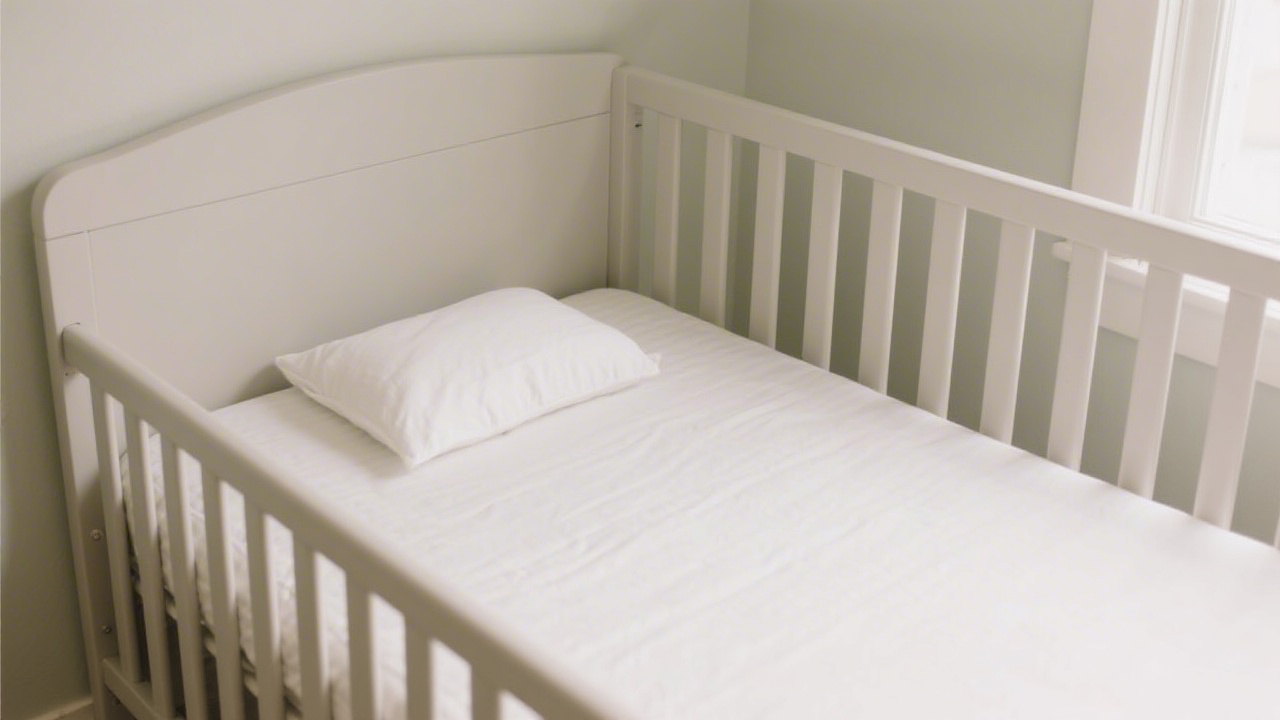
Keep the sleep surface clear. No pillows, blankets, bumper pads, sleep positioners, stuffed animals, or wedges. The only exception is a fitted sheet over the mattress. Sleep sacks replace loose blankets safely.
This guideline is frequently violated in marketing photography, which regularly shows cribs with decorative bumpers, quilts, and stuffed animals. Marketing images do not reflect safe sleep standards.
4. Room Sharing Without Bed Sharing
The AAP recommends that infants sleep in the parents' room, on a separate surface, for at least 6 months and preferably for the first year. Room sharing without bed sharing reduces SIDS risk by approximately 50%. Bed sharing with adults, particularly on soft mattresses, with pillows, or in environments where the adult has consumed alcohol or sedating medication, significantly increases suffocation risk.
This guideline is nuanced. Some research suggests that breastfeeding mothers who fall asleep while nursing and bed-share on a firm surface with no other risk factors face lower absolute risk than when a sedated or alcohol-impaired adult shares a soft surface with an infant. The AAP recommends room sharing as the safer default.
5. No Smoking in the Infant's Environment
Maternal smoking during pregnancy increases SIDS risk 2 to 3 fold. Secondhand smoke exposure after birth is an independent risk factor. No smoking in any space where the infant sleeps or spends time.
6. Offer a Pacifier at Nap and Bedtime
Pacifier use at sleep onset is associated with a reduced SIDS risk. The proposed mechanism involves the pacifier maintaining a slightly more forward tongue position and a slightly raised arousal threshold set point. Introduce after breastfeeding is well established (typically 3 to 4 weeks). Do not reinsert if it falls out during sleep.
Setting Up a Fully Safe Sleep Environment
Step 1: Purchase a CPSC-compliant crib or bassinet. Check recall status at recalls.gov before purchasing secondhand equipment. Do not use cribs manufactured before 2011 (drop-side crib recall).
Step 2: Select a firm crib mattress with a waterproof cover. Install it with a snug fit to the crib frame.
Step 3: Place the crib in the parents' bedroom. Position it away from window cords, curtain strings, and electrical outlets.
Step 4: Remove all soft items from the crib. Add only a single fitted sheet.
Step 5: Use a sleep sack rated to the room temperature instead of blankets.
Step 6: Set room temperature to 68 to 72 degrees Fahrenheit. Overheating is an independent SIDS risk factor.
Frequently Asked Questions
What does back to sleep mean for infants?
Back to sleep means placing the infant on their back for every sleep, including naps, until age 1. The American Academy of Pediatrics first recommended this position in 1992. Between 1992 and 2001, the SIDS rate in the US declined by more than 50%. Side and stomach sleeping increase the risk of rebreathing exhaled carbon dioxide and reduce the infant's ability to arouse from sleep when breathing is compromised.
Can I use a bedside bassinet for safe sleep?
Yes, with conditions. The bassinet must have a firm, flat sleep surface rated to CPSC standards. Inclined surfaces exceeding 10 degrees are not safe. The bassinet should be empty except for the infant with a fitted sheet. Side-car or bedside co-sleepers that attach to the adult bed are acceptable only if there is no gap between the bassinet and bed mattress and the infant cannot roll into the adult sleeping space.
When is it safe to add a pillow or blanket to the crib?
The AAP recommends keeping the crib free of soft objects including pillows, blankets, bumpers, and stuffed animals for the entire first year. After 12 months, when the infant can roll and reposition independently, a single small pillow and a light blanket become appropriate. A sleep sack remains a safer alternative to a loose blanket until age 3.
What is room sharing without bed sharing?
Room sharing without bed sharing means placing the infant's sleep surface (crib, bassinet, or play yard) in the parents' bedroom rather than in a separate nursery, without placing the infant in the adult bed. The AAP recommends this arrangement for at least the first 6 months, preferably 1 year. Room sharing is associated with a 50% reduction in SIDS risk compared to solitary room sleeping.
Why are bumper pads unsafe?
Bumper pads were originally designed to prevent infant limbs from getting caught between crib slats when crib slat spacing was wider. Modern CPSC-compliant cribs have slat spacing of 2 and 3/8 inches or less, which eliminates entrapment risk but does not require bumpers. Bumpers pose suffocation risk when infants press their faces against them, and are associated with infant deaths. Several US states have banned their sale.