
 by
by Scandinavian Sleep Rankings: The Data
Nordic countries consistently outperform other regions in global sleep quality metrics. The 2024 Sleep Health Index (National Sleep Foundation) ranks Finland, Norway, and Sweden in the top 5 globally for self-reported sleep quality. The 2023 Philips Global Sleep Survey found that 74% of Swedes reported feeling rested most mornings, versus 54% of Americans.
This is not accounted for by genetics. Research comparing Scandinavian populations who have emigrated to the US shows their sleep quality declines within 2-3 years of adoption of American schedules and sleep culture -- pointing squarely to behavioral and environmental factors.
The Two-Duvet Method
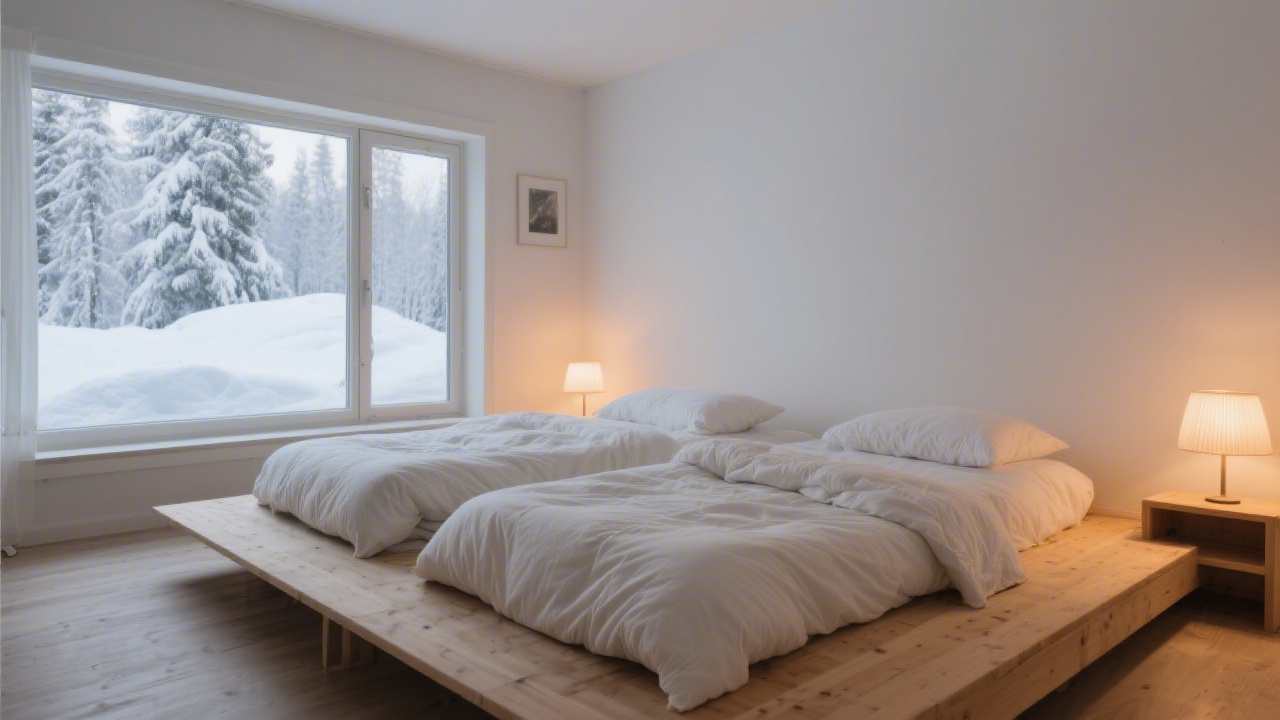
The most exported Scandinavian sleep practice: instead of sharing a single duvet, each person in a couple uses their own. In Sweden and Denmark, this is the default -- shared bedding is the exception, not the rule.
The practical benefits:
- Independent temperature regulation (no compromise between a warm and cold sleeper)
- No nighttime blanket redistribution (a significant sleep disruption source)
- Each person can choose a duvet weight appropriate for their body temperature (400-fill lightweight vs. 650-fill heavyweight)
Implementation in the US: buy two twin/full-size duvets and place them on a king or queen bed. For more on the specific method, see our Scandinavian sleep method guide.
Outdoor Infant Napping: The Nordic Practice
In Denmark, Sweden, Norway, and Finland, it is standard -- not exceptional -- to leave infants napping in prams outside year-round. Danish daycare facilities (dagpleje) have outdoor pram bays.
The research basis:
- A 2012 University of Oulu study found Finnish infants napping outdoors slept significantly longer (average 1h16m longer per nap) than those napping indoors
- Cold, fresh air increases metabolic rate slightly and appears to enhance sleep-promoting adenosine accumulation
- Cultural habituation: infants accustomed to outdoor napping from birth show reduced arousal response to outdoor stimuli
Blue-Light Awareness and Screen Culture
Sweden's Public Health Agency issued blue-light and screen recommendations for children as early as 1997 -- two decades before the rest of the world began discussing it. Norwegian schools have implemented device-free evenings as a health initiative since 2009.
The contrast with US norms is significant: a 2022 American Academy of Pediatrics survey found 61% of American children ages 6-12 use screens within an hour of bedtime, versus 18% of Swedish children in a comparable study.
Structured Bedtimes and the Lagom Principle
Scandinavian sleep culture is shaped by lagom -- a Swedish concept meaning "just the right amount" -- applied to sleep as a principle of sufficiency without obsession. Consistent, adequate sleep is viewed as a basic daily maintenance activity, like eating, rather than a performance metric.
Practical bedtime structure observed in Nordic households:
- Children's bedtimes are fixed and observed socially -- social engagements don't override child bedtime norms
- Employer culture supports early leaving to maintain family sleep schedules
- Seasonal light management: heavy blackout solutions are standard in Nordic homes to manage midnight sun during summer months
For building a structured bedtime routine at home, see our wind-down routine guide and our blackout bedroom setup. Our no-phone bedroom guide covers the US equivalent of Scandinavian screen culture practices.
Frequently Asked Questions
- What is the Scandinavian sleep method?
- The Scandinavian sleep method refers to couples using two separate duvets instead of one shared bedding. Each person has their own duvet matched to their temperature preference, eliminating the covers tug-of-war and allowing independent temperature regulation.
- Do Nordic babies really sleep outside in the cold?
- Yes. In Denmark, Sweden, Norway, and Finland, it is standard practice to leave infants napping outdoors in prams, even in sub-zero temperatures. Daycare facilities have outdoor napping areas. Research shows cold, fresh air exposure increases sleep duration and depth in infants.
- Why do Scandinavian countries have better sleep quality?
- Multiple factors: structured bedtime culture from childhood, high awareness of blue-light effects, darker winter environments that naturally preserve melatonin production, and social norms that support early, consistent sleep schedules.
- What is lagom in Scandinavian sleep culture?
- Lagom (Swedish: 'just the right amount') applies to sleep as a principle of sufficiency without excess. Scandinavian sleep culture discourages both the American over-productivity framing and anxiety-inducing 'perfect sleep' obsession. Sleep is simply a daily necessity -- consistent, unadorned, sufficient.
- Does the two-duvet method actually improve sleep for couples?
- Yes, in couples with different temperature preferences. A 2021 Swedish sleep study found couples sharing a single duvet reported 30% more nighttime awakenings from temperature discomfort than couples using individual duvets.
The Saatva Down Alternative Comforter is available in lightweight, medium, and warm versions -- ideal for implementing the two-duvet method.
Our Top Mattress Pick
The Saatva Classic consistently ranks #1 for comfort, support, and long-term durability.
Key Takeaways
Scandinavian Sleep Culture is a topic that depends heavily on individual needs and preferences. The most important thing is to consider your specific situation — your body type, sleep position, and personal comfort preferences — before making any decisions. When in doubt, take advantage of trial periods to test before committing.