
 by
by If you wake at 2 or 3 a.m. and cannot immediately return to sleep, you may not have insomnia. You may simply be experiencing what our ancestors considered completely normal — the natural pause between two separate episodes of sleep.
The Historical Evidence for Two-Phase Sleep
In his landmark 2001 book At Day's Close: Night in Times Past, historian A. Roger Ekirch compiled more than 500 references to a two-phase sleep pattern from sources spanning 500 years of Western history. Court documents, diaries, medical texts, and literary works from the Middle Ages through the 17th century all referenced "first sleep" and "second sleep" as ordinary, unremarkable terms.
The pattern was consistent: people went to bed shortly after dark (roughly 9–10 p.m.) and slept for three to four hours. They then woke naturally for a period of roughly one to two hours before returning to sleep until dawn. This waking interval was not considered a problem. It was, in many ways, the most intimate time of day.
What People Did During the Waking Interval
Ekirch's research reveals that the midnight hour was used for a variety of activities. Common ones included:
- Prayer and religious reflection. The Church had traditionally designated midnight for prayer; segmented sleep provided a natural opportunity.
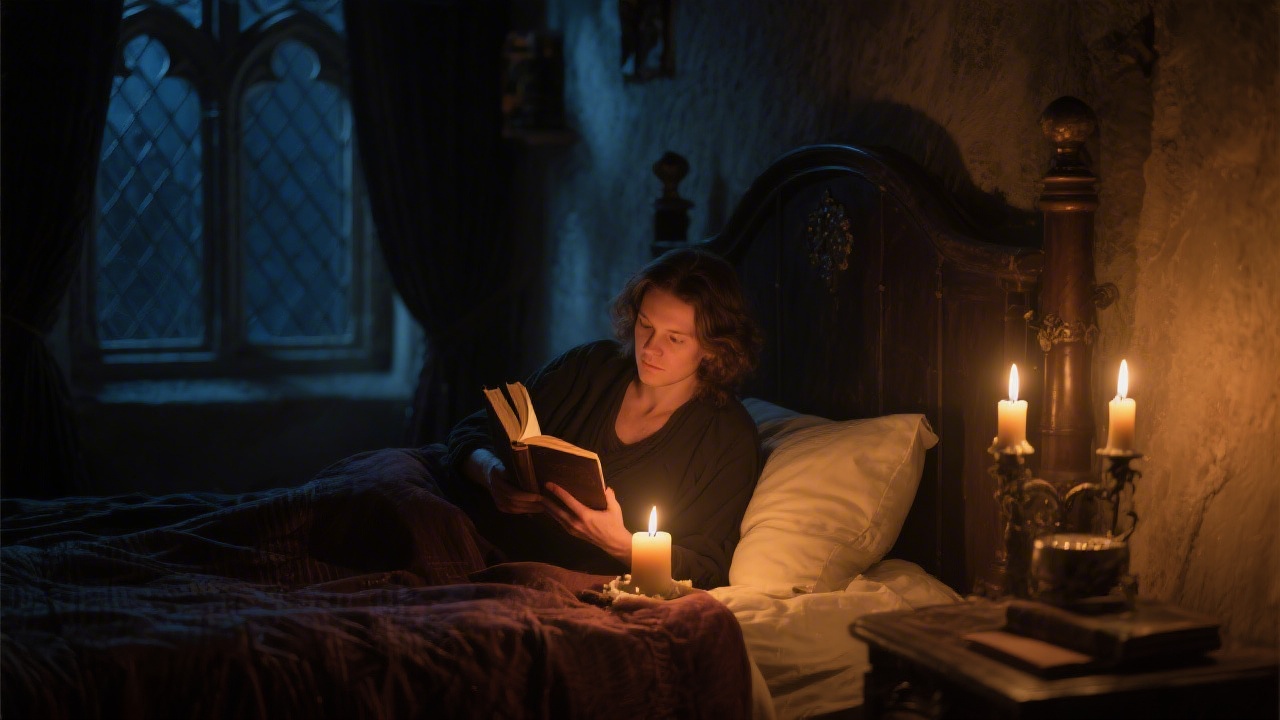
- Reading. By candlelight, literate Europeans read scripture, literature, or records.
- Sex. Medieval medical texts recommended intercourse during the waking interval, noting that both partners were refreshed from first sleep.
- Quiet conversation. Spouses, household members, or family discussed dreams, plans, or private matters.
- Light household tasks. Some added wood to fires, tended animals, or undertook small repairs.
The physician Thomas Cogan wrote in 1584 that "after the first sleep" was the ideal time for scholarly work because the mind was clear and distraction minimal.
The Biology Behind Biphasic Sleep
Ekirch's historical research found unexpected support in a 1990s sleep laboratory study by psychiatrist Thomas Wehr at the National Institute of Mental Health. Wehr removed artificial light from subjects for weeks, allowing them to experience only natural darkness. Within a few weeks, nearly all subjects spontaneously shifted to a two-phase sleep pattern — precisely matching the historical record.
The implication is significant: biphasic sleep may be the human default, suppressed only by artificial light. The waking period corresponded to elevated levels of prolactin, a hormone associated with a calm, meditative state — possibly explaining why the midnight hour was valued for prayer and reflection.
When Did Consolidated Sleep Become the Norm?
The disappearance of segmented sleep in Western Europe tracks closely with the spread of artificial lighting. Gas lighting arrived in cities in the early 19th century; electric lighting followed in the 1880s. As social and commercial life extended into the evening, bedtimes moved later. The waking interval was compressed, then eliminated. By the late 19th century, references to "first sleep" and "second sleep" had virtually vanished from the written record.
Sleep historian Ekirch notes that the medical literature of the early 20th century began pathologizing midnight waking for the first time — precisely because it was no longer culturally expected.
What This Means for Modern Insomnia
Sleep researchers have begun reconsidering whether some forms of "maintenance insomnia" — waking in the middle of the night and lying anxious and alert — represent not a disorder but a mismatch between our biology and our expectations.
If you expect to sleep eight consecutive hours and instead wake at 2 a.m., the anxiety that follows — the checking of clocks, the catastrophizing about tomorrow — may be more damaging than the waking itself. Cognitive behavioral therapy for insomnia (CBT-I) now includes a component that educates patients about natural sleep variation, including the history of segmented sleep.
Practical Takeaways
- Don't panic about waking. A brief awakening in the middle of the night has been normal for most of human history.
- Use the waking interval productively and calmly. Light reading, quiet reflection, or gentle stretching — not screen time or anxious clock-watching.
- Reduce artificial light exposure in the evening. This is the primary modern suppressor of natural sleep architecture.
- Evaluate your sleep surface. Waking repeatedly due to discomfort is a different issue — one a quality mattress can address.
Ready to improve your sleep surface?
The right mattress makes a measurable difference in sleep quality, temperature regulation, and morning recovery. The Saatva Classic is our top-rated pick for most sleepers.
Frequently Asked Questions
Key Takeaways
- The Historical Evidence for Two-Phase Sleep: a key factor in making the right sleeping decision.
- What People Did During the Waking Interval: a key factor in making the right sleeping decision.
- and cannot immediately return to sleep, you may not have insomnia.
- You may simply be experiencing what our ancestors considered completely normal — the natural pause between two separate episodes of sleep.
- The Historical Evidence for Two-Phase Sleep In his landmark 2001 book At Day's Close: Night in Times Past , historian A.
Our Top Pick: Saatva Classic
Voted best luxury innerspring mattress with exceptional lumbar support and white-glove delivery.
Check Price & AvailabilityWhat is segmented sleep?
Segmented sleep (also called biphasic sleep) is a pattern in which a person sleeps in two distinct episodes separated by a waking period of one to two hours. Historical records show this was the dominant sleep pattern in Europe before artificial lighting became widespread in the 19th century.
Is waking up in the middle of the night normal?
From a historical and biological perspective, waking briefly in the middle of the night is likely natural. Thomas Wehr's NIMH experiments showed that when humans are exposed only to natural light cycles, most spontaneously revert to a two-phase sleep pattern with a waking interval. The problem may not be the waking itself, but the anxiety modern people attach to it.
Who first documented biphasic sleep in history?
Historian A. Roger Ekirch at Virginia Tech compiled the most comprehensive historical documentation, published in his 2001 book At Day's Close. He found more than 500 references to "first sleep" and "second sleep" in pre-industrial European sources spanning five centuries.
Did the NIMH study confirm segmented sleep?
Yes. In the 1990s, psychiatrist Thomas Wehr removed artificial light from research subjects for extended periods. Most subjects spontaneously shifted to a two-phase sleep pattern within weeks, with a waking period corresponding to elevated prolactin levels and a calm, meditative state.
How do I know if my night waking is natural or a sleep disorder?
A brief, calm waking period without significant distress is likely natural. Persistent waking accompanied by anxiety, inability to return to sleep after 30+ minutes, or significant daytime impairment suggests a treatable sleep disorder. A sleep specialist or CBT-I practitioner can help distinguish between the two.