
 by
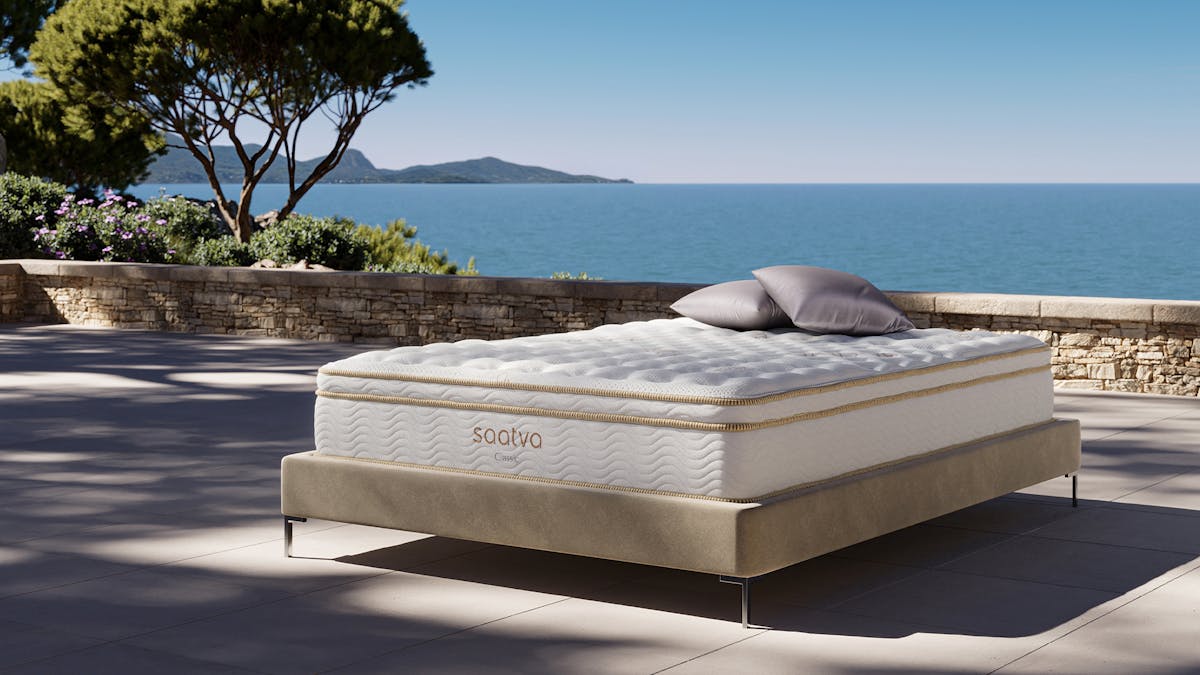
by The Serweet mattress is a budget-friendly hybrid from Amazon, available in 8, 10, and 12-inch profiles with pocket coils and gel-infused memory foam layers. It delivers solid value for the price range ($270-$460 queen), but edge support and long-term durability are genuine weaknesses. If you want a mattress that will last a decade and provide certified lumbar support, our top pick is the Saatva Classic, a dual-coil luxury hybrid with a reinforced lumbar zone, 365-night trial, and lifetime warranty.
Saatva Classic
9.2/10
- Dual-coil construction with a reinforced lumbar zone pad for active back support
- GREENGUARD Gold certified, organic cotton Euro pillow top
- Free white-glove delivery, in-room setup and old mattress removal
- 365-night home trial with lifetime warranty
- $99 return fee if you decide to send it back
- Heavier than foam mattresses, does not compress in a box
Where the Serweet is a short-term budget solution, the Saatva Classic is built for the long haul. Dual-coil support, a reinforced lumbar pad, and direct-to-consumer pricing give it a structural advantage that shows up over years of nightly use.
Serweet Mattress: What It Is
Serweet is a direct-to-consumer brand sold primarily on Amazon, positioning itself at the budget end of the hybrid mattress market. The lineup includes three heights (8, 10, and 12 inches), each with progressively more complex layer systems designed to offer varying levels of support and comfort.
The 8-inch model uses a 5-layer construction, while the 10- and 12-inch models step up to a 7-layer superior zone system. All models ship in a box and arrive ready to expand, making setup straightforward. The core draw is value: queen prices run from roughly $270 to $460, a fraction of what you pay for a luxury hybrid.
The trade-off, as we outline below, shows up in edge support, durability over time, and the absence of certifications that carry weight in the mattress industry.
Construction and Materials
The Serweet mattress layers from top to bottom include:
- Knitted fabric cover: Soft, breathable, and free of fiberglass and harmful chemicals. This is the surface you sleep on and the first layer of comfort.
- Cool gel memory foam: A layer engineered with millions of open cells to dissipate body heat. Gel infusion is a common approach in budget memory foam to counter the heat-trapping reputation of traditional foam.
- Bamboo charcoal-infused transition foam: Bamboo charcoal is used here for its moisture-absorbing and odor-neutralizing properties, a practical feature in a sealed foam environment.
- High-density comfort foam: A denser foam layer that transitions between the softer top and the spring core, providing the right balance of body contouring and pushback.
- Seven-zone pocket spring system: The 10- and 12-inch models include individually wrapped pocket coils organized into seven firmness zones. The coils respond independently to different body areas, with firmer coils under the lumbar and softer ones under the shoulders.
The pocket coil count in a queen is reported at 800-plus for the hybrid models. CertiPUR-US certification is claimed on the foam layers, though buyers should verify this directly before purchase, as third-party certification databases are the most reliable source.
Comfort and Firmness
The Serweet is designed to work for back, side, and stomach sleepers. The high-density foam base and zoned pocket coils create a medium to medium-firm feel across the lineup, though firmness is not adjustable and the brand does not offer multiple firmness options within a size.
For back sleepers at average weight (130-230 lb), the seven-zone system provides reasonable lumbar support. Side sleepers benefit from the gel memory foam's pressure relief at the shoulder and hip. Stomach sleepers on the thinner 8-inch model may notice more hips-forward sinkage than ideal for spinal neutrality.
The dual-layer foam above the springs creates a medium plush feel that is closer to the contouring side of the firmness spectrum than a firm hotel mattress. This suits most sleepers but may feel too soft for heavier individuals over 230 lb who need stronger edge and lumbar reinforcement.
Cooling and Breathability
The bamboo charcoal layer and gel memory foam are Serweet's main thermal regulation features. The bamboo charcoal absorbs moisture and prevents odor buildup, while the gel memory foam's open-cell structure allows more airflow than standard closed-cell memory foam.
In practice, the pocket coil core also contributes to airflow, as the open space between coils lets air circulate through the mattress. This puts the Serweet ahead of all-foam mattresses in cooling but behind latex or advanced hybrid mattresses with dedicated airflow channels.
Hot sleepers who run very warm at night may still find the Serweet insufficiently cool over a full sleep cycle, particularly in warmer climates or without climate-controlled rooms.
Motion Isolation
Pocket coils isolate motion better than connected innerspring systems, but the Serweet's coil count and foam layers produce moderate motion isolation rather than excellent. Partners who are light sleepers or move frequently during the night may feel some transfer through the mattress.
For couples where motion isolation is a priority, a denser memory foam layer or a higher coil count hybrid is worth the additional investment. The Serweet performs adequately for partners who are heavy sleepers or do not move significantly.
Edge Support and Sagging
Edge support is one of the Serweet's documented weaknesses. The perimeter coils are not reinforced with a dedicated edge foam or steel border, so the edges compress more than the center under seated or near-edge sleeping pressure. Users who sleep close to the edge or frequently sit on the edge of the bed to dress or stand up will notice this compression.
Sagging is the second long-term concern. Like most budget mattresses, the foam layers in the Serweet are not as dense as the materials used in mid-luxury or premium mattresses. Most buyers report the mattress performing well for the first two to three years, with visible body impressions beginning to form between years four and six. The 10-year warranty covers manufacturing defects, but deep body impressions often require documentation to qualify for a claim.
Is Serweet Good for Back Pain?
For mild, non-specific lower back discomfort, the Serweet's seven-zone pocket spring system provides enough lumbar differentiation to support proper spinal alignment for average-weight sleepers. The foam comfort layers add pressure relief that complements the coil support.
For chronic back pain, herniated discs, or sciatica, the Serweet is not the right tool. The foam density and coil gauge are not engineered to the level of therapeutic support that dedicated back-pain mattresses provide. A mattress with a reinforced lumbar zone pad, a clinical medium-firm rating, and a trial long enough to properly assess its impact on pain is worth the investment.
Size Options and Pricing
| Size | Dimensions | Height Options | Price Range (USD) |
|---|---|---|---|
| Twin | 39" x 75" | 8", 10", 12" | $280-$320 |
| Full | 54" x 75" | 8", 10", 12" | $330-$430 |
| Queen | 60" x 80" | 8", 10", 12" | $360-$460 |
| King | 76" x 80" | 10", 12" | $420-$540 |
Trial, Shipping, and Warranty
Trial: Serweet ships with a 100-night sleep trial. If the mattress does not work for you, you can initiate a return, refund, or donation within the trial window.
Warranty: A 10-year limited warranty covers manufacturing defects. Note that body impressions under a specific depth threshold are not typically covered, so check the warranty terms before buying.
Shipping: Free delivery to the door, compressed and rolled in a box. Setup takes around 10-15 minutes. Full expansion to the stated height typically requires 24-48 hours.
Adjustable bed compatibility: Due to the pocket coil core, the Serweet is generally not recommended for use on an adjustable bed frame. The coil system does not flex to accommodate the articulation of adjustable bases.
Flippable: No. The Serweet is a one-sided mattress built with comfort layers on top and a support core underneath. Flipping it is not recommended.
Pros and Cons
- Budget-friendly pricing ($270-$460 queen) with pocket coil construction
- Bamboo charcoal layer adds moisture management and odor control
- Seven-zone support system in the 10" and 12" models
- Ships in a box, easy setup, 100-night trial included
- CertiPUR-US foam certification claimed
- Edge support is weak, particularly under seated pressure
- Foam density is lower than mid-luxury mattresses, limiting long-term durability
- Not compatible with adjustable bed frames
- No firmness options within a size
- Durability typically 4-6 years before body impressions develop
Who Should Buy the Serweet
- Budget-conscious shoppers who need a new mattress under $500 and plan to upgrade in a few years
- Guest room use where the mattress won't take nightly punishment from the same sleeper
- Average-weight sleepers (130-230 lb) who sleep on their back or side without specific pain conditions
- Those who prefer the feel of a hybrid (coil + foam) over an all-foam mattress at a budget price point
Who Should Avoid the Serweet
- Chronic back pain sufferers who need therapeutic lumbar support
- Heavier sleepers over 230 lb who need reinforced edges and denser foam layers
- Couples who are light sleepers and sensitive to motion transfer
- Anyone using or planning to use an adjustable bed base
- Anyone looking for a mattress to last 8-10 years with nightly use
The Serweet delivers on its value proposition as a budget hybrid under $500. The seven-zone pocket spring system and bamboo charcoal foam are real features, not just marketing. But weak edge support, limited durability, and foam density that sits below mid-luxury standards mean it is a short-term solution. If your budget allows, a mattress like the Saatva Classic at $1,095+ offers a fundamentally different durability profile, a reinforced lumbar zone, and a lifetime warranty that justifies the premium over several years.
Frequently Asked Questions
Is the Serweet mattress good quality?
For its price range (under $500 queen), the Serweet is a reasonable quality mattress with legitimate pocket coil construction and gel memory foam. The quality ceiling is capped by the foam density and coil gauge, which are optimized for cost rather than longevity. Expect solid performance for 3-5 years of nightly use.
Does the Serweet mattress have fiberglass?
Serweet does not list fiberglass as a component in its fire barrier. However, budget mattresses sold on Amazon sometimes use fiberglass in the cover as a fire retardant without prominent disclosure. Check the product listing and tag on the mattress before purchase, and do not remove the cover if you are unsure of the fire barrier material.
Is the Serweet mattress made in the USA?
Serweet has stated its mattresses are constructed in the USA. Manufacturing origin can change, so verify with current product listings or customer service if this is important to your purchase decision.
Can you use a Serweet mattress on a platform bed or slats?
Yes, the Serweet works with platform beds and slatted bases with slats no more than 3 inches apart. A solid foundation or box spring also works. Avoid adjustable bases due to the pocket coil construction.
How long does the Serweet mattress take to expand?
After unboxing and unrolling, the Serweet typically reaches its stated height within 24 to 48 hours. The mattress is usable the same night, but full expansion and off-gassing takes up to two days in a well-ventilated room.