
 by
by For couples who share a bed:
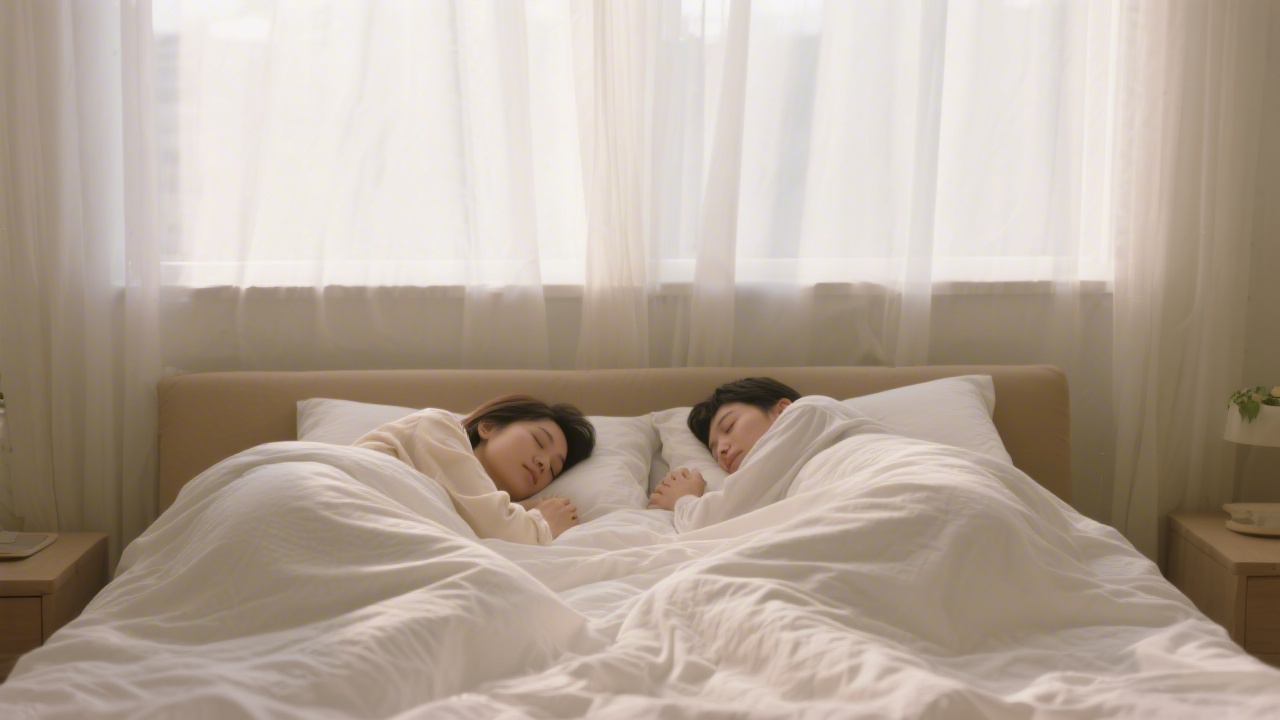
The Saatva Classic mattress minimizes motion transfer while supporting two different body types — designed for the reality of shared sleep.
The Research Is Split — Here's Why
Ask a sleep scientist whether sharing a bed is good for sleep, and the honest answer is: it depends. The research literature contains high-quality studies supporting both conclusions, and both are correct — for different populations, relationship types, and sleep environments.
Understanding which outcome applies to you requires understanding the mechanisms on both sides.
The Case for Co-Sleeping: Why Sharing a Bed Can Improve Sleep
Oxytocin and reduced arousal. Physical proximity with a romantic partner promotes oxytocin release, which reduces cortisol levels and lowers the arousal threshold that keeps anxious sleepers awake. For people with anxiety-related insomnia, a trusted partner's presence can be genuinely sedating.
Synchronized sleep architecture. A 2020 study from the University of Michigan found that couples who shared a bed showed increased REM sleep synchrony — both partners spending more time in REM simultaneously. REM sleep is associated with emotional processing and memory consolidation. Importantly, relationship quality correlated with degree of synchrony, suggesting the effect is real and not just artifact. (See also: sleep synchrony in couples.)
Safety signaling. Human sleep evolved in social environments where sleeping alone was genuinely dangerous. Partner presence may reduce baseline vigilance, allowing deeper sleep stages in people whose nervous systems respond to social safety cues.
Mental health benefits. Co-sleeping is associated with lower rates of depression and anxiety in both partners, likely through a combination of oxytocin effects and the emotional security of close proximity. Lower anxiety directly improves sleep architecture — less time in lighter stages, faster sleep onset.
The Case Against Co-Sleeping: Why Sharing a Bed Can Hurt Sleep
Movement disturbance. A study using actigraphy (wrist-worn movement sensors) found that adults sharing a bed experienced 50% more movement-related awakenings than solo sleepers. These awakenings are often brief and not consciously remembered, but they fragment sleep architecture and reduce slow-wave sleep.
Thermal incompatibility. Body temperature preferences during sleep vary significantly between individuals and are difficult to negotiate in a shared bed. One partner running warm disrupts both partners' sleep — the warm partner can't cool down, and radiated heat disrupts the cool partner's thermoregulation.
Schedule incompatibility. When partners have different chronotypes — one a morning person, one a night owl — sharing a bed creates mutual sleep disruption at both ends of the night.
Snoring and breathing disruptions. Sleep-disordered breathing affects approximately 26% of adults aged 30-70. A snoring or apnea partner is one of the most significant sources of sleep disruption reported by couples, and it doesn't habituate — the disruption remains even after years of exposure.
When Co-Sleeping Helps vs. Hurts: A Framework
Co-sleeping likely helps when:
- Both partners have similar chronotypes and sleep schedules
- Anxiety or stress-related sleep disruption is a factor for either partner
- The mattress minimizes motion transfer effectively
- Neither partner has significant sleep-disordered breathing
- The relationship is characterized by high security and low conflict
Co-sleeping likely hurts when:
- One partner snores significantly
- Partners have substantially different chronotypes
- Body temperature preferences are incompatible
- The mattress transmits movement readily
- High relationship conflict creates pre-sleep arousal
The Mattress Variable Is Larger Than Most People Think
Many couples who report poor co-sleeping quality are actually reporting poor mattress quality. A mattress that creates a "trampoline effect" — where one partner's movement is felt across the whole surface — produces the actigraphy-measured disruptions without any of the genuine incompatibility problems. Upgrading mattress quality resolves this category of co-sleeping problem entirely.
The Saatva Classic mattress uses individually wrapped coils that isolate motion between sleep zones — one partner turning over doesn't register on the other side. For couples whose co-sleeping problems are primarily mechanical, this is the most direct solution.
Is it better to sleep together or alone?
Research supports both outcomes. Sharing a bed improves sleep for many couples through oxytocin effects and reduced anxiety. For others, movement, temperature differences, schedule incompatibility, or snoring creates net disruption. The quality of the shared environment is often the deciding variable.
Does sleeping with a partner affect REM sleep?
Yes. Couples sharing a bed show increased REM synchrony — spending more time in REM simultaneously. But movement disruption can also fragment REM cycles. The net effect depends heavily on the quality of the sleep environment.
What is sleep divorce and is it healthy for relationships?
Sleep divorce means sleeping in separate rooms. For couples with significant incompatibility — snoring, different schedules, severe movement — it improves both sleep quality and relationship satisfaction. Research doesn't support the idea that it damages relationships when both partners agree.
How do you stop a partner's movement from disrupting your sleep?
A mattress with strong motion isolation — individually wrapped coils or quality memory foam — is the most direct solution. A larger bed size adds physical separation as a secondary measure.
Does co-sleeping release oxytocin?
Physical proximity and touch with a romantic partner promotes oxytocin release, which reduces cortisol and lowers the arousal threshold. This can meaningfully improve sleep onset for people with anxiety-related sleep difficulties.
Remove the mechanical barriers to co-sleeping:
The Saatva Classic mattress — motion isolation and dual comfort options so two different sleepers can share a bed without compromise.