
 by
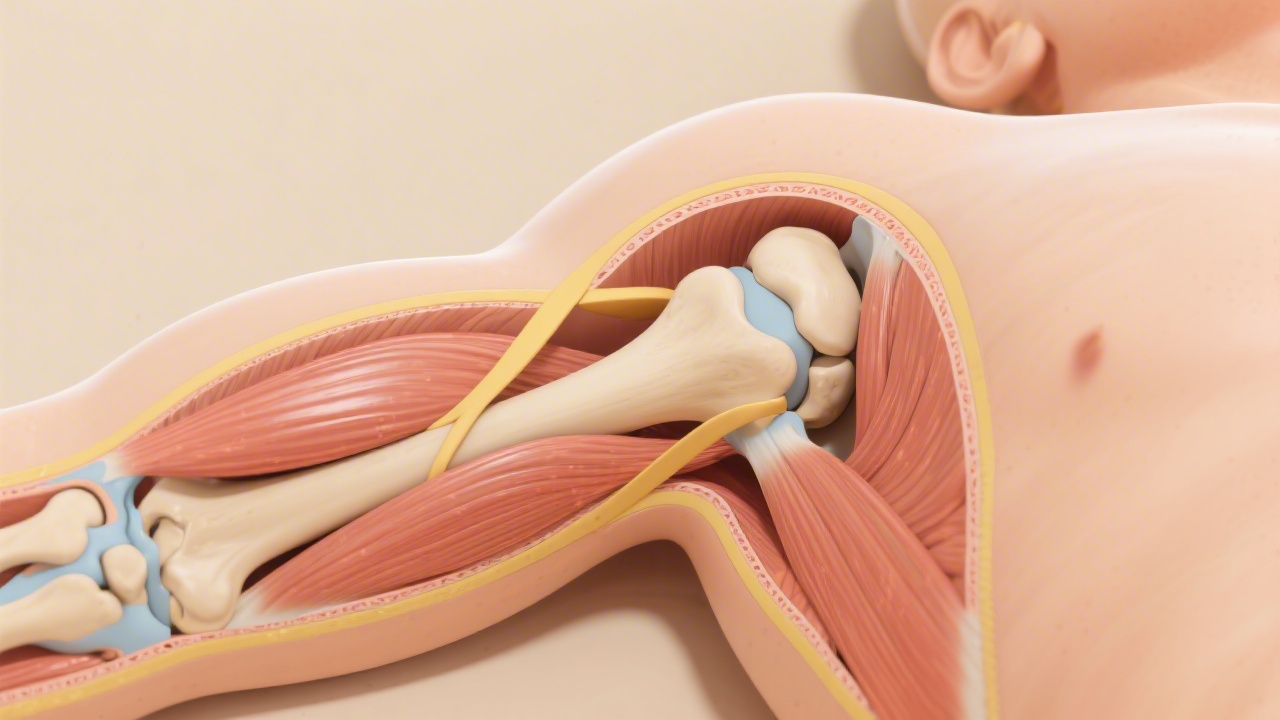
by The shoulder is the most mobile joint in the body and, consequently, one of the least stable. In side sleeping, the full weight of the torso is transmitted through the shoulder complex — the glenohumeral joint, the acromioclavicular joint, and the rotator cuff. When the mattress does not adequately accommodate shoulder width, the resulting misalignment translates directly into compressive and tensile forces on the rotator cuff, the bicipital groove, and the brachial plexus. Morning shoulder pain in side sleepers is one of the most underdiagnosed consequences of poor mattress selection.
What Correct Shoulder Alignment Looks Like
In optimal side-sleeping shoulder alignment, the glenohumeral joint is in a neutral position: the humeral head sits centrally in the glenoid fossa, the rotator cuff is at resting length, and the acromion is not impinging on the supraspinatus tendon. The shoulder blade lies flat against the ribcage rather than winging outward or rotating excessively.
Two common failure modes occur in side sleeping. The first is shoulder collapse — the shoulder rolls forward (protraction) because the mattress is too firm to accommodate it and the body naturally seeks a position of lower resistance. This brings the acromion forward, narrowing the subacromial space and impinging the supraspinatus. The second is shoulder elevation — the shoulder is pushed upward by a mattress too firm to allow sinkage, shortening the upper trapezius and elevating the scapula.
How Mattress Firmness Affects the Shoulder
Too Firm
On an overly firm mattress, the acromion (the bony point of the shoulder) cannot sink into the surface. The mattress pushes back against the shoulder with a force approximately equal to the body weight component on that side — typically 30–40% of total body weight. The body compensates by rolling the shoulder forward into protraction, which narrows the subacromial space. This is the mechanism behind impingement-pattern shoulder pain in side sleepers on firm mattresses.
Too Soft
On an excessively soft mattress, the shoulder sinks too deeply, dragging the cervical spine with it and requiring the pillow to compensate with additional loft. More significantly, when the shoulder sinks past the neutral line, the upper arm rests in an internally rotated position relative to the torso, placing the subscapularis under sustained tension and the posterior capsule under compression.
The Correct Zone
For side sleepers, medium-soft (4–4.5) is optimal for most individuals under 175 lbs — the shoulder must sink approximately 1.5–2.5 inches to reach neutral depending on shoulder width. Heavier individuals or those with broad shoulders need medium (5–5.5) to provide sufficient resistance once the shoulder has sunk to the appropriate depth. The surface must yield enough to allow sinkage, then resist further sinking with increasing firmness — the progressive resistance characteristic of quality coil systems and natural latex.
Mattress Width and Shoulder Alignment
Mattress width affects shoulder alignment in a less obvious way: narrow sleep surfaces cause side sleepers to position the shoulder closer to the edge, where support is reduced in most mattress constructions (edge support zones are typically firmer). For broad-shouldered individuals, a queen or king mattress (60 or 76 inches wide) provides sufficient room to position the shoulder over the main support zone rather than near the edge compression zone.
Pillow Height and Shoulder Interaction
The shoulder position determines the cervical spine position, which in turn determines the pillow height needed. A mattress that is too firm prevents shoulder sinkage, raising the shoulder plane and increasing the gap between the ear and the mattress — requiring a higher-loft pillow. A mattress that allows appropriate sinkage reduces this gap and requires a lower-loft pillow. This interdependency is why changing mattress firmness without also evaluating pillow loft can create a new cervical alignment problem while solving the shoulder one.
For side sleepers specifically, the pillow must bridge the distance from the mattress surface to the ear, accounting for shoulder sinkage. On a medium-soft mattress (1.5–2.5 inches of shoulder sinkage for most adults), a medium-high loft pillow (5–6 inches) is typically appropriate. On a firmer mattress with less shoulder sinkage, loft requirements increase by approximately the difference in sinkage depth.
The Under-Shoulder Position
One effective technique for reducing shoulder impingement in side sleeping is to pull the lower shoulder slightly forward and place the arm in a resting position in front of the body rather than under it. This shifts the contact point from the acromion to the anterior deltoid — a softer, fleshier surface — and opens the subacromial space. Combined with an appropriately soft mattress at the shoulder zone, this technique significantly reduces impingement-pattern pain.
The Saatva Classic in Plush Soft uses a dual-coil construction with a yielding Euro pillow top that allows shoulder sinkage of 1.5–2 inches before the coil layer increases resistance — closely matching the required accommodation range for most side-sleeping adults.
Internal Resources
- Neck Alignment During Sleep: Pillow Height and Mattress Interaction
- Pressure Points During Sleep: What They Are and How to Relieve Them
- How to Sleep With a Neutral Spine
Frequently Asked Questions
Key Takeaways
- What Correct Shoulder Alignment Looks Like: a key factor in making the right sleeping decision.
- How Mattress Firmness Affects the Shoulder: a key factor in making the right sleeping decision.
- The shoulder is the most mobile joint in the body and, consequently, one of the least stable.
- Morning shoulder pain in side sleepers is one of the most underdiagnosed consequences of poor mattress selection.
- The shoulder blade lies flat against the ribcage rather than winging outward or rotating excessively.
Our Top Pick: Saatva Classic
Voted best luxury innerspring mattress with exceptional lumbar support and white-glove delivery.
Check Price & AvailabilityWhy does my shoulder hurt after sleeping on my side?
Morning shoulder pain after side sleeping is most commonly caused by one of two mechanisms: subacromial impingement from the shoulder rolling forward on a too-firm mattress, or bicipital groove compression from the arm being trapped under the body. If the pain is sharp on shoulder elevation, impingement is likely; if it is a deep ache with numbness into the arm, nerve compression from the arm position is more likely. Both have mattress and position solutions.
Should I sleep on my good or bad shoulder if I have rotator cuff issues?
Sleep on the unaffected shoulder during acute phases — bearing weight on an inflamed rotator cuff compresses the subacromial space further. If you must sleep on the affected side, use a mattress soft enough to allow full shoulder sinkage and position the lower arm forward to open the subacromial space. Many people with rotator cuff issues find back sleeping on a medium-firm mattress is the most pain-free option during recovery.
Can a mattress topper fix shoulder pain from side sleeping?
A 2–3 inch memory foam or latex topper can meaningfully soften an overly firm mattress and restore shoulder sinkage. This is an effective partial solution if the underlying mattress has good support — the topper adds the contouring layer that allows shoulder accommodation. It does not work well on a mattress with a worn-out support core, because the shoulder sinks through the topper into the non-supportive base, losing both alignment and pressure relief.
Does arm position during side sleeping matter?
Yes significantly. The arm extended straight above the head (overhead position) places the brachial plexus under stretch and can cause numbness in the hand by morning. The arm trapped under the torso compresses the radial nerve. The optimal position is the lower arm extended in front of the body at approximately 45 degrees from the torso with the elbow gently flexed — this is the position of lowest vascular and neural compression.
How wide should my mattress be if I have broad shoulders?
Broad-shouldered side sleepers (shoulder width over 20 inches) benefit from a queen (60 inches) or king (76 inches) mattress to ensure the shoulder zone is well within the primary support area, away from the edge. Most mattresses use reinforced edge support that is firmer than the center, which can impede shoulder sinkage if you sleep near the perimeter. A wider mattress provides more functional positioning freedom.