
 by
by Our Top Mattress Pick for Better Sleep
The Saatva Classic is engineered for spinal alignment and temperature regulation — two non-negotiables for restorative sleep at any stage of a habit-building journey.
Why External Accountability Works for Sleep
Self-monitoring alone produces modest behavior change. Adding external accountability — another person, a system, or a community that will witness your compliance — amplifies the effect substantially. Research in behavior change consistently shows that external accountability increases follow-through rates by 30-65 percent depending on the accountability type and relationship.
Sleep is a domain where external accountability is particularly valuable because the benefits are largely invisible to others (no one sees you sleeping well) and the compliance behaviors happen in private at the end of the day, when motivation and executive function are at their lowest. An external commitment changes the psychological calculus: non-compliance is no longer just an internal disappointment but a visible commitment failure.
The Four Forms of Sleep Accountability
1. Partner Accountability
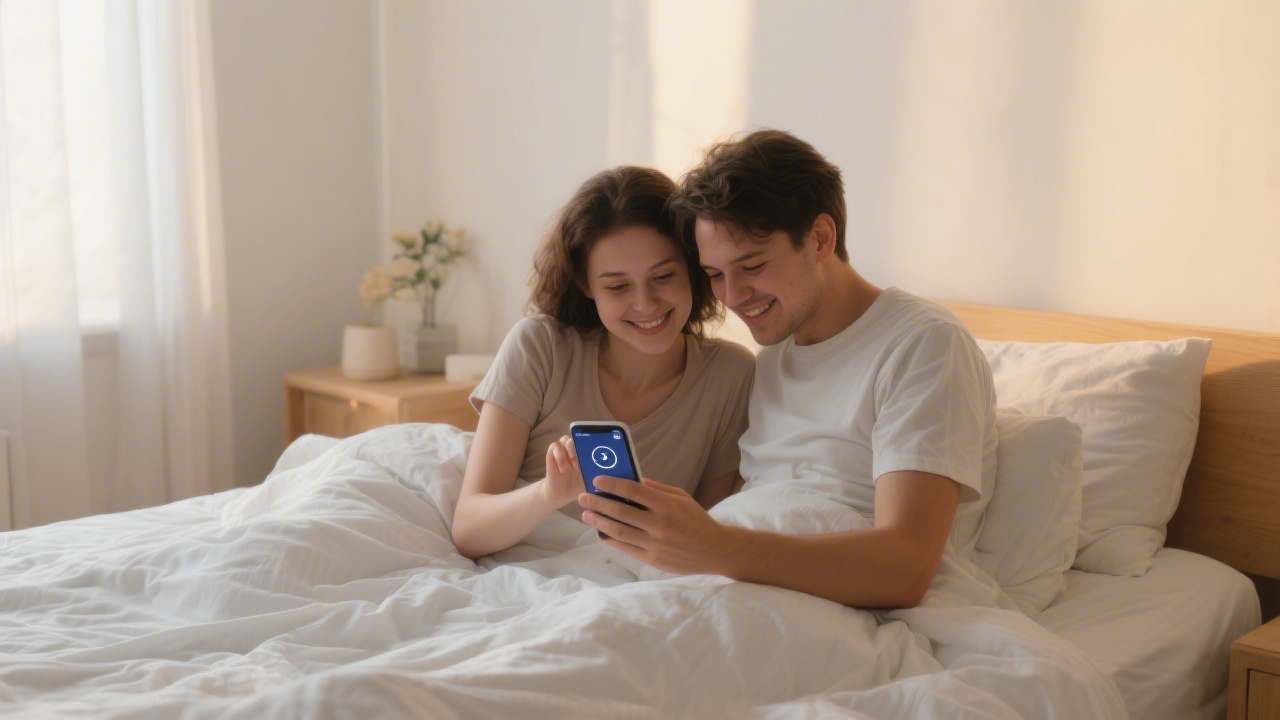
The most powerful form for people in relationships. Partners who adopt coordinated sleep schedules show significantly better long-term maintenance than those with misaligned schedules. The physical and social cues of a partner following a wind-down routine are strong environmental prompts for your own compliance.
Effective partner accountability involves: shared discussion of sleep goals and rationale, agreed-upon "lights out" timing that both parties respect, and brief weekly check-ins on sleep quality. It does not require perfect schedule alignment — a 30-minute tolerance works well — but it does require mutual acknowledgment that sleep quality is a shared household priority.
2. App-Based Tracking Accountability
Sleep tracking apps with streak mechanics and daily compliance notifications provide low-friction accountability without requiring another person. The best implementations focus on input behaviors (consistent wake time, phone-free bedroom, wind-down compliance) rather than output metrics alone.
Apps with social accountability features — where you share sleep scores or consistency streaks with a small group — combine tracking with social commitment in ways that approach the effectiveness of partner accountability for solo sleepers.
3. Professional Sleep Coaching
A qualified sleep coach or CBT-I therapist provides the most structured accountability, with weekly check-ins, behavioral protocol adjustments, and cognitive work on sleep-related beliefs. This is the appropriate level of support for clinical insomnia or when other forms of accountability have not produced adequate results.
CBT-I delivered digitally (Sleepio, Somryst) has the same evidence base as in-person CBT-I at lower cost and higher convenience. These programs include accountability check-ins, sleep diary review, and structured protocol adjustment based on your data.
4. Community Accountability
Small peer groups focused on sleep improvement — whether online communities, workplace wellness groups, or friend groups pursuing the same goals — provide a combination of social commitment and shared knowledge. Public commitment to a group is consistently more compliance-motivating than private commitment.
Effective community accountability involves: specific, measurable commitments (not "sleep better" but "consistent 6:30 AM wake time for 30 days"), regular check-ins (weekly, not daily — daily reporting can become anxiety-inducing), and a culture of non-judgment for setbacks with focus on return to protocol.
Matching Accountability Type to Sleep Problem
Not every form of accountability works equally well for every sleep problem:
- Schedule inconsistency: Partner accountability + app tracking (consistent zeitgeber inputs benefit from environmental alignment)
- Motivation collapse: Community accountability + streak-based apps (social commitment is most effective for motivation maintenance)
- Clinical insomnia or anxiety-driven waking: Professional CBT-I coach (cognitive components require trained intervention)
- Environment habits: App-based tracking is sufficient (environment changes are structural, not behavioral, so lighter accountability is adequate)
Setting Up Your Accountability System
Choose one primary accountability form and implement it fully before adding secondary layers. Over-engineered systems produce compliance burden that undermines the habits they are designed to support. One committed accountability partner or one well-chosen app, consistently used, produces better outcomes than three accountability mechanisms used sporadically.
Related guides: Sleep Motivation, Sleep Identity, Sleep Habit Stacking, Sustainable Sleep Improvement.
Frequently Asked Questions
Does having a sleep partner improve sleep outcomes?
Research on social accountability shows that sharing sleep goals with a partner increases long-term compliance by approximately 33 percent compared to solo self-monitoring. This effect is strongest when the partner actively participates (same schedule, same wind-down practices) rather than serving as a passive witness.
What sleep tracking devices are most useful for accountability?
Devices that report objective sleep continuity and consistency metrics — such as the Oura Ring, Whoop, or Garmin sleep tracking — are more useful for accountability than devices that focus on deep or REM stage percentages, which have high inter-device variability. Track consistency (same bedtime and wake time) and resting heart rate trends rather than sleep stage percentages.
Is a sleep coach worth the investment?
For people with chronic sleep issues (longer than three months, daytime impairment), a CBT-I trained sleep coach or therapist has strong evidence for long-term improvement. For people seeking habit accountability without clinical insomnia, a general health coach who will check in weekly on sleep metrics can provide sufficient accountability at lower cost.
What online communities support sleep improvement accountability?
The r/sleep and r/insomnia subreddits have active communities. The Sleep Foundation's online forums and several CBT-I focused Facebook groups provide structured peer accountability. Apps like Rise, Sleepio, and Somryst also offer community accountability features within structured sleep improvement programs.
How do you use a sleep app for accountability without creating sleep anxiety?
Focus accountability tracking on the input behaviors (consistent wake time, wind-down compliance, no phone in bed) rather than output metrics (sleep score, minutes of deep sleep). Input behaviors are within your control; output metrics are not. Tracking outcomes you cannot directly control is the primary source of sleep-tracking-induced anxiety.
Our Top Mattress Pick for Better Sleep
The Saatva Classic is engineered for spinal alignment and temperature regulation — two non-negotiables for restorative sleep at any stage of a habit-building journey.