
 by
by For the 40–50 million Americans with allergic rhinitis, the bedroom is often the most problematic room in the house. Eight hours of close contact with a mattress harboring millions of dust mites, combined with airway inflammation from allergen exposure, creates a systematic assault on sleep quality that compounds over years.
Editor's Pick for Better Sleep
The Saatva Classic is our top-rated mattress for restorative sleep — innerspring support with Euro pillow-top comfort, available in three firmness levels.
See the Saatva Mattress Pad →How Allergic Rhinitis Disrupts Sleep Architecture
Allergic rhinitis — nasal inflammation caused by airborne allergens — creates several simultaneous sleep-disrupting mechanisms. Nasal congestion forces mouth breathing, which increases upper airway resistance and substantially raises the risk of sleep-disordered breathing and snoring. Even without frank sleep apnea, increased airway resistance fragments sleep and reduces slow-wave sleep time.
Research published in the Journal of Allergy and Clinical Immunology found that untreated allergic rhinitis reduced slow-wave sleep by up to 20% and REM sleep by 15% compared to non-allergic controls. These reductions are not trivial — they represent the most physically restorative and emotionally processing phases of sleep.
Additionally, nocturnal allergic symptoms tend to worsen in the early morning hours (2–6 AM) due to circadian variation in cortisol levels. Cortisol suppresses allergic inflammatory responses; as it drops in the pre-dawn hours, histamine and other inflammatory mediators rise, causing the characteristic morning sneezing, nasal congestion, and eye itching that many allergy sufferers experience upon waking.
The #1 Bedroom Allergen: Dust Mites
Dust mites — microscopic arachnids that feed on shed human skin cells — live primarily in mattresses, pillows, and upholstered furniture. An average unprotected mattress can harbor one to ten million dust mites. Their fecal pellets (not the mites themselves) are the primary allergenic substance, containing the protein Der p 1 that triggers IgE-mediated immune responses in sensitized individuals.
Dust mites thrive in conditions above 70°F and 70% relative humidity. Mattresses are ideal habitat: warm, humid (from body heat and perspiration), and continuously supplied with food. A single gram of mattress dust can contain 250,000 mite fecal particles. The human body sheds approximately 30,000–40,000 skin cells per hour during sleep.
The clinical relevance: in dust mite-sensitized individuals, eight hours of breathing in close proximity to a mite-contaminated mattress represents the highest allergen exposure event of the entire day — far exceeding outdoor pollen exposure.
Mattress Encasement: What the Evidence Shows
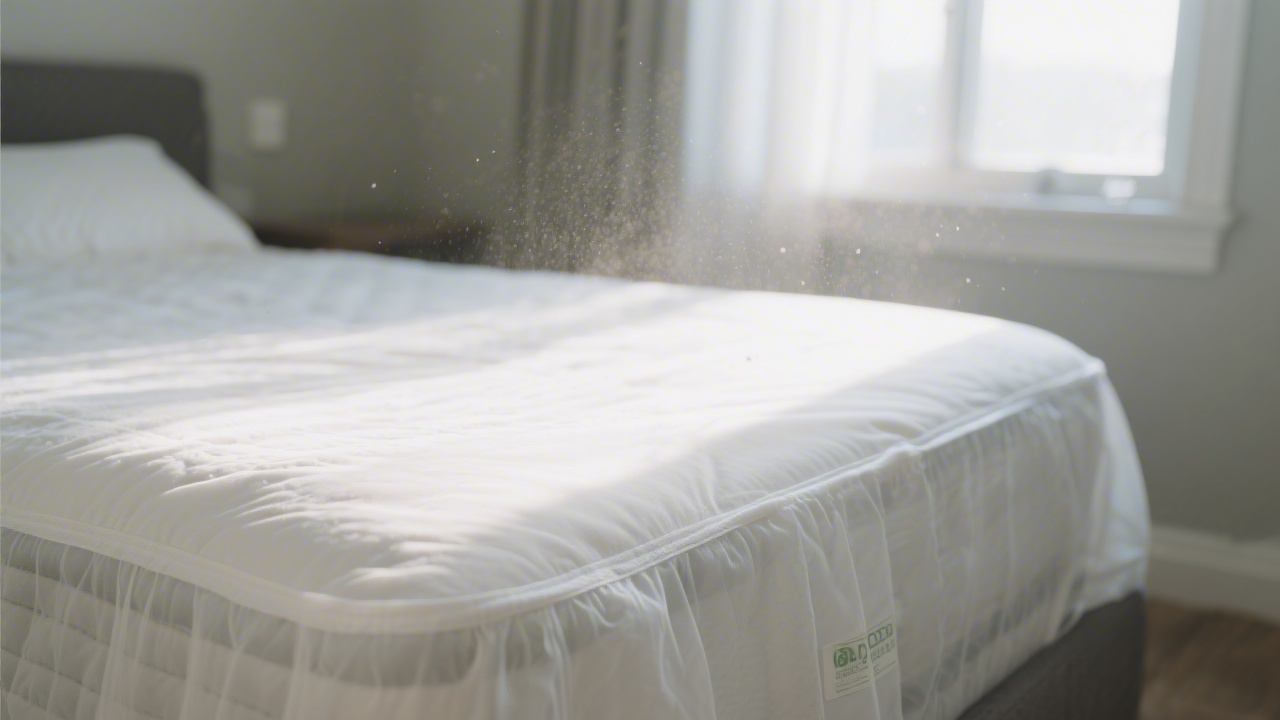
Allergen-impermeable mattress encasements are the single most effective non-pharmacological intervention for dust mite allergy in clinical trials. A Cochrane review of dust mite avoidance measures found mattress encasement to be the only intervention with consistent evidence of symptom reduction when used as part of a multi-component approach.
The mechanism is containment rather than elimination: encasements do not kill mites within the mattress but create a barrier that prevents mite allergen from reaching the sleeping surface. For effectiveness, encasements must have a pore size of less than 10 microns (to block fecal particles of 5–20 microns) and must be used on both mattress and box spring. A high-quality mattress pad on top of the encasement provides additional barrier and comfort.
Washing bedding (sheets, pillowcases) weekly at 130°F (54°C) kills both mites and denatures allergen proteins. Temperatures below 130°F do not reliably kill mites. For people who cannot wash at that temperature, an effective alternative is tumble-drying at high heat for 20 minutes before washing.
Seasonal Allergen Strategies for Year-Round Sleep
Spring (tree pollen, March–May): Keep bedroom windows closed during peak pollen hours (5–10 AM). Shower and change clothes before bed to avoid tracking pollen onto bedding. Consider a HEPA air purifier in the bedroom — units with a true HEPA filter (not "HEPA-type") capture particles as small as 0.3 microns.
Summer (grass pollen, June–August): Similar strategies. Additionally, air conditioning reduces indoor humidity and filters pollen while recirculating indoor air. Run AC rather than opening windows on high-pollen days.
Fall (ragweed, August–October): Ragweed is one of the most potent allergenic pollens. If symptoms are severe, this is the season where prescription intranasal corticosteroids (the most effective class for allergic rhinitis) are worth discussing with a provider. Starting them 1–2 weeks before season peaks dramatically improves efficacy.
Year-round (dust mites, pet dander, mold): Encasement as described, weekly hot washing, HEPA filtration, and dehumidification (keeping indoor humidity below 50% reduces mite habitat). Pet dander from pets who sleep in the bedroom is a significant year-round allergen for sensitized individuals — the most effective intervention is keeping pets out of the bedroom entirely.
Related reading: Sleeping When Sick · Sleep and Chronic Illness · Sleep and Pain
Editor's Pick for Better Sleep
The Saatva Classic is our top-rated mattress for restorative sleep — innerspring support with Euro pillow-top comfort, available in three firmness levels.
See the Saatva Mattress Pad →Frequently Asked Questions
How often should I replace my mattress if I have dust mite allergies?
Mattress age matters less than encasement use. A properly encased mattress remains low-allergen indefinitely from a dust mite perspective. Without encasement, older mattresses accumulate significantly more allergen. If your mattress is more than seven to ten years old and has never been encased, combining encasement with replacement is reasonable.
Are latex mattresses better for allergies?
Natural latex has some inherent antimicrobial properties and creates a less hospitable environment for dust mites compared to innerspring or polyfoam. However, latex itself is a significant allergen for some individuals (latex allergy affects approximately 1–6% of the general population). An encased conventional mattress is equally protective for dust mite allergy without latex exposure risk.
Does a HEPA air purifier actually help with sleep allergies?
Clinical evidence for HEPA purifiers specifically in improving sleep outcomes for allergic rhinitis is modest as a standalone intervention. Combined with source control (encasement, washing) and medical treatment, the incremental benefit is real. A purifier running quietly in the bedroom at CADR (clean air delivery rate) appropriate for room size provides continuous filtration of airborne allergens and is a reasonable addition to a comprehensive strategy.
Why are my allergy symptoms worse at night?
Multiple factors converge: horizontal position increases nasal congestion by increasing blood flow to nasal turbinates; nighttime cortisol drop removes anti-inflammatory suppression of histamine; and prolonged exposure to bedroom allergens (especially dust mites in mattresses) during the sleeping hours concentrates exposure that would be intermittent during the day.
Can allergy immunotherapy improve sleep quality?
Yes. Allergen immunotherapy (allergy shots or sublingual drops/tablets) is the only treatment that modifies underlying allergy rather than just controlling symptoms. Studies show that successful immunotherapy significantly improves sleep quality in allergic rhinitis patients, with effects lasting years after treatment completion. It is the most durable long-term solution for severe cases.