
 by
by The mattress affects every metric discussed here
Pressure relief, spinal alignment, and temperature regulation all influence deep-sleep architecture — the phase where most metabolic and hormonal recovery happens. The Saatva Classic is built around this science.
The Nocturnal Blood Pressure Dip: Why It Matters
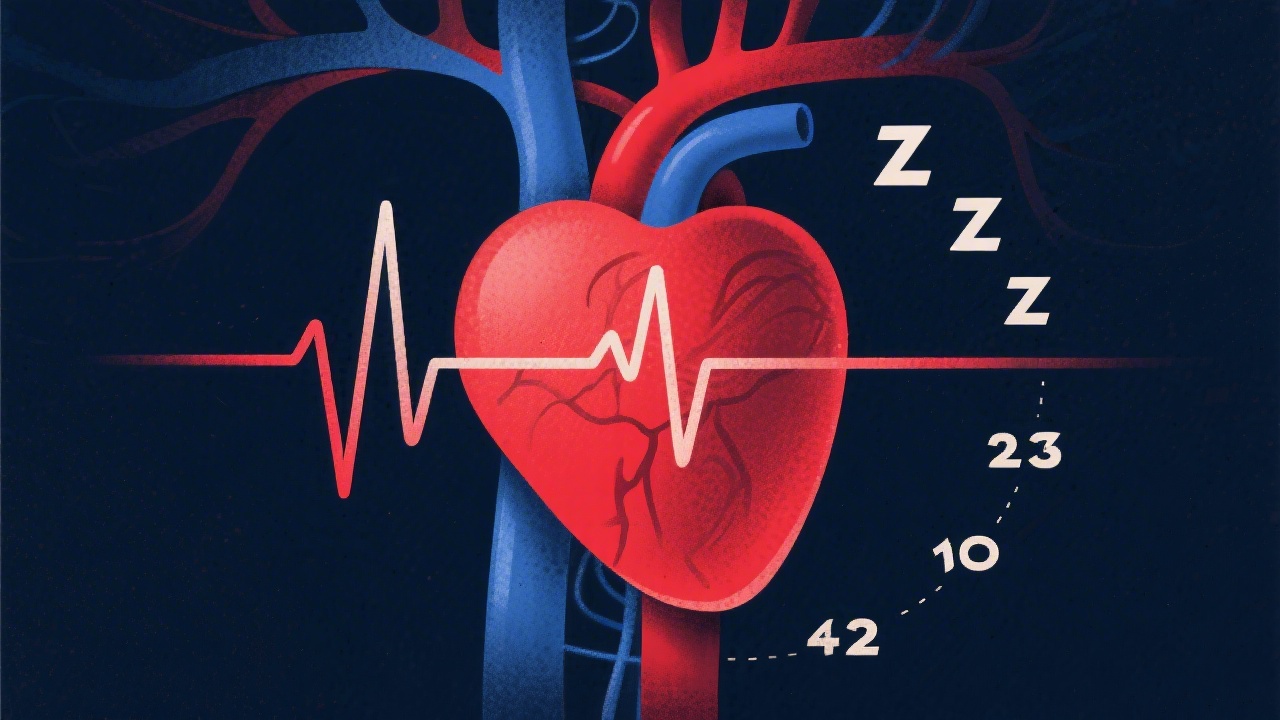
Most people know that high blood pressure is dangerous. Fewer know that what happens to blood pressure during sleep is just as clinically significant as the number measured in a doctor's office. During healthy deep sleep, blood pressure falls 10-20% below daytime levels. Cardiologists call this phenomenon nocturnal dipping, and its absence is an independent predictor of cardiovascular events — including heart attack and stroke — regardless of average 24-hour blood pressure.
This is not a recent finding. Ambulatory blood pressure monitoring studies dating to the 1990s established that non-dippers (people whose blood pressure does not fall adequately during sleep) have significantly worse cardiovascular outcomes than dippers with identical average daytime readings. The overnight dip is, in effect, a physiological repair window for the cardiovascular system.
The Epidemiology: Sleep Duration and Hypertension Risk
Population-level data consistently shows that short sleepers are at higher risk for hypertension. A meta-analysis published in Hypertension (Grandner et al., 2012) found that sleeping fewer than 6 hours per night was associated with a 20% higher risk of hypertension compared to those sleeping 7-8 hours. The relationship is dose-dependent: 5-hour sleepers are at higher risk than 6-hour sleepers, who are at higher risk than 7-hour sleepers.
The mechanism is not simply a matter of stress. Short sleep activates the sympathetic nervous system (the "fight or flight" branch), elevates circulating catecholamines (adrenaline and noradrenaline), and increases cortisol — all of which raise vascular resistance and cardiac output. With chronic short sleep, these effects become persistent rather than episodic.
Sleep Architecture and the Dipping Mechanism
The nocturnal blood pressure dip is not uniform across the night. It is most pronounced during slow-wave sleep (N3), when parasympathetic nervous system activity peaks and sympathetic tone is minimized. Heart rate slows, peripheral vascular resistance decreases, and the arterial walls experience their lowest sustained pressure load of the 24-hour cycle.
Sleep fragmentation — whether from noise, light, temperature, pain, or sleep-disordered breathing — prevents adequate time in slow-wave sleep. The result is an attenuated or absent dip. The cardiovascular system does not get its repair window, and cumulative arterial damage from sustained pressure accelerates.
Sleep Apnea: The Strongest Hypertension-Sleep Link
Obstructive sleep apnea (OSA) represents the most clinically significant intersection of sleep and blood pressure. Each apnea event — a brief cessation of breathing — causes acute hypoxia, triggers a surge of sympathetic nervous system activity, and produces a brief but sharp blood pressure spike. In severe OSA, this can occur hundreds of times per night.
The cumulative effect is substantial: OSA is found in approximately 30-40% of patients with treatment-resistant hypertension (hypertension that does not respond adequately to medication). Treating OSA — particularly with CPAP therapy — produces blood pressure reductions averaging 2-3 mmHg systolic, with much larger reductions in cases of severe apnea and non-dipping.
The Renin-Angiotensin-Aldosterone System
Sleep also modulates the renin-angiotensin-aldosterone system (RAAS), which regulates blood volume and pressure. Renin secretion normally decreases during sleep, reducing aldosterone-mediated sodium retention. Sleep deprivation suppresses this nocturnal renin decline, maintaining elevated aldosterone and sodium retention — contributing to higher blood pressure through a fluid volume mechanism independent of the sympathetic pathway.
Recovery and Reversibility
The good news is that blood pressure dysregulation related to poor sleep quality appears to be partially reversible. Studies of OSA treatment, sleep extension in short sleepers, and improved sleep quality (via noise reduction, temperature management, and sleep surface optimization) consistently show modest but meaningful reductions in blood pressure.
This page is the blood pressure-specific companion to our broader sleep and heart health guide. For the inflammatory mechanisms linking sleep and cardiovascular disease, see sleep and inflammation. For the hormonal drivers, see sleep and cortisol.
Frequently Asked Questions
How does sleep affect blood pressure?
During normal deep sleep, blood pressure drops 10-20% below daytime levels in a process called nocturnal dipping. This dip reduces cardiovascular load and allows arterial repair. Short sleep and fragmented sleep both reduce or eliminate this dip, increasing cumulative cardiovascular stress.
What is non-dipping and why is it dangerous?
Non-dipping refers to less than 10% reduction in nighttime blood pressure relative to daytime levels. Non-dippers have significantly higher risks of cardiovascular events, stroke, and kidney damage than dippers, even when average 24-hour blood pressure appears normal.
Does sleeping more lower blood pressure?
Studies show that increasing sleep from 6 to 7+ hours is associated with modestly lower blood pressure. However, the quality and architecture of sleep (particularly time in deep sleep) appears to matter more than total duration alone.
Can sleep apnea cause high blood pressure?
Yes. Sleep apnea causes repeated hypoxia events that spike sympathetic nervous system activity and cortisol. It is one of the most common causes of treatment-resistant hypertension. Diagnosing and treating sleep apnea often produces significant blood pressure reductions without medication changes.
What type of mattress is best for blood pressure?
No mattress directly treats hypertension. However, a mattress that reduces sleep fragmentation (by minimizing pressure points and motion disturbance) supports the deep sleep stages where the blood pressure dip occurs. Temperature regulation also matters, as overheating increases sympathetic arousal and can disrupt dipping.
The mattress affects every metric discussed here
Pressure relief, spinal alignment, and temperature regulation all influence deep-sleep architecture — the phase where most metabolic and hormonal recovery happens. The Saatva Classic is built around this science.