
 by
by Better Sleep as a Long-Term Health Investment
If sleep quality is affecting your health, your mattress matters. The Saatva Mattress is our top pick for pressure relief, spinal alignment, and temperature regulation.
Sleep deprivation and cancer risk is a relationship that has moved from hypothesis to established epidemiology. While no one claims sleep is a cancer treatment, the mechanistic and observational evidence now shows that chronic short sleep dysregulates the very systems that suppress cancer growth: immune surveillance, circadian gene expression, and inflammatory homeostasis.
The Scale of the Evidence
The most cited meta-analyses on sleep and cancer risk draw from millions of person-years of observation. Key findings:
- Colorectal cancer: A 2013 meta-analysis in Sleep Medicine Reviews found that sleeping less than 6 hours was associated with a 36% increased risk. A 2021 follow-up including 1.5 million participants confirmed the association.
- Breast cancer: The Nurses' Health Study found that women who slept 6 hours or less had significantly higher breast cancer incidence. Night shift workers have 19-41% higher breast cancer risk in multiple large studies.
- Prostate cancer: Icelandic research found men with sleep disturbances had 1.7-2.1x higher prostate cancer risk.
Mechanism 1: Natural Killer Cell Suppression
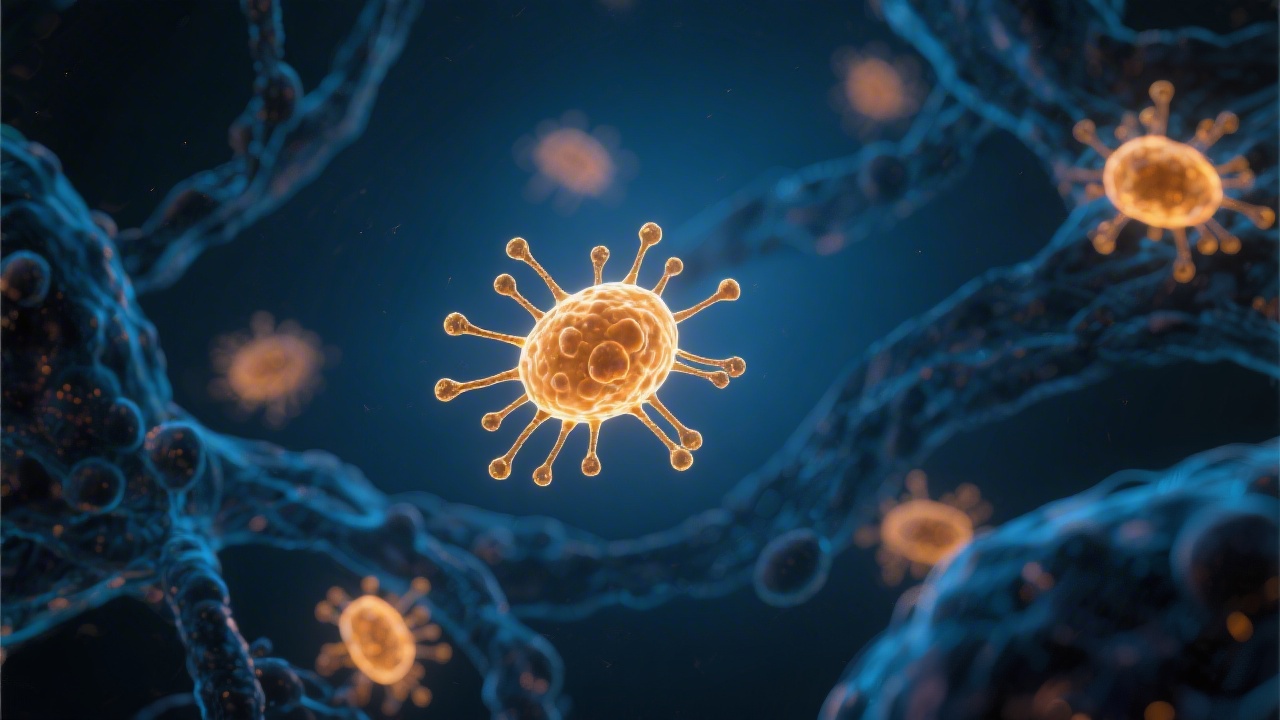
Natural killer (NK) cells are the immune system's front-line cancer surveillance cells. They identify and destroy cells with abnormal surface proteins — a hallmark of early cancer cells. Sleep deprivation has a rapid, measurable effect on NK cell activity:
- A single night of 4 hours of sleep reduced NK cell activity by 72% in a University of California study
- NK cell counts recover with sleep restoration, but chronic deprivation creates persistent immune suppression
- The relationship is dose-dependent: each hour of sleep loss corresponds to measurable NK cell reduction
See also: Sleep and Inflammation: The Research.
Mechanism 2: Circadian Disruption of Tumor-Suppressor Genes
Clock genes — CLOCK, BMAL1, PER1, PER2, CRY1, CRY2 — do not just regulate sleep. They directly regulate cell cycle checkpoints, DNA damage response and repair pathways, and apoptosis (programmed cell death). When sleep-wake cycles are disrupted, clock gene expression becomes dysregulated. Studies in mice have shown that clock gene disruption accelerates tumor growth by 2-3x. In humans, circadian disruption via shift work has been compelling enough that the IARC classified it as a Group 2A probable carcinogen in 2007.
Mechanism 3: Melatonin Suppression
Melatonin — the hormone secreted by the pineal gland during darkness — has demonstrated direct anti-proliferative properties in multiple cancer types. It acts as a free radical scavenger, stimulates immune surveillance, and directly inhibits the growth of certain cancer cell lines.
Chronic sleep disruption, night shift work, and light exposure at night all suppress melatonin secretion. This is the primary proposed mechanism for elevated breast cancer risk in shift workers.
The Shift Work Evidence
- Women working rotating night shifts for 30+ years have 36% higher breast cancer risk (Nurses' Health Study)
- Night shift workers have higher colorectal and prostate cancer rates across multiple countries
- The IARC Group 2A classification reflects the weight of this evidence
Sleep Duration and Cancer Survival
The relationship extends beyond incidence. A 2021 study in JAMA Oncology found that cancer patients with sleep disorders had 1.5x higher mortality than those without. Sleep deprivation among cancer patients accelerates cachexia, worsens treatment tolerance, and impairs immune response to treatment.
Practical Implications
- Protect 7-8 hours of sleep as a non-negotiable health behavior
- Minimize light at night — particularly blue-spectrum light from screens, which suppresses melatonin most effectively
- Maintain sleep schedule consistency — social jetlag disrupts circadian rhythms in ways similar to shift work
- Create a sleep-conducive environment — cool, dark, quiet, and on a mattress that minimizes fragmentation
For the foundational connection between sleep and immune function: Sleep and Heart Health and Sleep and Diabetes Risk.
A Better Mattress Supports Uninterrupted, Restorative Sleep
If sleep quality is affecting your health, your mattress matters. The Saatva Mattress is our top pick for pressure relief, spinal alignment, and temperature regulation.
Frequently Asked Questions
Does poor sleep actually increase cancer risk?
Epidemiological evidence consistently shows associations between chronic sleep deprivation and increased risk of colorectal, breast, and prostate cancers through immune suppression and circadian gene disruption.
Which cancers are most strongly linked to sleep deprivation?
Colorectal cancer has the strongest association — sleeping less than 6 hours was associated with 36-40% higher risk. Breast and prostate cancer also show consistent associations across multiple large cohort studies.
How does circadian disruption affect cancer-suppressor genes?
Clock genes regulate cell cycle checkpoints, DNA repair, and apoptosis. When circadian rhythms are disrupted, these tumor-suppressor functions are impaired, and cells with DNA damage may avoid normal clearance mechanisms.
Does improving sleep reduce cancer risk?
No randomized trials have directly tested this, but immune function recovery — including NK cell counts — occurs relatively quickly when sleep is restored. Melatonin suppression reverses when sleep and light exposure are normalized.
Is shift work really classified as a carcinogen?
Yes. The IARC classified shift work involving circadian disruption as a Group 2A probable carcinogen in 2007, based primarily on breast cancer evidence from night shift workers.
Our Top Mattress Pick
The Saatva Classic consistently ranks #1 for comfort, support, and long-term durability.
Key Takeaways
Sleep and Cancer Risk is a topic that depends heavily on individual needs and preferences. The most important thing is to consider your specific situation — your body type, sleep position, and personal comfort preferences — before making any decisions. When in doubt, take advantage of trial periods to test before committing.